Encyclopedia › Battles and events
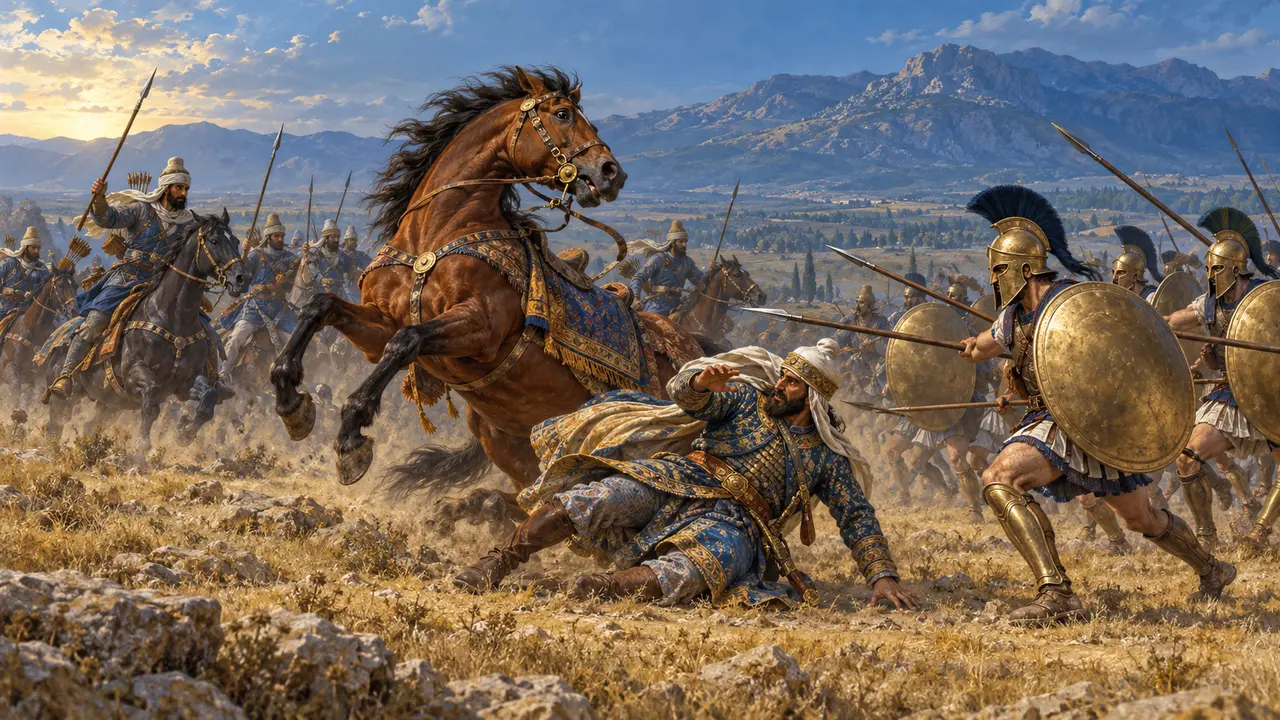
The death of Masistius
Cavalry fight below Mount Cithaeron, near Erythrae in Boeotia, 479 BCE
In the game: Level 11: The Finale
In the first major clash of the Plataea campaign, Mardonius sent his whole cavalry under Masistius against the Greeks camped on the slopes of Cithaeron near Erythrae. Masistius was thrown when an arrow struck his horse, and Athenian soldiers killed him. Herodotus says his death was mourned across the Persian camp and gave the Greeks the confidence to move down onto the plain of Plataea.
In the game: The game presents this as the cavalry battle at Erythrae, with Masistius unhorsed and killed, as Herodotus tells it. The horsemen were Mardonius's command; Xerxes had already gone back to Asia and was not at the fight.
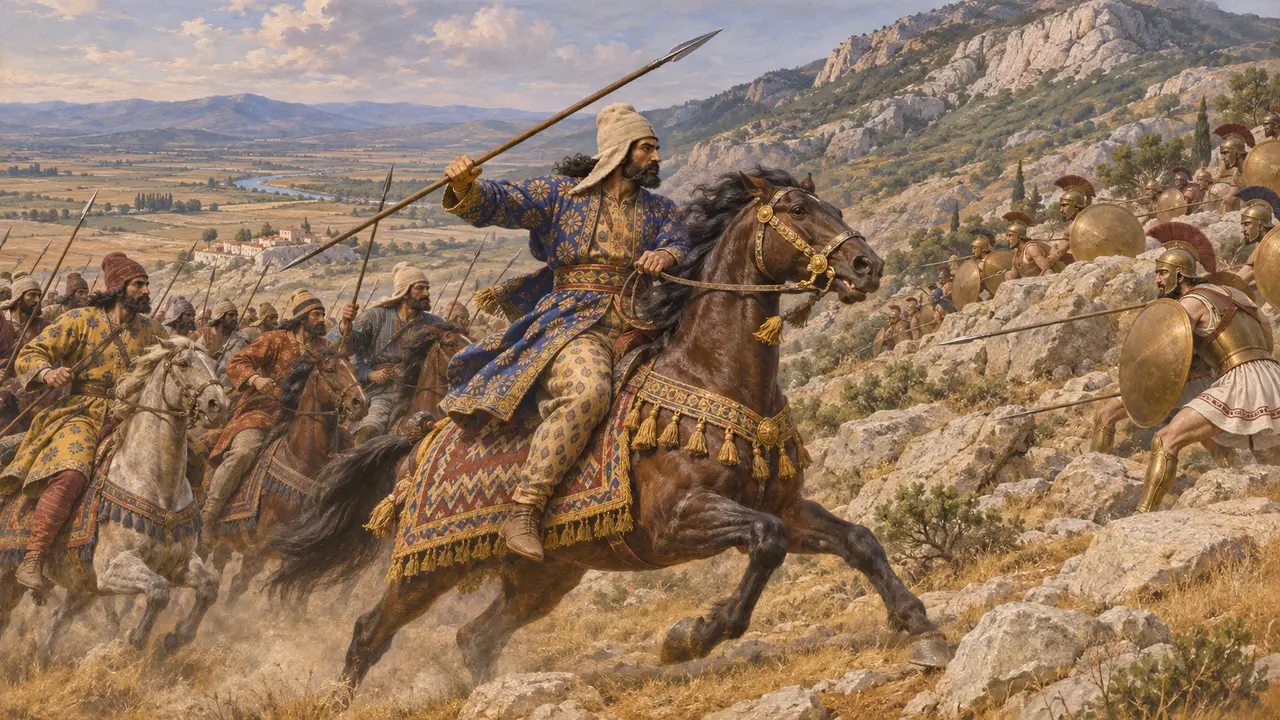
The Greeks on the slopes of Cithaeron
Ancient accountHerodotus says the allied Greek army under the Spartan Pausanias came over Cithaeron and took up position on its lower slopes near Erythrae, keeping off the open plain. Mardonius, camped by the Asopus river, sent all his cavalry against them. Their commander was Masistius, whom Herodotus describes as highly regarded among the Persians, riding a Nisaean horse with a golden bit and rich trappings.
Herodotus 9.15, 9.19-20
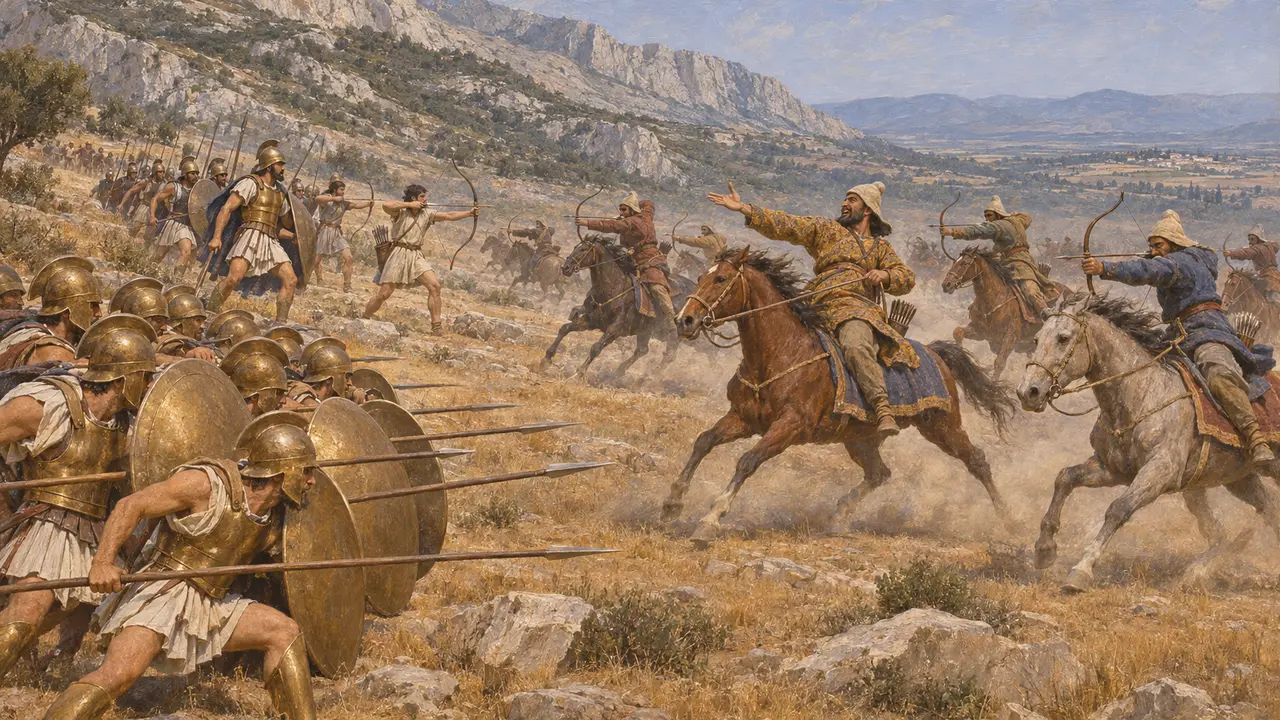
The attack on the Megarians
Ancient accountThe horsemen attacked squadron by squadron, shooting and taunting the Greeks. The Megarians held the most exposed ground and sent word to Pausanias that they could not hold without relief. Herodotus says only the Athenians volunteered: 300 picked men under Olympiodorus son of Lampon, with archers among them.
Herodotus 9.20-21
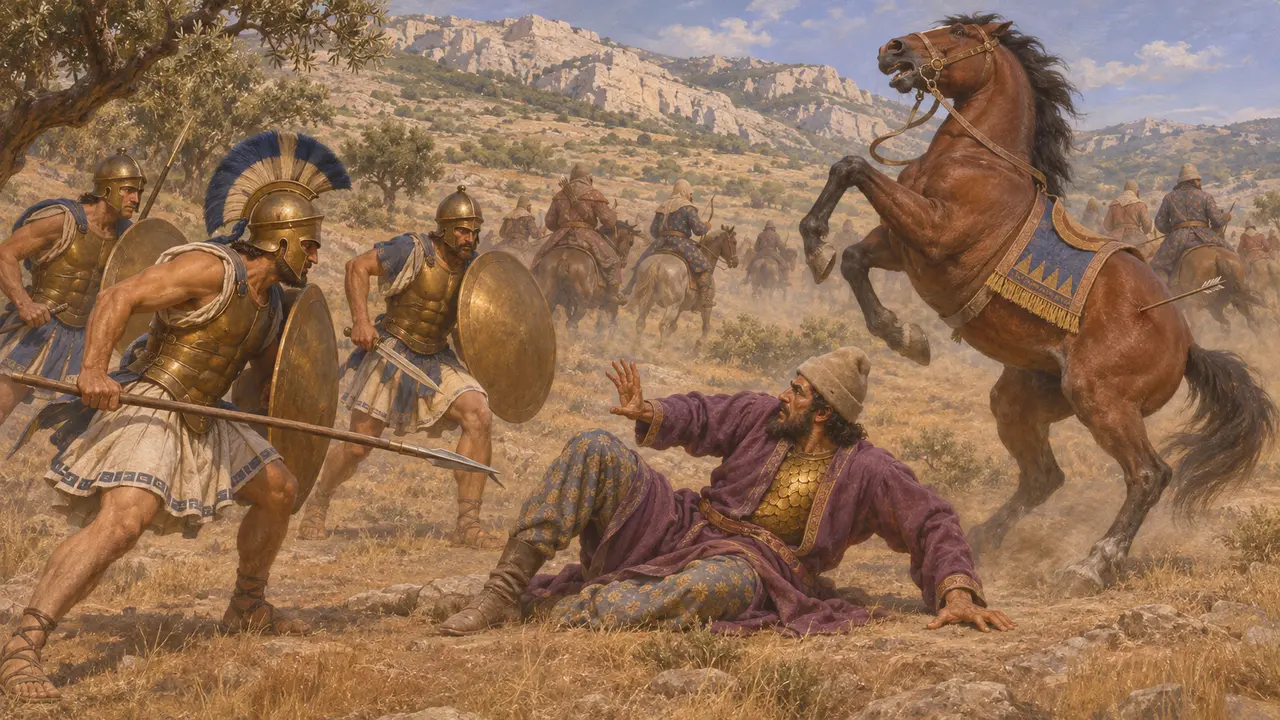
How Masistius fell
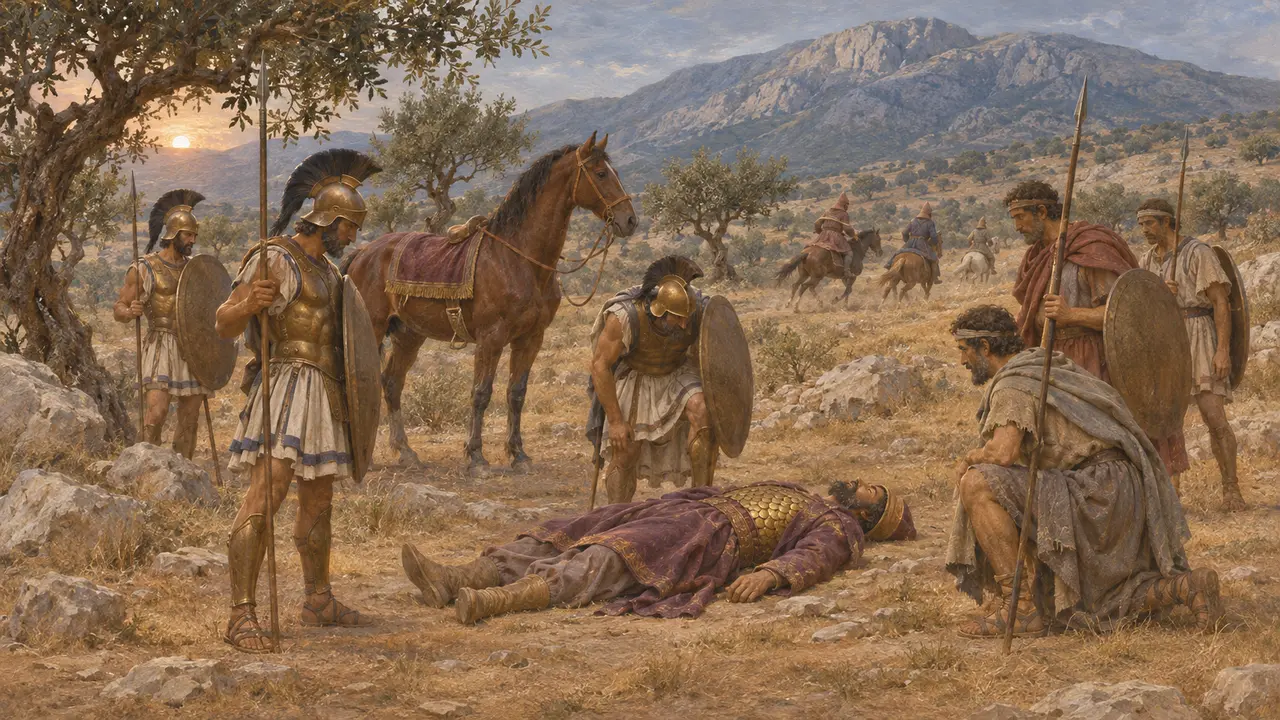
Ancient accountAn arrow struck Masistius's horse in the flank; it reared and threw him. The Athenians closed on him, but he wore a corselet of golden scales beneath a purple tunic and their blows did no harm until one man stabbed him through the eye. The cavalry at first did not see him fall, then charged together for the body; the Athenians gave way until the rest of the Greek army came up, and the horsemen withdrew.
Herodotus 9.22-23
Mourning in the camp and the body on the cart
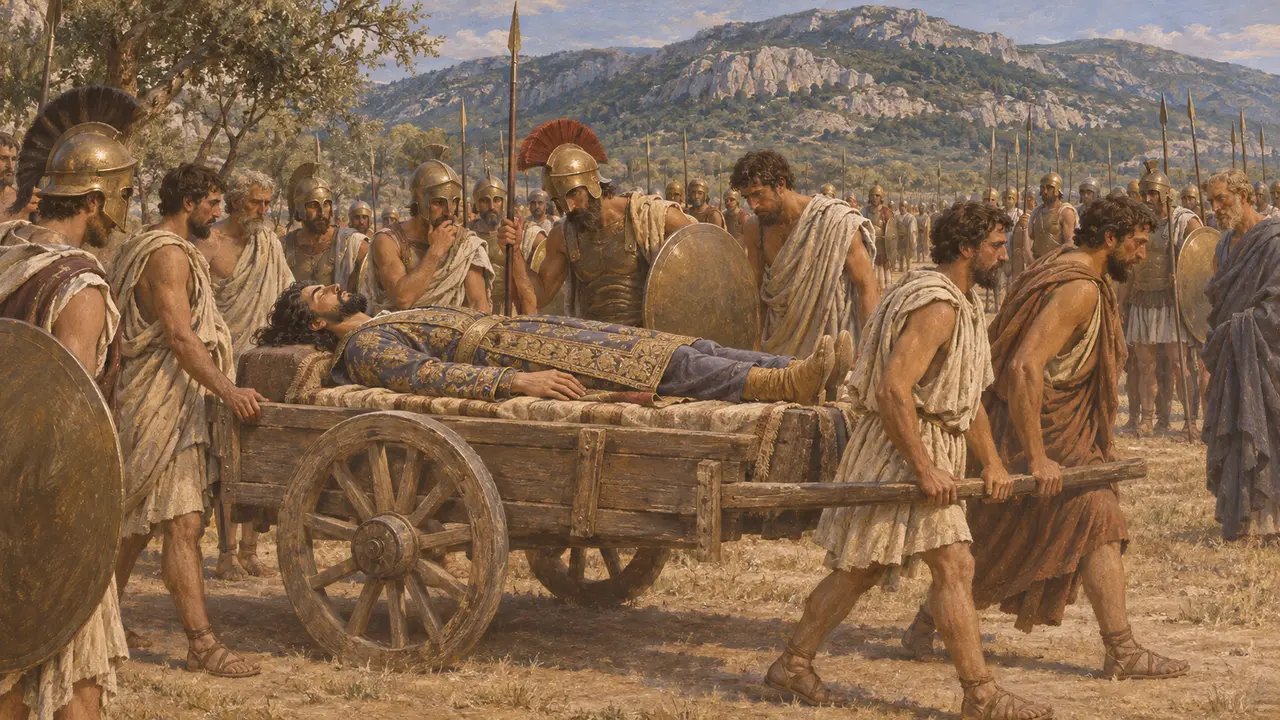
Ancient accountHerodotus says the Persian camp mourned Masistius as the man most honoured after Mardonius himself: the soldiers shaved their heads and cut the manes of their horses and pack animals, and their wailing carried across Boeotia. The Greeks laid the body on a cart and drove it along their lines, and men left their ranks to see his size and looks. Encouraged, the army then moved west towards Plataea and the spring Gargaphia.
Herodotus 9.24-25
A story told only by the Greeks
DisputedNo surviving Persian text describes this fight, and every detail comes from Greek writers whose informants were probably Athenian. Historians note that the story credits Athens with rescuing the Megarians, which suited Athenian pride, and that Herodotus gives no size for the cavalry or count of losses. Most accept a real skirmish and a commander's death, but its weight rests on Greek telling. The travel writer Pausanias later saw a corselet said to be his at Athens.
Plutarch, Aristides 14; Pausanias 1.27.1; M. A. Flower and J. Marincola, Herodotus: Histories Book IX, 2002
Sources
- Herodotus 9.15-25
- Plutarch, Aristides 14
- Pausanias, Description of Greece 1.27.1
- M. A. Flower and J. Marincola, Herodotus: Histories Book IX, 2002
- P. Briant, From Cyrus to Alexander, 2002