Encyclopedia › Soldiers and ships
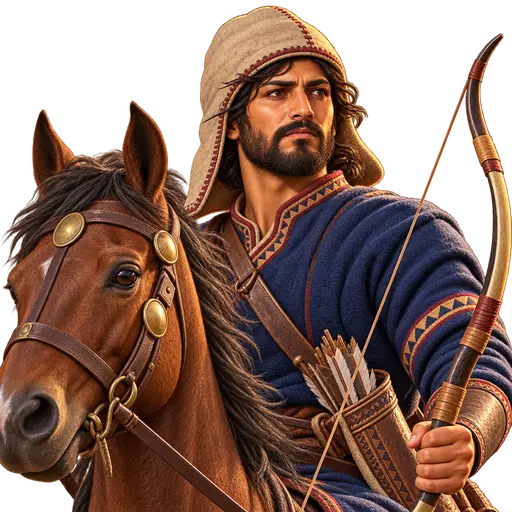
King's Horse Archer
Mounted bowmen of the Achaemenid royal army, about 550-479 BCE
The King's Horse Archer stands for the mounted bowmen of the Achaemenid army. Persian nobles prided themselves on riding and shooting, and Greek writers describe Persian cavalry pouring arrows and javelins onto infantry that could not reach them. No surviving source names a separate royal corps of horse archers.
In the game: The game shows a royal cavalryman who shoots from the saddle and outrides foot soldiers, which fits Herodotus on Plataea. The counter is simplified: there, Masistius fell to Athenian archers and hoplites, not to horsemen.
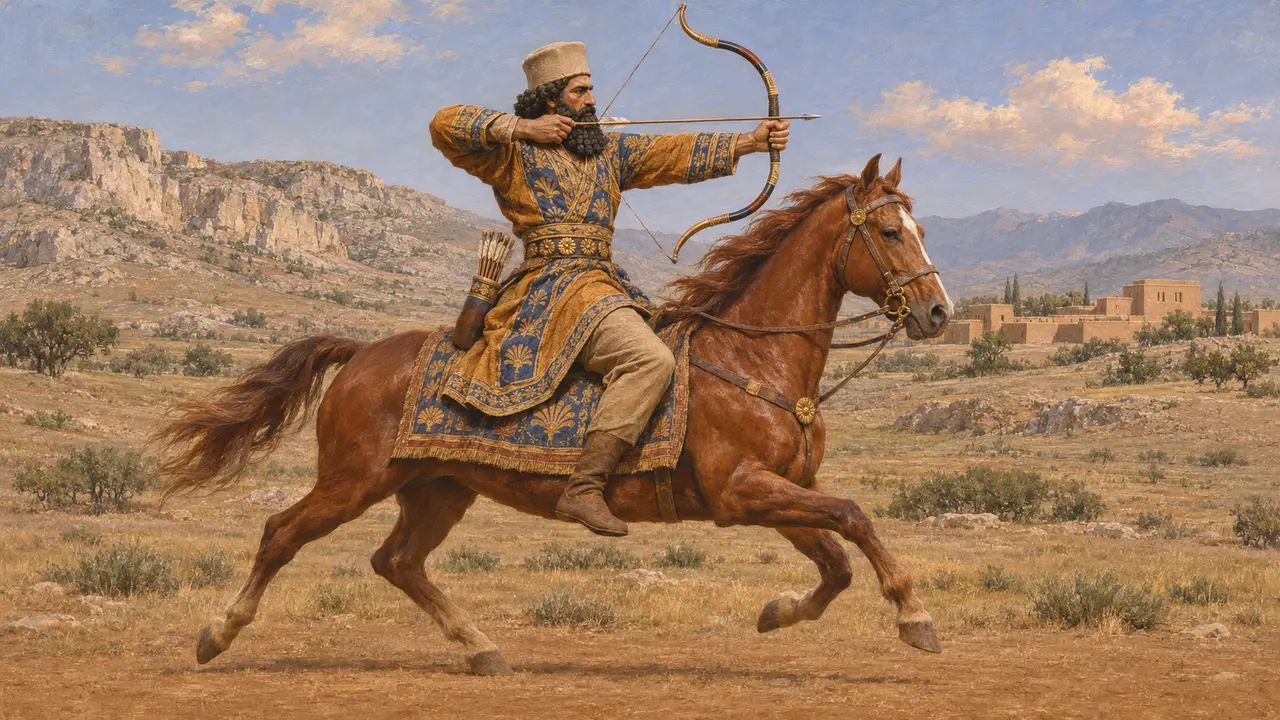
A king who shot from horseback
In the recordIn the inscription on his tomb at Naqsh-e Rostam, Darius lists his skills as a warrior. He claims to be a good horseman, and a good bowman both on foot and on horseback, as well as a good spearman. Riding and archery were therefore part of how the King himself wished to be seen.
DNb
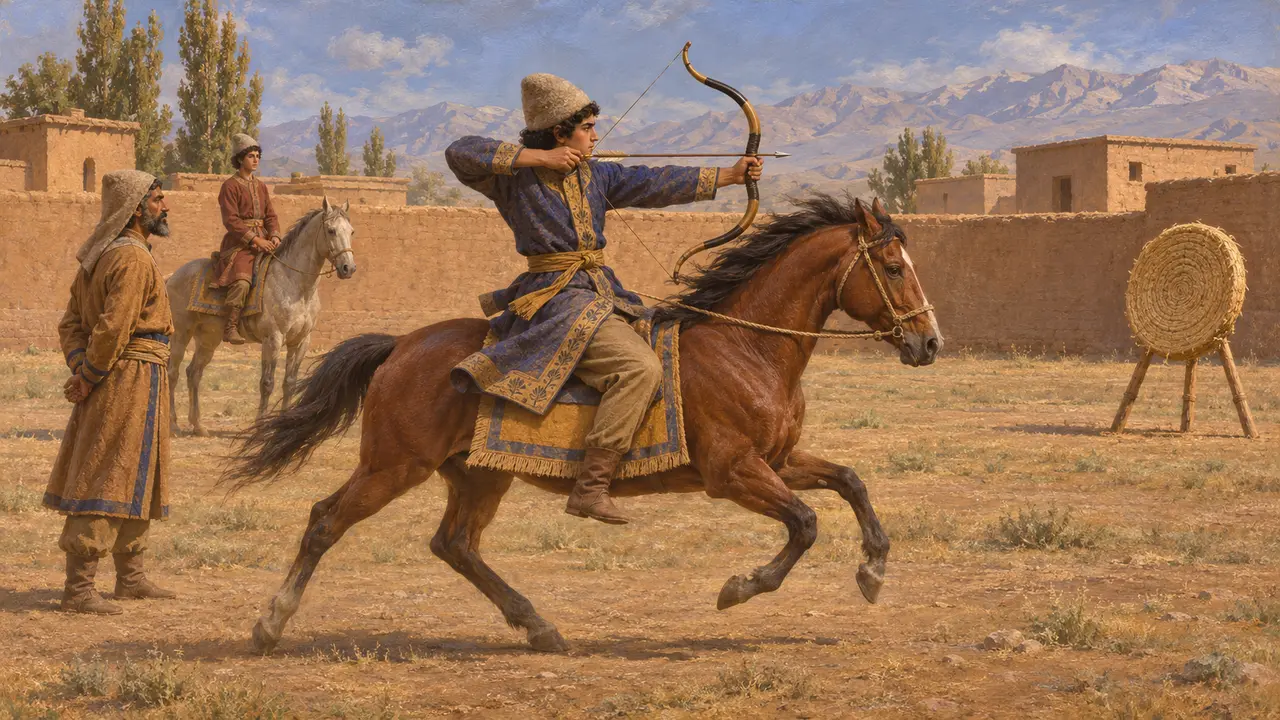
Riding and shooting in Persian upbringing
Ancient accountHerodotus says that Persian boys were taught only three things between the ages of five and twenty: to ride, to shoot with the bow, and to tell the truth. The claim is simplified, but it agrees with the royal inscriptions in placing horse and bow at the centre of elite Persian training.
Herodotus 1.136
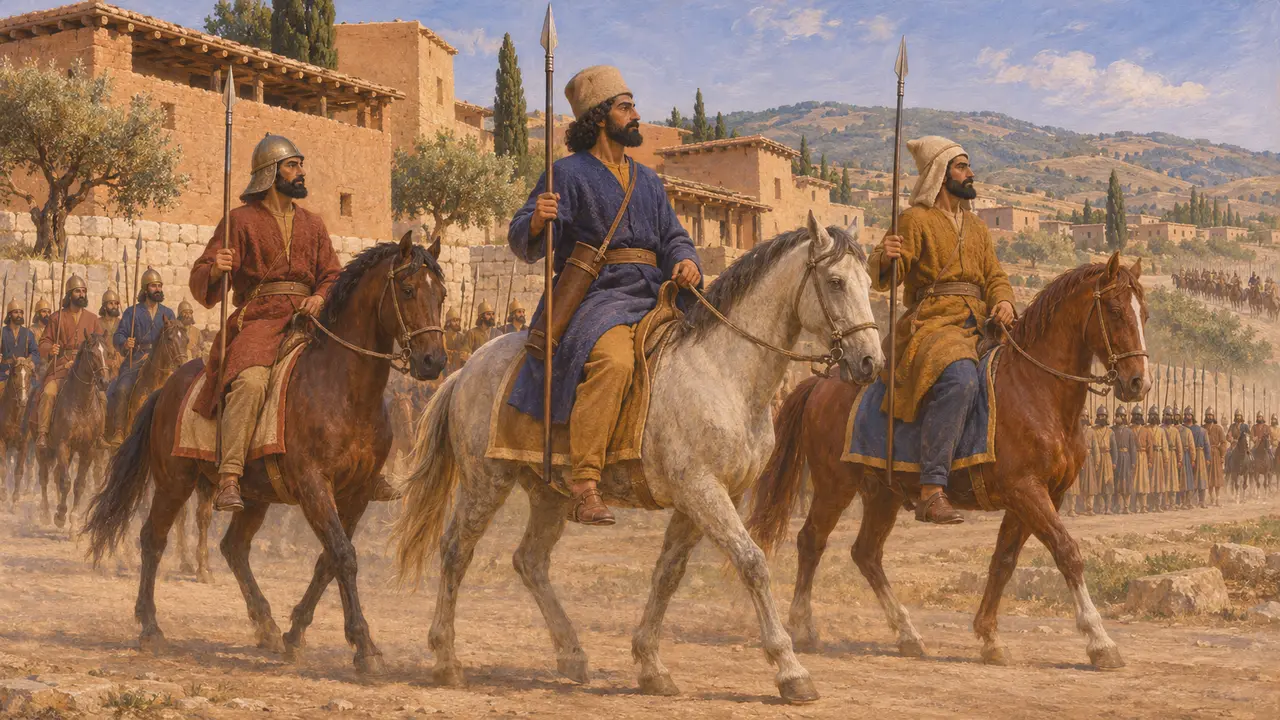
Horsemen around the King
Ancient accountHerodotus describes Xerxes leaving Sardis in 480. A thousand picked Persian horsemen rode ahead of him and another thousand behind his spearmen, and after ten thousand Persian foot came ten thousand Persian cavalry. He says Persian cavalry were armed much like the infantry, some with metal helmets. His figures for the whole army are greatly exaggerated, and he does not say these royal horsemen were archers.
Herodotus 7.40-41; 7.84
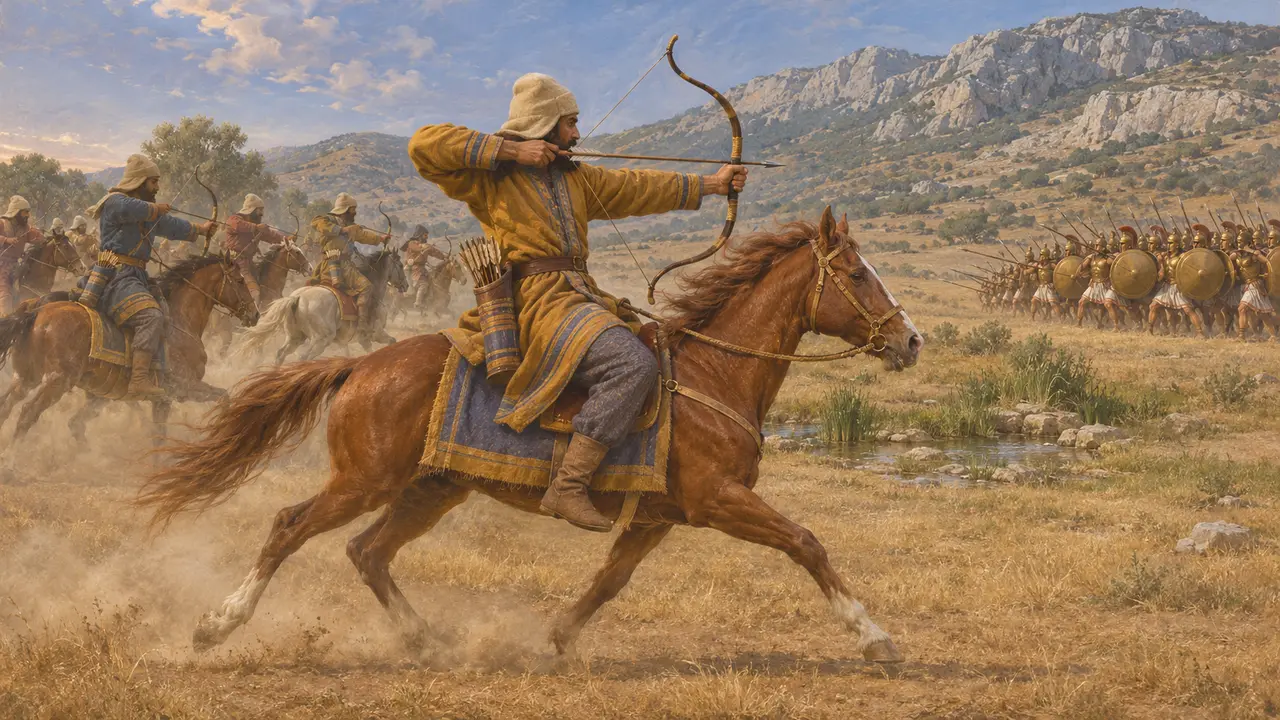
Arrows from the saddle at Plataea
Ancient accountHerodotus tells how Mardonius sent his cavalry under Masistius against the Greeks in 479. Charging in squadrons, they pressed the Megarians hard until Masistius's horse was struck by an arrow and threw him, and Athenian troops killed him. Later, he says, these horsemen, whom he calls mounted archers hard to come to grips with, harassed the Greeks with javelins and arrows and choked the Gargaphia spring.
Herodotus 9.20-25; 9.49
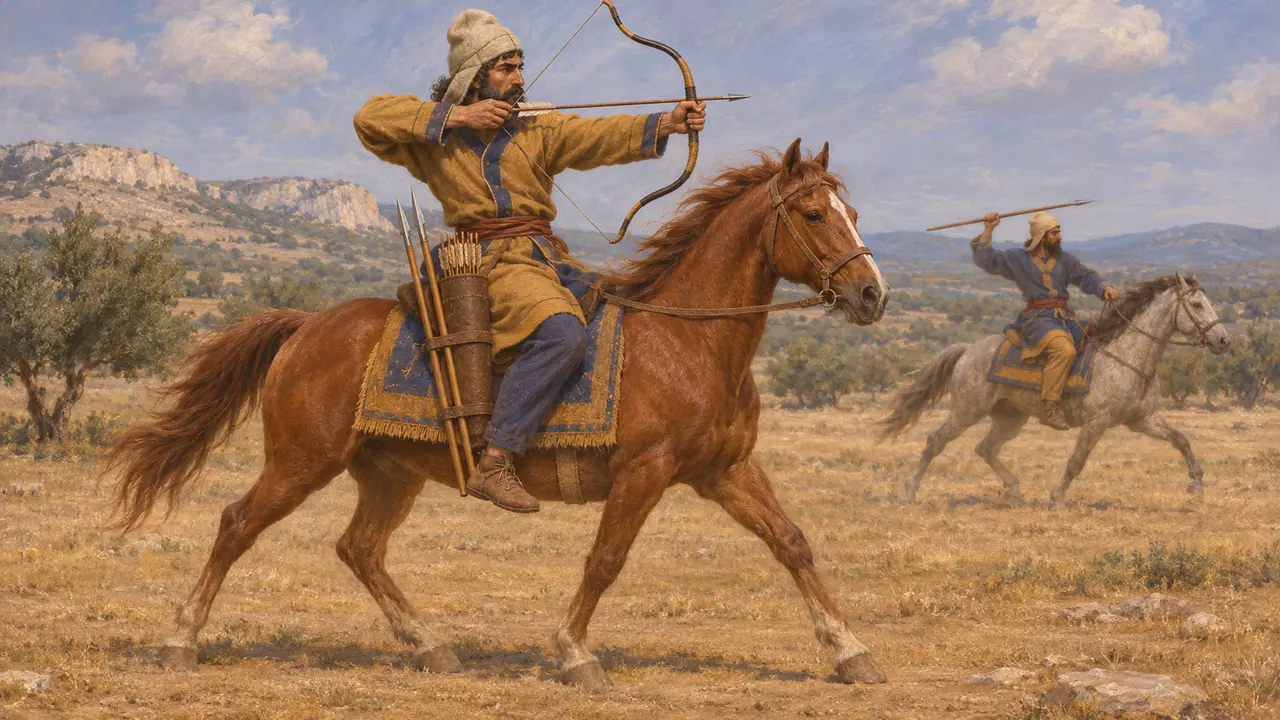
Bow, javelin or both
DisputedHistorians debate how far Persian cavalry were true horse archers. Herodotus calls the horsemen at Plataea mounted archers yet shows them throwing javelins too, and Xenophon, writing later, recommends two javelins for a horseman. Many scholars think Persian riders carried mixed weapons, while steppe peoples such as the Saka specialised in mounted archery. Whether the King kept a distinct guard of horse archers is unknown.
Herodotus 9.49; Xenophon, On Horsemanship 12; C. Tuplin, All the King's Horse, 2010
Sources
- Herodotus, Histories 1.136; 7.40-41; 7.84; 9.20-25; 9.49
- Darius, tomb inscription at Naqsh-e Rostam (DNb)
- Xenophon, On Horsemanship 12
- C. Tuplin, All the King's Horse: In Search of Achaemenid Persian Cavalry, 2010
- P. Briant, From Cyrus to Alexander, 2002