Encyclopedia › Battles and events
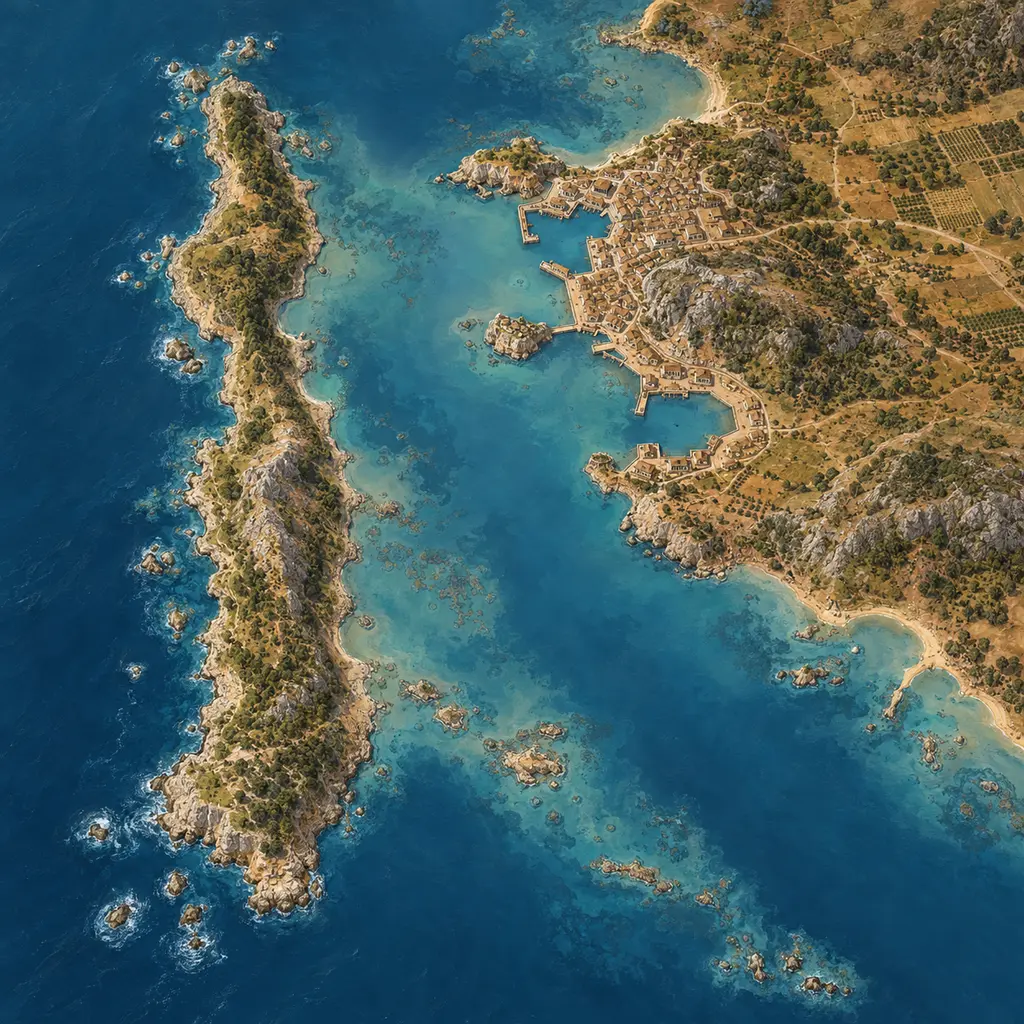
The battle of Lade
Sea battle off Miletus that broke the Ionian Revolt, 494 BCE
In the game: Level 7: Sardis Burns
In 494 BCE a royal fleet, drawn mainly from Phoenicia, Cyprus, Cilicia and Egypt, defeated the combined fleet of the rebel Ionian Greeks off the island of Lade near Miletus. The defeat ended the Ionian Revolt at sea and left Miletus open to siege and capture. No Persian record of the battle survives, so the story is almost entirely Herodotus's.
In the game: The game follows Herodotus: 600 BCE royal ships against 353 Ionian triremes, an abandoned drill and a Samian flight. The 600 BCE is his round figure, and the Chronicle's description of the diekplous is a modern reconstruction.
Two fleets off Miletus
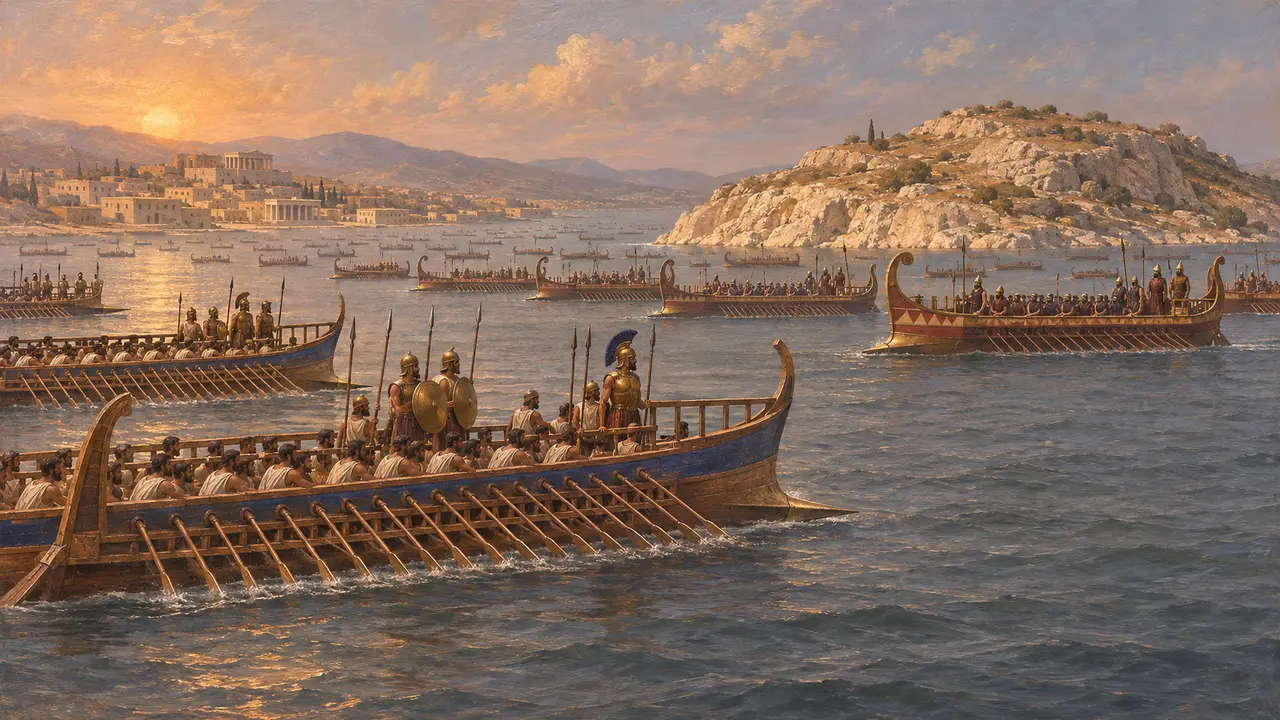
Ancient accountHerodotus says the Ionians chose to defend Miletus at sea and gathered 353 triremes at Lade, then an island off the city and now a hill in the silted Maeander plain. The largest squadrons came from Chios (100), Miletus (80), Lesbos (70) and Samos (60). Against them he sets 600 royal ships, with the Phoenicians the keenest. Six hundred is a round figure he gives for other royal fleets, and many historians doubt it.
Herodotus 6.6-9
Dionysius and the seven days of drill
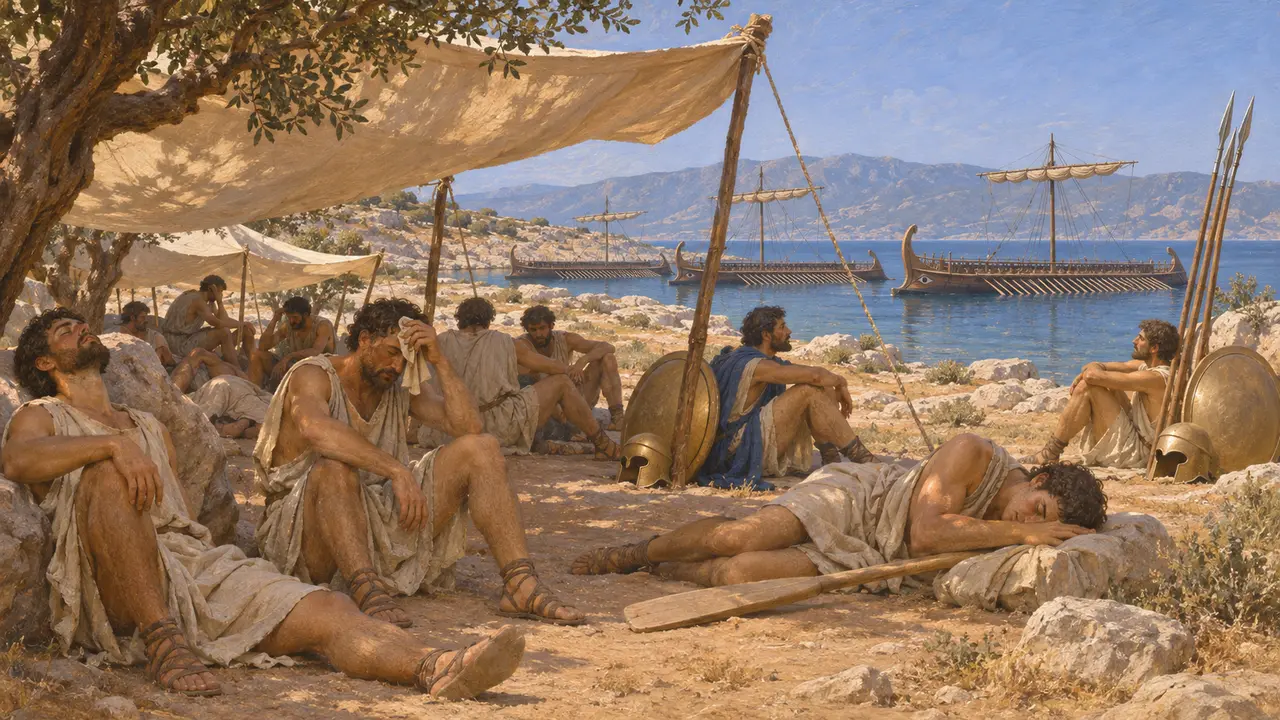
Ancient accountHerodotus tells how Dionysius of Phocaea, who had brought only three ships, persuaded the Ionians to accept his command. For seven days he kept the rowers at the oars and the marines under arms, practising the manoeuvre called the diekplous. Then the crews, unused to such labour and suffering in the heat, refused to go on. They pitched tents on the island and stayed in the shade.
Herodotus 6.11-12
The Samians sail away
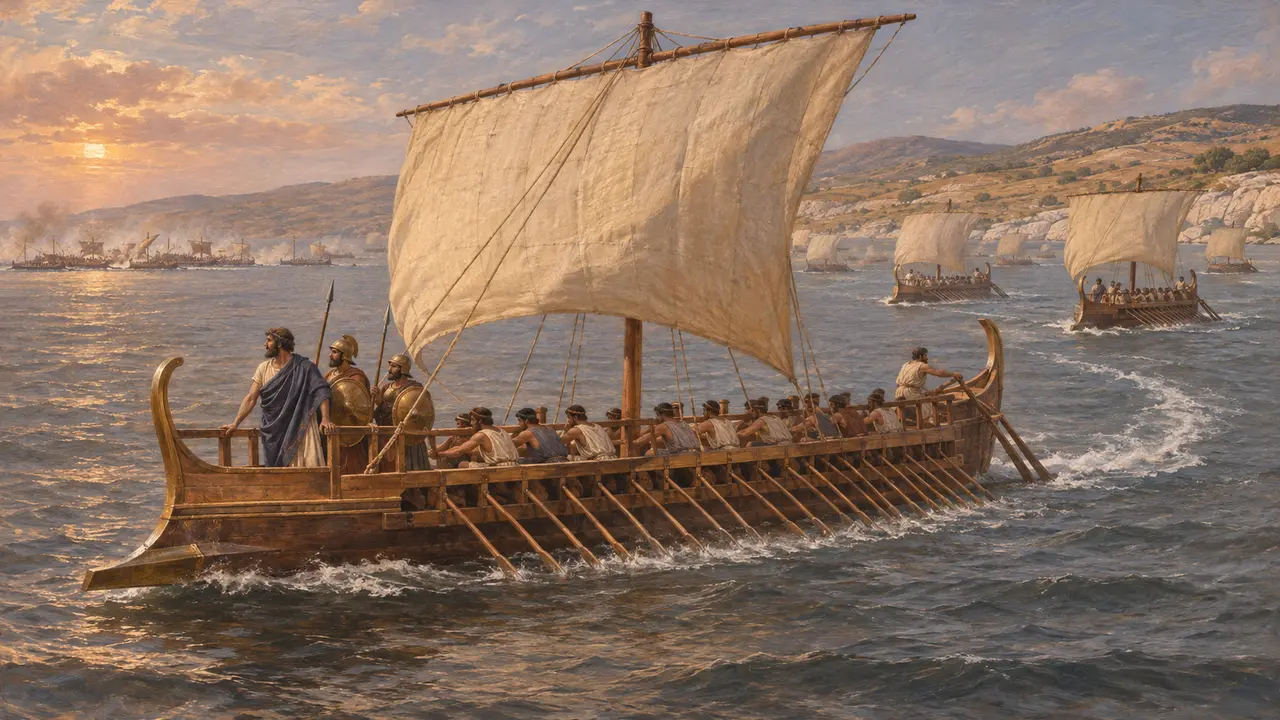
Ancient accountHerodotus says the former tyrant of Samos, Aeaces son of Syloson, sent word to the Samian captains that their island would be spared if they deserted. When the fleets met, most of the Samians sailed off, followed by the Lesbians and then by many others. Eleven Samian ships stayed and fought, and Samos later honoured their captains on a pillar. Herodotus admits the Ionians blamed one another and he could not say exactly who fled.
Herodotus 6.13-14
The Chian stand and the aftermath
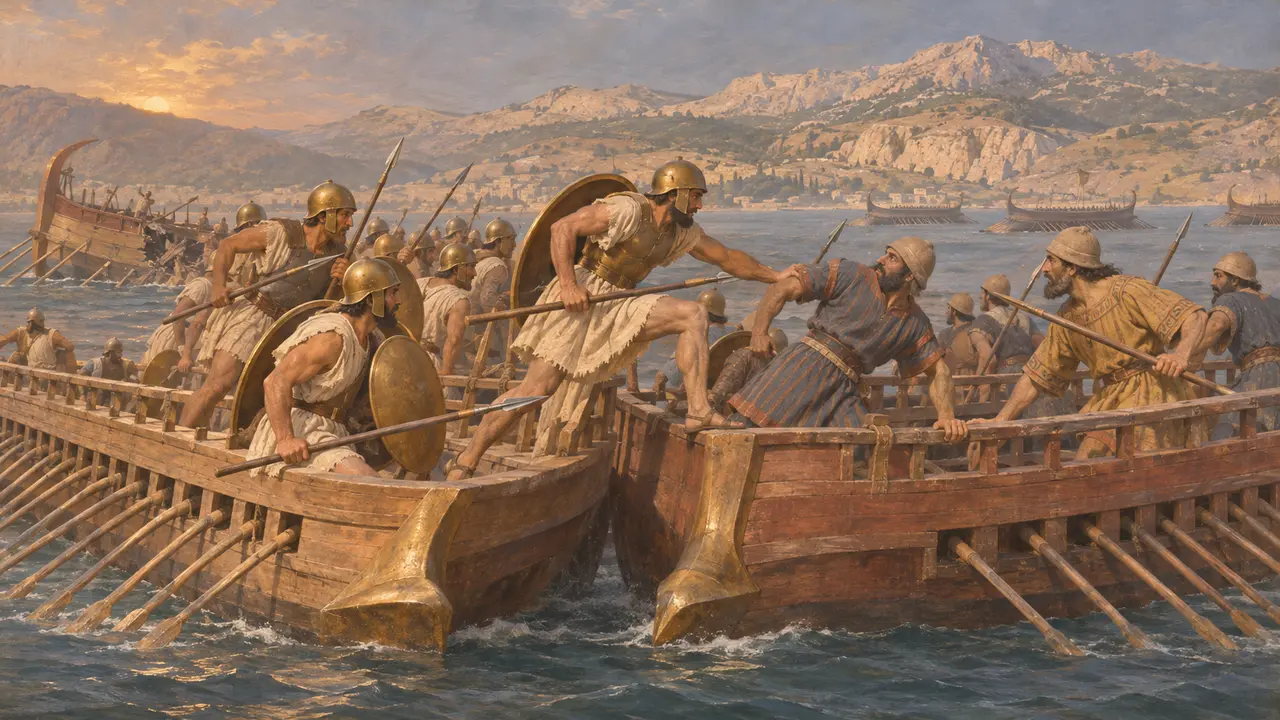
Ancient accountThe Chians, Herodotus says, fought hardest, with 100 ships each carrying 40 picked citizens as marines, and they took enemy ships before losing most of their own. Survivors beached at Mycale and crossed into Ephesian land on foot, where Ephesians took them for raiders and killed them. Dionysius captured three ships and left to raid, first off Phoenicia and later from Sicily. Herodotus dates the capture of Miletus to the sixth year of the revolt.
Herodotus 6.15-18
The diekplous and the blame
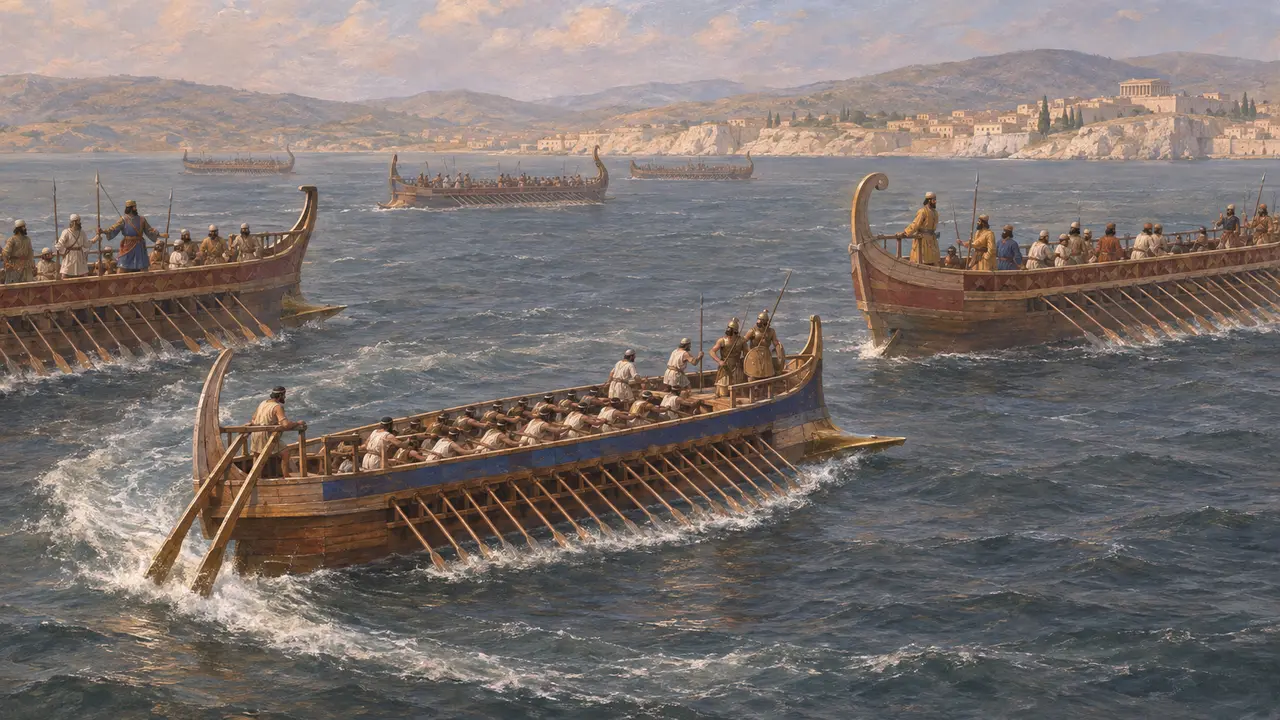
DisputedHerodotus names the diekplous but never describes it. Many historians read it as rowing through a gap in the enemy line and turning to ram exposed sides or sterns, but they argue over how it was formed, how it was countered, and whether a week of drill could teach it. Some also suspect that the tale of idle Ionians echoes the blame the cities traded after the defeat, as it later reached Herodotus.
J. S. Morrison, J. F. Coates and N. B. Rankov, The Athenian Trireme, 2000
Sources
- Herodotus 6.6-22
- J. S. Morrison, J. F. Coates and N. B. Rankov, The Athenian Trireme, 2000
- H. T. Wallinga, Ships and Sea-Power before the Great Persian War, 1993
- J. F. Lazenby, The Defence of Greece 490-479 BC, 1993
- P. Briant, From Cyrus to Alexander, 2002