Encyclopedia › Battles and events
The fall of Miletus
Persian capture of the leading city of the Ionian Revolt, Ionia, 494 BCE
In the game: Level 7: Sardis Burns
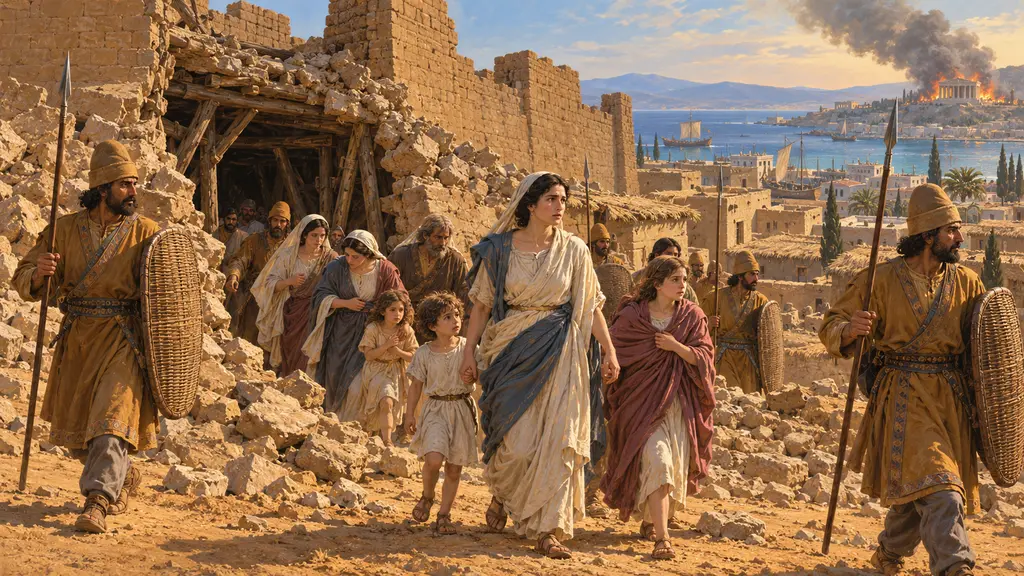
In 494, after the Ionian fleet broke up at Lade, Persian forces besieged Miletus by land and sea and took it. Miletus had led the Ionian Revolt since 499. Herodotus treats its capture as the revolt's decisive blow: most of its men were killed, its women and children were enslaved, and the survivors were deported deep into Asia.
In the game: The game shows a siege won by mining, as Herodotus tells it. It simplifies: he says most men, not all, were killed, and the revolt did not end at once, since Persia spent 493 retaking the islands and the Hellespont.
Siege by land and sea
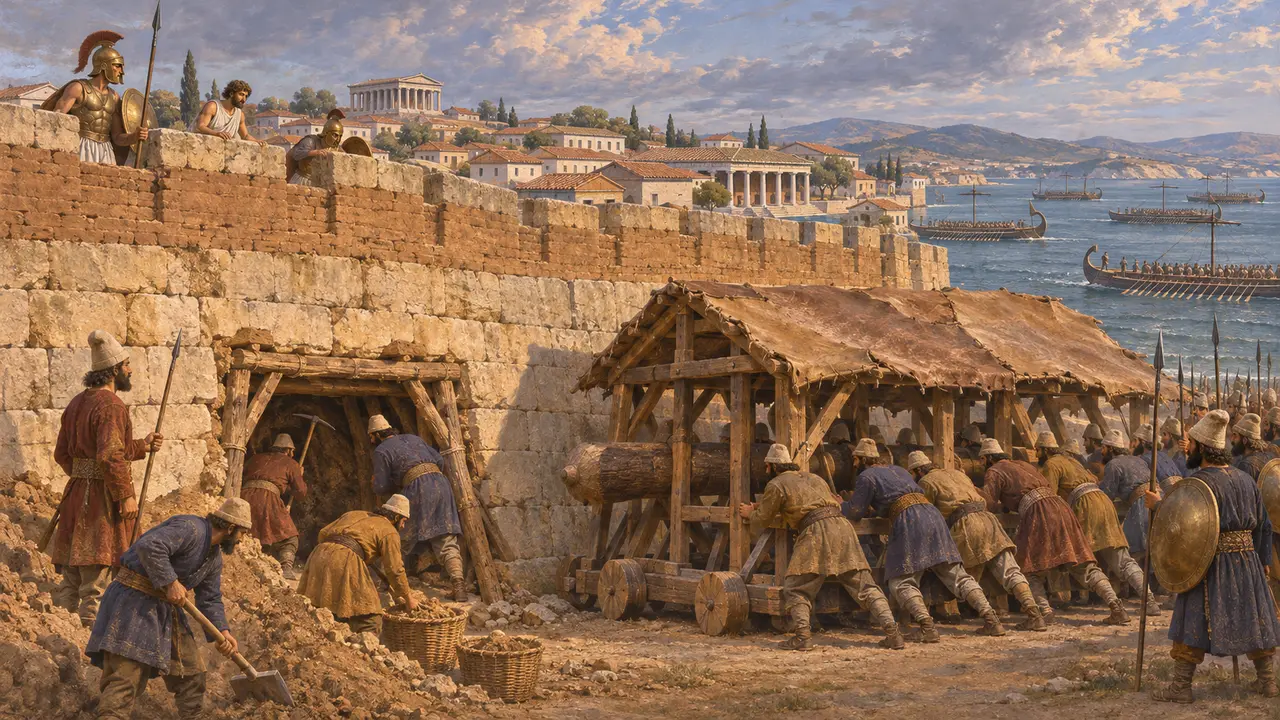
Ancient accountHerodotus says that after the Ionian fleet scattered at Lade, the Persian commanders closed on Miletus by land and sea. They dug mines under the walls and brought up every kind of siege engine. They took the city in the sixth year after Aristagoras had begun the revolt. Herodotus gives no figure for the besieging army and names no Persian commander for the final assault.
Herodotus 6.18
Death, slavery and exile
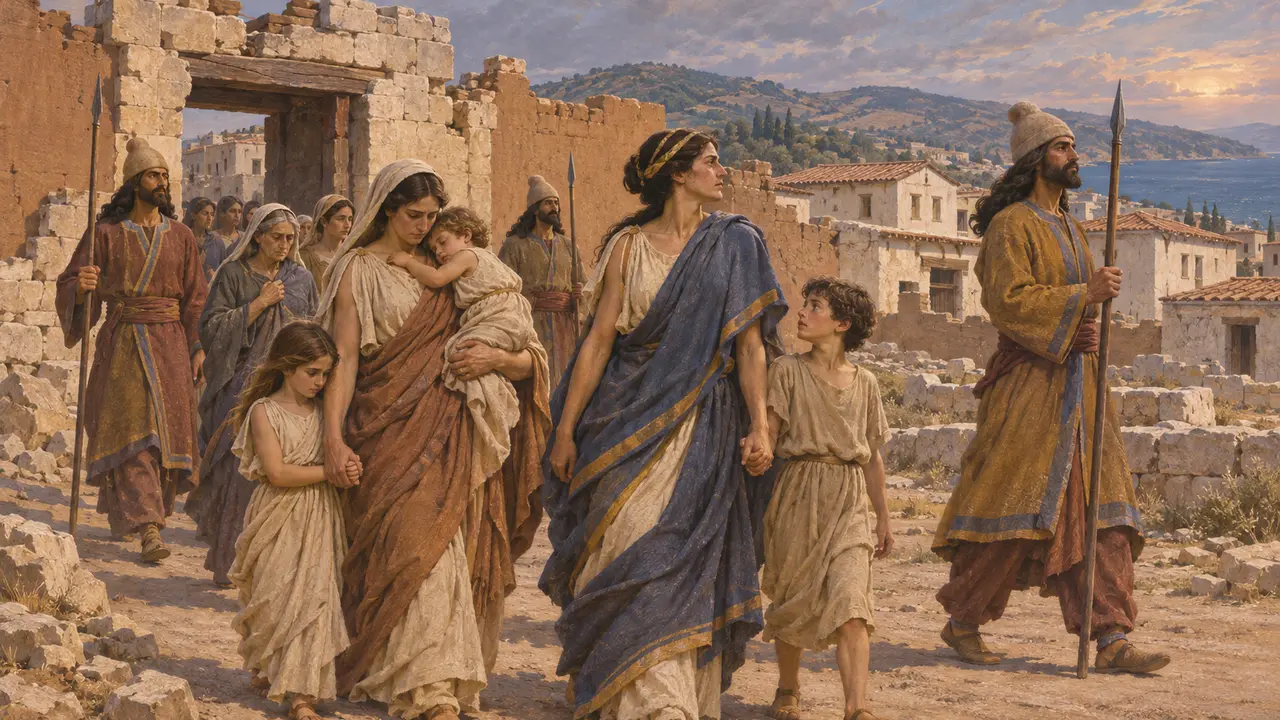
Ancient accountHerodotus says the Persians, whom he describes as long-haired, killed most of the Milesian men and made the women and children slaves. The captives were taken to Susa. Darius did them no further harm and settled them at Ampe, on the Persian Gulf near the mouth of the Tigris. The Persians kept the city and its plain for themselves and gave the hill country to Carians from Pedasa.
Herodotus 6.19-20
A bronze knucklebone from Susa
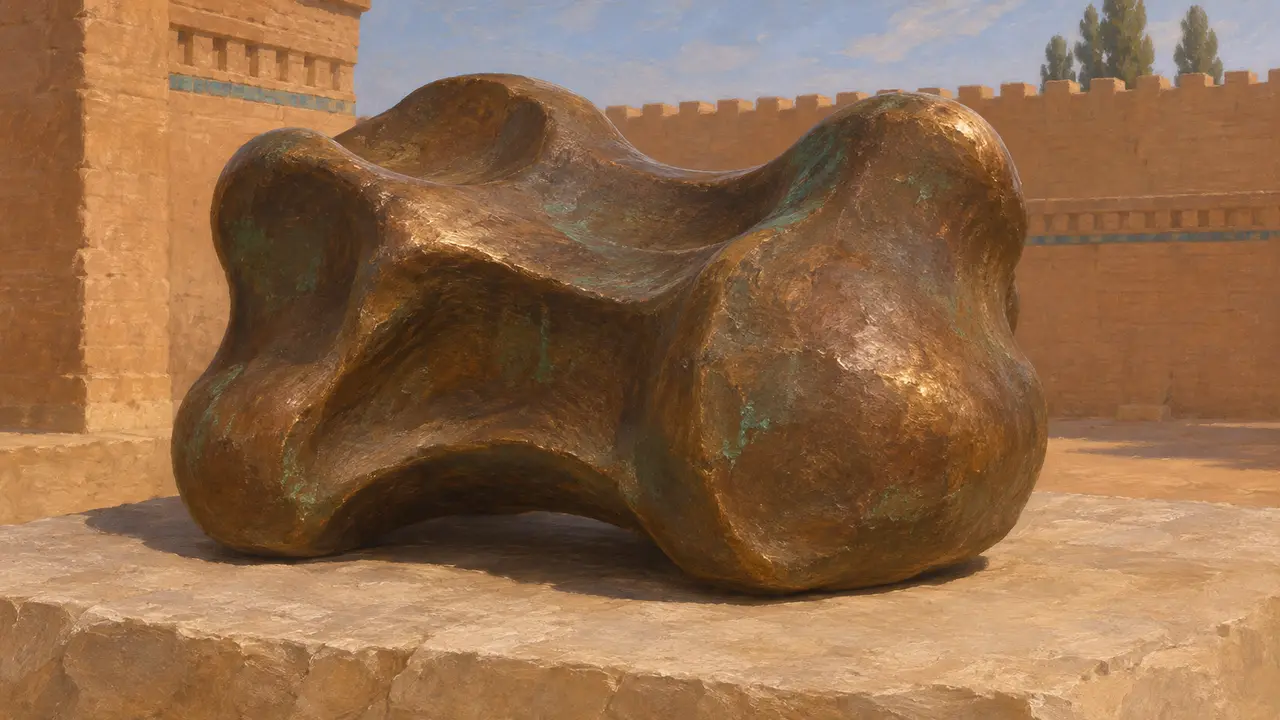
In the recordFrench excavators at Susa found a large bronze weight in the shape of a knucklebone, which is now in the Louvre. Its Greek inscription records a dedication to Apollo, and most scholars think it was carried off from his sanctuary at Didyma. If so, it is a rare physical trace of the plunder Herodotus describes. The inscription itself does not say when the weight was taken or by whom.
Bronze astragal from the Susa excavations (J. de Morgan), Louvre
When Didyma burned and how empty Miletus was
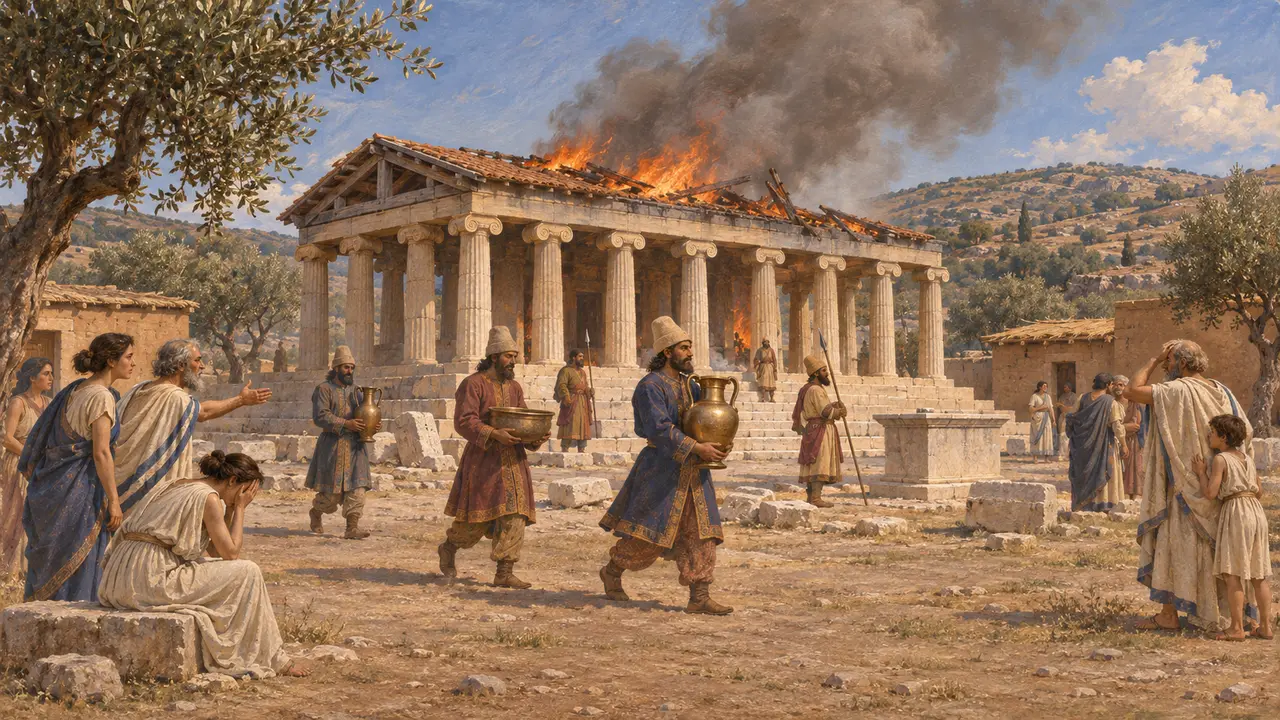
DisputedHerodotus places the plunder and burning of the shrine at Didyma in 494. Strabo instead says Xerxes burned it, after the Branchidae priests handed over its treasure and went east with him. Excavators find destruction at Miletus, yet Herodotus says Milesians serving the Persians turned against them at Mycale in 479. The city was probably not wholly emptied.
Herodotus 6.19; Strabo, Geography 14.1.5; Herodotus 9.99, 9.104
The Capture of Miletus on the Athenian stage
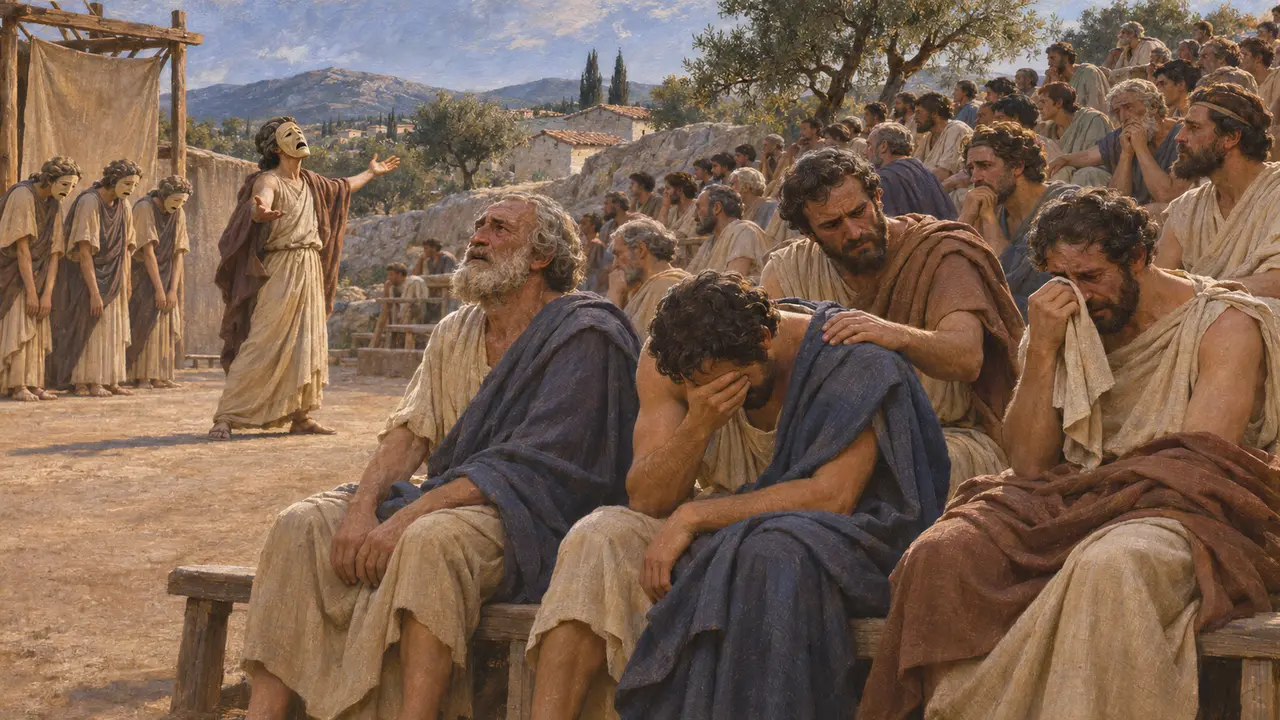
Ancient accountHerodotus says the Athenians grieved deeply at the news. When the poet Phrynichus staged a tragedy called The Capture of Miletus, the audience wept. The Athenians then fined him a thousand drachmas for reminding them of a disaster that touched them closely, and they forbade anyone to perform the play again.
Herodotus 6.21
Sources
- Herodotus, Histories 6.18-21
- Strabo, Geography 14.1.5
- P. Briant, From Cyrus to Alexander, 2002
- A. Greaves, Miletos: A History, 2002
- O. Murray, 'The Ionian Revolt', Cambridge Ancient History IV, 1988