Salamis (Cyprus)
Greek-speaking royal city on the east coast of Cyprus, site of a land battle about 497 BCE
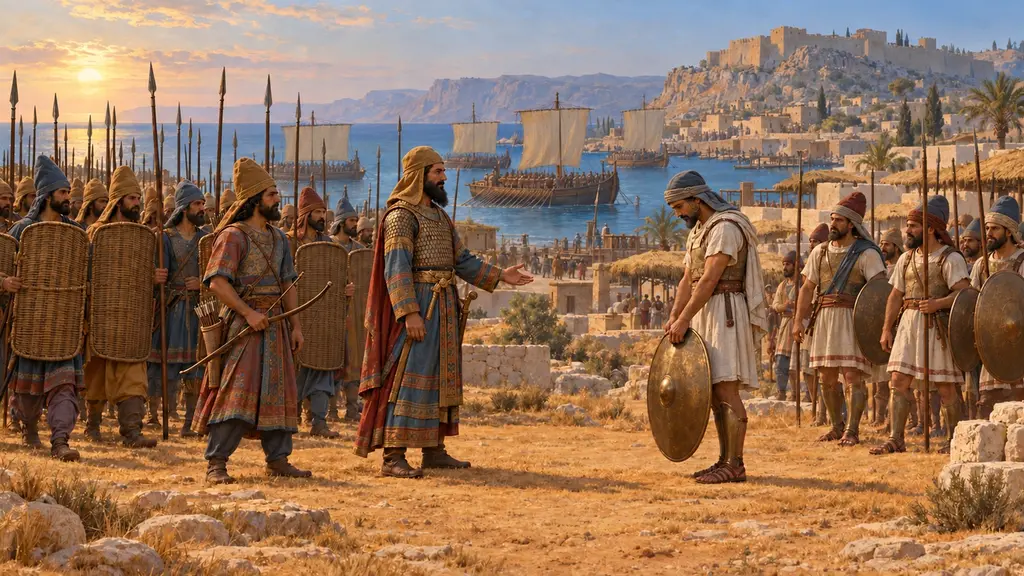
Salamis was the main Greek city of eastern Cyprus and the seat of Onesilus, who led the Cypriot revolt against Persia during the Ionian Revolt. Herodotus places the decisive land battle of that revolt on the plain by the city. The game calls it the city of Onesilus; Herodotus says he took it from his brother Gorgus, the ruling king.
In the game: Salamis is named in the event articles on the revolt of Cyprus and the Ionian Revolt. It has no mechanic of its own. The game presents it as the city of Onesilus, which simplifies Herodotus's story of his seizing it from Gorgus.
Onesilus seizes the city
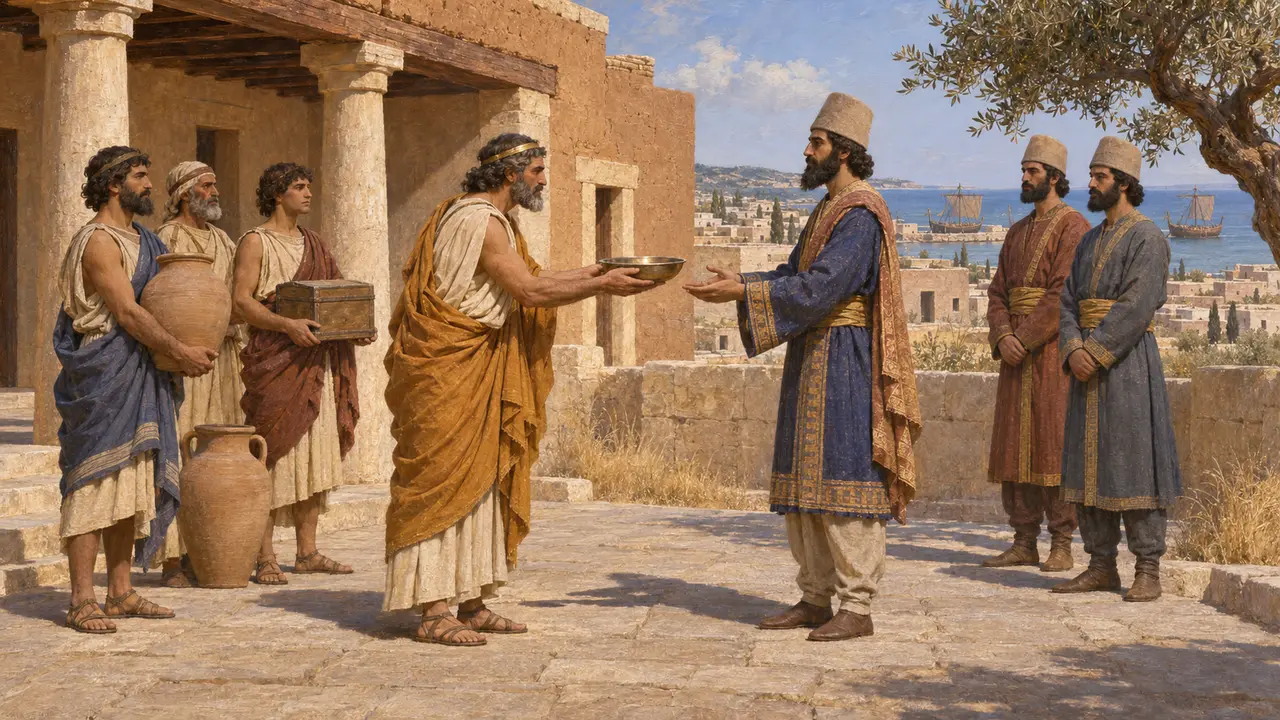
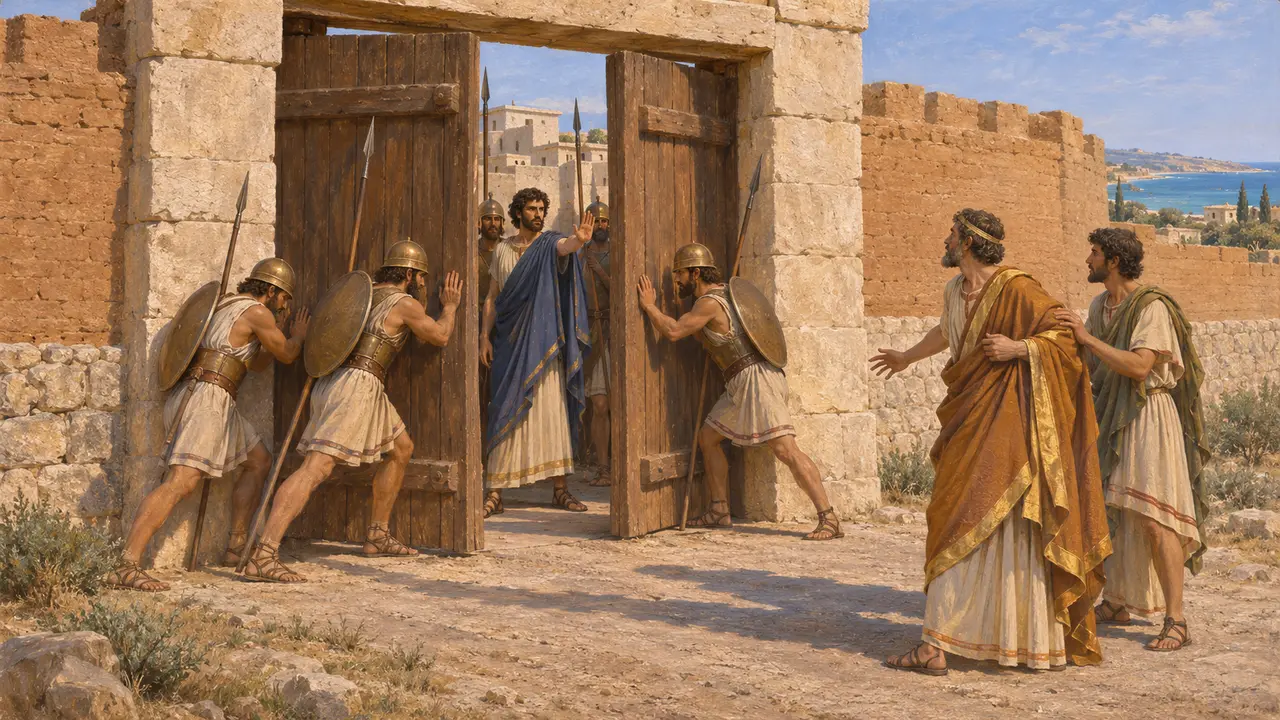
Ancient accountHerodotus tells how Onesilus, Gorgus's younger brother, urged Gorgus to join the Ionians and rebel. When Gorgus refused, Onesilus shut him out of the city and took power, and Gorgus went over to the Persians. Herodotus says all Cyprus except Amathus joined the revolt.
Herodotus 5.104-5.105
The land battle on the plain
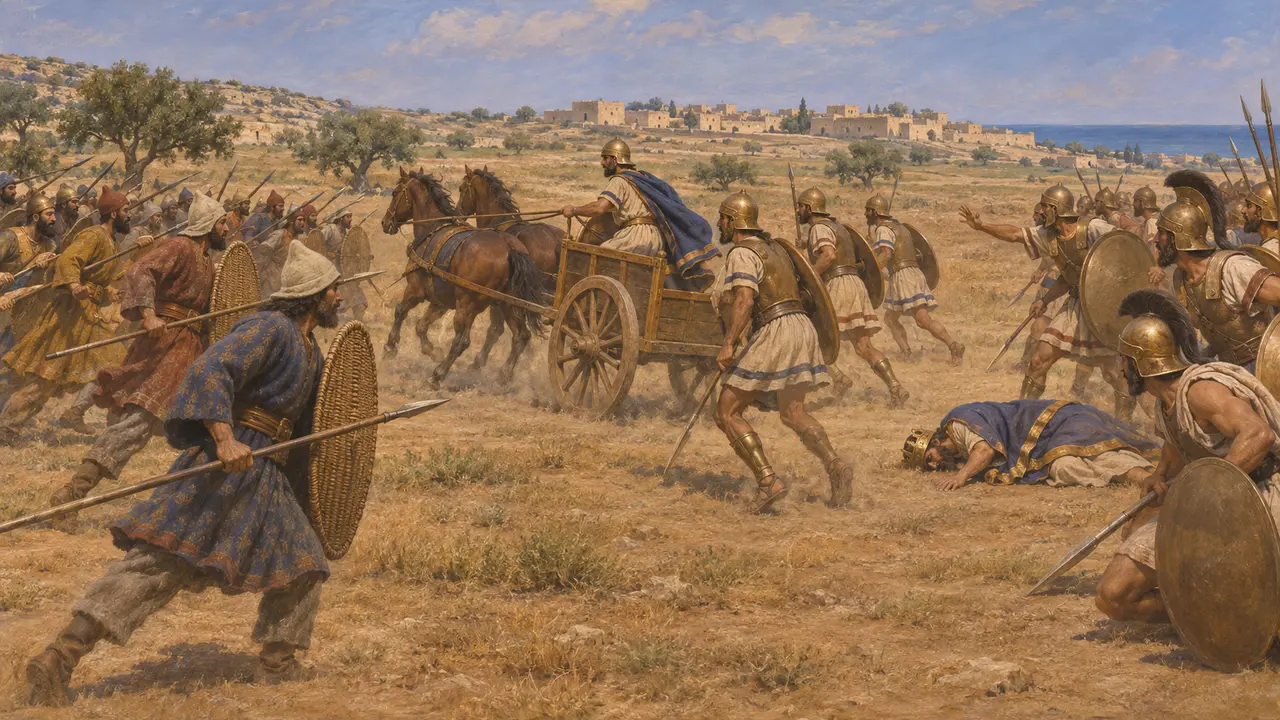
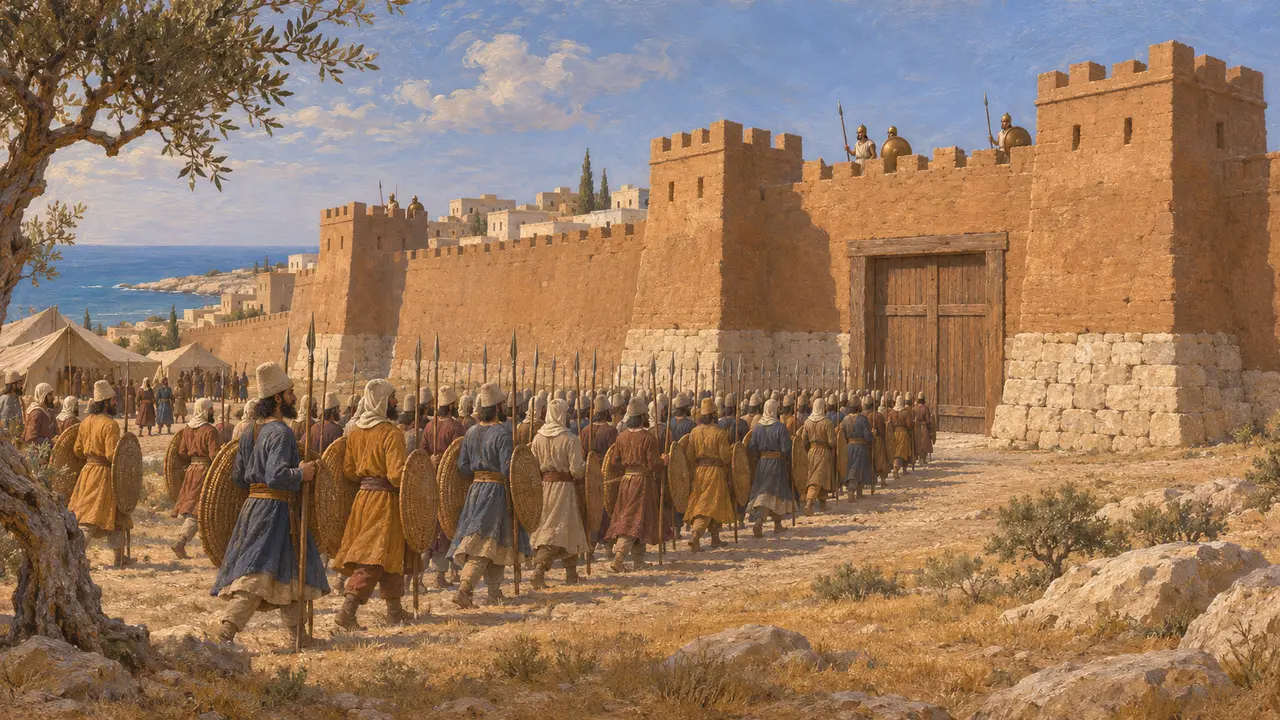
Ancient accountHerodotus says a Persian army crossed from Cilicia while a Phoenician fleet sailed round to Cyprus. The Ionians defeated the Phoenicians at sea, but the Persians prevailed on land by the plain of Salamis. He says Onesilus was killed in the fighting, and that the defection of the Curium contingent and of the Salamis chariots decided the day.
Herodotus 5.108-5.113
What followed
Ancient accountHerodotus says the Persians besieged the rebel cities one by one and brought the whole island back under their rule within a year of the revolt's start. His account of Cyprus ends there, and he says nothing more about Salamis.
Herodotus 5.115-5.116
Reading the story
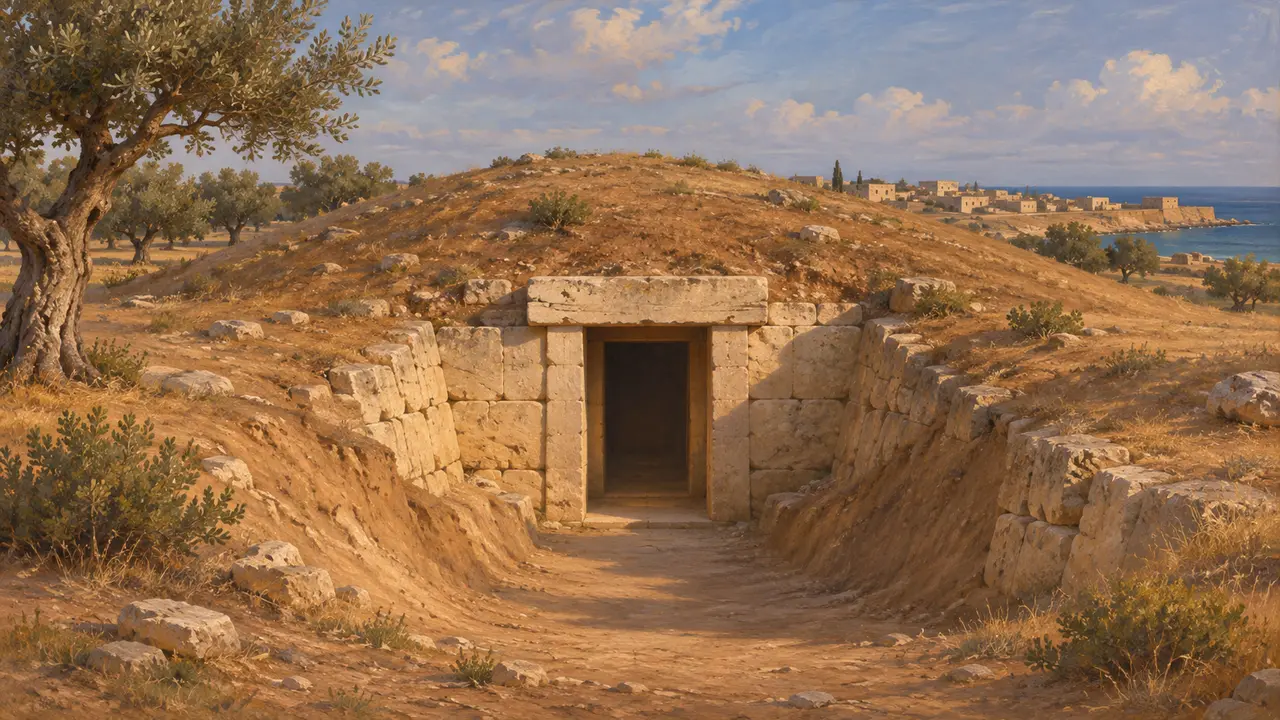
DisputedHerodotus is the only continuous source for the revolt of Cyprus, and he writes from a Greek point of view. Modern historians generally accept the outline but debate the details, such as the treachery at Curium and the exact dates. Excavation at Salamis has uncovered rich tombs of the eighth and seventh centuries, but nothing there confirms the battle narrative.
P. Briant, From Cyrus to Alexander, 2002
Sources
- Herodotus 5.104-5.105
- Herodotus 5.108-5.116
- Herodotus 3.19
- Herodotus 3.91
- P. Briant, From Cyrus to Alexander, 2002