Onesilus of Salamis
Cypriot leader of the revolt of Cyprus, killed in battle near Salamis, about 497 BCE
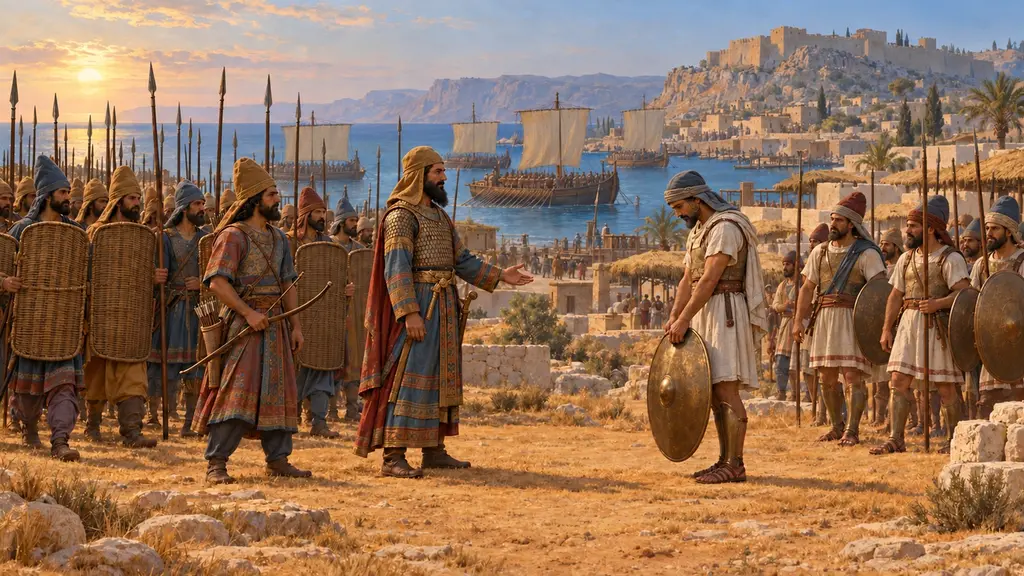
Onesilus was the younger brother of Gorgus, king of Salamis on Cyprus, and the man who took the island's cities into the Ionian Revolt. Herodotus is the main source for him. The revolt lasted about a year before Persian forces beat the Cypriots on land and the Ionian fleet sailed home.
In the game: The game names Onesilus only in the event articles, chiefly the revolt of Cyprus. He has no figure, level or mechanic of his own.
Brother of the king of Salamis
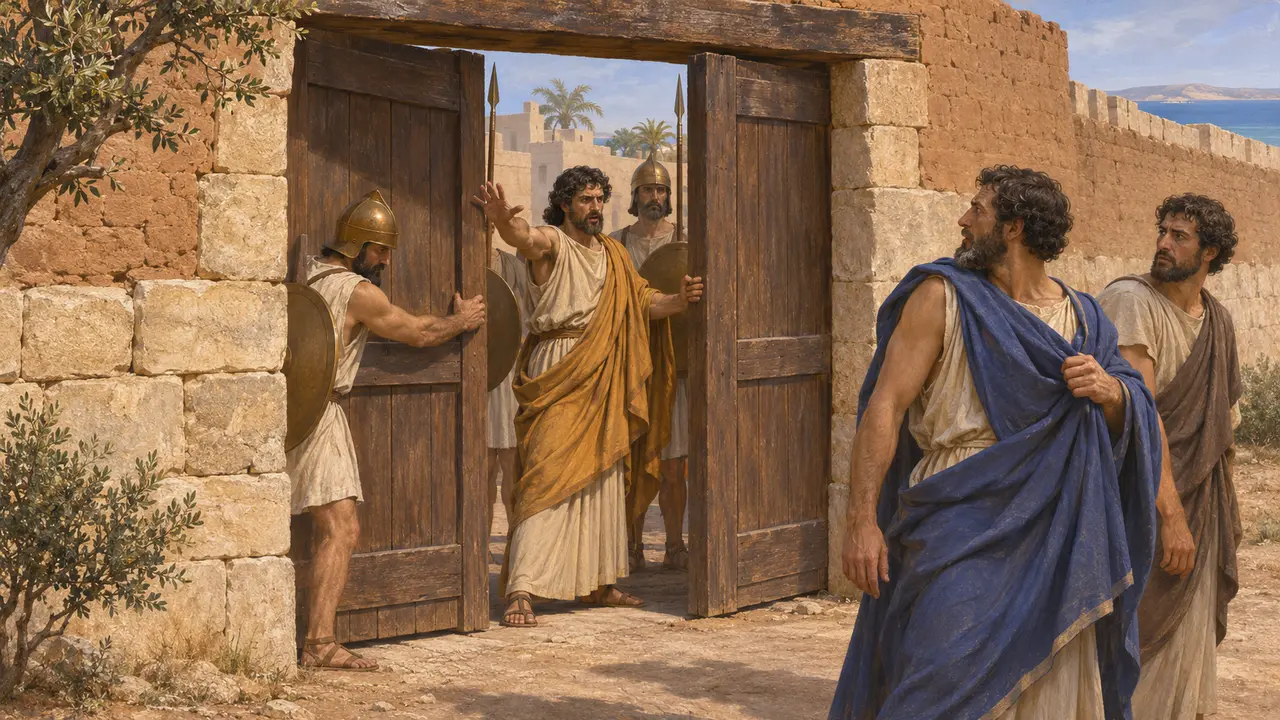
Ancient accountHerodotus says Onesilus was the son of Chersis and the brother of Gorgus, king of Salamis on Cyprus. He had often urged Gorgus to revolt, and when Gorgus refused he shut him out of the city and took power. Gorgus fled to the Medes, as Herodotus calls the Persians.
Herodotus 5.104
The rising on Cyprus
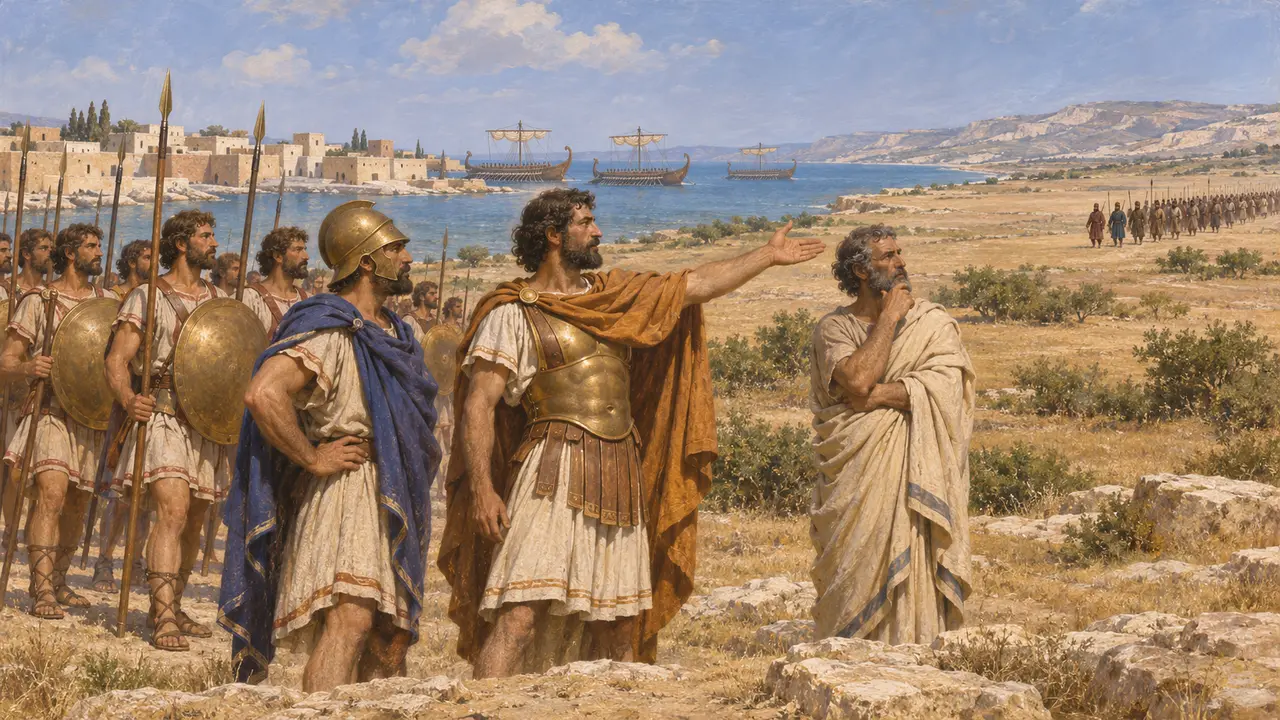
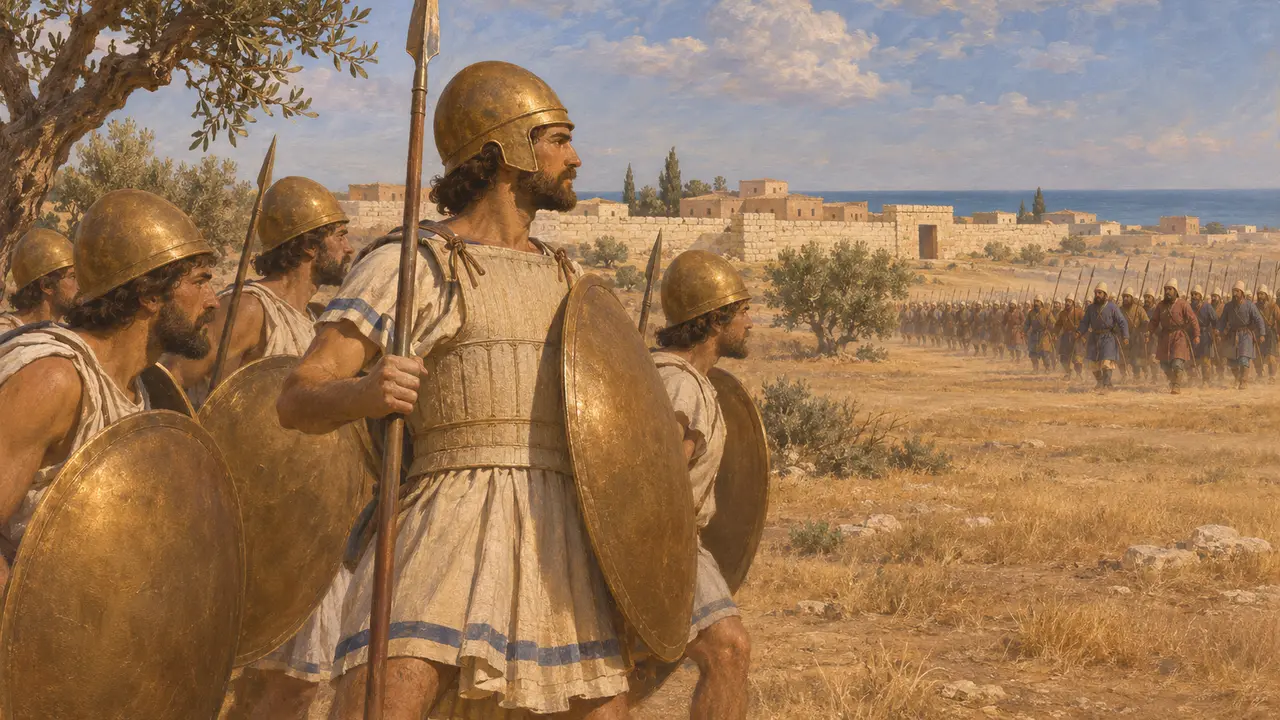
Ancient accountHerodotus reports that Onesilus persuaded the Cypriot cities except Amathus to revolt, and that he besieged Amathus. A Persian force then crossed to the island, and the Ionian fleet arrived to help. The Cypriot leaders chose to meet the Persians on land and leave the sea to the Ionians.
Herodotus 5.104-109
The battle before Salamis
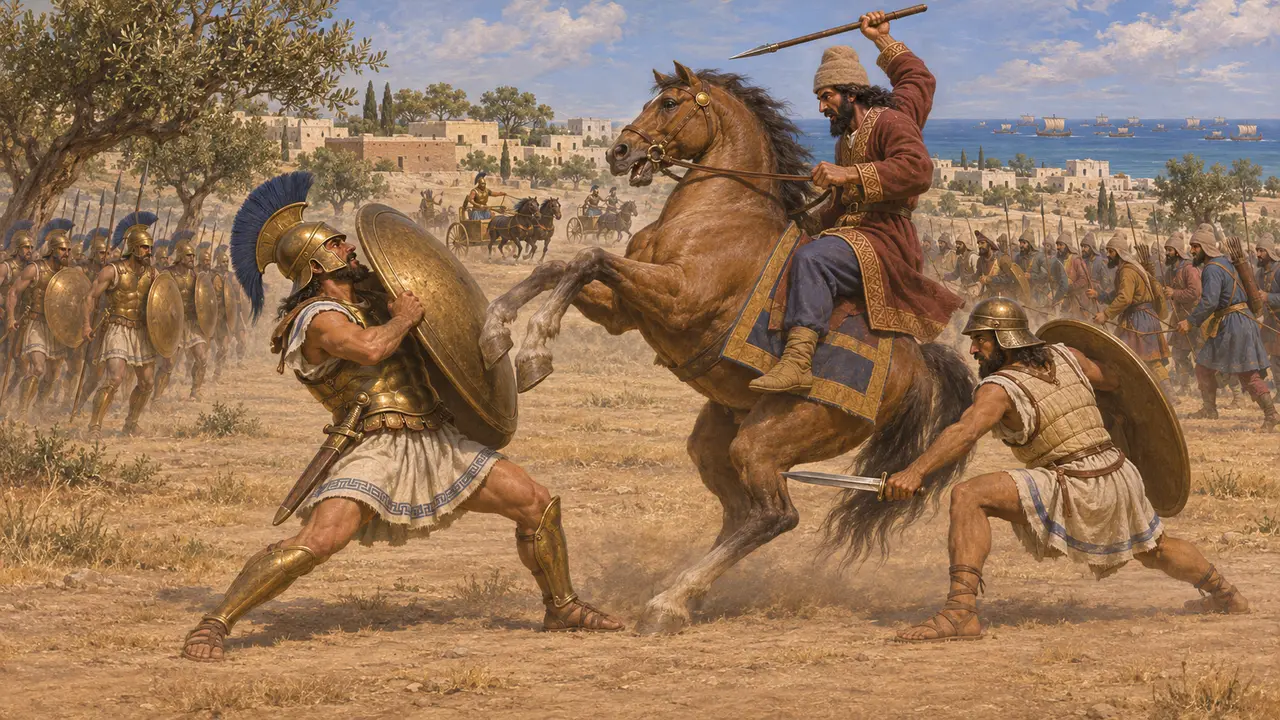
Ancient accountHerodotus says the Ionians won the sea battle. On land Onesilus faced the Persian commander Artybius, whose horse was trained to rear against hoplites, and Onesilus's Carian shield-bearer cut the horse down. Herodotus adds that the Curians went over to the Persians, the Salaminian chariots followed, and Onesilus was killed along with Aristocyprus, king of Soli.
Herodotus 5.110-113
After his death
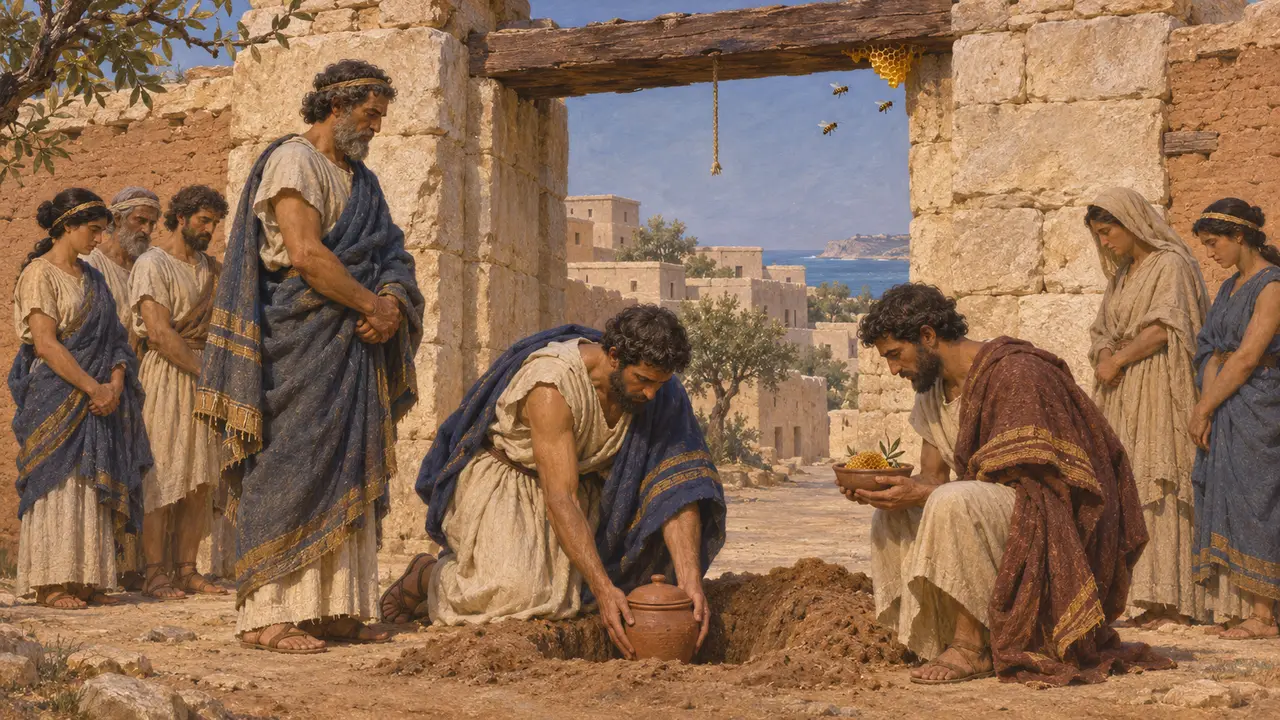
Ancient accountHerodotus says the Amathusians cut off Onesilus's head, took it to Amathus and hung it above their gate. It filled with bees, and an oracle told them to bury it and honour him yearly as a hero. He reports the rest as the end of the revolt: the Persians retook the Cypriot cities one by one, and Cyprus was enslaved again after a year of freedom.
Herodotus 5.114-116
What is known and not known
DisputedNo Persian or Cypriot text of the time is known to name Onesilus, so the story rests on Herodotus. Historians accept the revolt on Cyprus as real, but details such as the horse duel and the bees probably owe something to storytelling. The date, about 497, is inferred from the sequence of the Ionian Revolt.
P. Briant, From Cyrus to Alexander, 2002
Sources
- Herodotus 5.104-116
- P. Briant, From Cyrus to Alexander, 2002