Encyclopedia › Battles and events
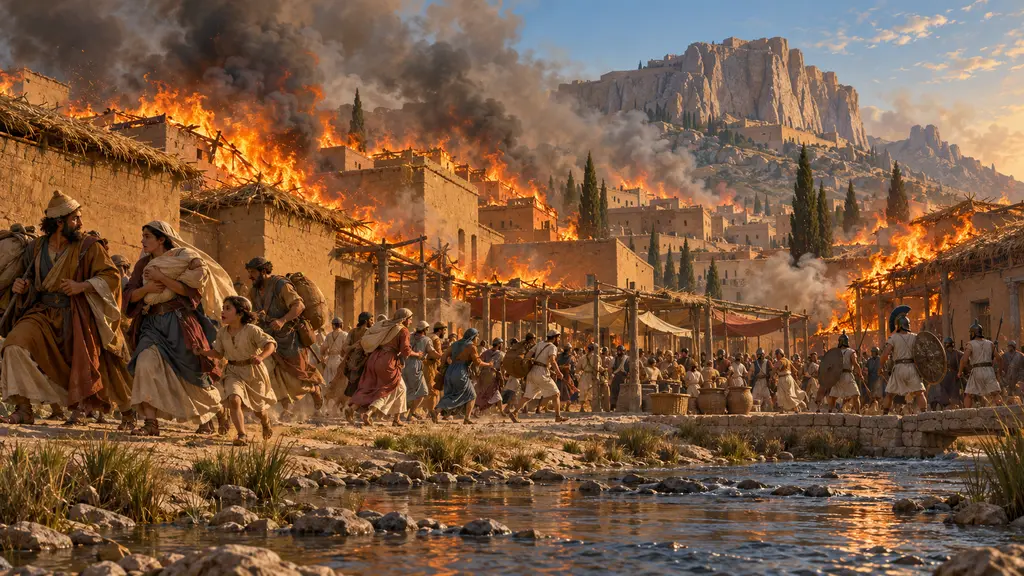
The battle of Ephesus
Persian victory over the Ionians and their allies near Ephesus, Ionia, 498 BCE
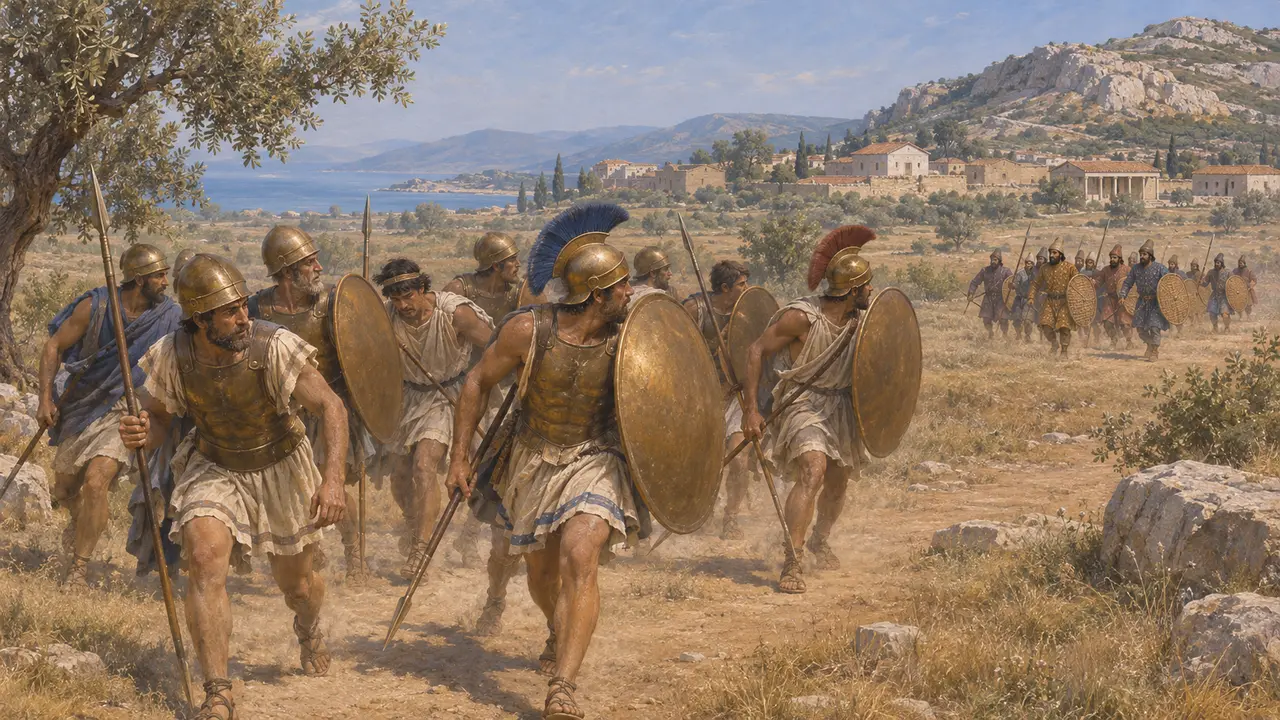
After burning Sardis, the Ionian rebels and their Athenian and Eretrian allies fell back to the coast. Herodotus says Persian troops caught them near Ephesus and beat them badly. Soon afterwards Athens withdrew from the Ionian Revolt, and the rebels fought on without Athenian help.
In the game: The game lists it as a battle of 498 in which the retreating Greeks were beaten and the Athenians went home for good. This follows Herodotus; the game does not show Charon's version, in which no defeat took place.
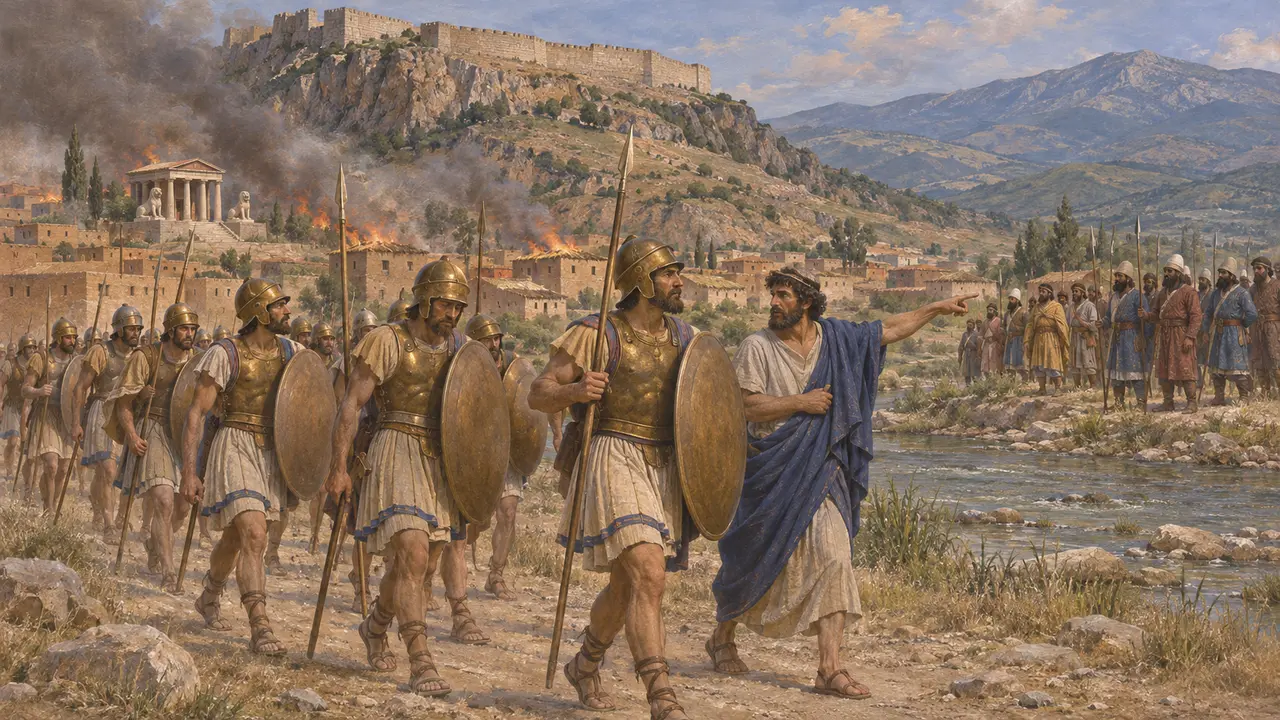
The march on Sardis
Ancient accountHerodotus says the Ionians sailed to Ephesus, left their ships at Coressus and marched inland with Ephesian guides along the Cayster and over Mount Tmolus. They took the lower city of Sardis, but Artaphernes held the citadel. A fire spread through the reed-roofed houses and burned the temple of the goddess Cybebe. Faced with the Lydians and Persians gathered by the Pactolus, the Greeks withdrew towards the coast.
Herodotus 5.100-102
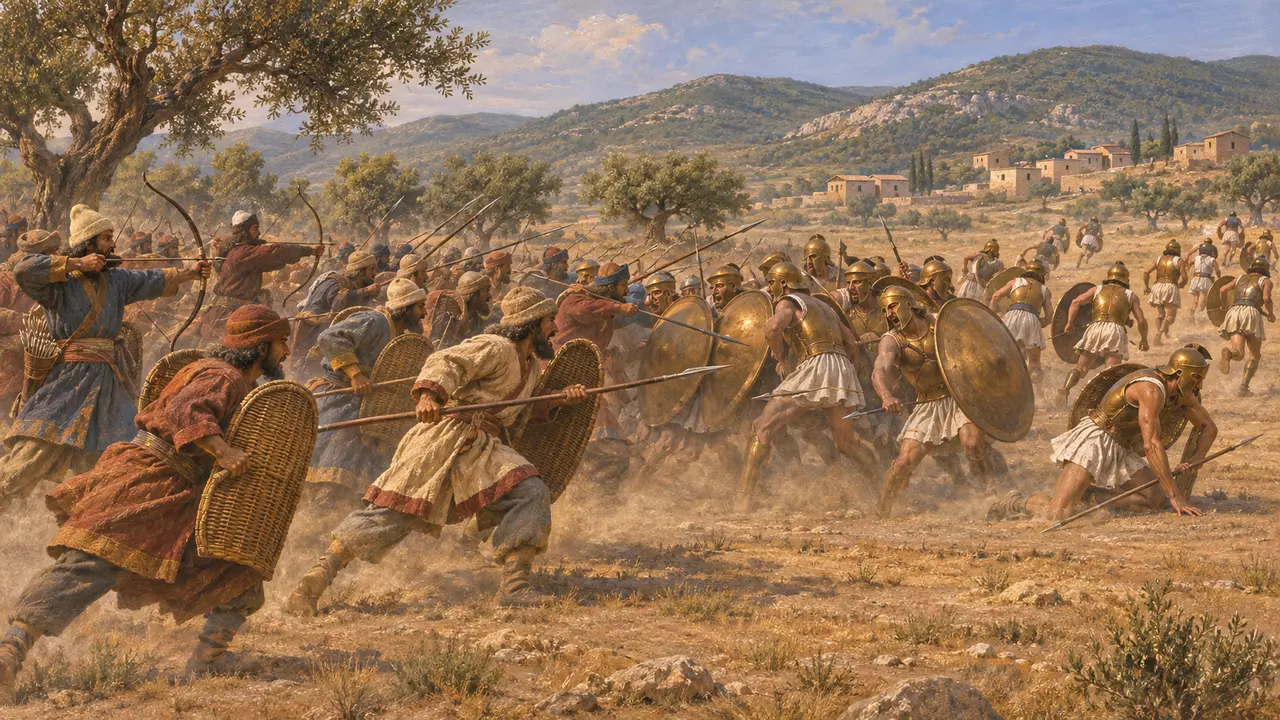
The pursuit and the fight near Ephesus
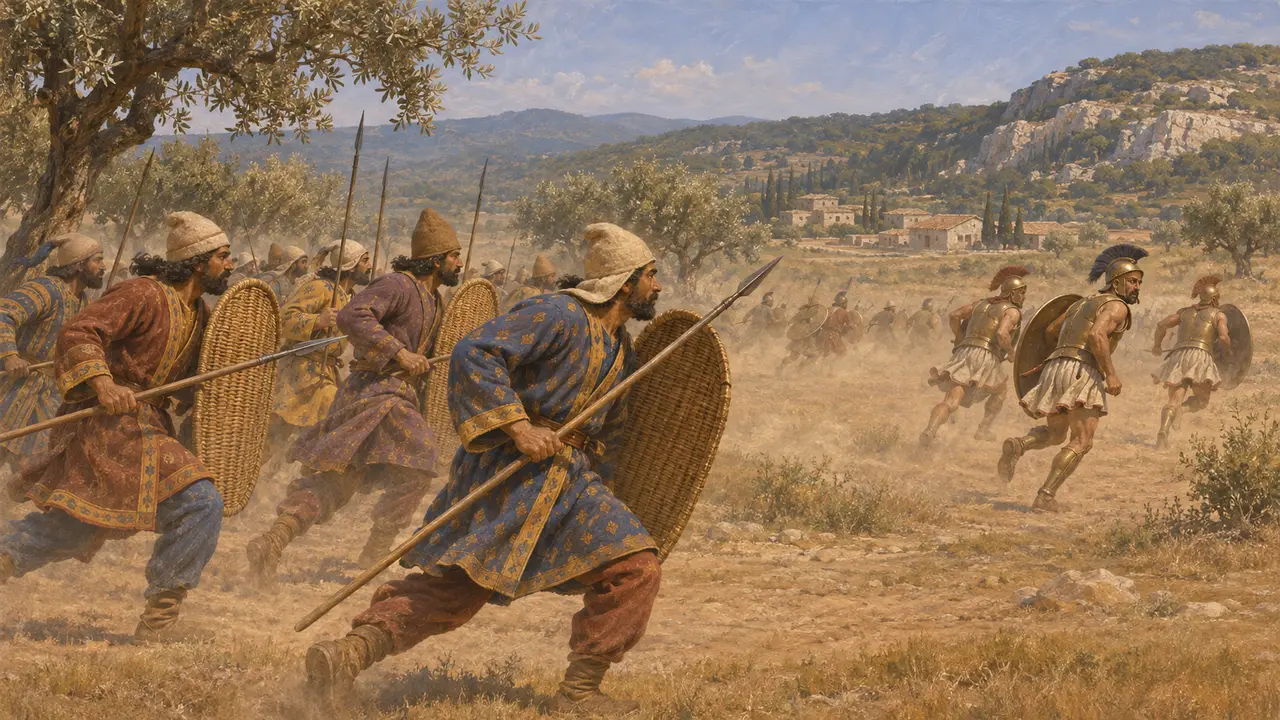
Ancient accountHerodotus says the Persians who held lands west of the Halys came to help Sardis, found the Greeks gone and followed their tracks. They overtook them at Ephesus, where the Ionians formed up and were heavily defeated. Many were killed, among them Eualcides, general of the Eretrians and a victor at the games, whom the poet Simonides had praised. The survivors scattered to their own cities.
Herodotus 5.102
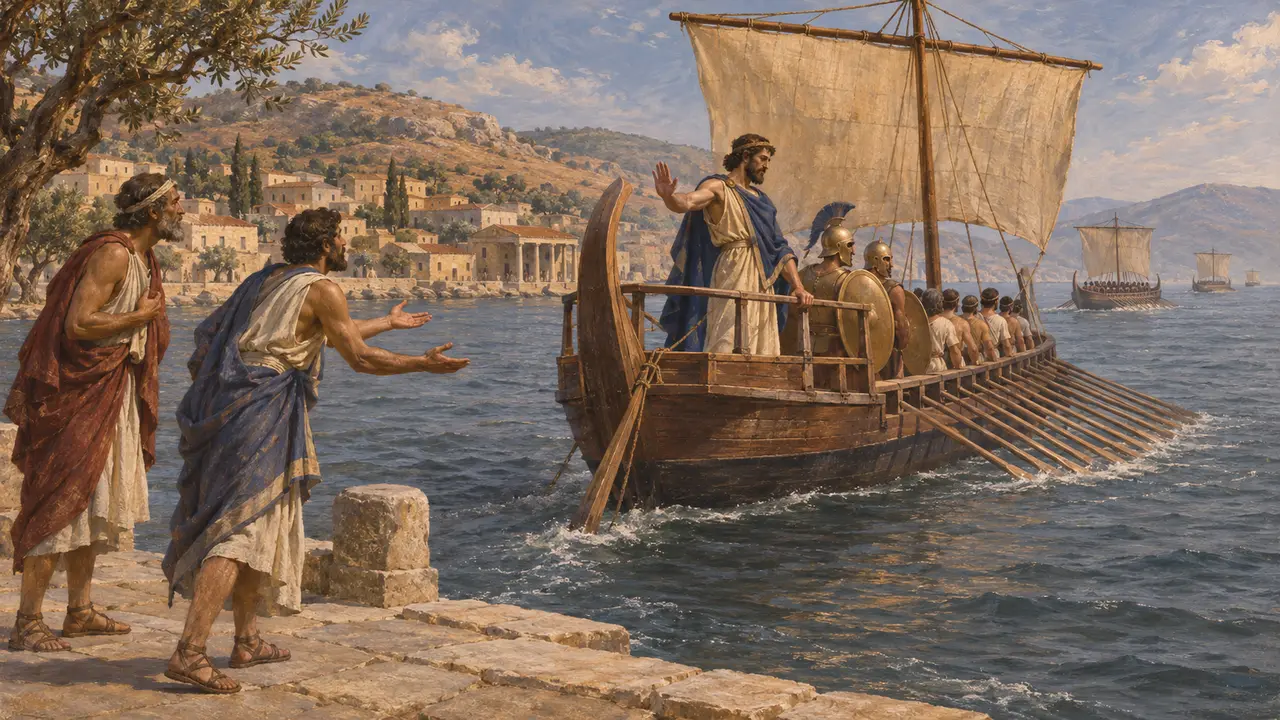
Athens leaves the war
Ancient accountHerodotus says the Athenians then abandoned the Ionians completely and refused to help again, although Aristagoras sent messengers asking them to return. He had already called the twenty Athenian ships the beginning of troubles for Greeks and barbarians. He links Darius's anger against Athens to the burning of Sardis, not to the defeat.
Herodotus 5.97; 5.103; 5.105
Was there a defeat at all
DisputedPlutarch accused Herodotus of inventing or exaggerating the defeat. He cited Charon of Lampsacus, who told of the Athenian ships, the capture of Sardis except the royal wall, and a return to Miletus, with no battle at Ephesus. Most modern historians still accept a real setback near Ephesus but treat its scale and details as uncertain.
Plutarch, On the Malice of Herodotus
Date and the silent Persian record
DisputedThe raid on Sardis and the fight near Ephesus are usually dated to 498, though some historians prefer 499. No Persian inscription or tablet mentions either event, so the whole story rests on Greek writers. How the Persian commanders saw the action, and how many troops took part on each side, is not known.
O. Murray, 'The Ionian Revolt', Cambridge Ancient History IV, 1988
Sources
- Herodotus 5.97-105
- Plutarch, On the Malice of Herodotus
- O. Murray, 'The Ionian Revolt', Cambridge Ancient History IV, 1988
- P. Briant, From Cyrus to Alexander, 2002