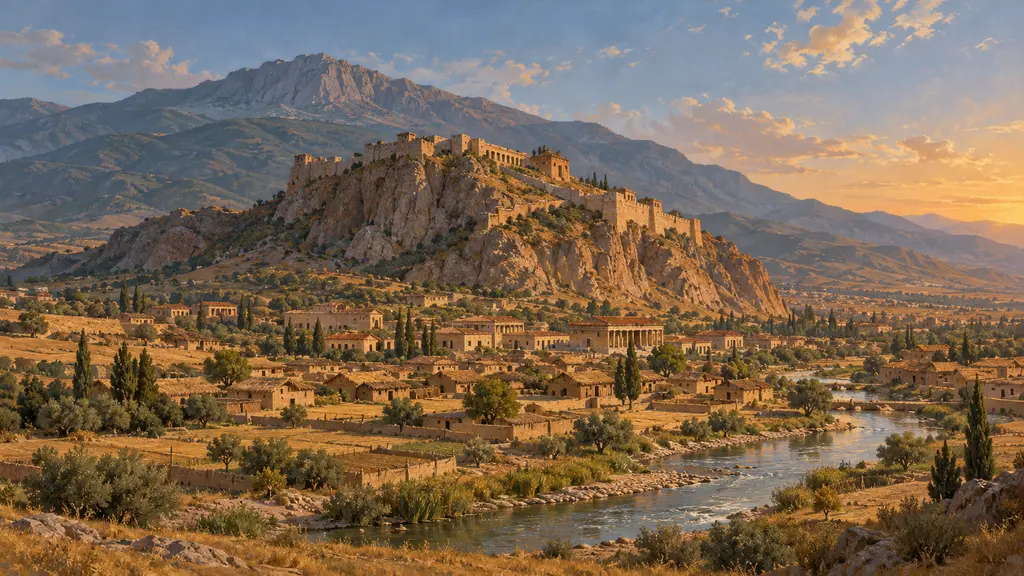
Mount Tmolus
The mountain above Sardis in Lydia, source of the Pactolus's gold, 6th-5th century BCE
Tmolus, now Bozdağ, is the mountain range that rises south of Sardis in western Lydia. The citadel of Sardis stands on one of its spurs, and the Pactolus runs down from it through the city. Herodotus counts the gold dust it sends down among the few marvels of Lydia.
In the game: Tmolus stands behind the Sardis level: the Citadel of Sardis is built with its back to the mountain, and the townsfolk speak of its timber, its vineyards and the road over it.
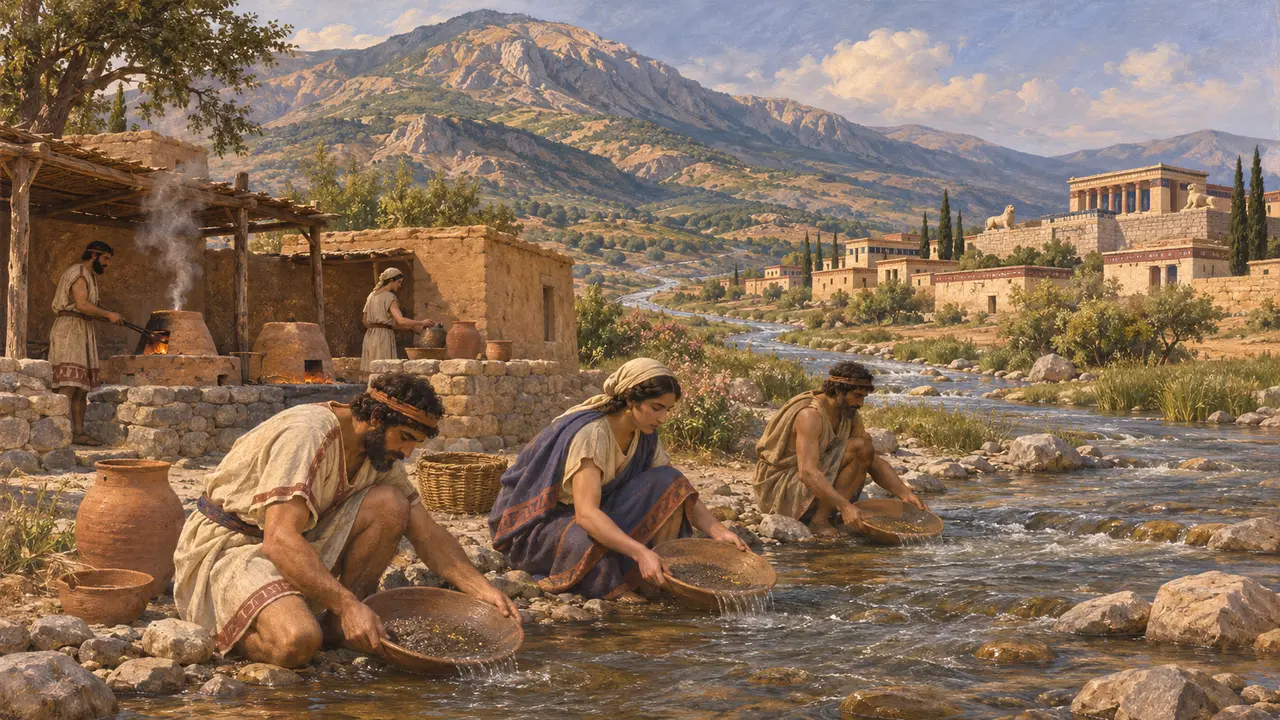
The mountain of gold dust
Ancient accountHerodotus says Lydia has few marvels to record except the gold dust carried down from Tmolus. He also says the Pactolus, which ran through the market of Sardis, brought the gold down from the mountain. Excavators have found the refinery by the Pactolus where the Lydians parted gold from silver, so the gold of the river is real, though Herodotus says nothing of how much remained in his time.
Herodotus 1.93, 5.101
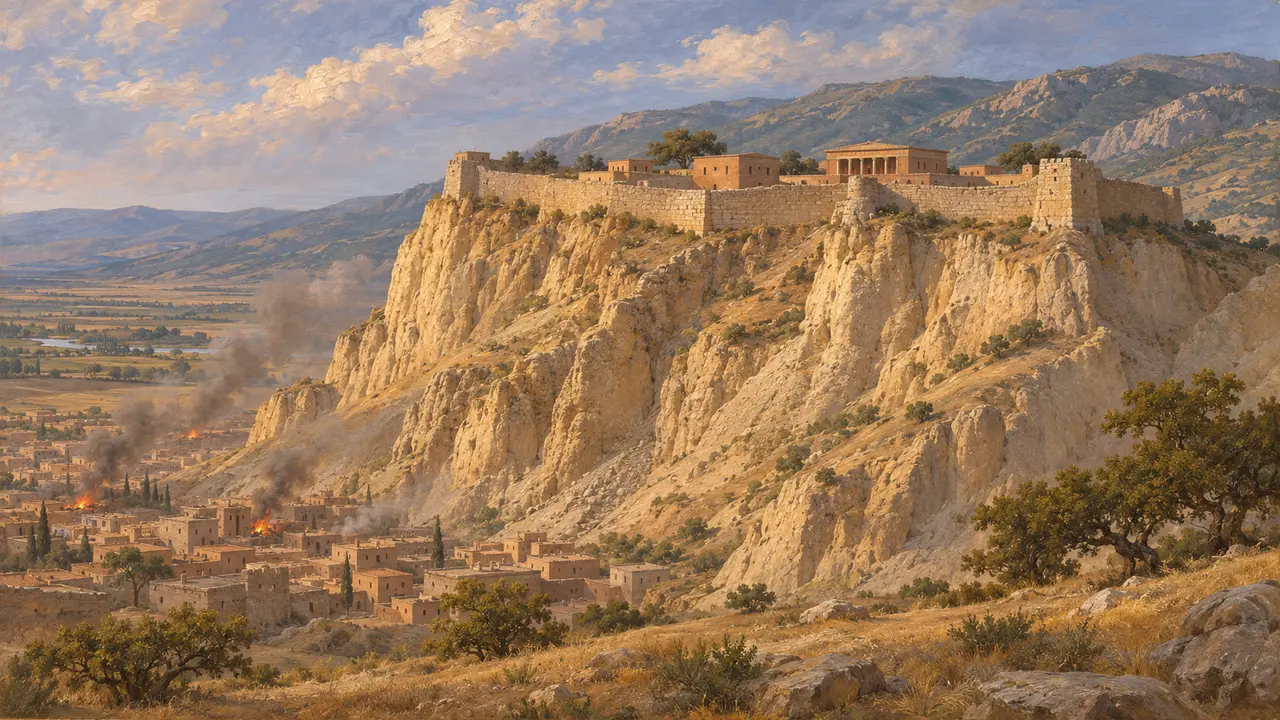
The citadel on its spur
Ancient accountThe acropolis of Sardis sits on a steep spur of Tmolus above the plain. Herodotus tells how Cyrus's army took it about 547, when a Mardian soldier climbed the side the Lydians thought too sheer to need a guard. In 498 the same citadel held out for Artaphernes while the lower city burned.
Herodotus 1.84, 5.100
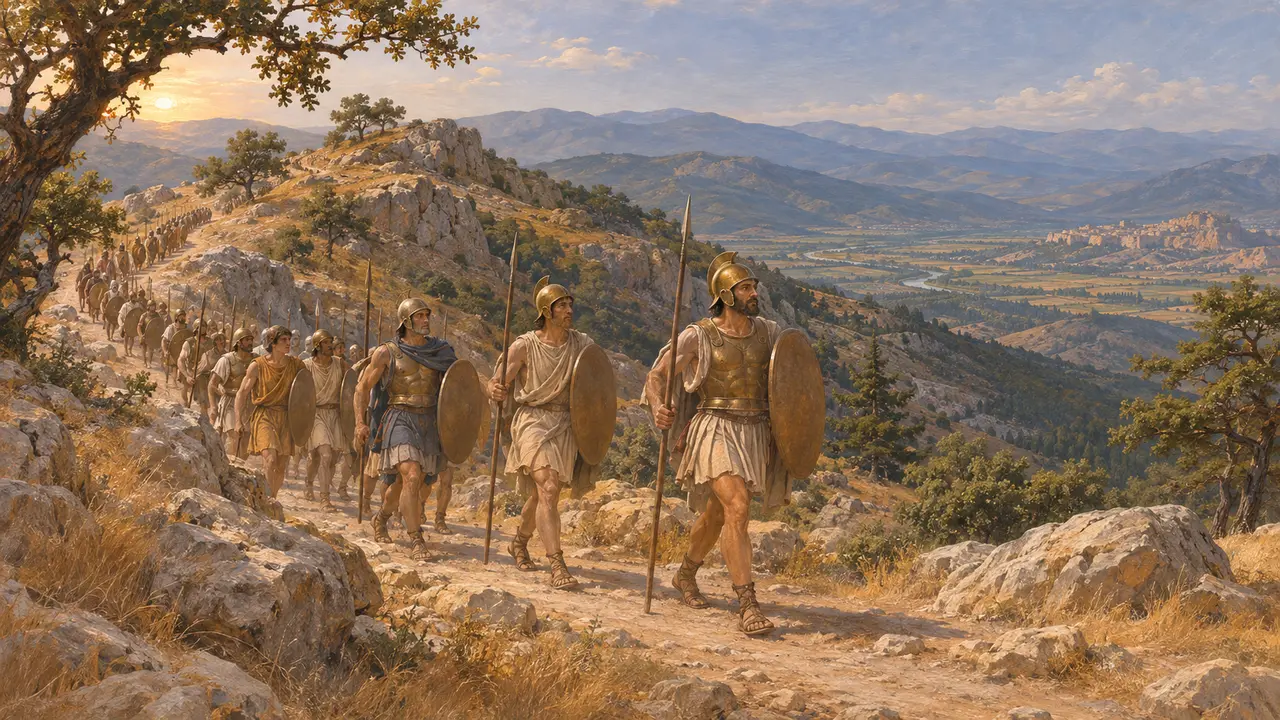
The road over the mountain
Ancient accountIn 498 the Ionians and their Athenian and Eretrian allies left their ships at Ephesus, marched up the Cayster valley and crossed Tmolus to come down on Sardis. After the city burned they fell back the same way and were beaten near Ephesus. The route shows how close the Aegean coast lay to the satrap's seat.
Herodotus 5.100-102
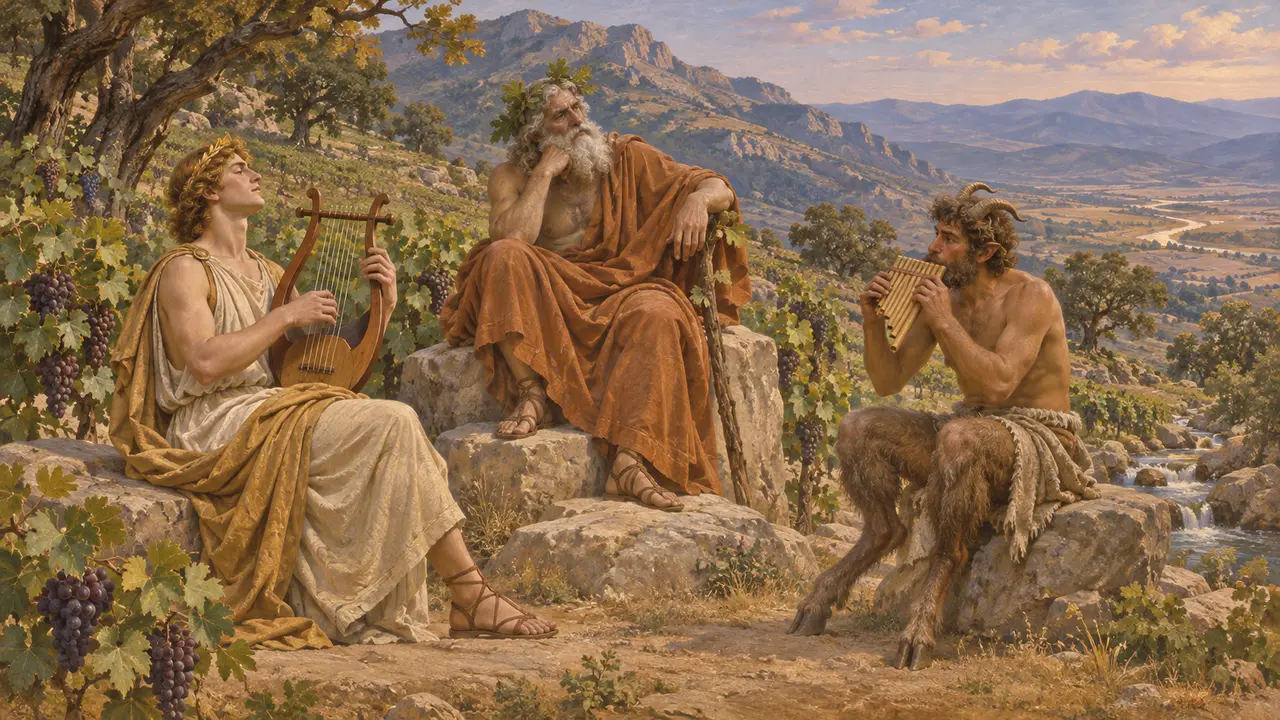
Vines and the god of the mountain
Later legendLater Greek and Roman writers praise the wine of Tmolus and make the mountain a haunt of Dionysus; Ovid even tells of Tmolus judging a contest between Apollo and Pan. These stories come long after the Persian period and say nothing of the Lydian or Persian Tmolus itself.
Ovid, Metamorphoses 11.150-171; Virgil, Georgics 2.98
Sources
- Herodotus 1.84, 1.93, 5.100-102
- C. H. Greenewalt and others, excavations at Sardis (Archaeological Exploration of Sardis)
- Ovid, Metamorphoses 11.150-171