Encyclopedia › Battles and events
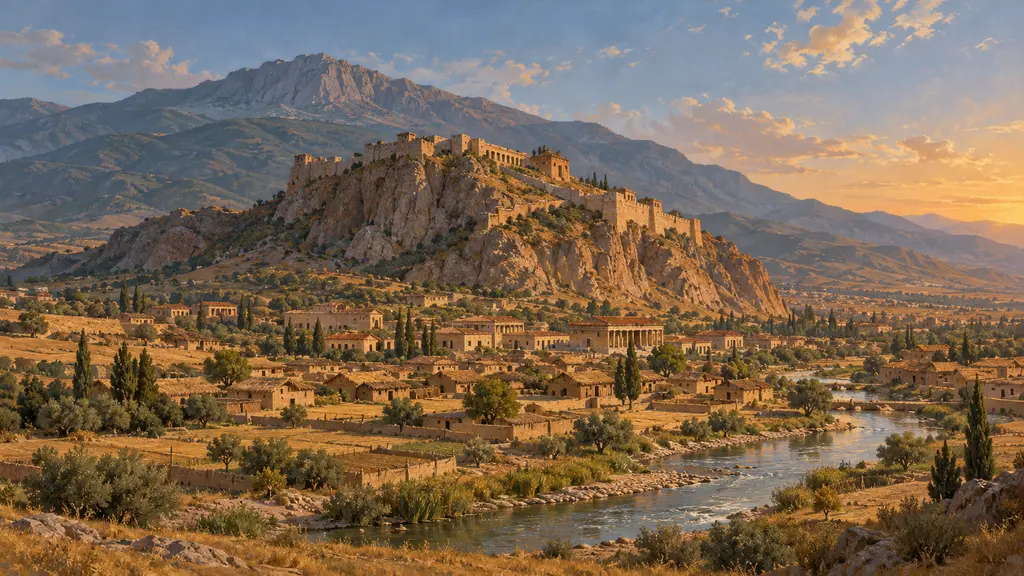
The fall of Sardis
Cyrus's capture of the Lydian capital from Croesus, about 547-546 BCE
In the game: Level 1: The Founder's Tomb
Croesus of Lydia crossed the Halys river to attack Cyrus and was driven back to his capital, Sardis, where the Persians beat his cavalry and took the citadel. The fall of Lydia gave Cyrus western Anatolia, its wealth and the road to the Greek cities of the Aegean coast, which his generals conquered in the following years.
In the game: The game follows Herodotus: camels turn the Lydian horse, a climber takes the citadel, and Croesus lives on as adviser. Its firm date of 546 is the traditional one, and Bacchylides gives Croesus a different fate.
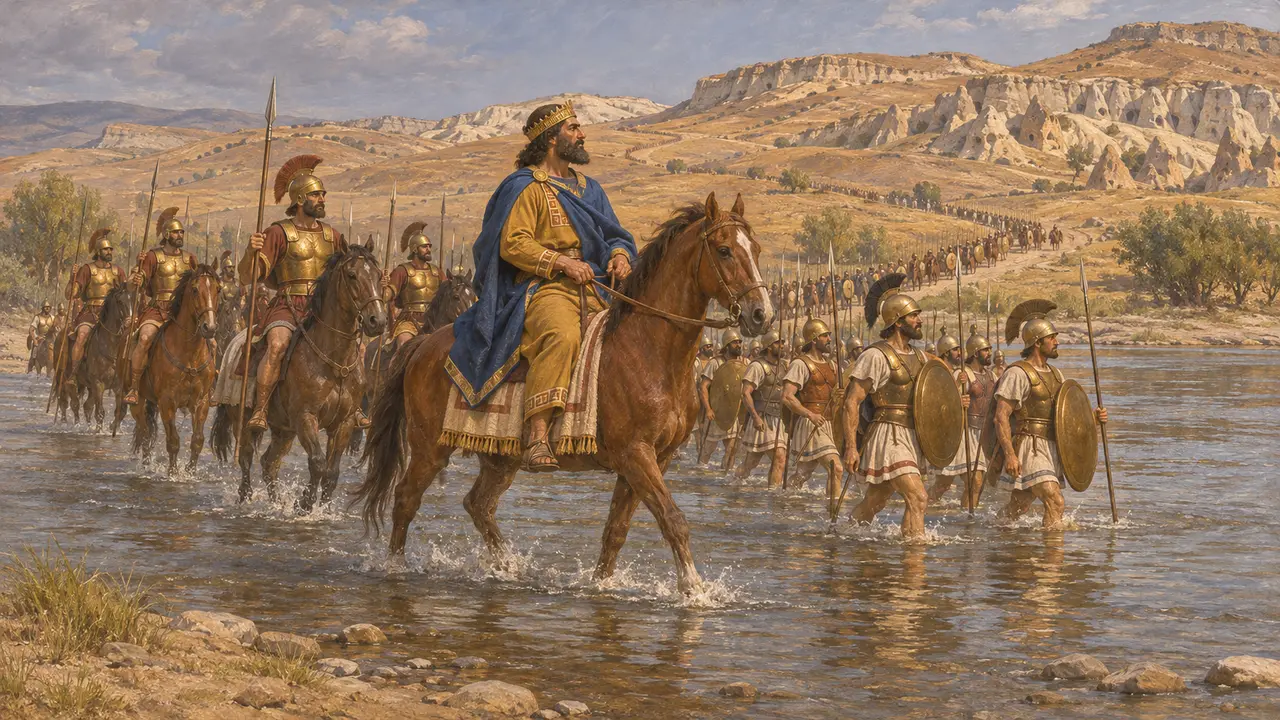
Croesus crosses the Halys
Ancient accountHerodotus says Croesus consulted Delphi and was told that if he made war on the Persians he would destroy a great empire. He crossed the Halys into Cappadocia and fought Cyrus at Pteria without a clear result. Expecting no campaign before spring, he returned to Sardis and sent his allied troops home for the winter.
Herodotus 1.53, 1.75-77
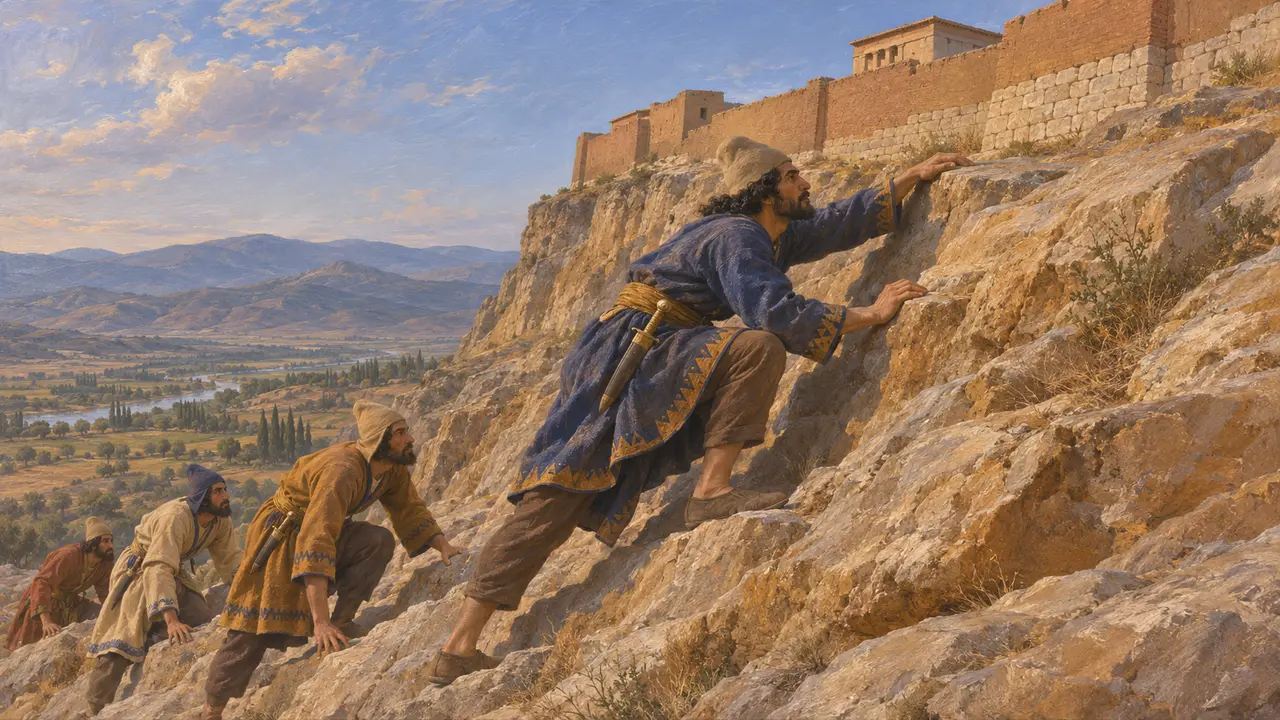
Camels on the plain and a climb up the rock
Ancient accountHerodotus tells that Cyrus followed at speed and met the Lydians on the plain before Sardis. On Harpagus's advice he put his baggage camels in front, and the Lydian horses, unused to their smell, turned away. Croesus was besieged in the citadel, and on the fourteenth day a Mardian soldier named Hyroeades climbed the steep side that the defenders had left unguarded, and the Persians followed him in.
Herodotus 1.79-84
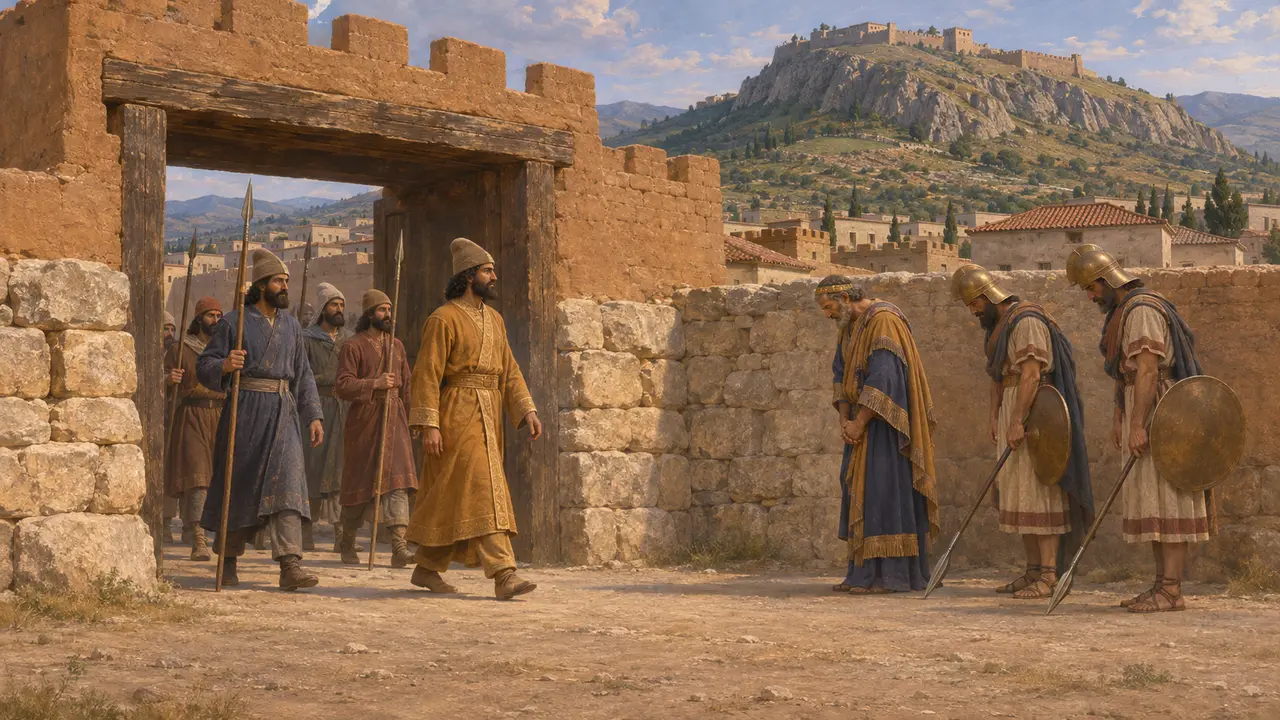
When it happened
DisputedThe date of 546 rests on later Greek chronology. The Nabonidus Chronicle records that in the ninth year of Nabonidus, about 547, Cyrus marched against a land and killed its king, but the land's name is damaged. Older readings took it as Lydia; several scholars now doubt that reading, so the chronicle may not mention Sardis at all, and the fall of Lydia cannot be fixed more closely than the mid 540s.
Nabonidus Chronicle, year 9; A. Kuhrt, The Persian Empire, 2007
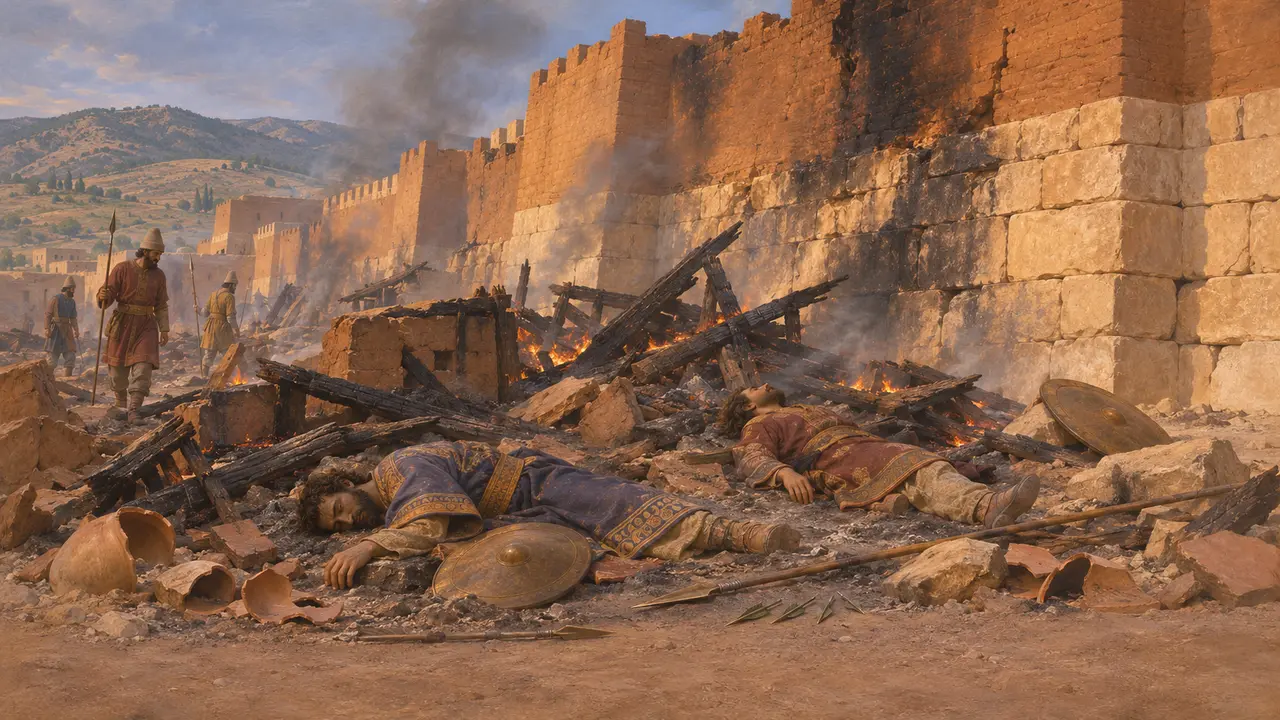
The destruction layer at Sardis
In the recordExcavators at Sardis have found a burned destruction level of the mid 6th century against the Lydian city wall, with arrowheads, weapons and the remains of men killed in the fighting. It is generally linked to the Persian capture. The remains show the city was stormed with violence, whatever happened to its king.
Archaeological Exploration of Sardis, excavation reports
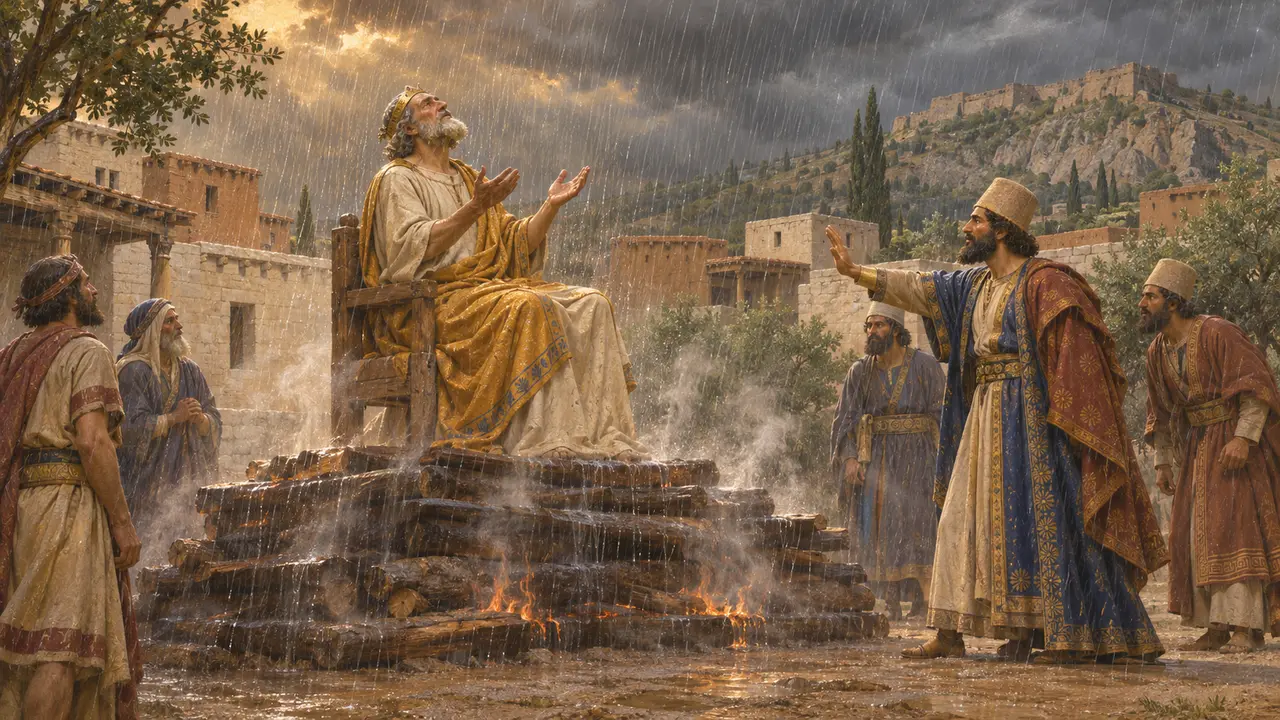
Croesus on the pyre
Later legendHerodotus says Cyrus set Croesus on a pyre and relented when Croesus called the name of Solon, who had warned him to call no man happy before his end. When the flames would not die, Croesus prayed to Apollo and a sudden rain put them out. Bacchylides, writing about 468, has Croesus mount the pyre by choice until Apollo carries him away, and an Athenian vase shows him enthroned on it. Both are moral tales, not reports.
Herodotus 1.86-87; Bacchylides, Ode 3
Sources
- Herodotus 1.53-91, 1.208
- Nabonidus Chronicle (ABC 7)
- Bacchylides, Ode 3
- A. Kuhrt, The Persian Empire: A Corpus of Sources from the Achaemenid Period, 2007
- P. Briant, From Cyrus to Alexander, 2002
- Archaeological Exploration of Sardis, excavation reports