Encyclopedia › Battles and events

Harpagus's conquest of Ionia
Persian campaign against the Greek cities of Asia Minor, about 546-545 BCE
In the game: Level 1: The Founder's Tomb
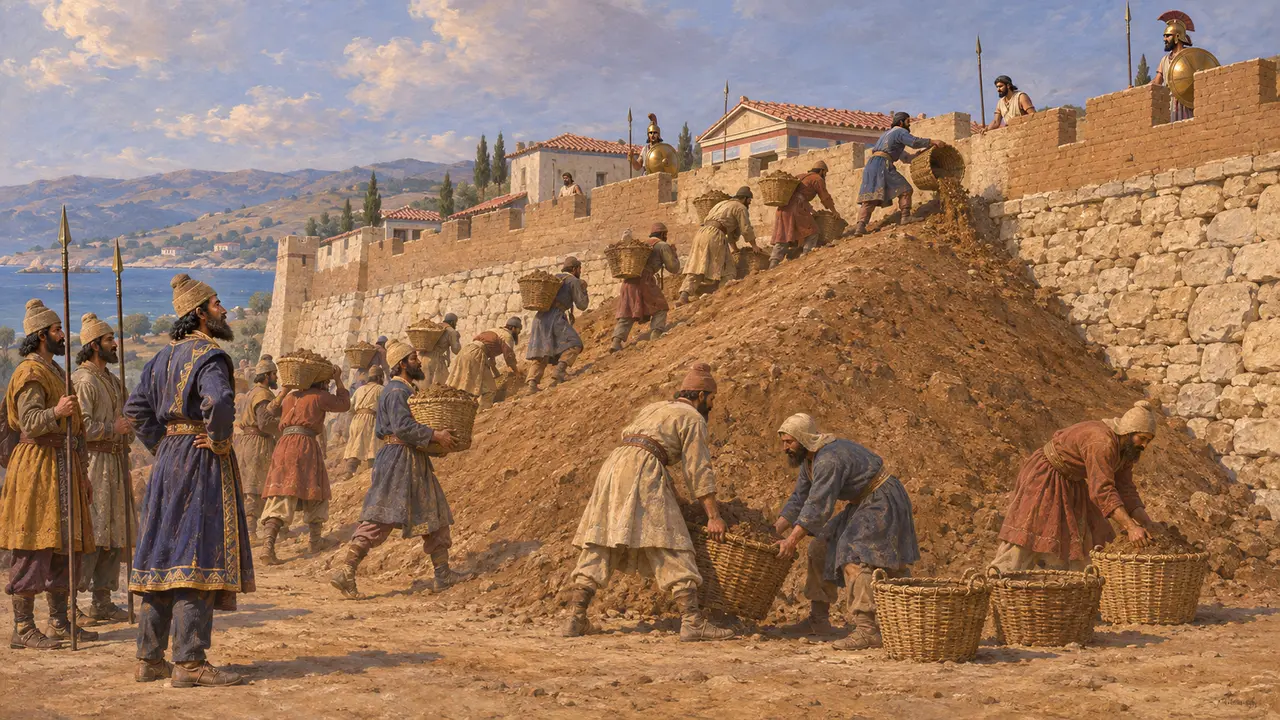
After Cyrus took Sardis, the Greek cities of the Ionian coast, once subject to the Lydian king Croesus, offered to submit on their old terms, and Cyrus refused. Herodotus tells how Harpagus, the Mede who had helped Cyrus overthrow Astyages, then reduced them one by one with siege mounds in the mid-540s. The conquest probably brought Ionian and Lydian craftsmen into the King's service, and their methods appear in the stonework of Pasargadae.
In the game: The game has Harpagus take the coastal cities with earth mounds, as in Herodotus, and links him to Ionian stone-cutters at Pasargadae. Its 546-545 date is approximate, and the masons' origin is inferred from technique.
Refusal and the revolt of Pactyes
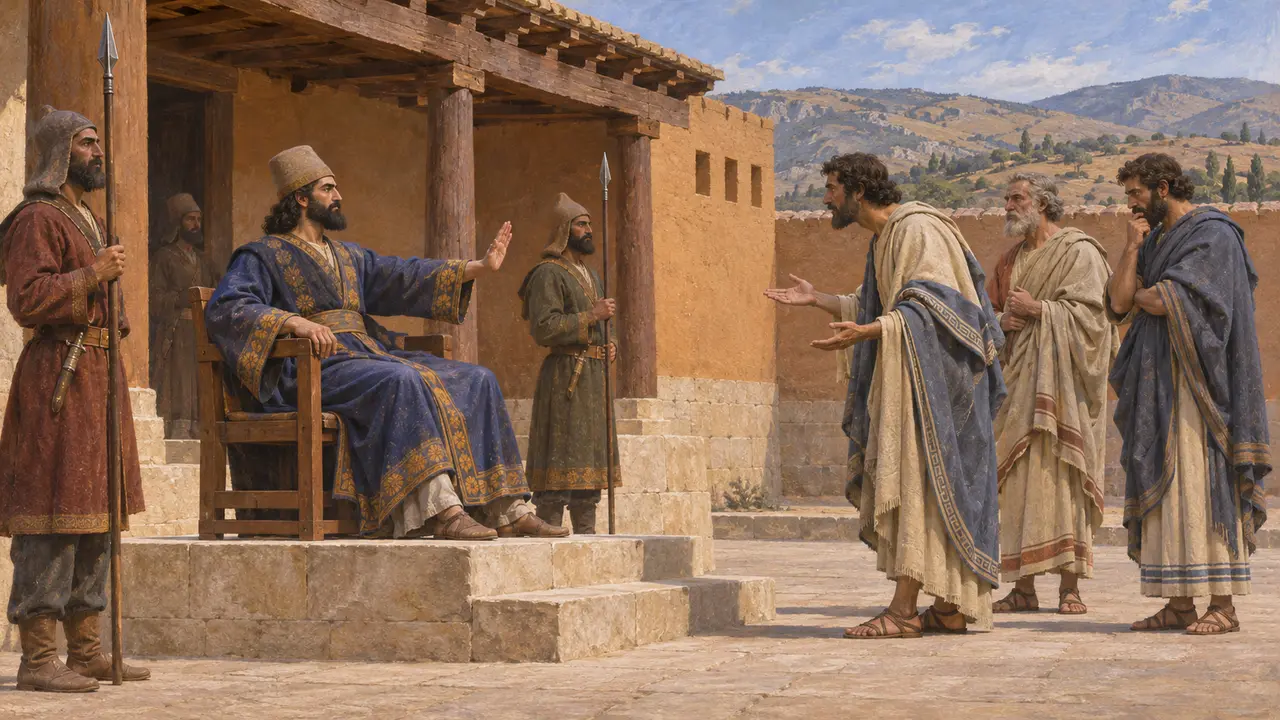
Ancient accountHerodotus says the Ionians and Aeolians sent envoys to Cyrus at Sardis, offering to submit on the terms they had held under Croesus. Cyrus refused, since they had ignored his earlier call to desert Croesus, and granted such terms only to Miletus. Soon after, the Lydian Pactyes, left in charge of Croesus's gold, rose in revolt. The Mede Mazares crushed it, enslaved the people of Priene and plundered the Maeander plain, then fell ill and died.
Herodotus 1.141, 1.153-161
Harpagus and the siege mounds
Ancient accountHarpagus succeeded Mazares and, Herodotus says, took the cities by penning the defenders inside their walls and heaping earth mounds against them. The Phocaeans abandoned their city and sailed west, though more than half soon turned back, and the people of Teos left to found Abdera in Thrace. The other mainland cities fought and fell one by one, and the Ionian islanders surrendered. Harpagus then moved against Caria and Lycia.
Herodotus 1.162-176

The piper and the fish
Later legendHerodotus has Cyrus answer the Ionian envoys with a fable. A piper played to the fish to draw them ashore, and when they would not come he caught them in a net. As they leapt about, he told them it was too late to dance. The story works as a moral about submitting in good time, and it owes more to Greek storytelling than to any record of what Cyrus said.
Herodotus 1.141
Ionian and Lydian craft at Pasargadae
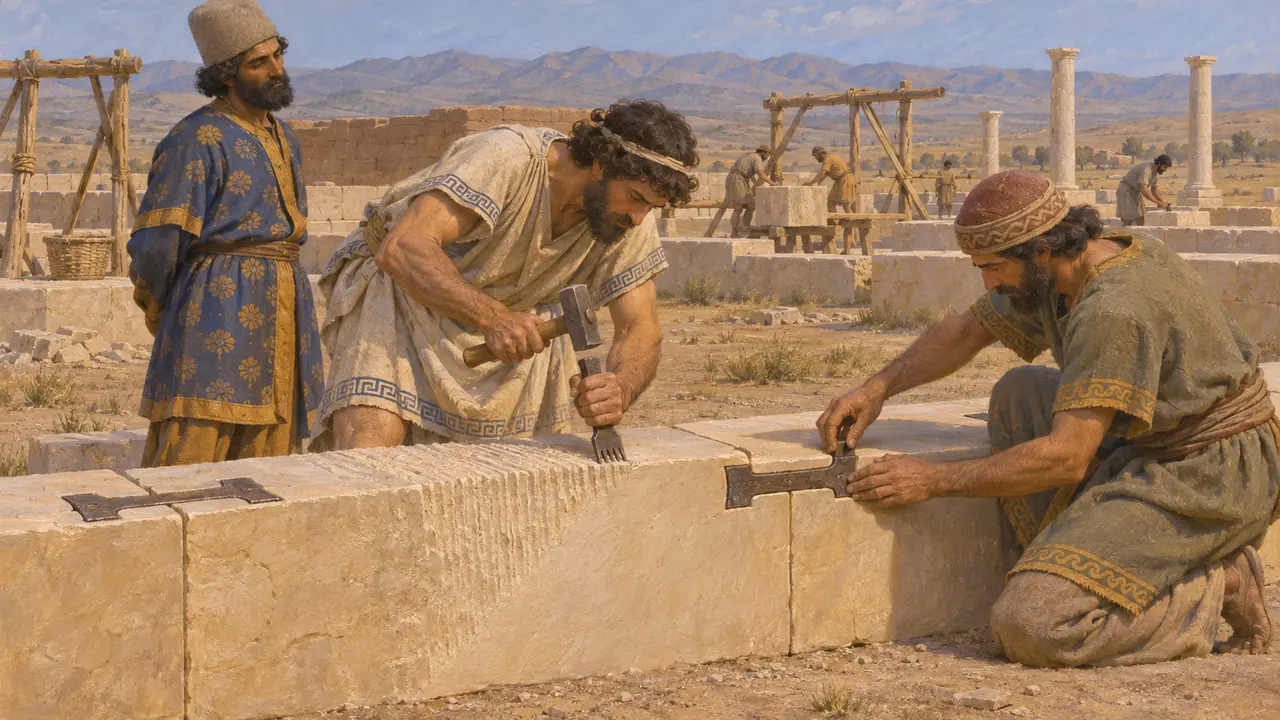
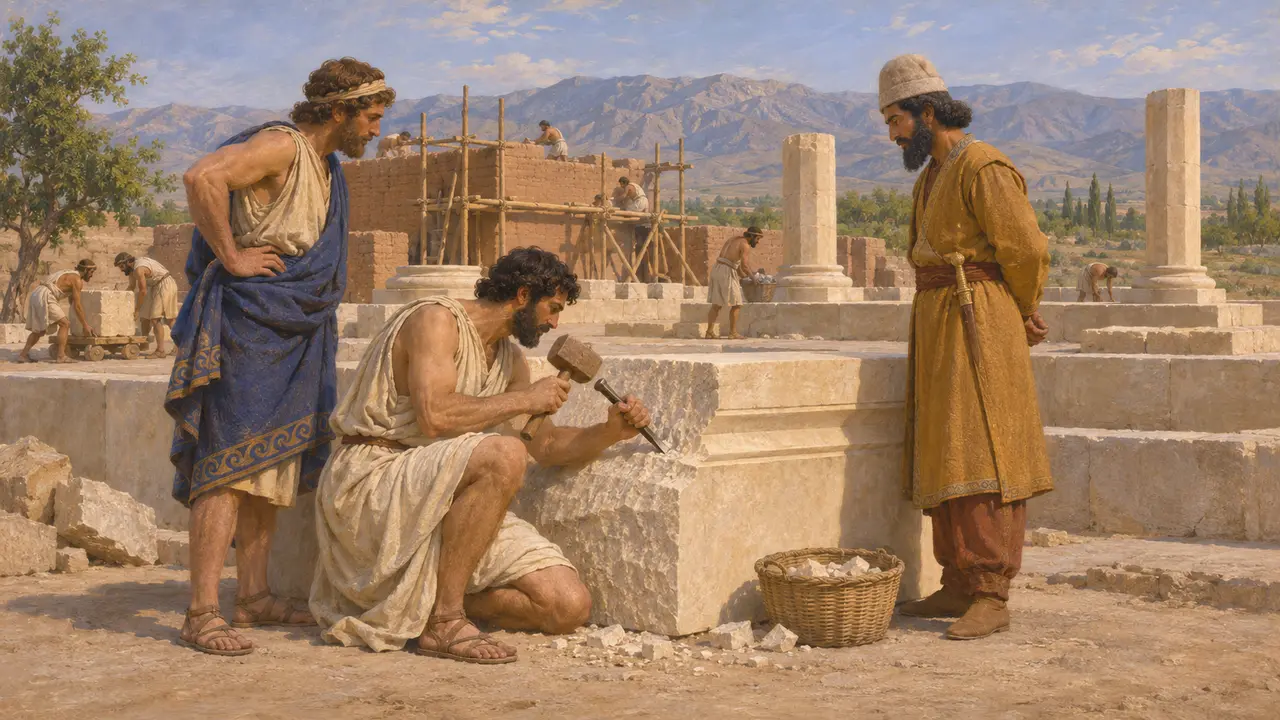
In the recordExcavations at Pasargadae show masonry methods new to Persis: finely dressed joints, the toothed chisel, and swallowtail iron clamps linking the blocks. Carl Nylander traced these methods to Lydian and Ionian workshops, which suggests that craftsmen came east after Sardis and the coast were taken. No text from Cyrus's reign names these workers. Darius's later Susa charter does record Ionians and Sardians cutting stone at Susa.
D. Stronach, Pasargadae, 1978; C. Nylander, Ionians in Pasargadae, 1970; DSf
Dating the conquest
DisputedHerodotus gives no year. The fall of Sardis is usually placed about 547 or 546, partly on an entry in the Nabonidus Chronicle for 547 whose country name is damaged and may not be Lydia at all. Ionia therefore fell in the mid-540s, but the exact years are uncertain. Scholars also debate whether building at Pasargadae began before or after Lydian and Ionian craftsmen arrived.
Nabonidus Chronicle; P. Briant, From Cyrus to Alexander, 2002
Sources
- Herodotus 1.141-176
- C. Nylander, Ionians in Pasargadae, 1970
- D. Stronach, Pasargadae, 1978
- P. Briant, From Cyrus to Alexander, 2002
- DSf
- Nabonidus Chronicle