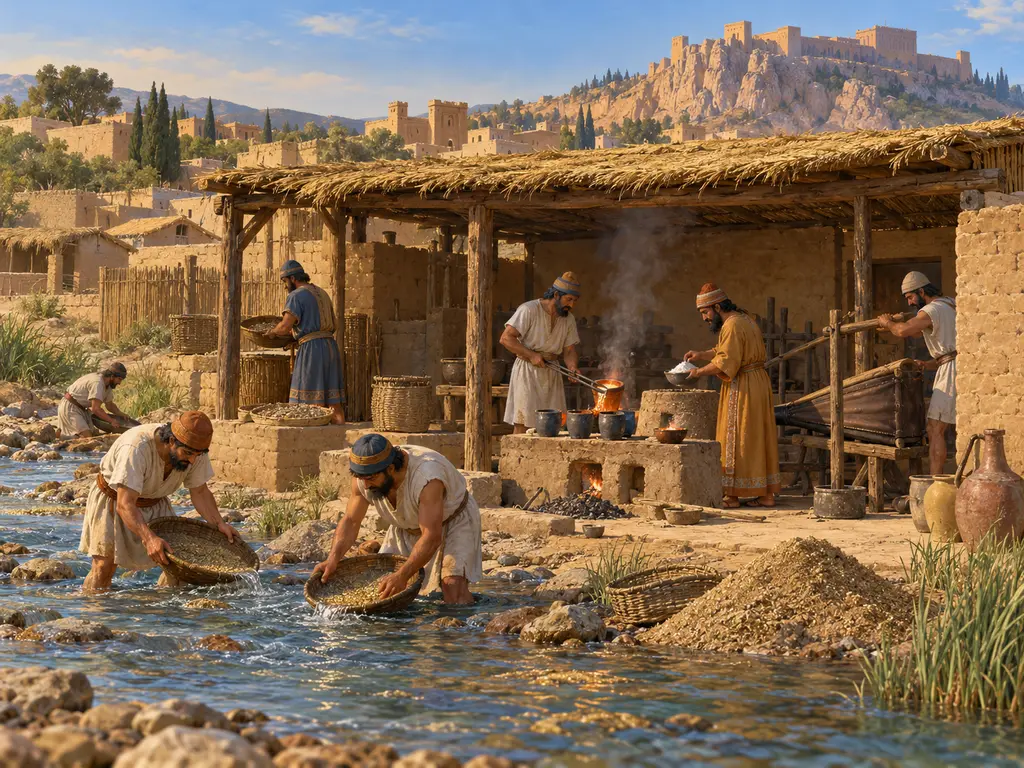
Pactolus Gold Refinery
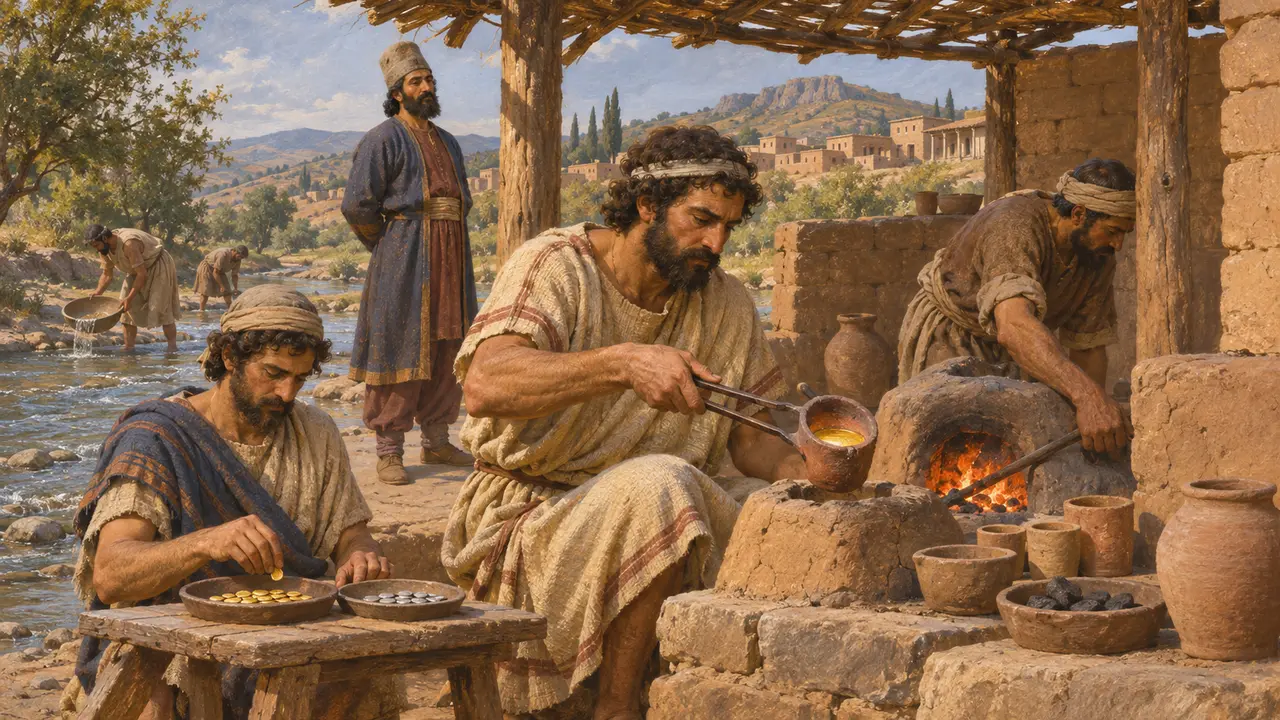
Workshop for refining river gold beside the Pactolus at Sardis, Lydia, sixth century BCE
In the game: Level 7: Sardis Burns
The Pactolus stream ran down from Mount Tmolus through Sardis carrying flakes of natural gold mixed with silver. Beside its bank, excavators found a Lydian refinery where this metal was purified into nearly pure gold. The workshop helps explain the wealth of Croesus and the early gold coinage that Sardis passed to its Persian rulers.
In the game: The game's washers and refiners follow the excavated method in outline. The dug workshop probably went out of use by the mid-sixth century, so a working refinery in the 490s is the game's assumption.
The gold of the Pactolus
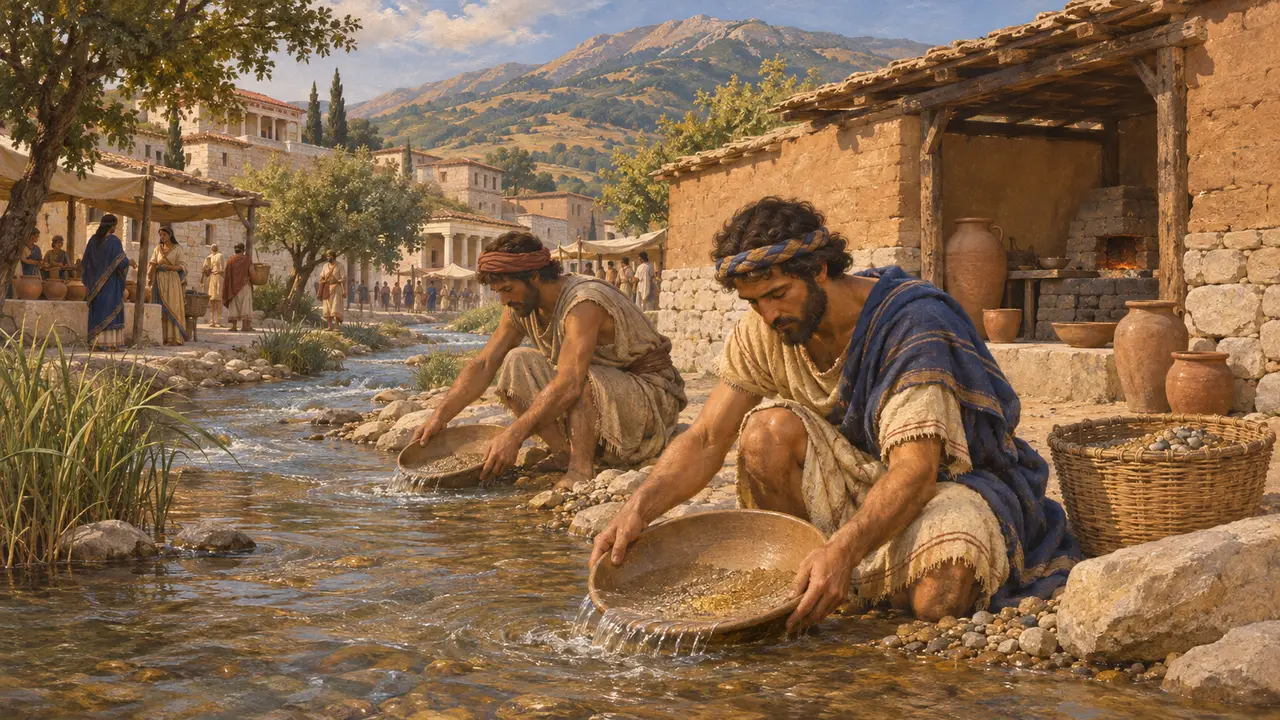
Ancient accountHerodotus says that Lydia had few marvels worth recording except the gold dust washed down from Tmolus. Describing the burning of Sardis by the Ionians and Athenians in 498, he says the Pactolus flowed through the market place carrying gold dust. Strabo, writing much later, says the river had once carried gold but that the supply had given out by his own day.
Herodotus 1.93; Herodotus 5.101; Strabo 13.4.5
The workshop by the river
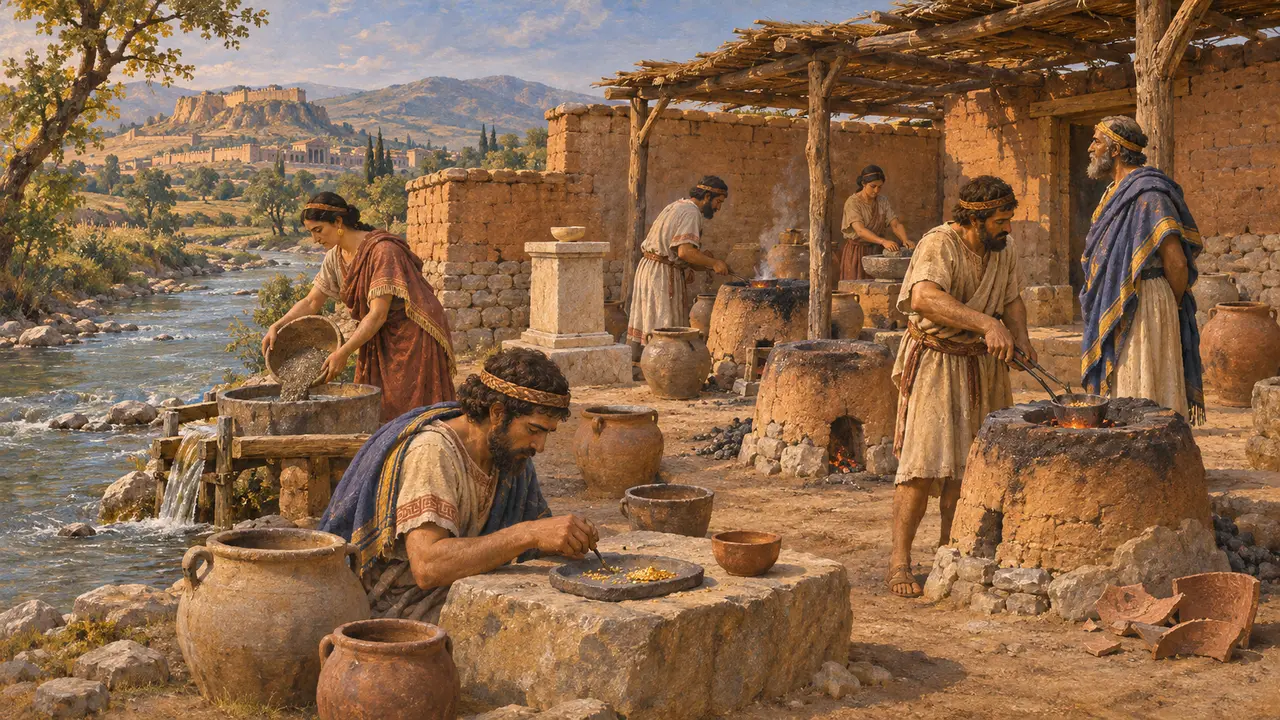
In the recordIn the 1960s and 1970s the Harvard-Cornell expedition to Sardis excavated an industrial area on the east bank of the Pactolus, known as Pactolus North. It held many small hearths and furnaces, fragments of coarse refining pots, lead-soaked hearth linings and tiny specks of gold. A small altar, probably for the goddess Kybebe or Cybele, stood among the workings.
A. Ramage and P. Craddock, King Croesus' Gold, 2000
Parting gold from silver
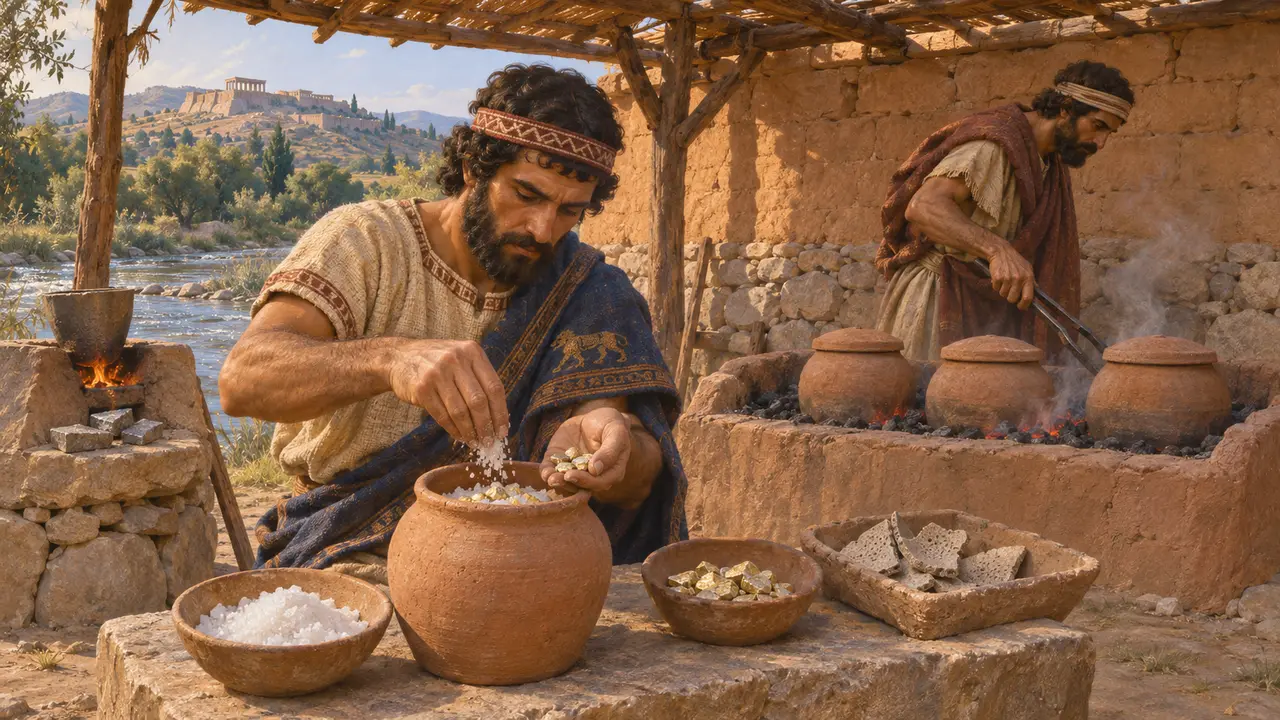
In the recordRiver gold at Sardis was electrum, a natural alloy of gold with a good deal of silver. The finds show that refiners first melted it with lead to remove base metals. They then packed the gold with salt in pots and heated it for a long time, so that the silver turned to a chloride and soaked into the pot walls. Analysis of the debris suggests the silver was probably recovered as well.
A. Ramage and P. Craddock, King Croesus' Gold, 2000
Croesus, coins and the Persians
DisputedHerodotus says the Lydians were the first to strike coins of gold and silver. The excavators date the refinery to the Lydian kings and link it to separate gold and silver coins, but its exact dates are argued. Scholars also debate whether these coins were struck by Croesus or by the first Persian governors after the conquest in the 540s, and how long refining went on at Sardis under Persian rule.
Herodotus 1.94; A. Ramage and P. Craddock, King Croesus' Gold, 2000
Midas and the golden river
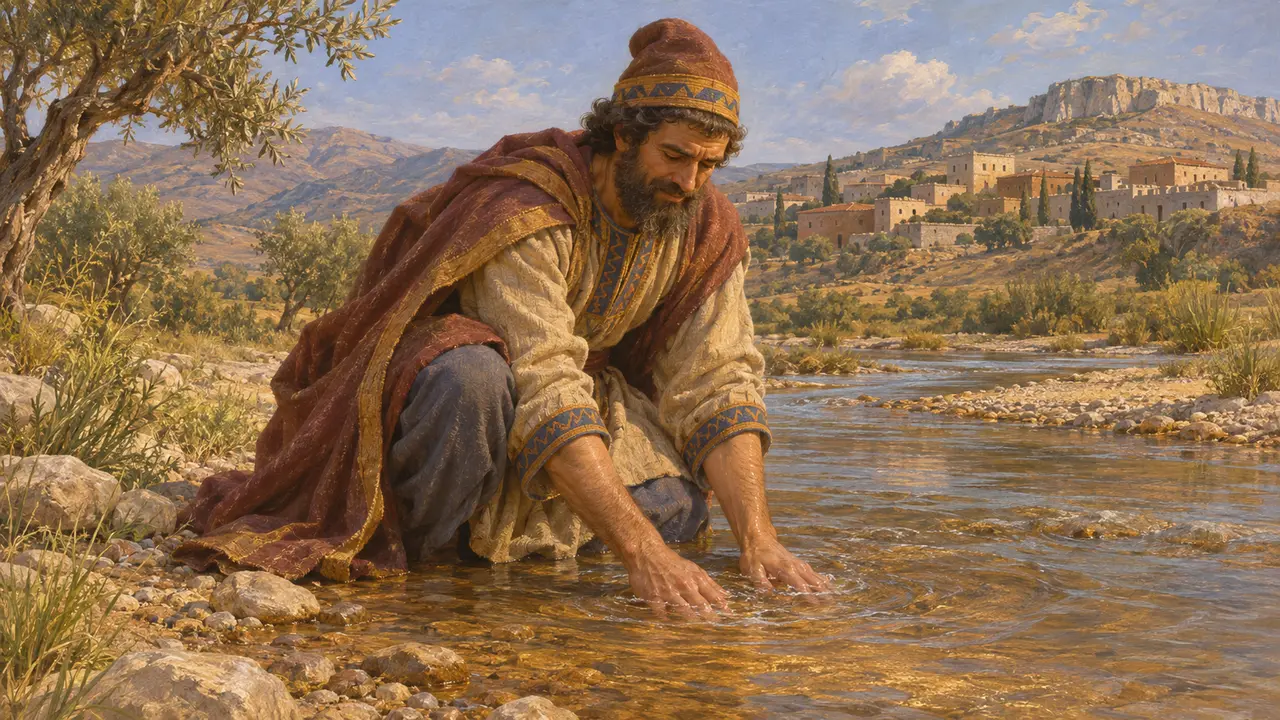
Later legendGreek writers told how King Midas of Phrygia was granted the power to turn whatever he touched into gold. In the version best known from Roman writers, he was told to wash it off in the Pactolus, and the river's sands turned golden. The fullest telling is by the poet Ovid, about five centuries after the events of this game. It is a moral tale about greed, not a record of how the gold got there.
Ovid, Metamorphoses 11
Sources
- A. Ramage and P. Craddock, King Croesus' Gold: Excavations at Sardis and the History of Gold Refining, 2000
- Herodotus 1.93
- Herodotus 1.94
- Herodotus 5.101
- Strabo 13.4.5
- Ovid, Metamorphoses 11