Encyclopedia › Battles and events
The revolt of Cyprus
Rising of the Cypriot kingdoms against Darius during the Ionian Revolt, 498-497 BCE
In the game: Level 7: Sardis Burns
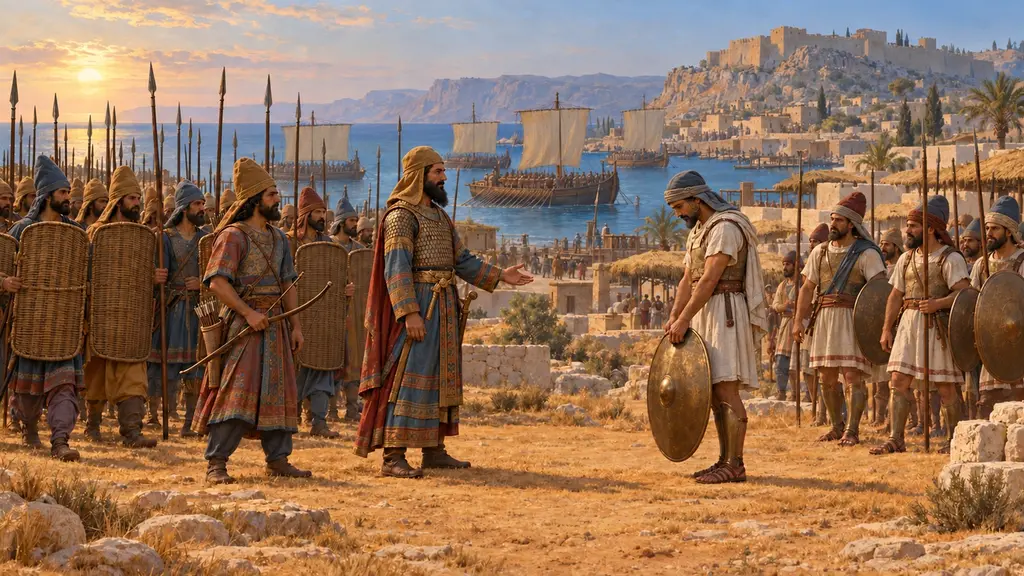
After the burning of Sardis in 498, almost all the city-kingdoms of Cyprus joined the Ionian Revolt, led by Onesilus of Salamis. A Persian army crossed from Cilicia with a Phoenician fleet, won a land battle near Salamis and then took the rebel cities one by one. Herodotus says the island was free for a single year, and its loss probably weakened the Ionian cause in the east.
In the game: The Chronicle records Cyprus joining the revolt and a Persian army from Cilicia winning it back within a year, dated 497. This matches Herodotus, though the island rose in 498 and some sieges ran on after the main battle.
Onesilus seizes Salamis
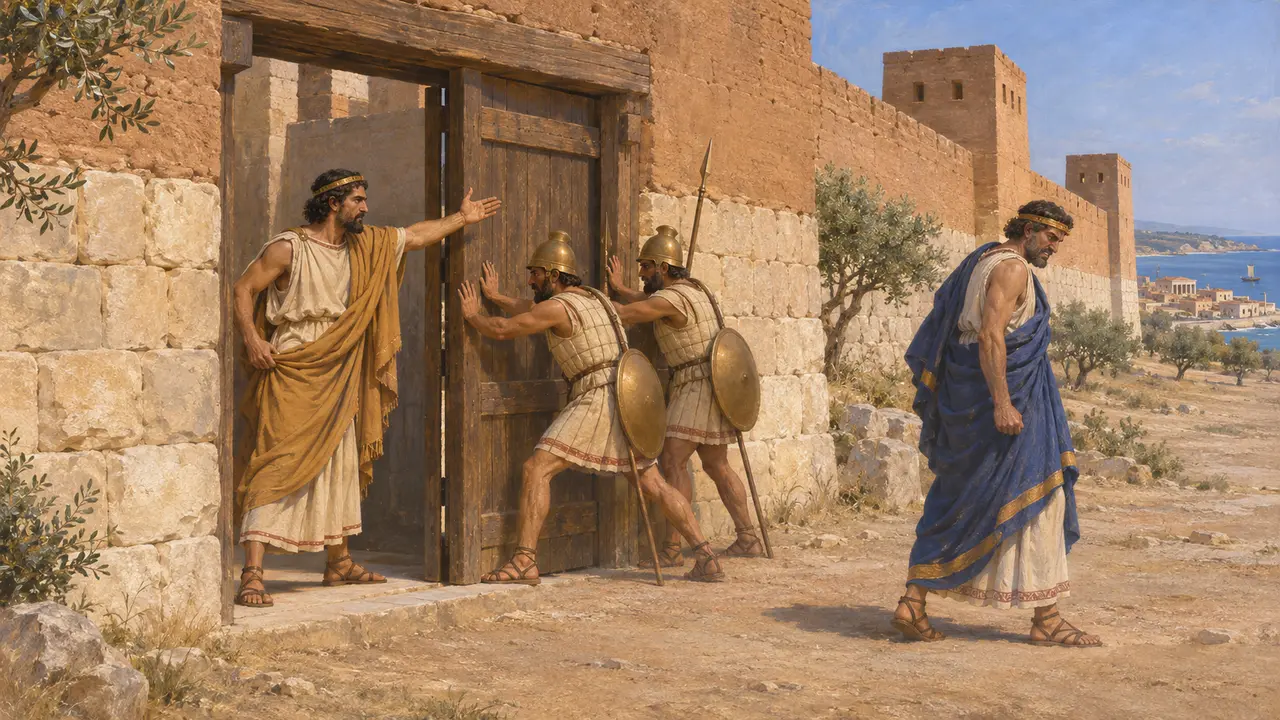
Ancient accountHerodotus says Onesilus, younger brother of King Gorgus of Salamis, had long urged revolt against the Persians. When Gorgus refused, Onesilus shut him out of the city and Gorgus fled to the Persian side. Every Cypriot kingdom then joined except Amathus, which Onesilus put under siege.
Herodotus 5.104
Battle by land and sea
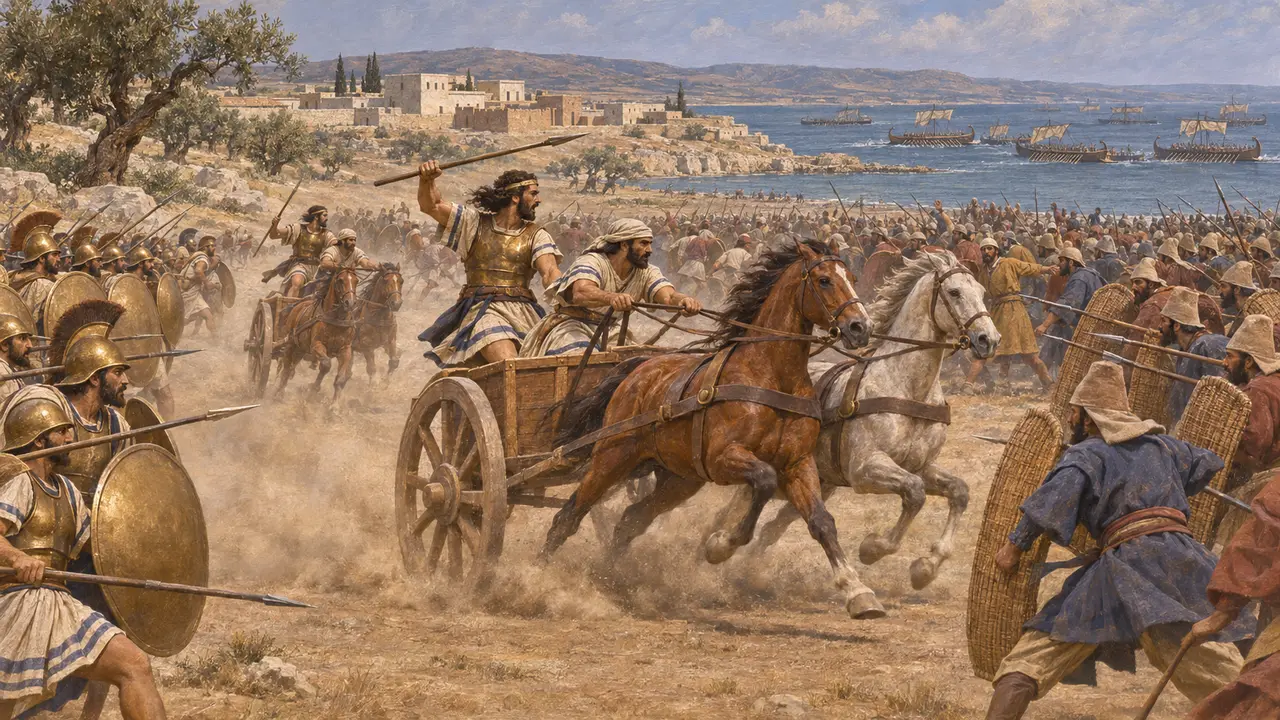
Ancient accountHerodotus reports that the Persian Artybius brought an army across from Cilicia while Phoenician ships sailed round the island, and an Ionian fleet came to help the rebels. The Ionians won at sea, but on land near Salamis Stesenor of Curium went over to the Persians, followed by the Salaminian chariots. Onesilus fell, as did Aristocyprus, king of Soli. Artybius was also killed in the fighting.
Herodotus 5.108-113
The sieges of the cities
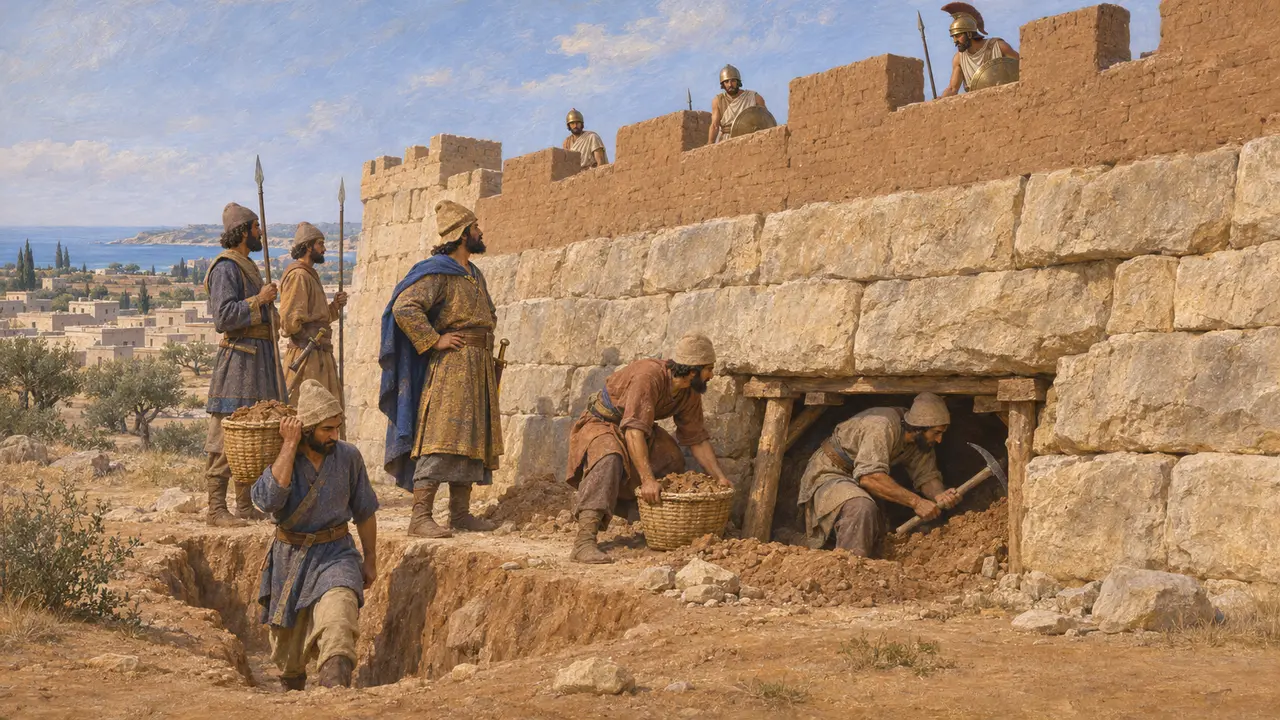
Ancient accountHerodotus says the Salaminians handed their city back to Gorgus, while the other Cypriot cities were put under siege. Hearing that Onesilus was dead, the Ionian fleet sailed home. Soli held out longest and fell in the fifth month, when the Persians dug under its wall. Herodotus ends by saying the Cypriots had been free for one year before they were brought under the King again.
Herodotus 5.115-116
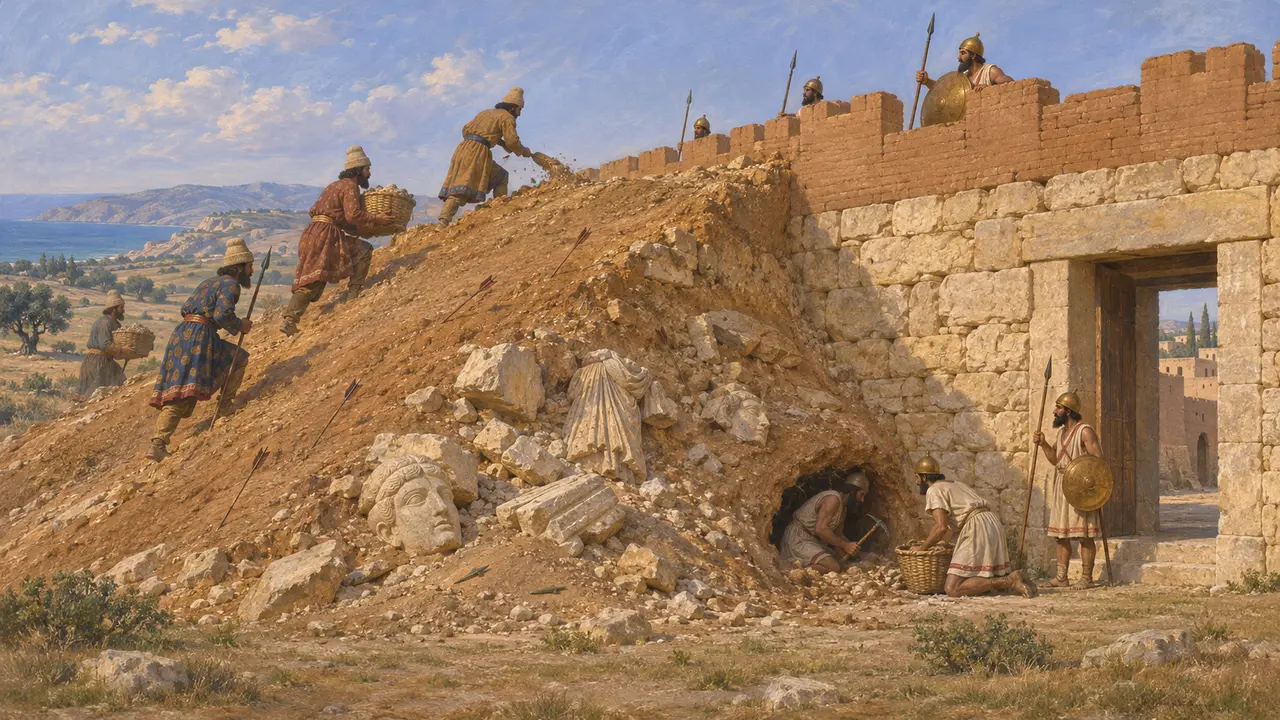
The siege mound at Old Paphos
In the recordExcavations at Kouklia, the site of Old Paphos, uncovered a large siege ramp built against the city wall near its north-east gate. Its fill held broken sculpture and votive pieces, and hundreds of arrowheads and other weapons were found in and around it. The defenders dug tunnels beneath the ramp to bring it down. The excavators date the assault to the Persian reconquest of about 497, giving physical evidence for sieges that Herodotus mentions only in general terms.
F. G. Maier and V. Karageorghis, Paphos: History and Archaeology, 1984
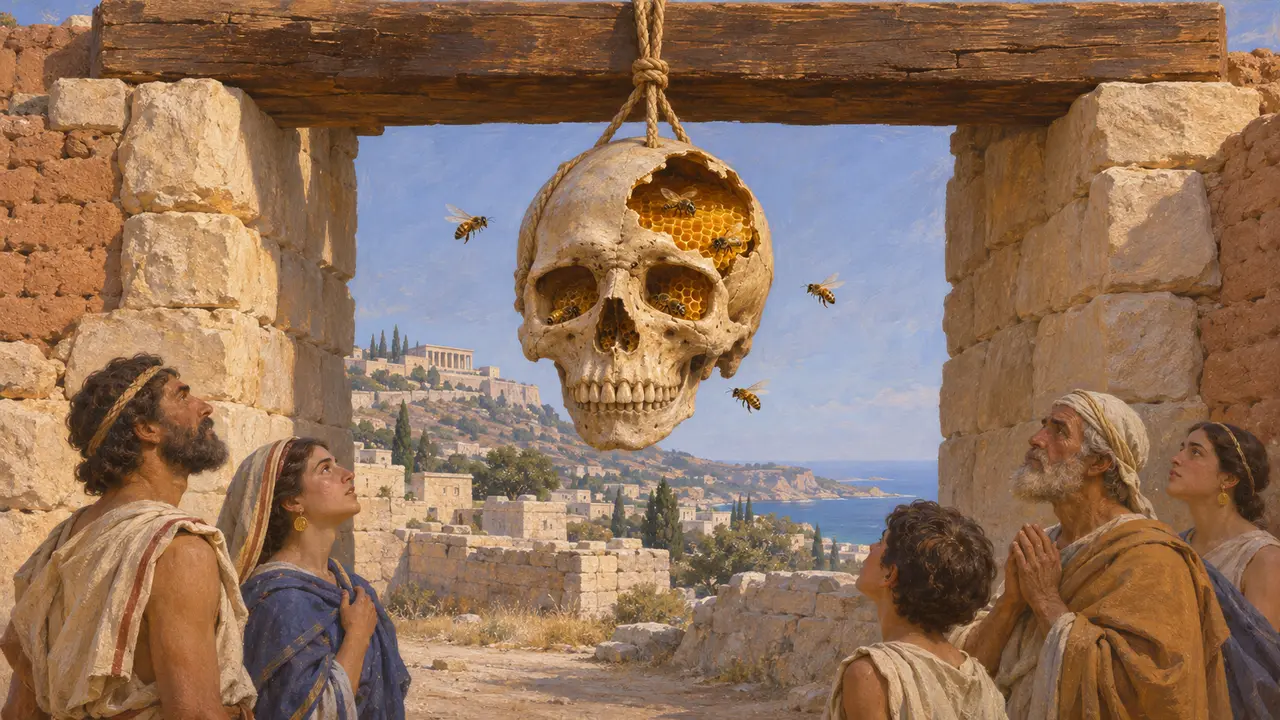
The head of Onesilus
Later legendHerodotus tells that the people of Amathus cut off the head of Onesilus and hung it over their gate. When bees filled the hollow skull with honeycomb, an oracle told them to bury the head and offer yearly sacrifice to Onesilus as a hero. The story explains the origin of a local cult and is shaped as a wonder tale rather than a record.
Herodotus 5.114
Sources
- Herodotus 5.104-116
- F. G. Maier and V. Karageorghis, Paphos: History and Archaeology, 1984
- P. Briant, From Cyrus to Alexander, 2002