Encyclopedia › Battles and events
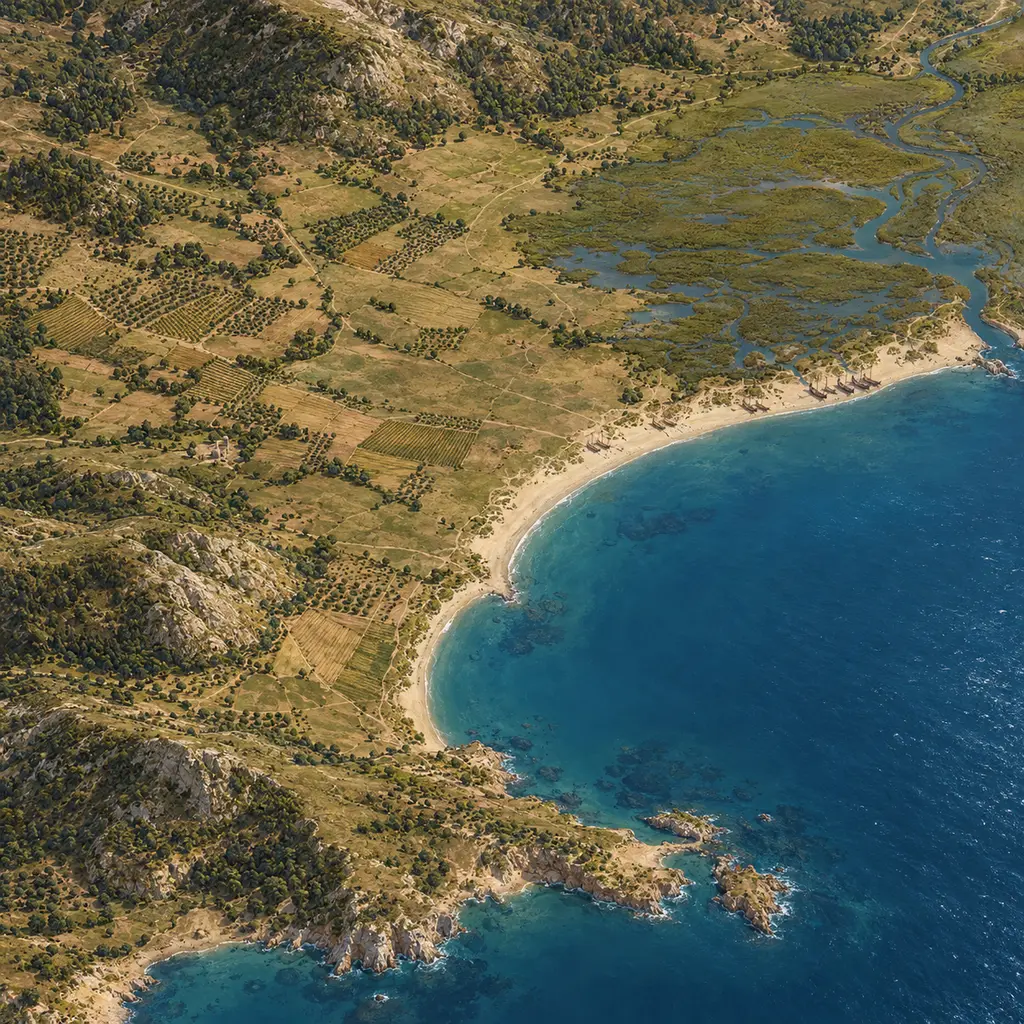
The battle of Marathon
Athenians and Plataeans against a Persian army, Attica, 490 BCE
In the game: Level 8: The Bay of Marathon
In 490 an Athenian and Plataean army defeated the Persian force of Datis and Artaphernes on the coastal plain of Marathon in north-eastern Attica. For the empire it was the setback of one expedition on its western edge, not a threat to its power. It ended Darius's attempt to punish Athens for the burning of Sardis and became the founding story of Athenian pride.
In the game: The Marathon level is built around the battle, with the Greek line thin in the centre and strong on the wings. The game's summary passes over Herodotus's report that the Persian centre first broke the Greek centre.
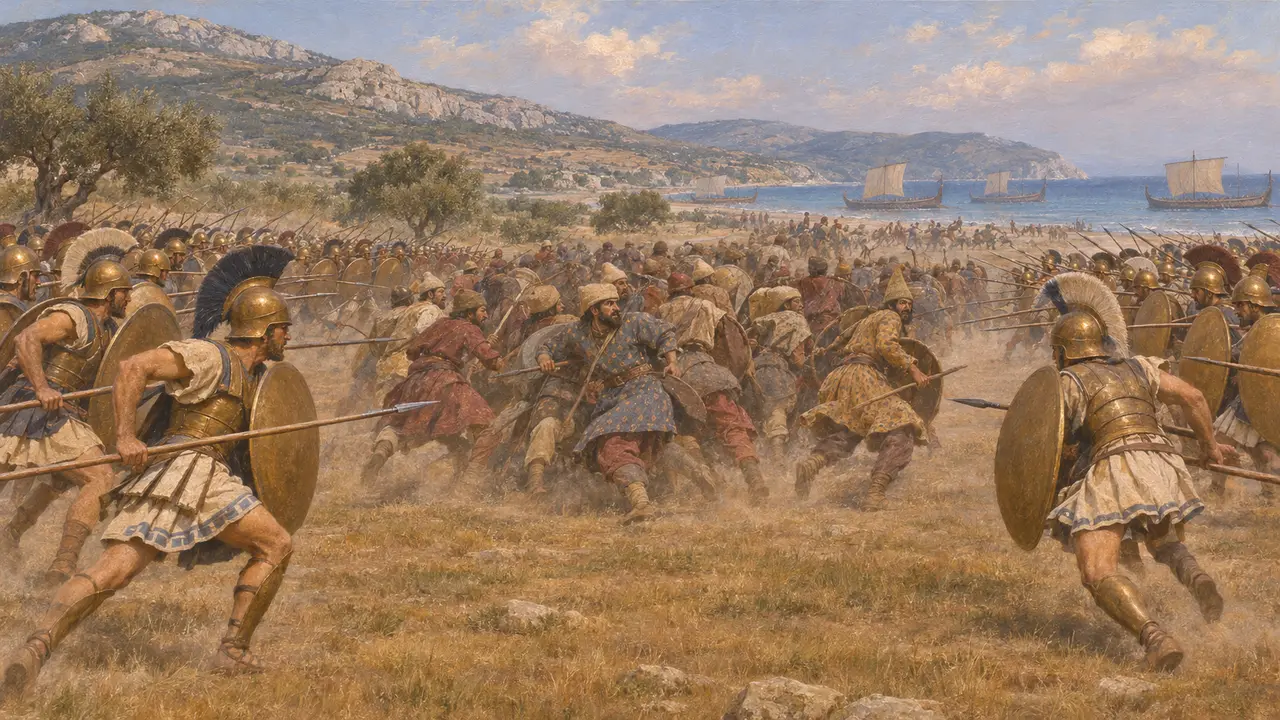
The charge and the wings
Ancient accountHerodotus says the exiled tyrant Hippias guided the Persians to Marathon, and that the Plataeans joined the Athenians in full force. The Greeks stretched their line to match the Persian front, thin in the centre and strong on the wings, and charged at a run. The Persians and Saka broke the Greek centre, but both wings won and then closed on it. They drove the Persians to their ships and took seven of them.
Herodotus 6.102, 6.108, 6.111-115
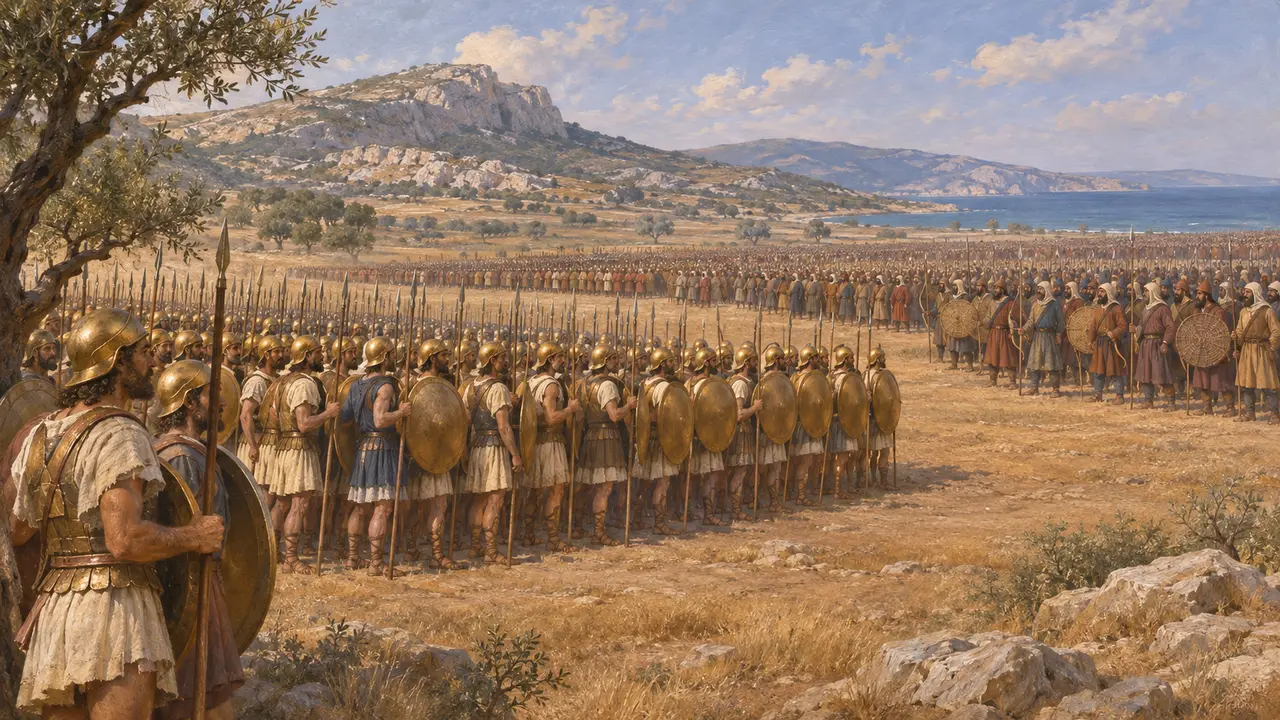
How many fought
DisputedHerodotus gives 6,400 Persian and 192 Athenian dead but no army sizes. Later writers fill the gap. Pausanias puts the Athenians at no more than 9,000, Nepos gives 10,000 Athenians and 1,000 Plataeans against 200,000 Persian foot, and Justin raises the Persians to 600,000. Modern historians generally think of about 10,000 Greeks against perhaps 20,000 to 30,000 Persians, though no figure for the Persian army can be checked.
Herodotus 6.117; Pausanias 10.20; Nepos, Miltiades 4-5; Justin 2.9
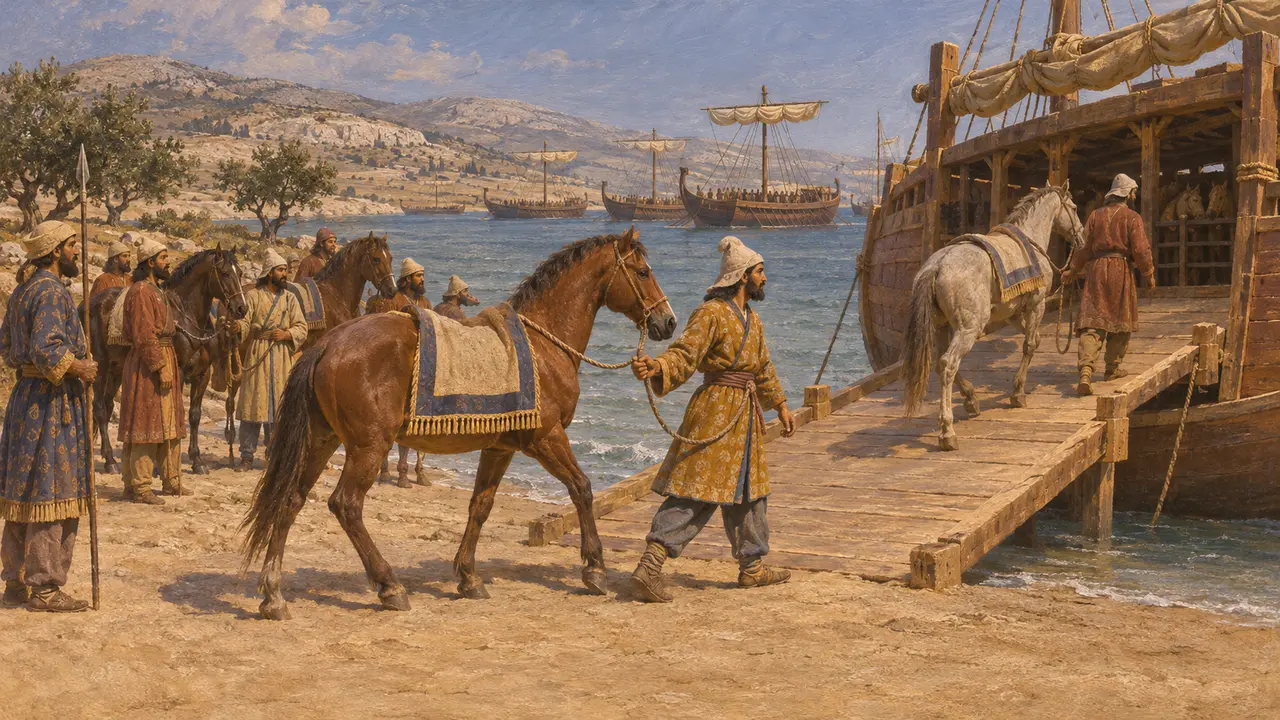
The Persian side and the missing cavalry
DisputedNo Persian document mentions Marathon, so how the court saw it is unknown. Herodotus says nothing of the Persian horse during the fight. A proverb explained in the Suda, a Byzantine lexicon of the tenth century CE, led some historians to think the cavalry was already embarking, but this is unproven. Before this check the campaign had taken Naxos and Eretria, and Herodotus says Darius afterwards resolved on a larger war.
Herodotus 6.96, 6.101, 7.1; Suda
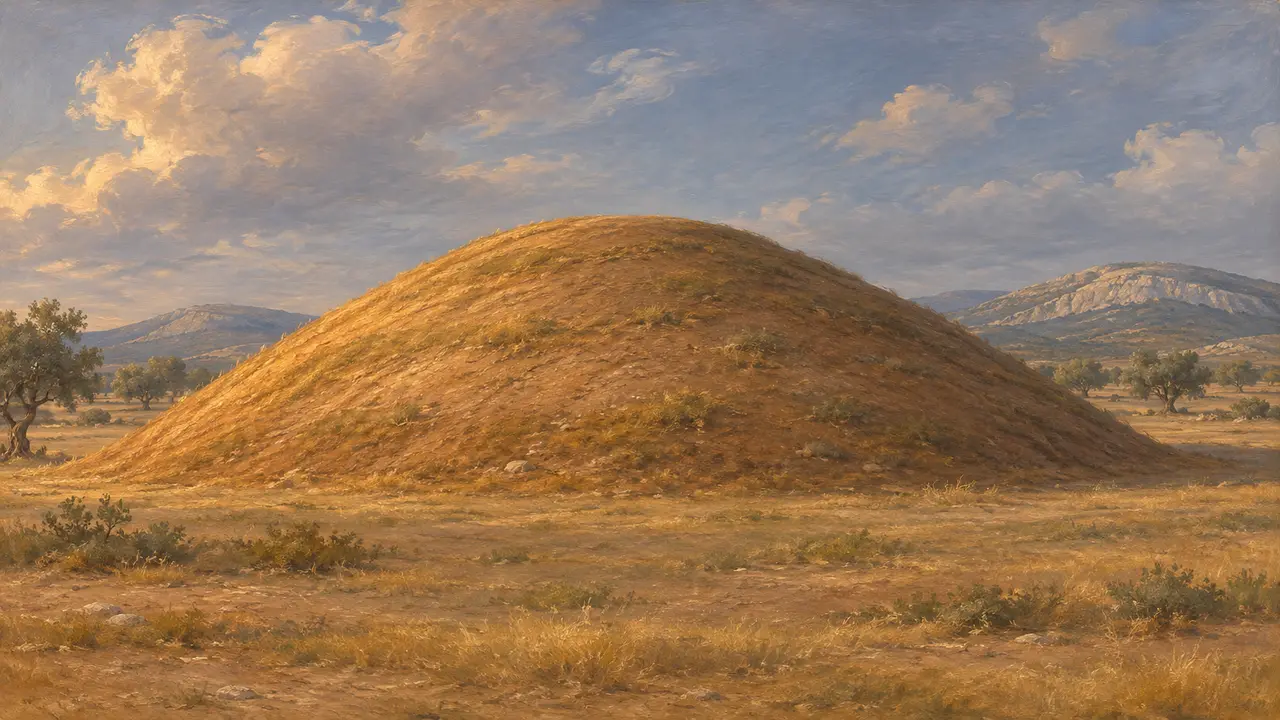
The Soros on the plain
In the recordThe burial mound called the Soros still stands on the plain, about 9 metres high. Excavation in 1890-91 found a layer of ash and burnt bone with pottery of about this date. This fits Thucydides' statement that only the Marathon dead were buried where they fell. A second tomb near Vrana has been identified as that of the Plataeans, but the identification is less certain.
Excavation of the Soros by V. Staïs, 1890-91; Thucydides 2.34.5; Pausanias 1.32.3
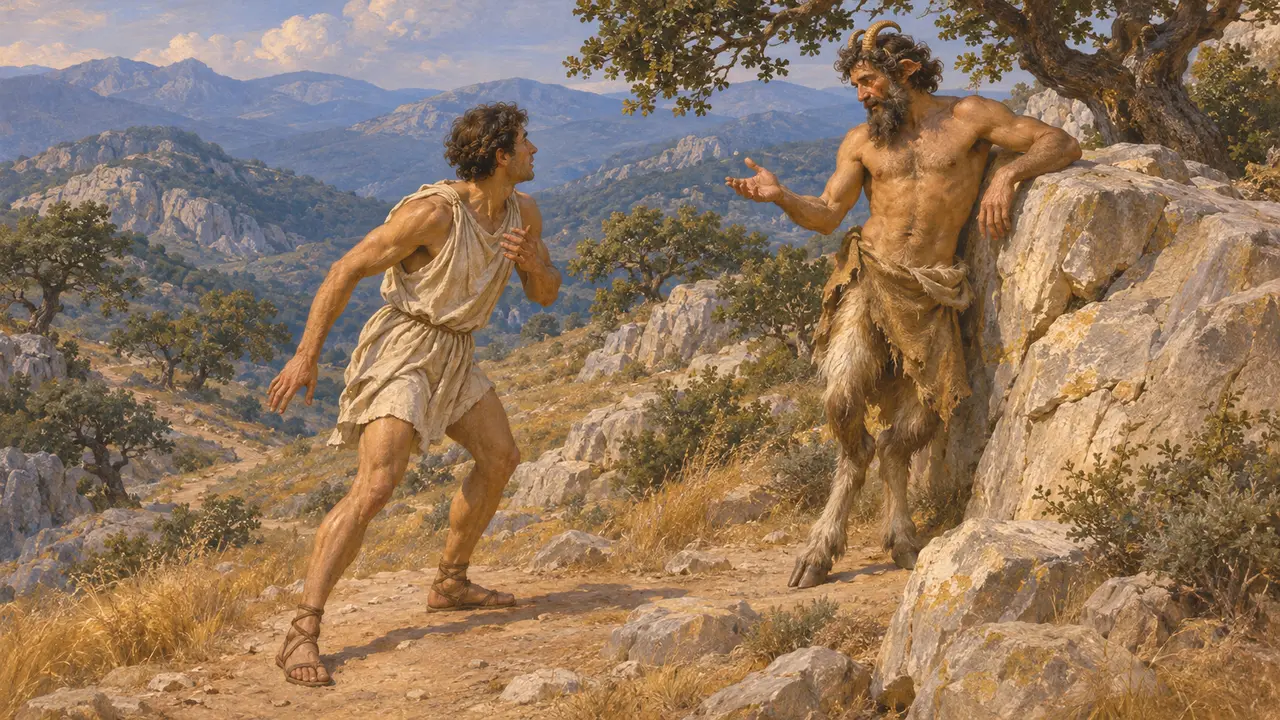
Runners and apparitions
Later legendHerodotus reports that the runner Pheidippides, sent to Sparta before the battle, said he had met the god Pan on the way. The tale of a runner who ran from Marathon to Athens, announced the victory and died appears only centuries later, in Plutarch and Lucian, who give him different names. Plutarch also reports that many soldiers thought they saw Theseus in armour fighting for Athens.
Herodotus 6.105; Plutarch, On the Glory of the Athenians 3; Lucian, A Slip of the Tongue in Greeting 3; Plutarch, Theseus 35
Sources
- Herodotus 6.94-120
- Thucydides 2.34.5
- Pausanias 1.32
- P. Krentz, The Battle of Marathon, 2010
- J. F. Lazenby, The Defence of Greece 490-479 BC, 1993
- P. Briant, From Cyrus to Alexander, 2002