Encyclopedia › Battles and events
Xerxes' invasion of Greece
Persian campaign by land and sea against the Greek mainland, 480-479 BCE
In the game: Level 10: The Hot Gates
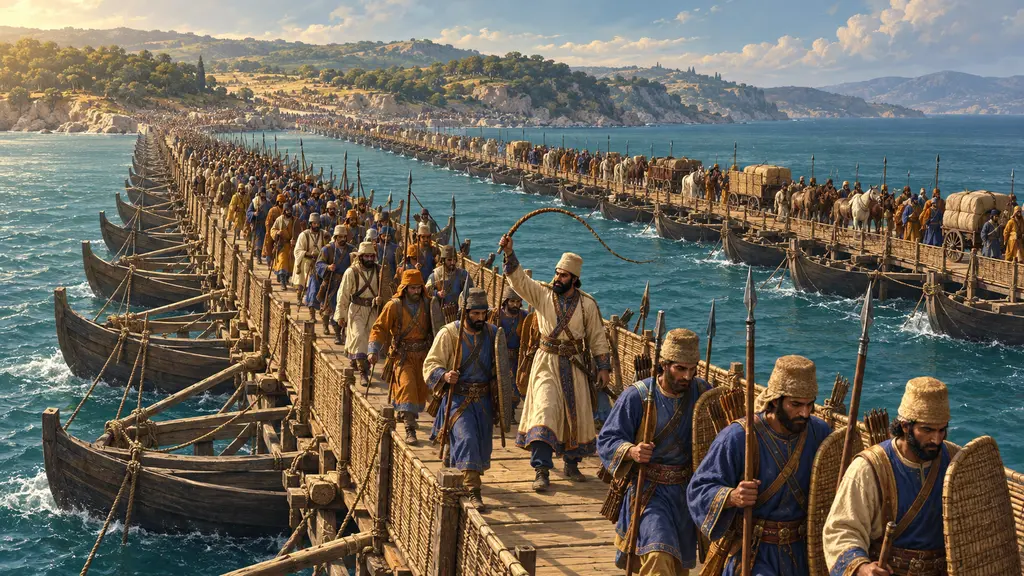
In 480 Xerxes led an army and fleet across the Hellespont into Europe to bring the Greek mainland under Persian rule. Persian forces took Athens twice, but defeats at Salamis in 480 and at Plataea and Mycale in 479 ended the attempt. The war shaped Greek memory for centuries, while Persian royal inscriptions say nothing of it.
In the game: The campaign spans the Athos, Thermopylae and Plataea levels and the Mycale epilogue. The Chronicle recalls Xerxes at Abydos letting Black Sea grain ships sail on to Greece, as Herodotus tells it (7.147).
Why the King marched
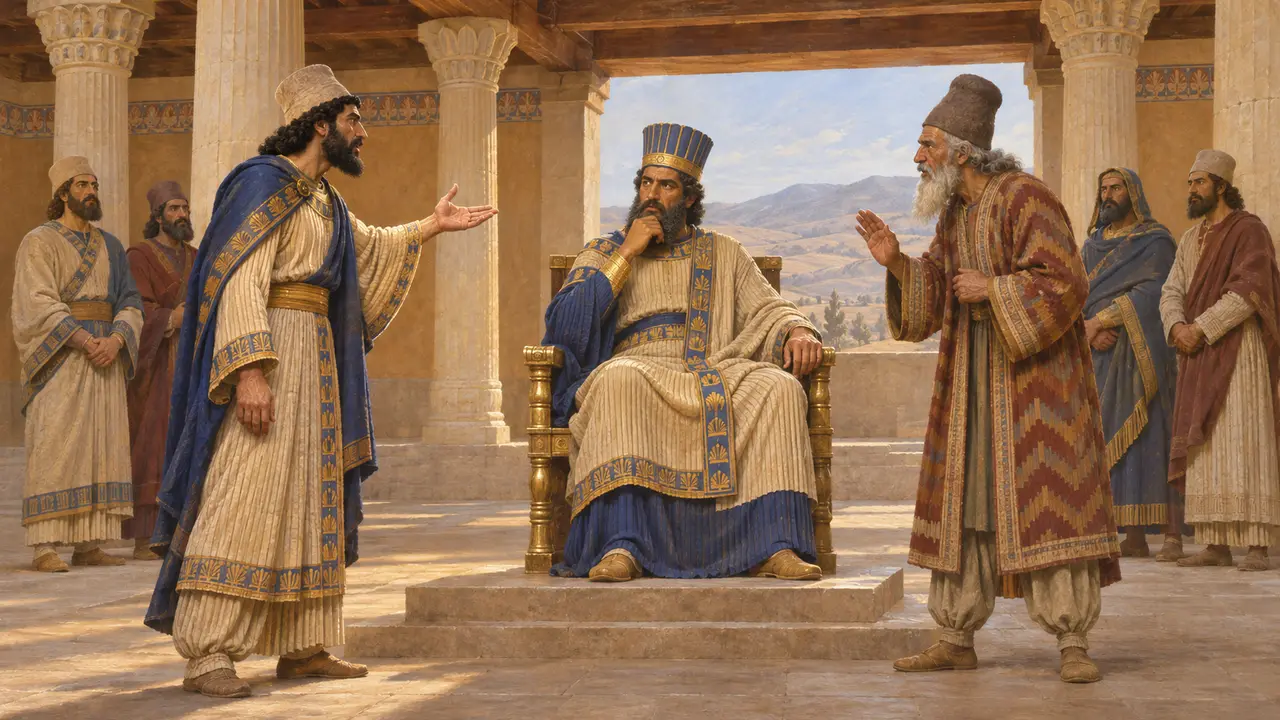
Ancient accountHerodotus says Darius was already preparing a new war after Marathon when Egypt revolted and he died. Xerxes, he says, took the war up once Egypt was subdued. Herodotus presents the decision as a council in which Mardonius urged war and Artabanus warned against it, with dreams driving Xerxes on. In his telling the King spoke of avenging the burning of Sardis and the defeat at Marathon, and of extending Persian rule over Europe.
Herodotus 7.1-19
Preparing by canal, bridge and depot
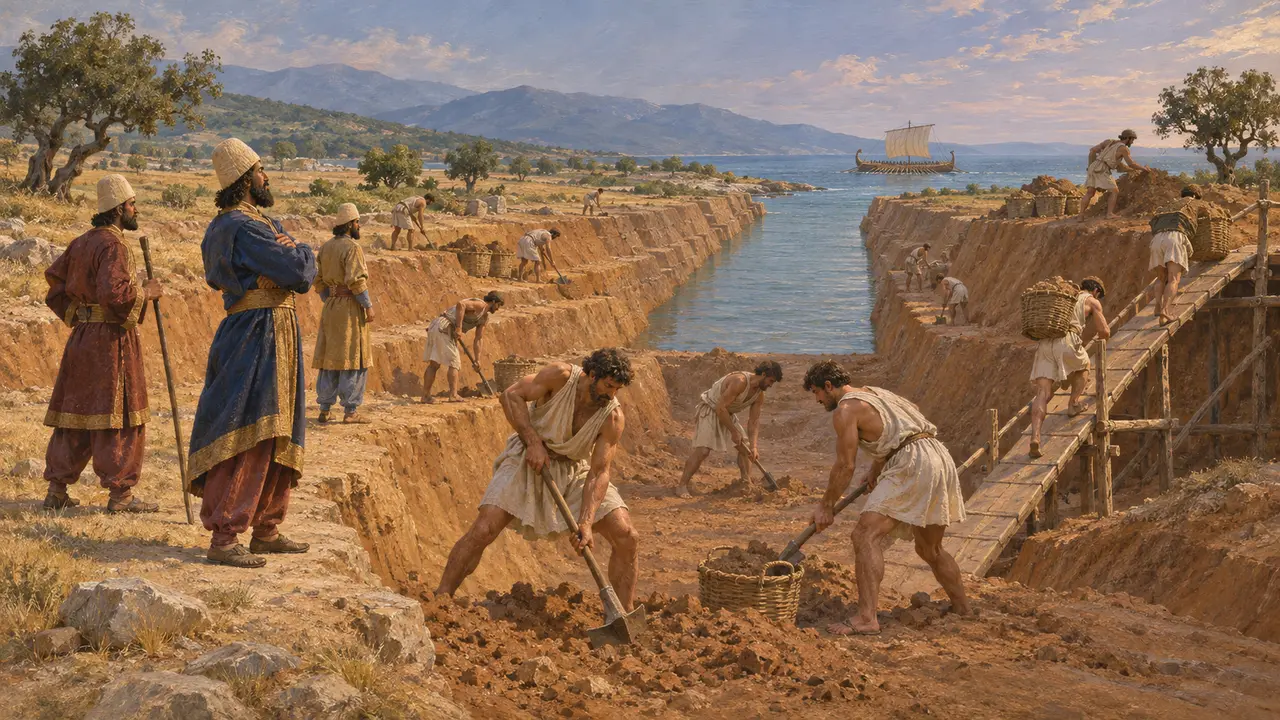
Ancient accountHerodotus says the canal through the neck of the Athos peninsula took about three years to dig. It let the fleet avoid the cape where Mardonius's ships had been wrecked in 492. Food was stored at depots along the Thracian and Macedonian coast, and two bridges of boats were laid across the Hellespont. When a storm broke the first bridges, he says, Xerxes had the water lashed and the overseers of the work beheaded.
Herodotus 7.22-25, 7.33-36
How large was the King's host
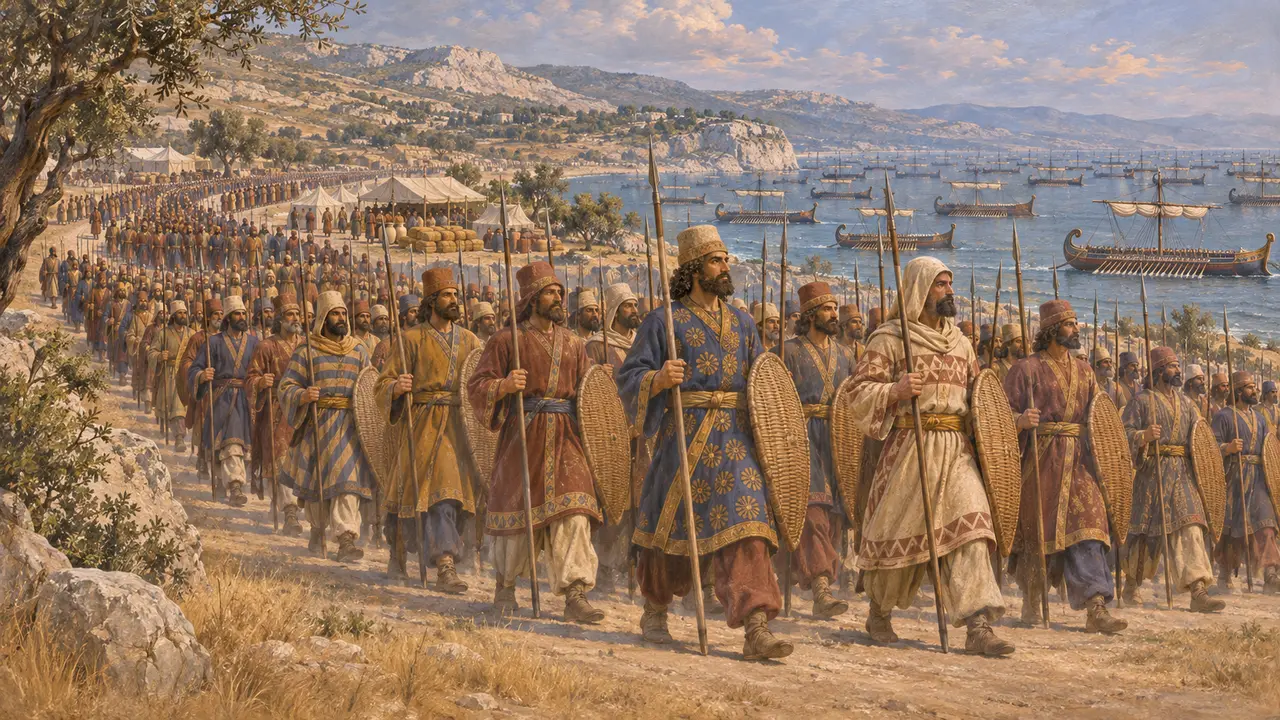
DisputedHerodotus gives 1,700,000 infantry and, with the fleet and camp followers, a total of over five million. He counts 1,207 warships. Aeschylus's thousand ships plus 207 fast ones is usually read as the same total. No modern historian accepts the land figures, which roads, water and supplies could not have sustained. Modern estimates of the army mostly run from under 100,000 to about 300,000, and many think the fleet was smaller too.
Herodotus 7.60, 7.89, 7.186; Aeschylus, Persians
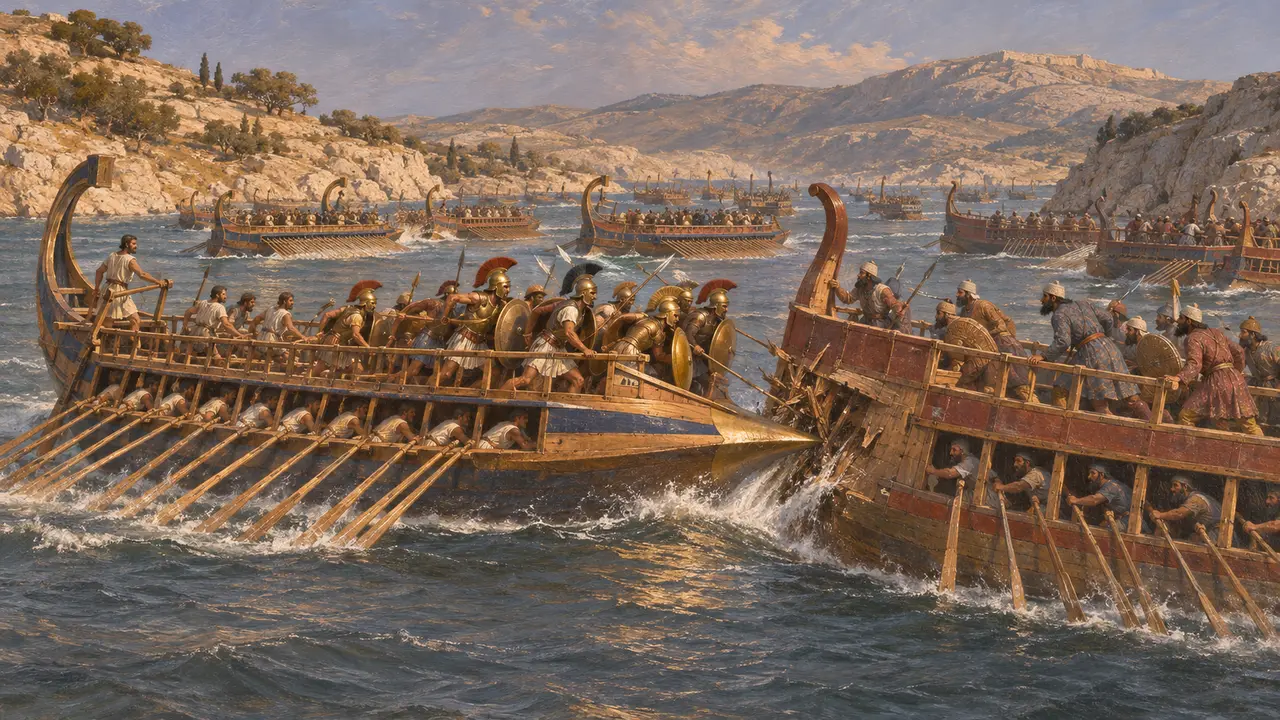
From Thermopylae to Salamis
Ancient accountIn August or September 480 the Persians forced the pass at Thermopylae, while the fleets fought indecisively off Artemisium. The army then marched into Attica and burnt the Acropolis of Athens. Probably in late September the Greek fleet defeated the Persian ships in the straits of Salamis. Herodotus says Xerxes then returned to Asia, leaving Mardonius with a picked army to finish the war.
Herodotus 7.201-8.120
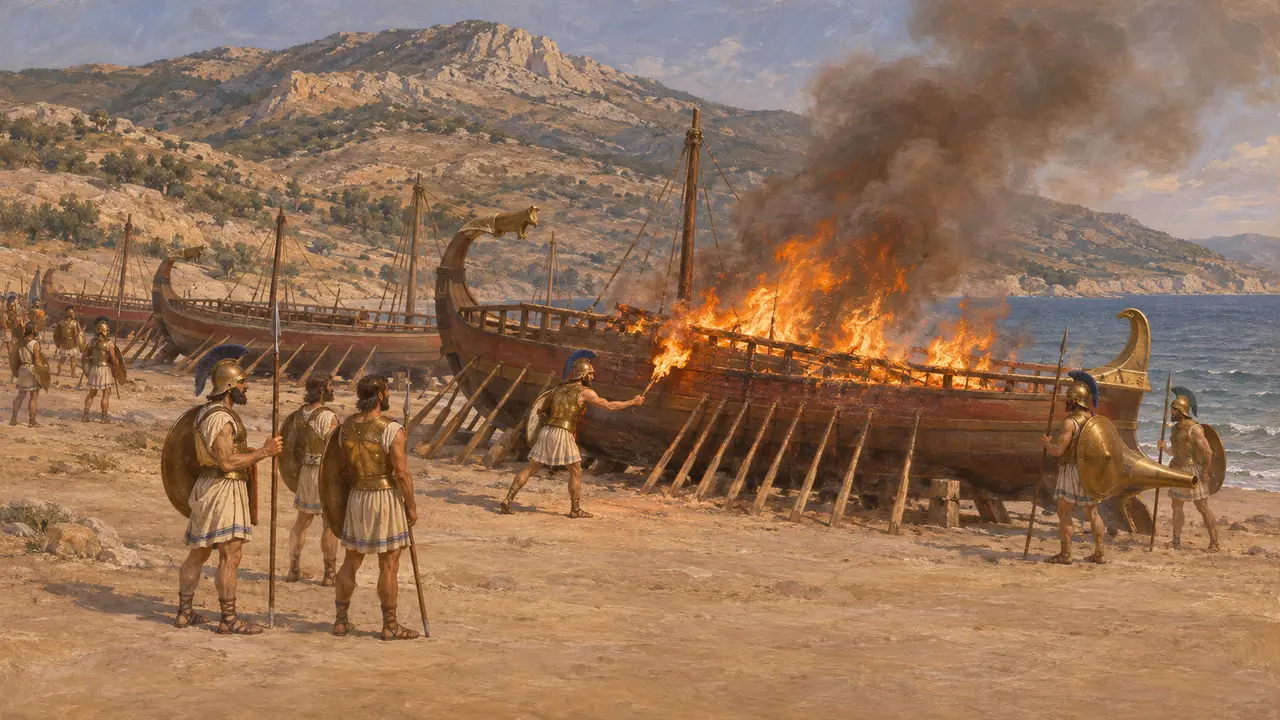
Plataea, Mycale and the Persian silence
DisputedIn 479 Mardonius reoccupied Athens, then fell in battle near Plataea. On the same day, by Herodotus's account, the Greeks burnt the Persian ships at Mycale. No Persian text records the war. Historians disagree on whether the court saw it as a serious defeat or as a setback on a distant frontier, since the empire's heartland was untouched.
Herodotus 9.1-106; P. Briant, From Cyrus to Alexander, 2002
Sources
- Herodotus, Histories, books 7-9
- Aeschylus, Persians
- P. Briant, From Cyrus to Alexander, 2002
- J. F. Lazenby, The Defence of Greece 490-479 BC, 1993
- G. Cawkwell, The Greek Wars: The Failure of Persia, 2005
- A. Kuhrt, The Persian Empire: A Corpus of Sources from the Achaemenid Period, 2007