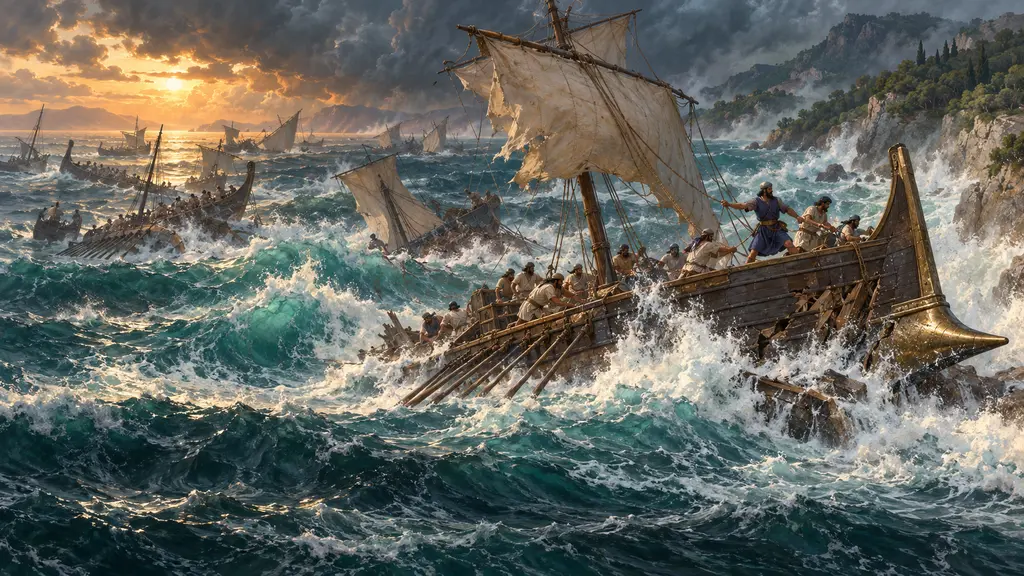
Magnesia
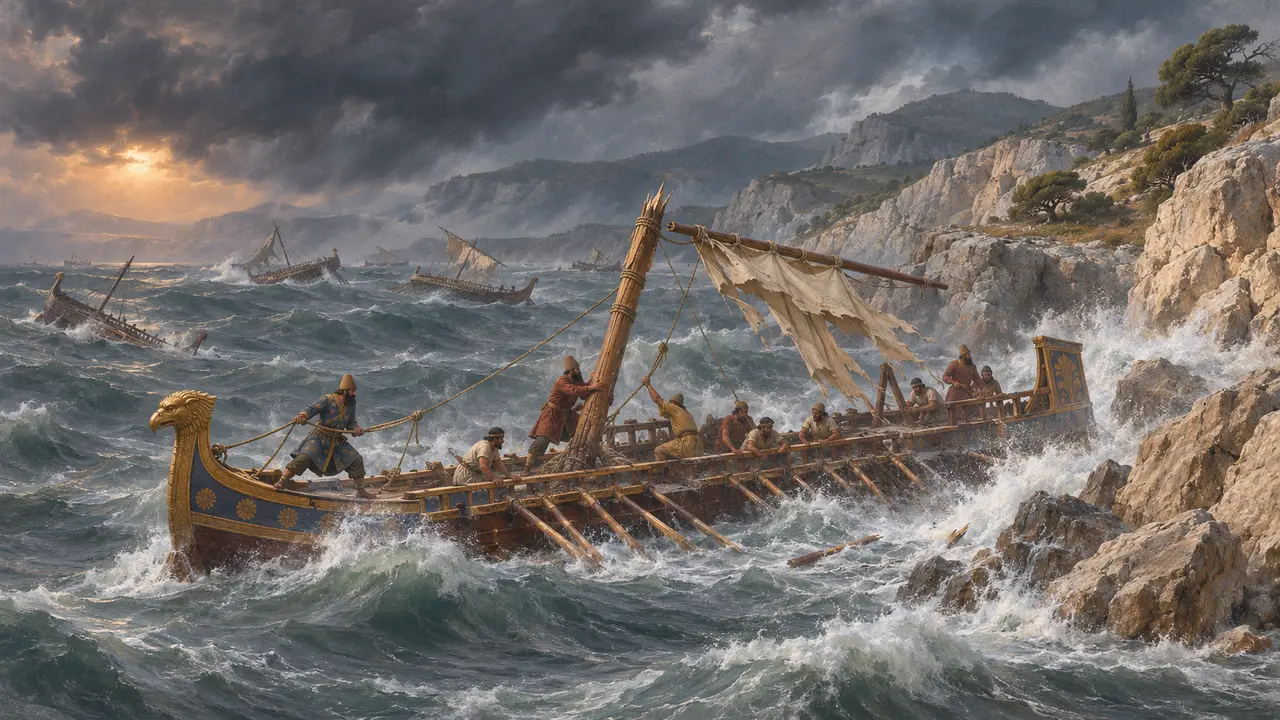
Coast of the Magnesian peninsula, Thessaly, where Xerxes' fleet met a storm in 480 BCE
In the game: Level 10: The Hot Gates
Magnesia is the hilly coastal region of eastern Thessaly, east of the Pagasaean gulf and including Mount Pelion. Herodotus places the great storm that damaged Xerxes' fleet on its shore in 480, shortly before the fighting at Artemisium. The coast gave poor shelter to a fleet of that size.
In the game: The game names Magnesia only in the Chronicle's entries and in the Encyclopedia's event article on the storm, as the coast where Xerxes' fleet was wrecked. It is not a level and has no mechanic of its own.
The coast and its anchorage
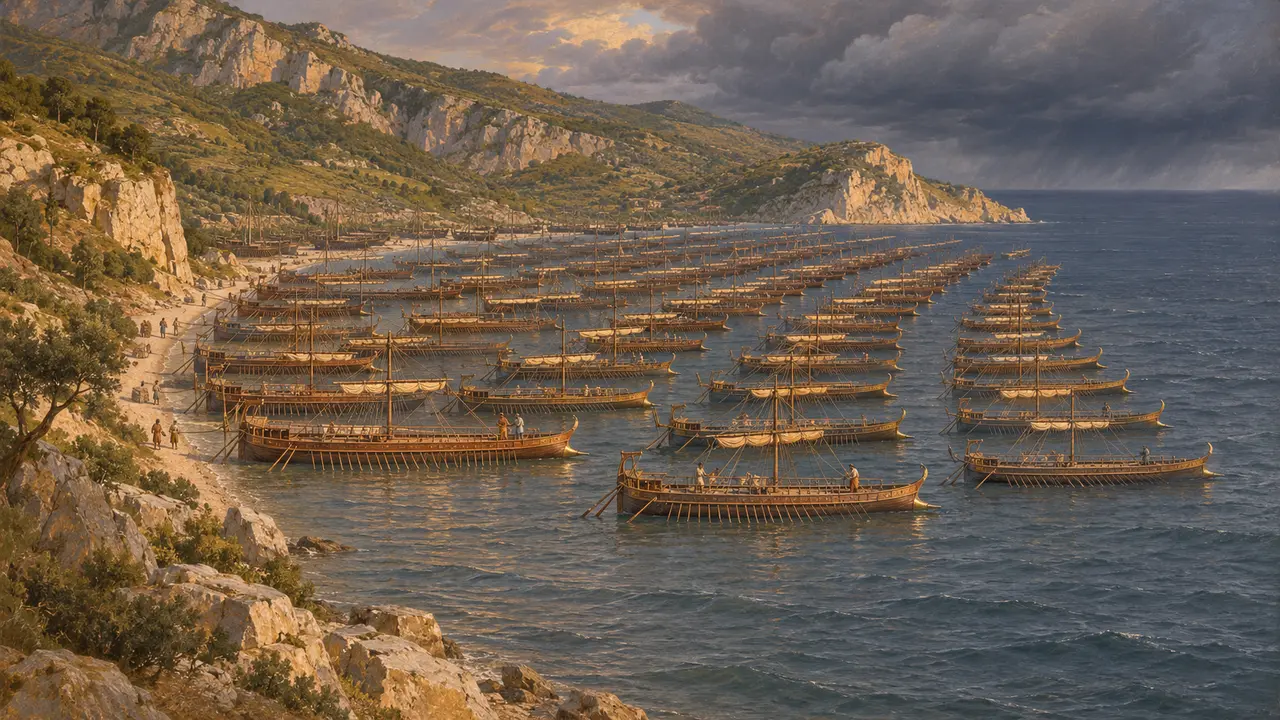
Ancient accountHerodotus says the fleet anchored on the Magnesian shore between the city of Casthanaea and the headland of Sepias. He says the beach was narrow, so the ships were moored in eight rows with their prows to the sea, the rest riding at anchor behind. The poor shelter explains why a storm did so much harm.
Herodotus 7.183
The storm of 480
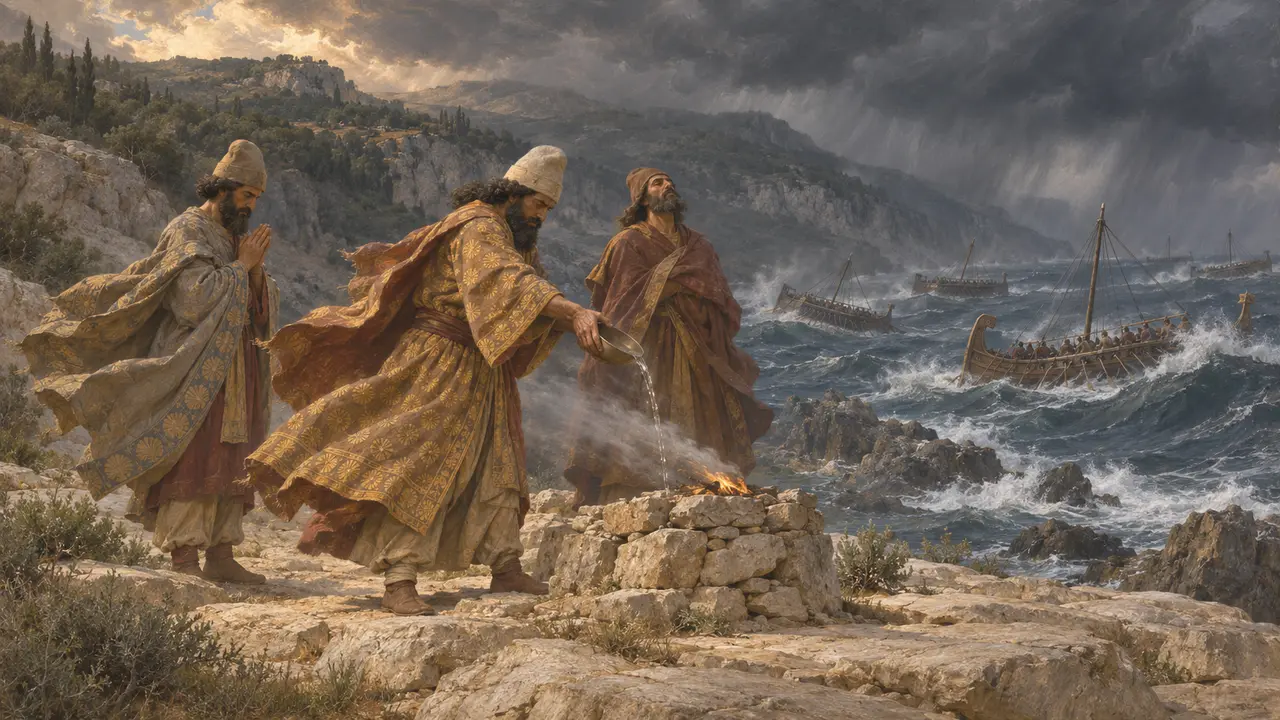
Ancient accountHerodotus says a violent wind from the east, which the locals called the Hellespontian, struck the fleet and blew for three days. He reports that the Magi sacrificed to the winds and to Thetis and the Nereids, and that the wind fell on the fourth day. He adds that it may have dropped of its own accord. He is the main source for the storm.
Herodotus 7.188-191
The size of the losses
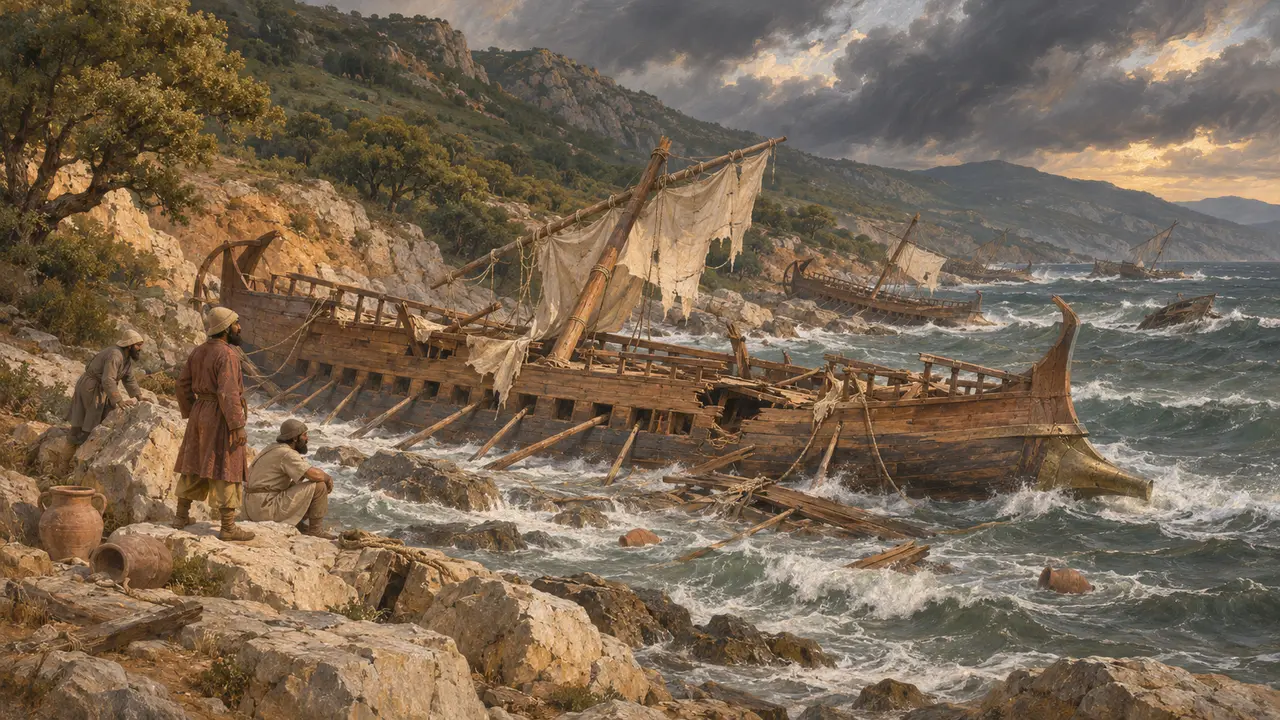
DisputedHerodotus says not fewer than 400 warships were lost, with many men and much property. Historians doubt his figures for the size of the fleets, so the total is probably too high, though a serious loss is not doubted. Greek lookouts on Euboea, he says, passed on the news of the wreck.
Herodotus 7.190-192
The second storm off Euboea
Ancient accountHerodotus tells of a second storm, off the Hollows of Euboea, which wrecked the Persian squadron sent round the island to cut off the Greeks. He says a god worked to bring the Persian numbers closer to the Greek. The losses therefore lessened the Persian advantage before the battles at Artemisium, in his telling.
Herodotus 8.13
The Athenian tale of Boreas
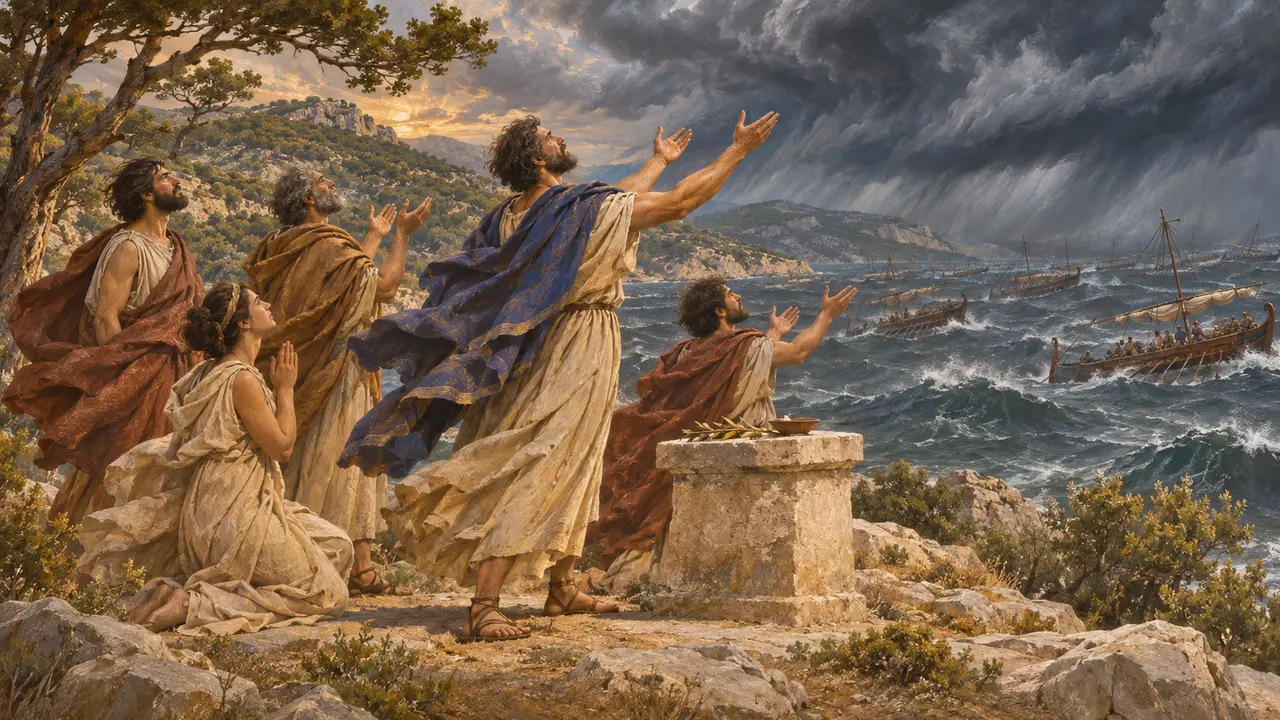
Later legendHerodotus reports that the Athenians said they had called on Boreas, the north wind, as their kinsman by marriage, and that he sent the storm. Herodotus says he cannot tell whether this was the reason for the storm. The story belongs to Athenian tradition of divine rescue and is not evidence of how the storm arose.
Herodotus 7.189
Sources
- Herodotus 7.183
- Herodotus 7.188-192
- Herodotus 8.13
- P. Briant, From Cyrus to Alexander, 2002