Encyclopedia › Soldiers and ships
The penteconter
Greek and Phoenician fifty-oared warship and long-range vessel, about 700-480 BCE
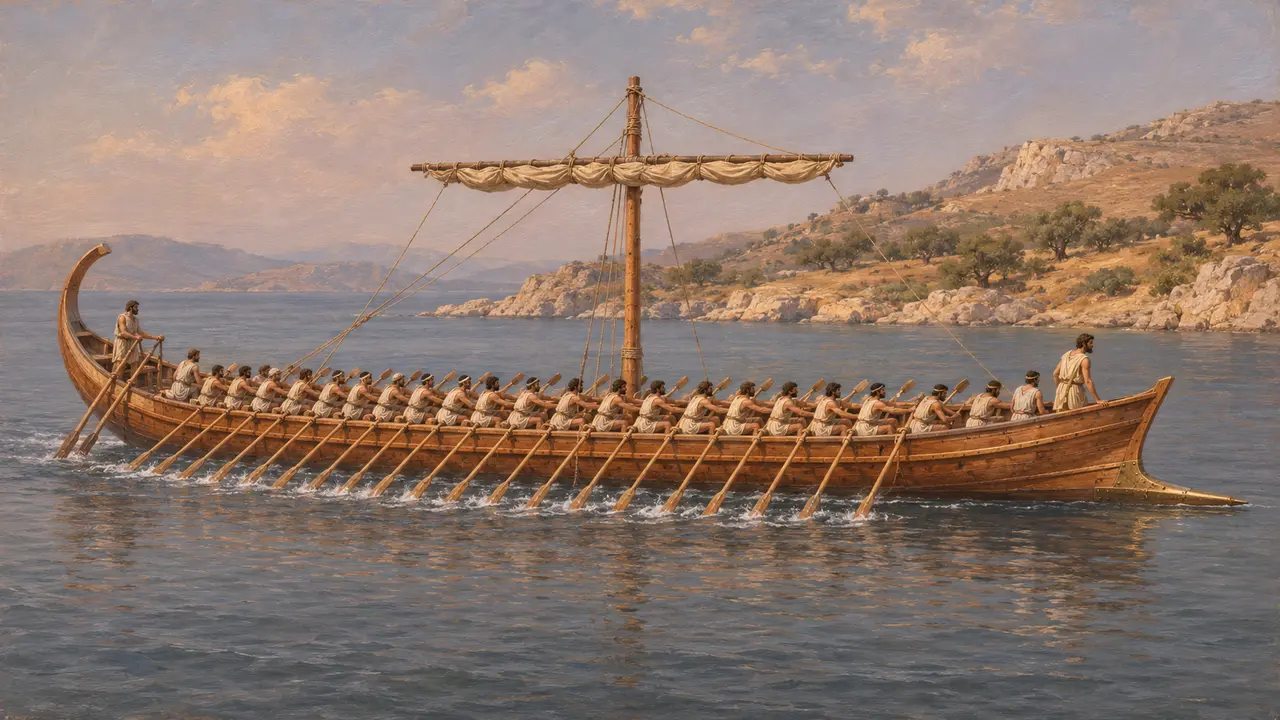
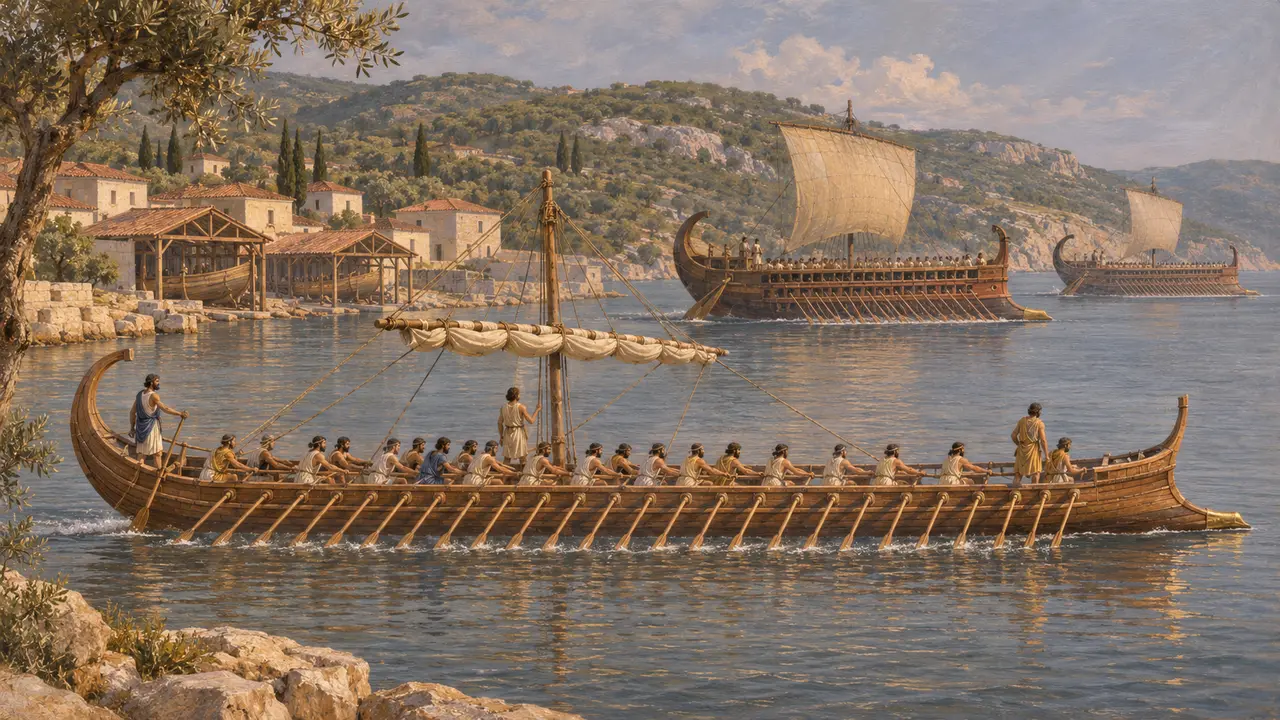
The penteconter was a long, narrow oared ship rowed by about fifty men, roughly twenty-five a side. Before the trireme spread in the late sixth century, it was the main warship and long-distance vessel of Greek and Phoenician seafarers. It still served in Persian fleets and ship-bridges in the age of Darius and Xerxes.
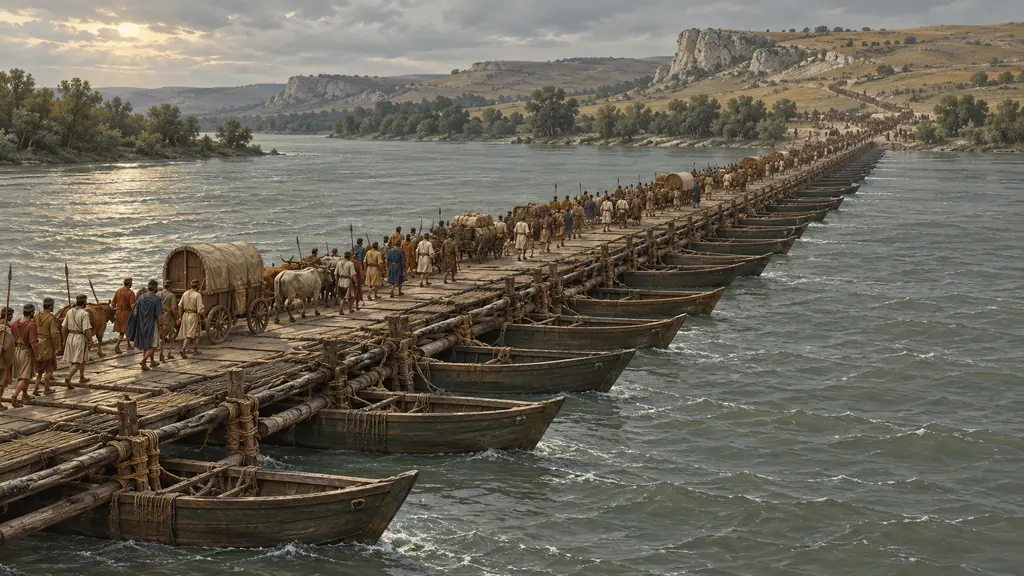
In the game: The game shows penteconters at the Ister bridge and along the coasts. Herodotus does not name the ship types used for Darius's Ister bridge, so penteconters there are a reasonable reconstruction, not a recorded fact.
A long ship for fifty rowers
In the recordGreek vase paintings of the eighth to sixth centuries show long open ships with a single bank of oarsmen and a pointed ram at the bow. Assyrian palace reliefs of about 700 from Nineveh show Phoenician oared warships, some with rowers on two levels, which allowed a shorter hull for the same crew. Modern reconstructions suggest a single-level penteconter was probably roughly 30 metres long or more.
L. Casson, Ships and Seamanship in the Ancient World, 1971
Phocaean voyages and the fleet of Polycrates
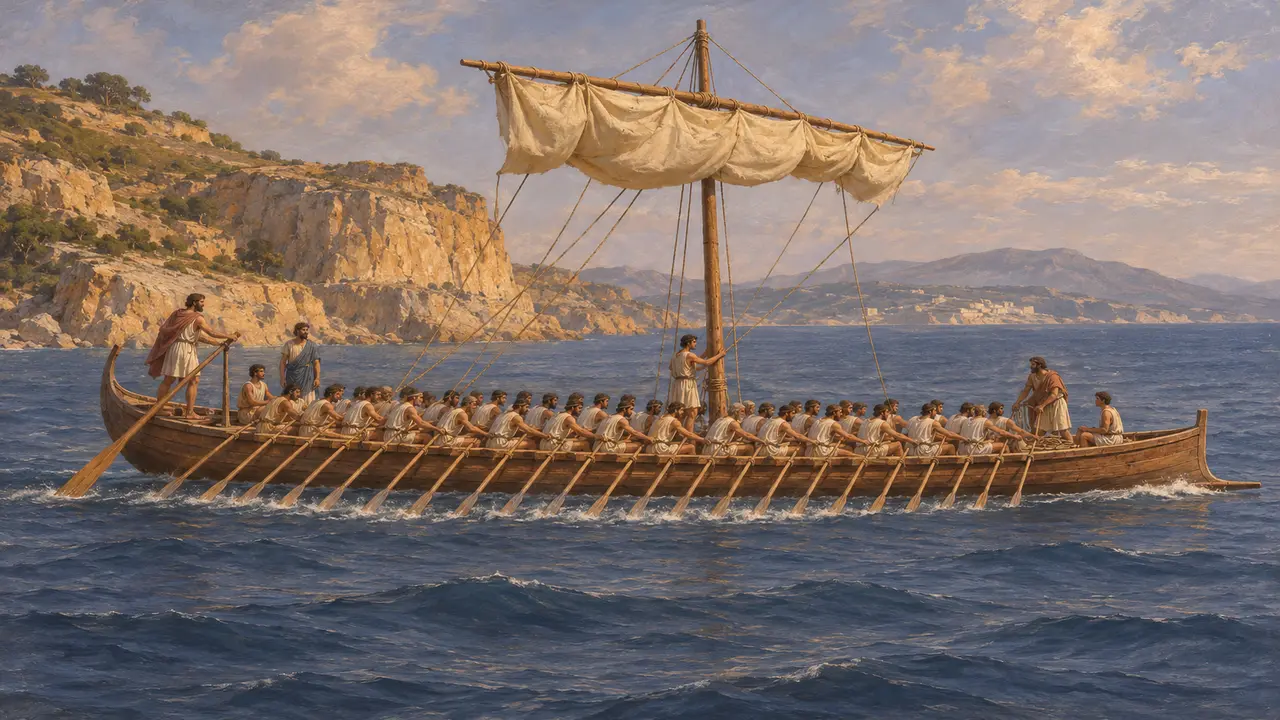
Ancient accountHerodotus says the Phocaeans of Ionia were the first Greeks to make long voyages. He says they sailed to the Adriatic, Iberia and Tartessus in penteconters rather than round-hulled merchantmen. He also says Polycrates, tyrant of Samos, built his sea power on a hundred penteconters, though the ships he sent to help Cambyses against Egypt in 525 were triremes.
Herodotus 1.163; 3.39; 3.44
Ships at the Ister and the Hellespont
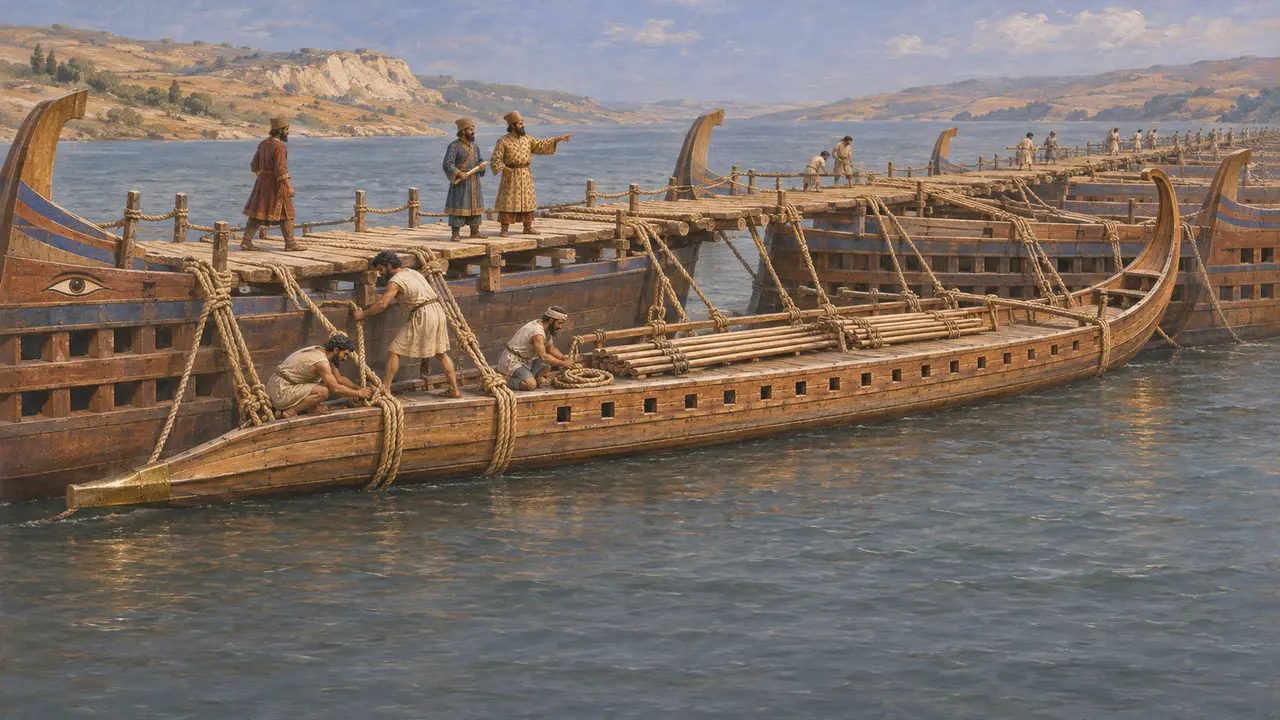
Ancient accountHerodotus says the Ionian fleet sailed into the Black Sea and bridged the Ister for Darius's Scythian campaign about 513, but he does not say what kind of ships formed the bridge. For Xerxes' bridges over the Hellespont in 480, he states that penteconters and triremes were lashed together. He also lists penteconters among the many smaller craft that followed Xerxes' fleet.
Herodotus 4.89; 7.36; 7.97
When the trireme took over
DisputedThucydides says Greek navies before the Persian Wars were made up mostly of penteconters and long boats. He dates the first large trireme fleets, in Sicily and at Corcyra, to shortly before Darius died. Historians debate how fast the change came and who drove it. H. T. Wallinga argued that big trireme navies were largely a Persian creation from Cambyses onwards, paid for by the King, while others give more weight to Greek and Phoenician states.
Thucydides 1.13-14; H. T. Wallinga, Ships and Sea-Power before the Great Persian War, 1993
Fifty oarsmen in the heroic age
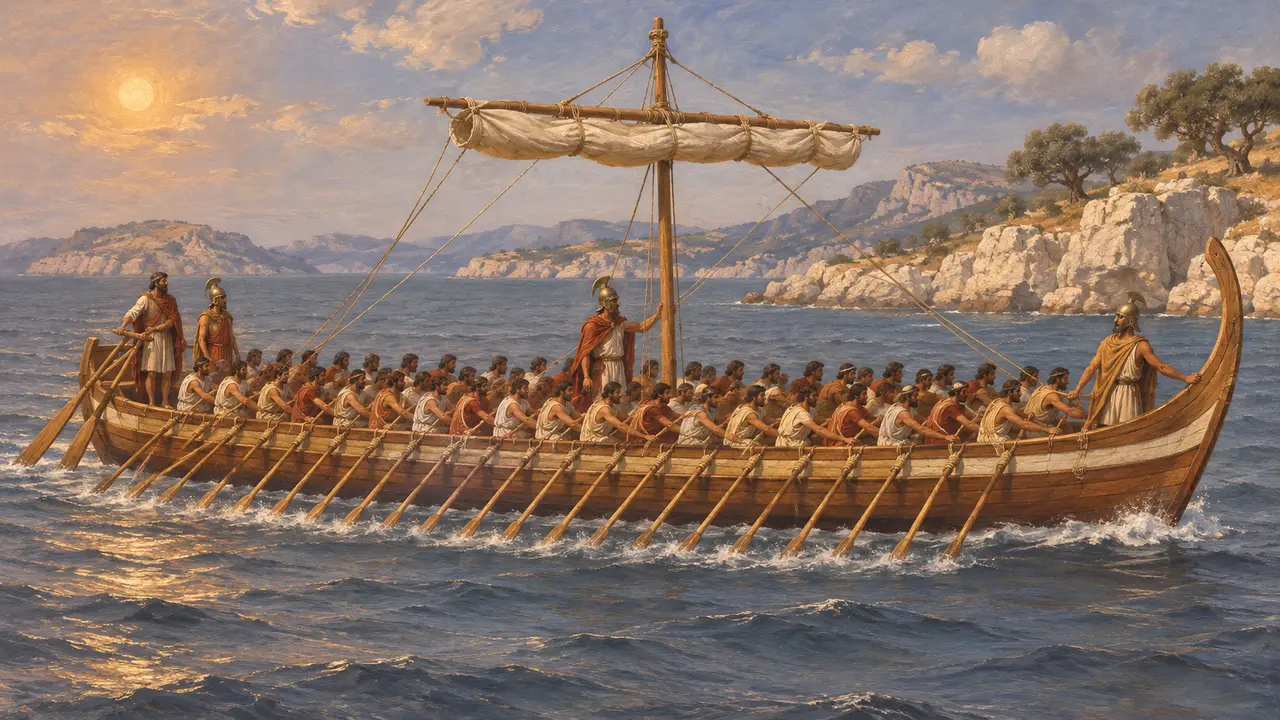
Later legendIn the Homeric Catalogue of Ships, Philoctetes leads seven ships, each rowed by fifty men. Later Greek tradition gave the Argo a crew of about fifty heroes. These poems were shaped long after any real expedition and show only that Greeks imagined their heroes sailing in fifty-oared ships.
Homer, Iliad 2.718-720
Sources
- Herodotus, Histories 1.163; 3.39; 3.44; 4.89; 7.36; 7.97
- Thucydides 1.13-14
- L. Casson, Ships and Seamanship in the Ancient World, 1971
- H. T. Wallinga, Ships and Sea-Power before the Great Persian War, 1993
- J. S. Morrison, J. F. Coates and N. B. Rankov, The Athenian Trireme, 2000
- Homer, Iliad 2