Idanthyrsus
Scythian king who faced Darius's invasion north of the Ister, about 513 BCE
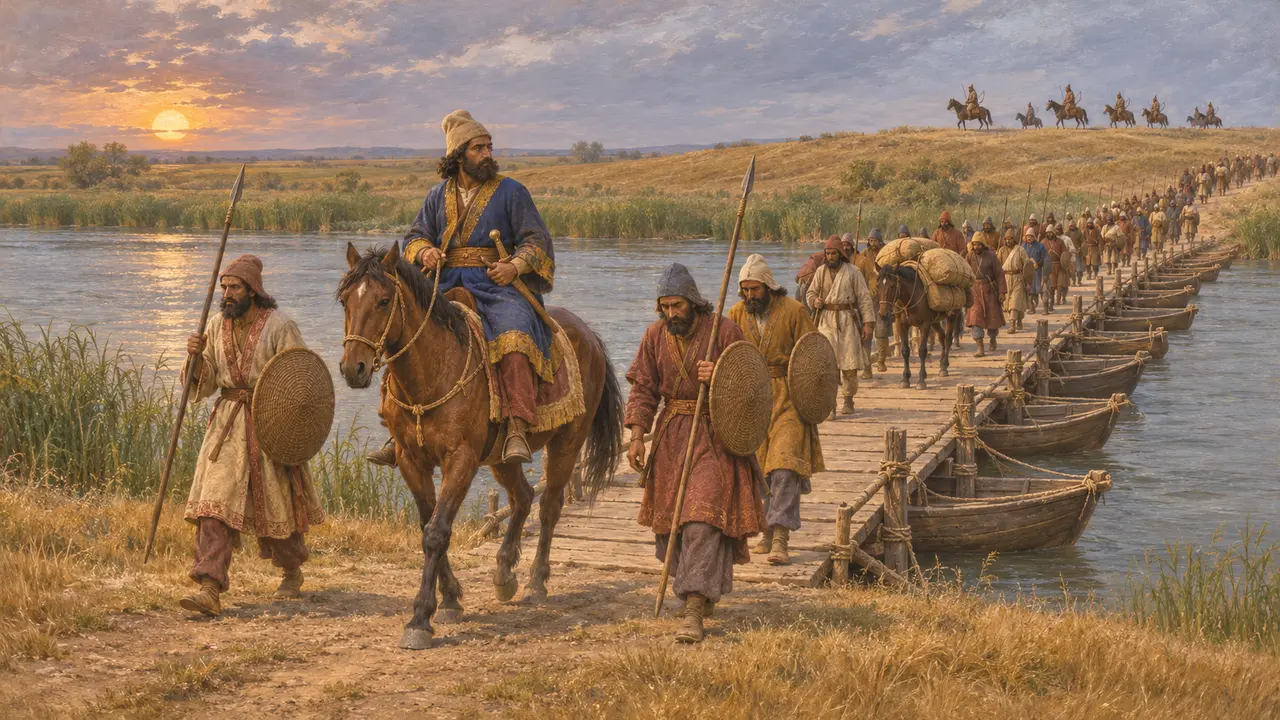
In the game: Level 6: The Bridge of Boats
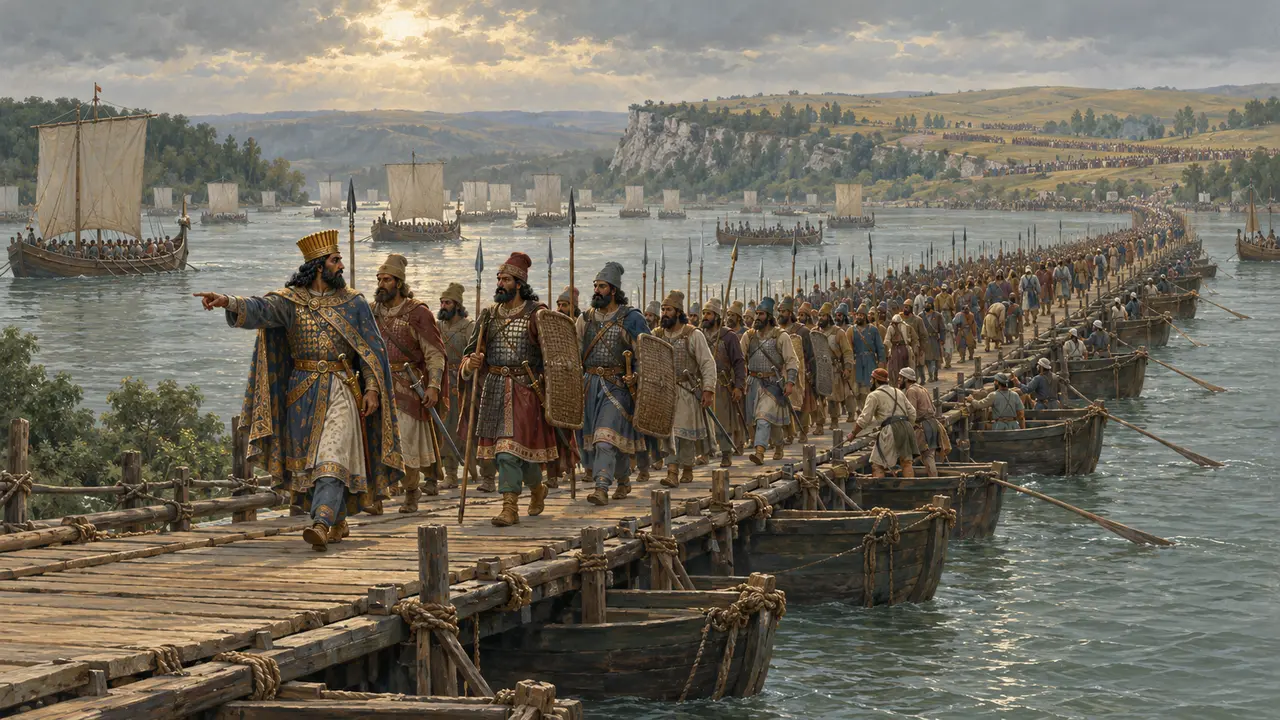
Idanthyrsus is the name Herodotus gives to the Scythian king who faced Darius's army north of the Ister. In Herodotus's story he refused a set battle, drew the Persians across the steppe, and answered Darius's demand that he fight or submit. The name is known from Herodotus; no surviving Persian or Scythian text is known to name him.
In the game: The game names Idanthyrsus only in the event articles on Darius's Scythian campaign and the debate at the Ister bridge. He has no figure, level or mechanic of his own.
Who Herodotus says he was
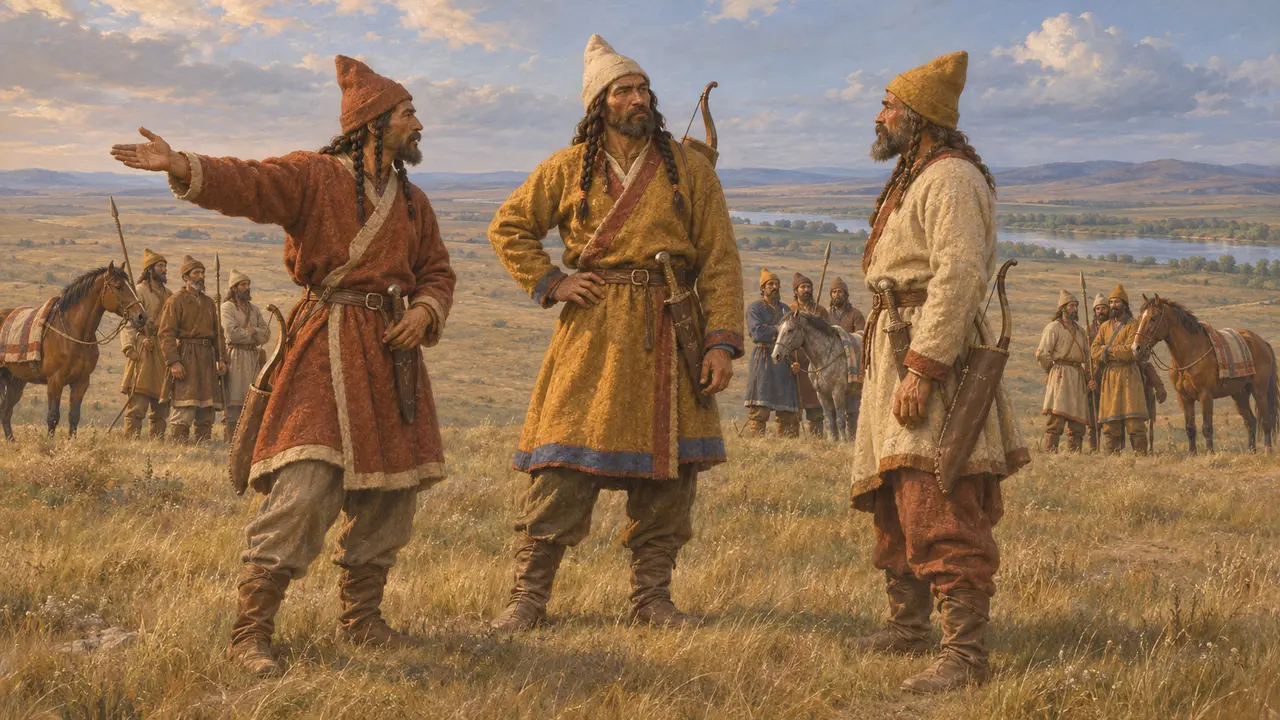
Ancient accountHerodotus calls Idanthyrsus a king of the Scythians and names him as the leader who faced Darius. He says two other Scythian kings, Scopasis and Taxacis, joined him, so the defence was shared between three rulers and their peoples.
Herodotus 4.120
Withdrawal instead of battle
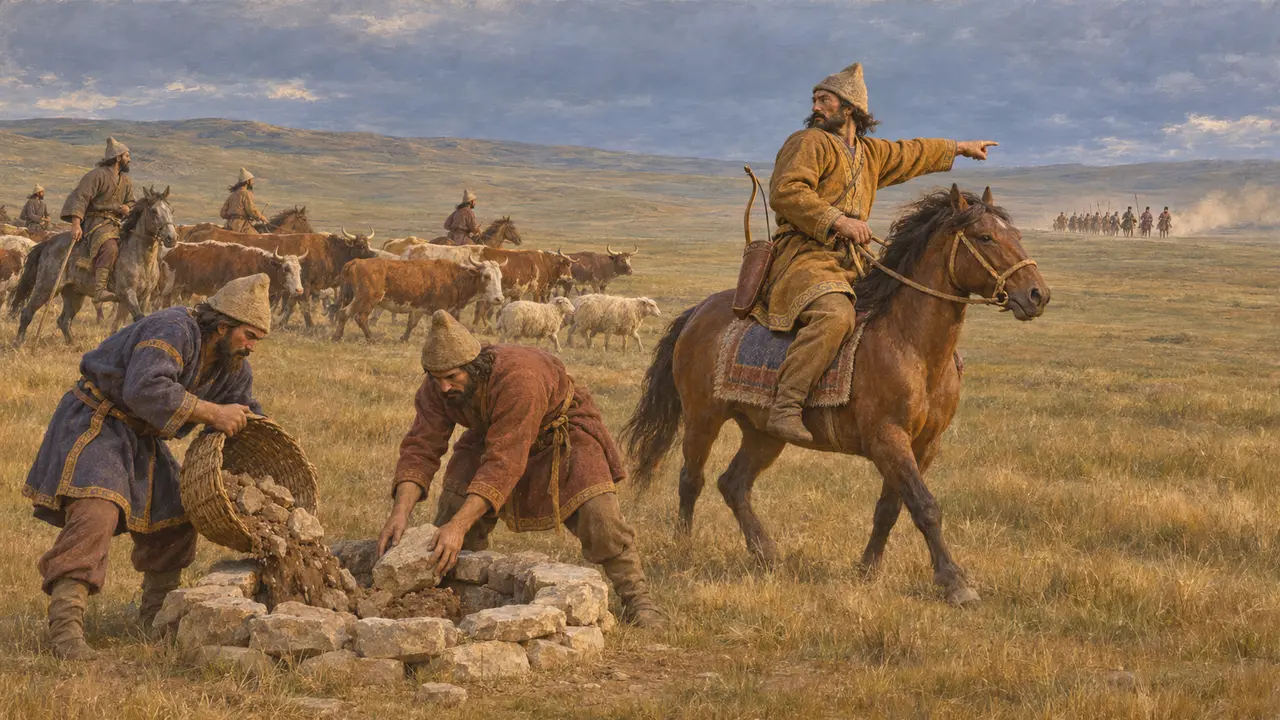
Ancient accountHerodotus says the Scythians had no towns or fields to defend, so they withdrew before the Persians, blocked wells and drove off their herds. They drew the Persians after them and harassed foragers with horsemen. Darius, on this telling, could not force a decisive fight.
Herodotus 4.120-4.125
The message to Darius
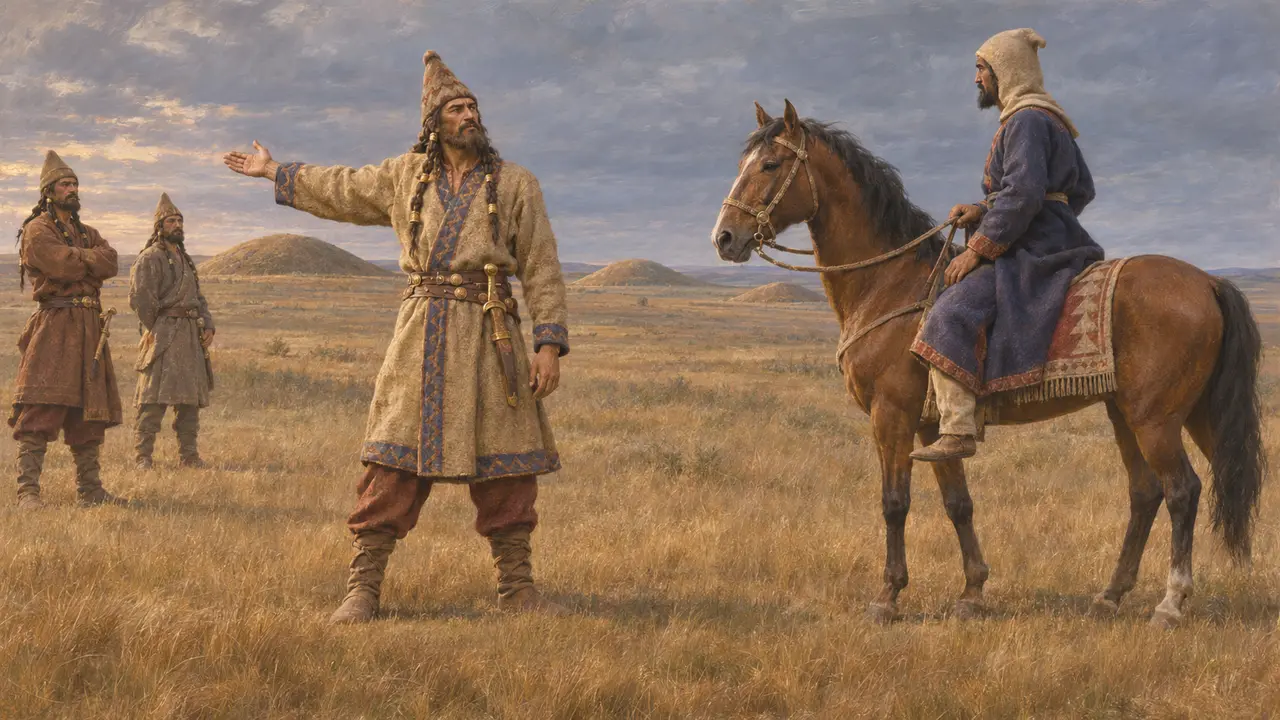
Ancient accountHerodotus reports that Darius sent a rider to Idanthyrsus asking why he kept running and why he would not either fight or submit. Idanthyrsus replied that he was doing nothing unusual, that the Scythians had no cities or crops to lose, and that Darius would learn who he was when he tried to disturb the Scythian ancestral graves. He added that Darius was not his master.
Herodotus 4.126-4.127
The bird, mouse, frog and arrows
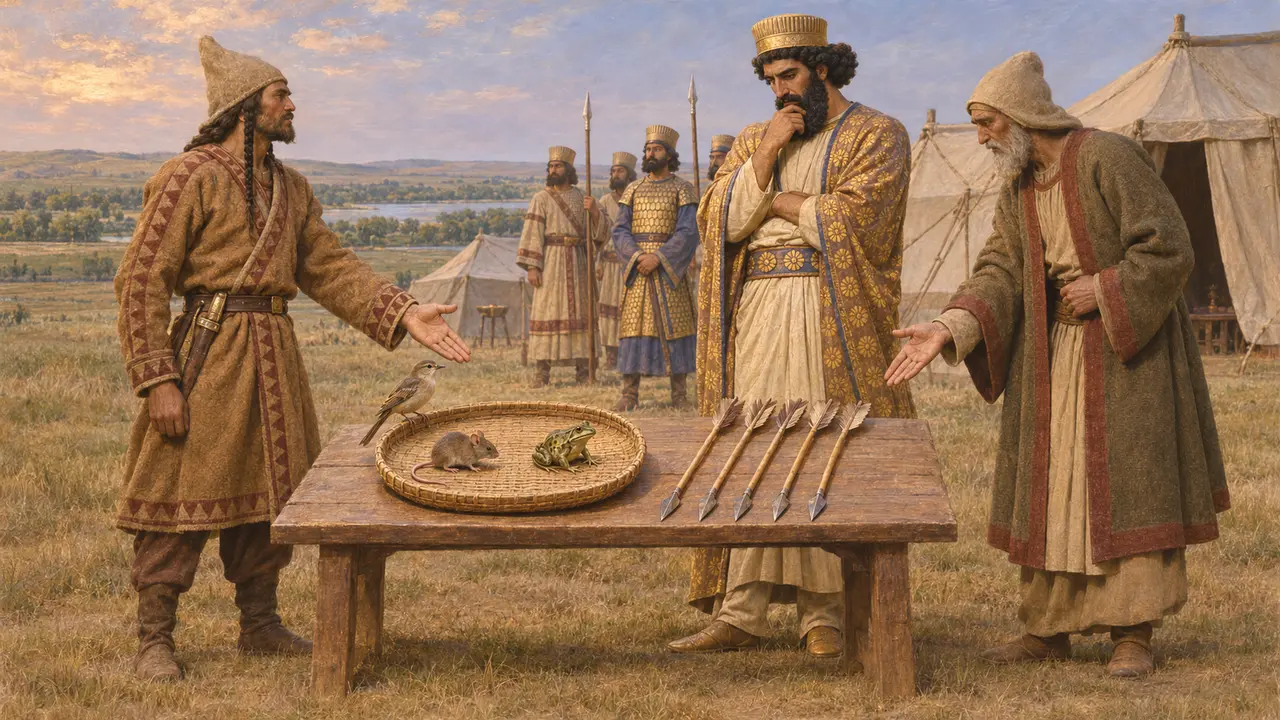
Later legendHerodotus says the Scythians sent Darius a bird, a mouse, a frog and five arrows. Darius took it as a surrender of land and water, while Gobryas read it as a warning that the Persians would be shot unless they escaped like birds, mice or frogs. The scene has the shape of a moral tale and cannot be tested against any other source.
Herodotus 4.131-4.132
What historians make of the campaign
DisputedHerodotus presents the campaign as a failure, and Darius's retreat as a narrow escape. Many modern historians doubt that the aim was ever to destroy the Scythians, and note that the Persians kept their hold on Thrace afterwards. How far Herodotus's named Scythian leaders reflect real individuals cannot be confirmed.
P. Briant, From Cyrus to Alexander, 2002
Sources
- Herodotus 4.120-4.132
- P. Briant, From Cyrus to Alexander, 2002