Encyclopedia › Battles and events
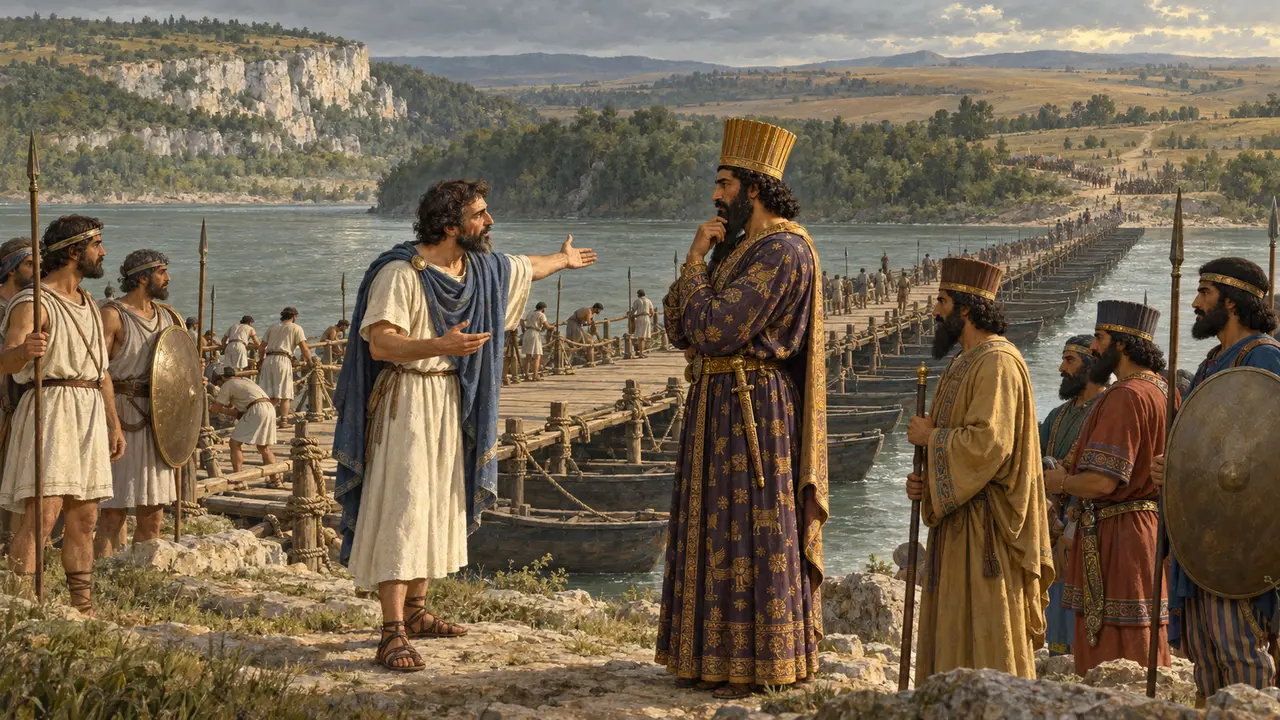
The debate at the Ister bridge
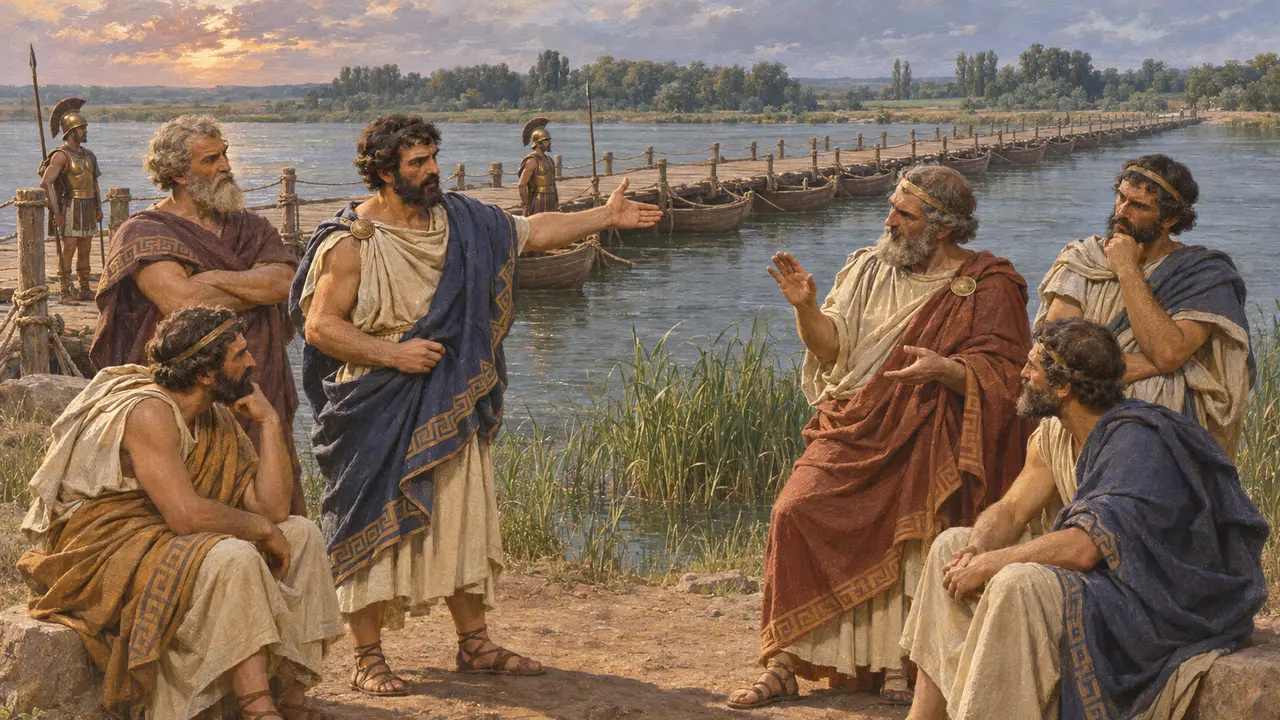
Council of Greek tyrants at the Danube bridge, Scythian campaign, about 513 BCE
In the game: Level 6: The Bridge of Boats
In about 513, while Darius campaigned against the Scythians north of the Ister (Danube), Greek contingents from Ionia and the Hellespont guarded the bridge of boats that was his road home. Herodotus tells how their tyrants debated whether to break it and strand the King, and how Histiaeus of Miletus persuaded them to keep it. The story shaped later Greek views of Ionian loyalty and of the men who went on to stir up the Ionian Revolt.
In the game: The game follows Herodotus: Coes advises keeping the bridge, Miltiades urges breaking it and Histiaeus saves it. The whole episode is known only from Herodotus, and Miltiades' part may be a later Athenian story.
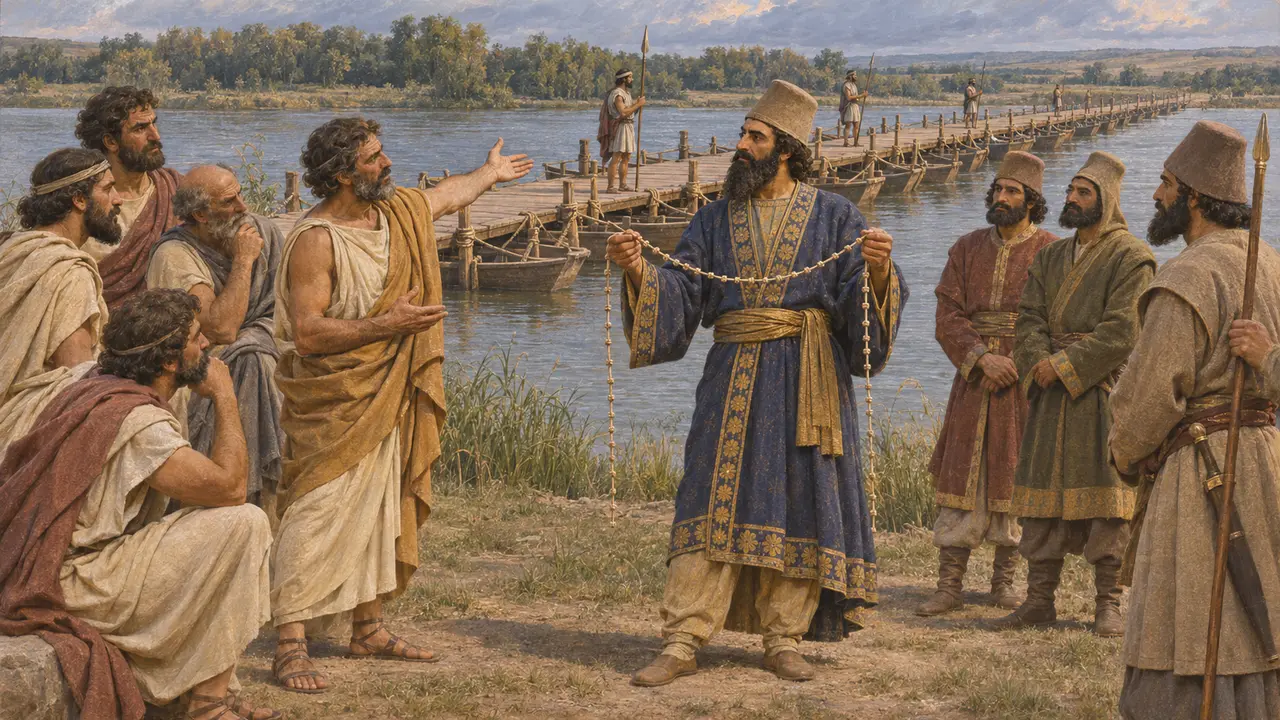
Coes advises the King
Ancient accountHerodotus says that once the army had crossed the Ister, Darius ordered the Ionians to break the bridge and march with him. Coes, general of the men of Mytilene, advised leaving it standing under its builders' guard as a way back in case the Scythians could not be found or brought to battle, and Darius agreed. He tied sixty knots in a cord and told the Ionians to untie one each day, and to sail home if he had not returned when the knots ran out.
Herodotus 4.97-98
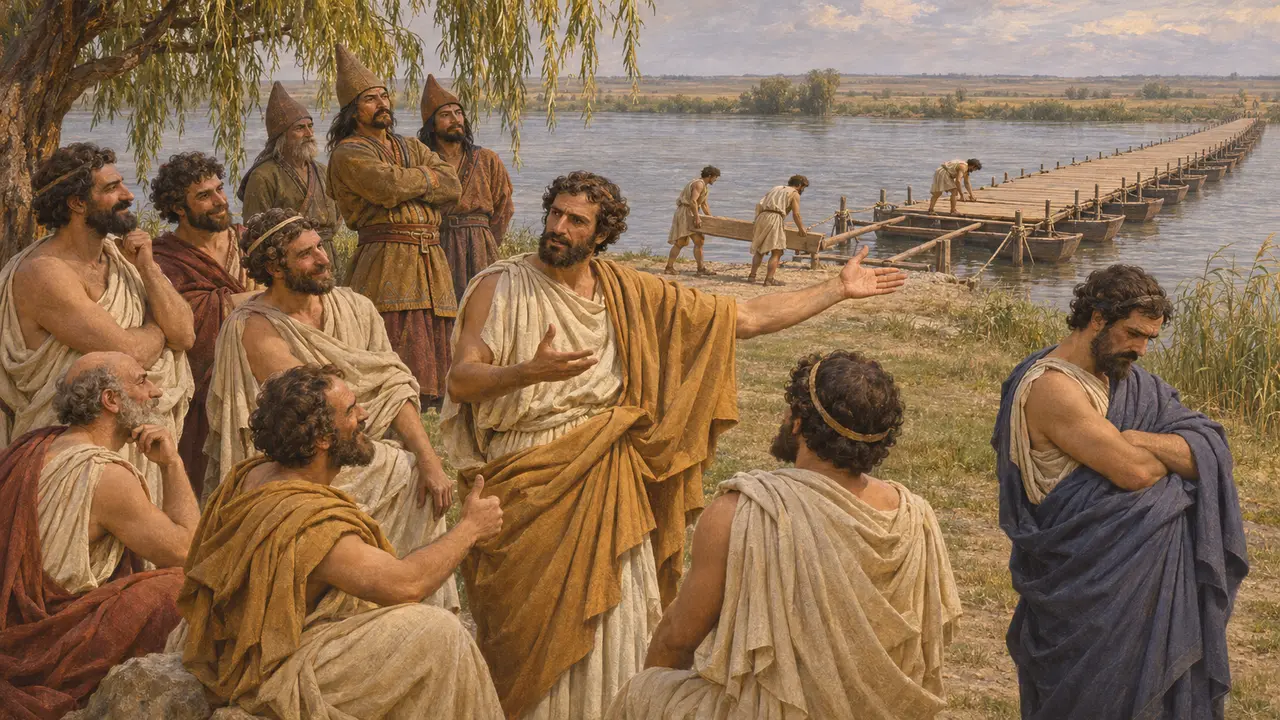
The tyrants' vote
Ancient accountScythians came to the bridge twice, the second time after the sixty days had passed, urging the Ionians to break it and go. Herodotus reports that Miltiades of Athens, tyrant of the Chersonese, wanted to agree. Histiaeus of Miletus answered that each tyrant ruled his city through Persian power and would fall to popular rule without it. The others sided with him, broke only the stretch nearest the Scythian bank and told the Scythians they would destroy the rest.
Herodotus 4.133-139
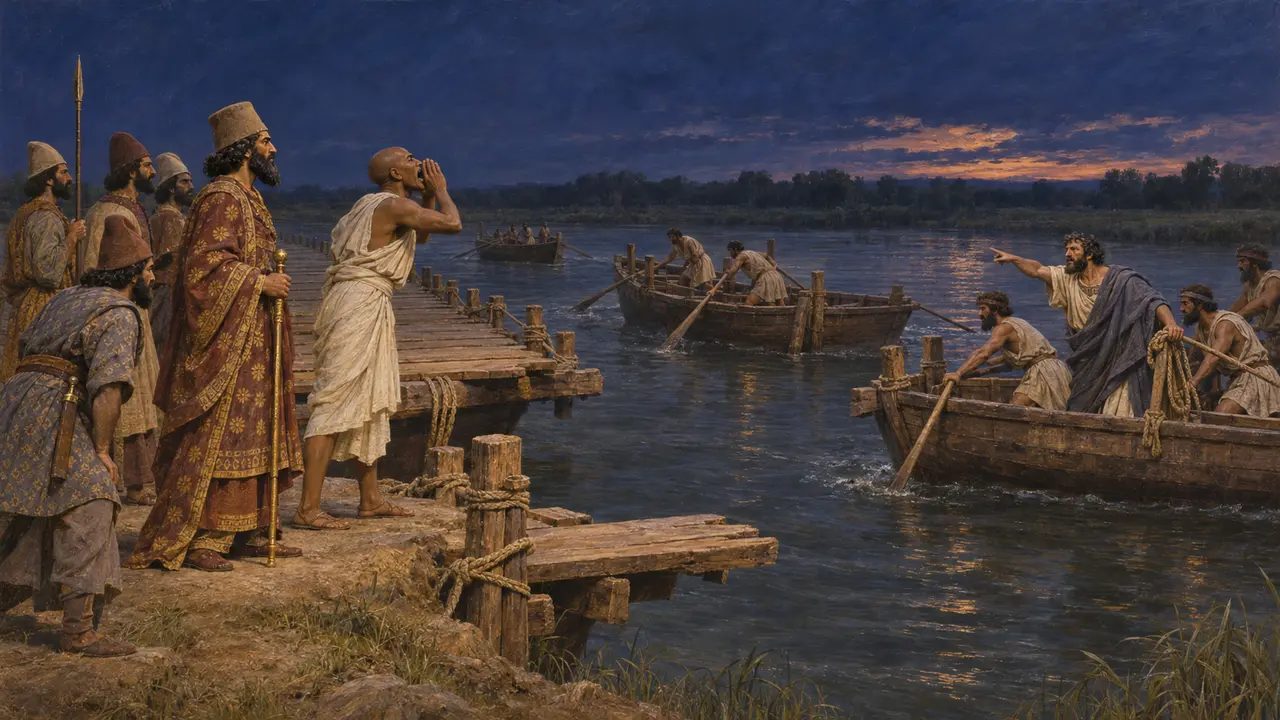
The King's return and the rewards
Ancient accountDarius reached the river at night and found the northern end gone. Herodotus says an Egyptian with a very loud voice called for Histiaeus, who brought the ships back and restored the crossing. Later, at Sardis, the King rewarded both men: Coes asked to be made tyrant of Mytilene, and Histiaeus received Myrcinus in Thrace. Herodotus adds a Scythian verdict that the Ionians were the most cowardly of free men and the most devoted of slaves.
Herodotus 4.140-142; 5.11
Did Miltiades really propose it
DisputedHistorians doubt this part of the story. Miltiades was later tried at Athens for his tyranny in the Chersonese and acquitted, and many think the tale of his proposal grew up to show him as an old enemy of Persia. Others note that he seems to have stayed in the Chersonese, a Persian vassal, until about 493, although Herodotus's account of those years is confused. The date of the campaign is also uncertain; about 513 is the usual estimate.
Herodotus 6.40; 6.104; P. Briant, From Cyrus to Alexander, 2002
The silence of the Persian record
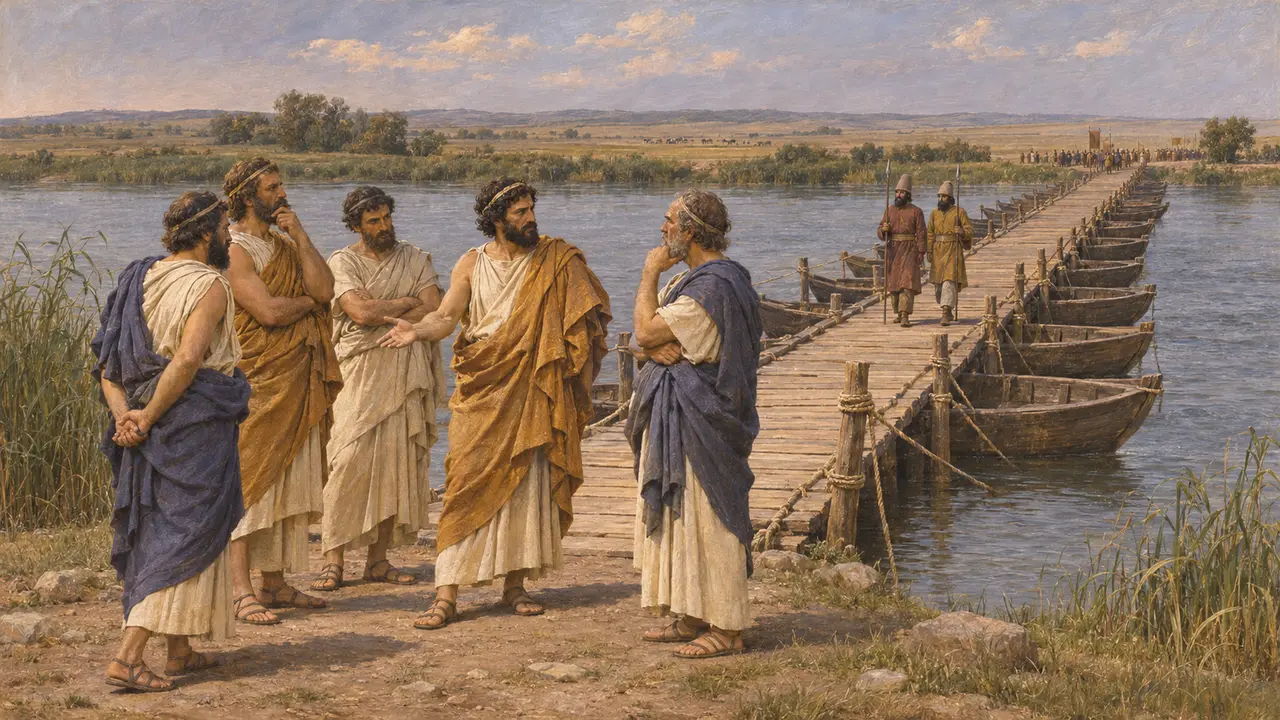
In the recordNo Persian text describes the bridge or the debate. Darius's tomb inscription at Naqsh-e Rostam lists among his subject peoples the Saka beyond the sea, whom many scholars link with this European campaign, though some place them elsewhere. The Persian record shows a claim to lands across the water, but the Greeks' choice at the bridge is known only from Greek tradition.
DNa
Sources
- Herodotus 4.97-98; 4.133-142
- Herodotus 5.11; 6.40; 6.104
- DNa
- P. Briant, From Cyrus to Alexander, 2002
- M. Waters, Ancient Persia, 2014