Tyrants of the Greek cities
Greek rulers who held Ionian and Hellespontine cities for the King, about 545-479 BCE
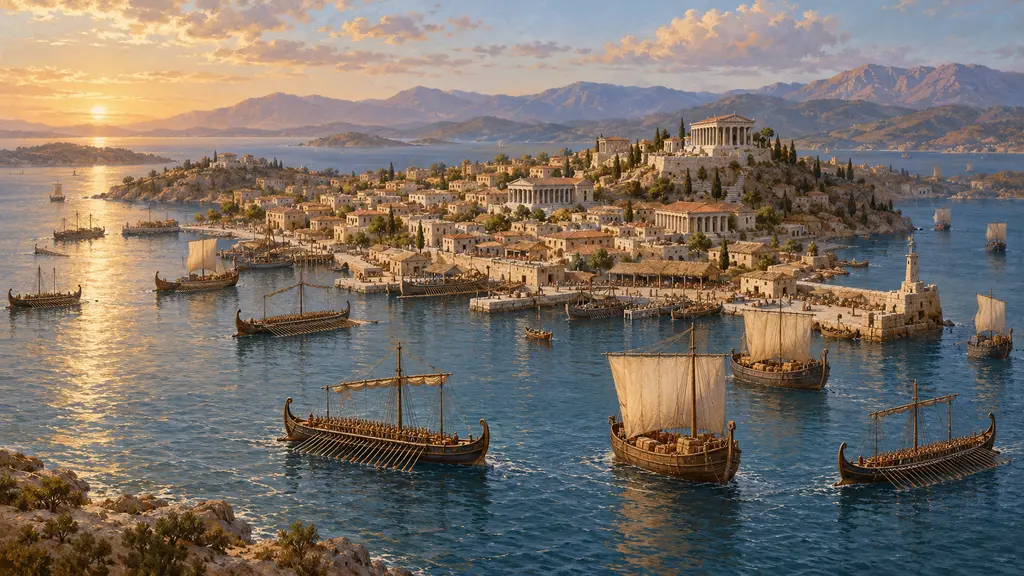
After Cyrus took Lydia and his generals subdued the Greek coast, the Persians governed many Greek cities through single local rulers called tyrannoi, a word for a ruler outside the customary constitution, not necessarily a cruel one. These men answered to the King's satraps at Sardis and Dascylium, served in his campaigns and owed their place to Persian backing. That loyalty broke in the Ionian Revolt of 499.
In the game: The game names Histiaeus, Aristagoras and Hippias as Greek rulers under the King. The first two did rule Miletus for Darius, but Hippias had lost Athens in 510 and served Persia as an exile hoping to be restored.
Rulers held up by Persian power
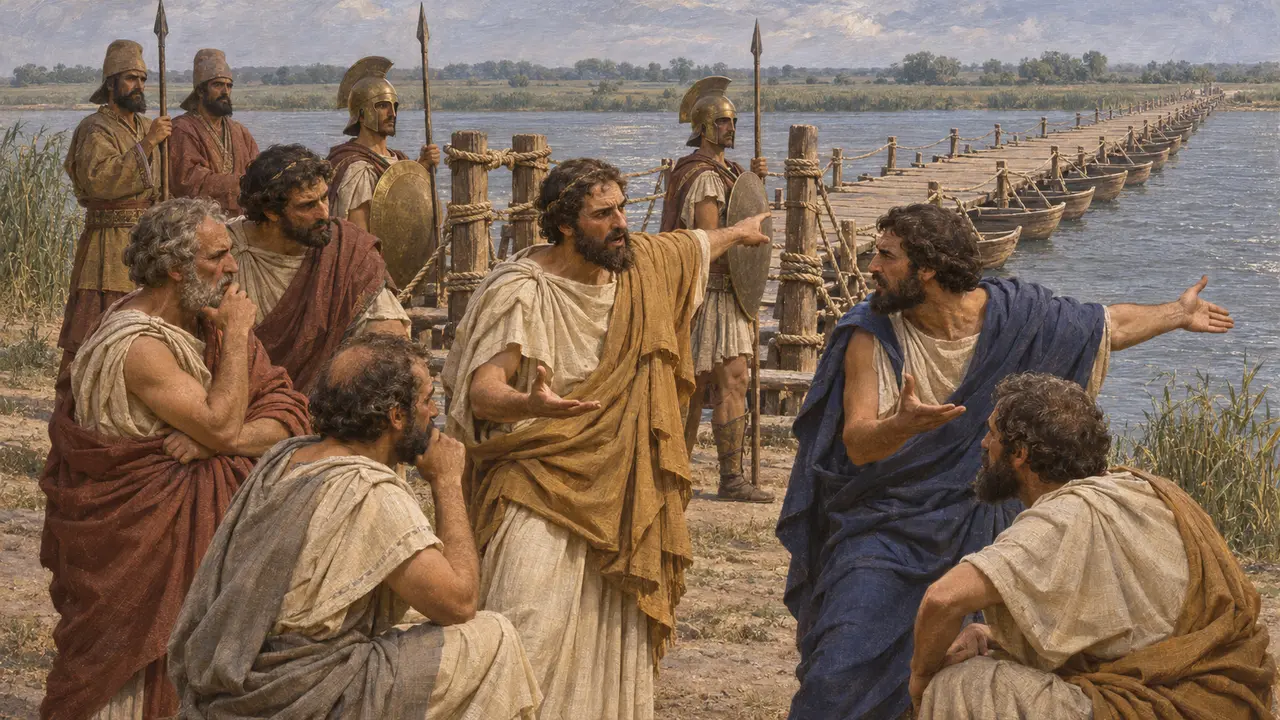
Ancient accountHerodotus says that during Darius's Scythian campaign, about 513, the tyrants of the Ionian and Hellespontine cities guarded the bridge over the Ister. When Miltiades urged them to break it and strand the King, Histiaeus of Miletus replied that each of them ruled only because of Darius, and that without him the cities would choose popular government. Herodotus then lists these rulers by name, among them Strattis of Chios and Aeaces of Samos.
Herodotus 4.137-138
Histiaeus and Aristagoras of Miletus
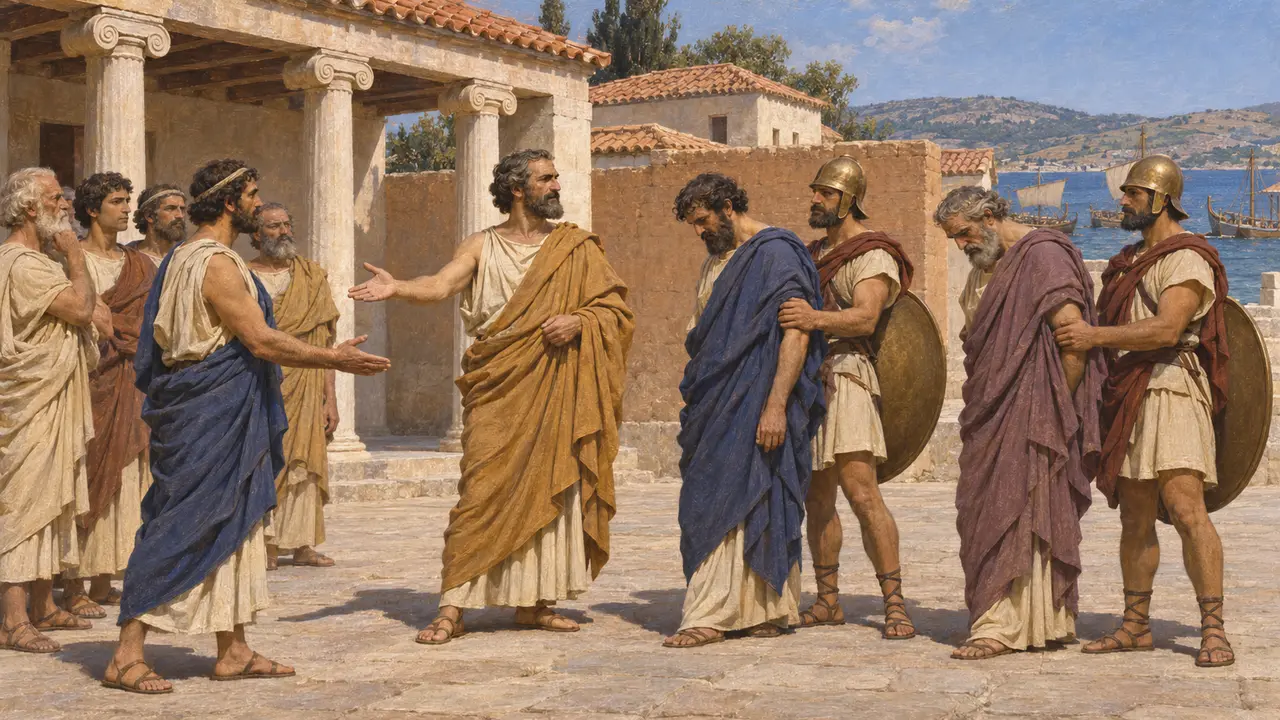
Ancient accountHerodotus says Darius rewarded Histiaeus with land at Myrcinus in Thrace, then kept him at court in Susa after Megabazus warned of his ambitions. His son-in-law Aristagoras governed Miletus in his place. After a failed attack on Naxos with Persian forces, Aristagoras turned against the King in about 499, gave up his own tyranny and had the tyrants of other cities seized and handed over to their citizens.
Herodotus 5.11; 5.23-25; 5.30-38
Hippias, an exile at the King's court
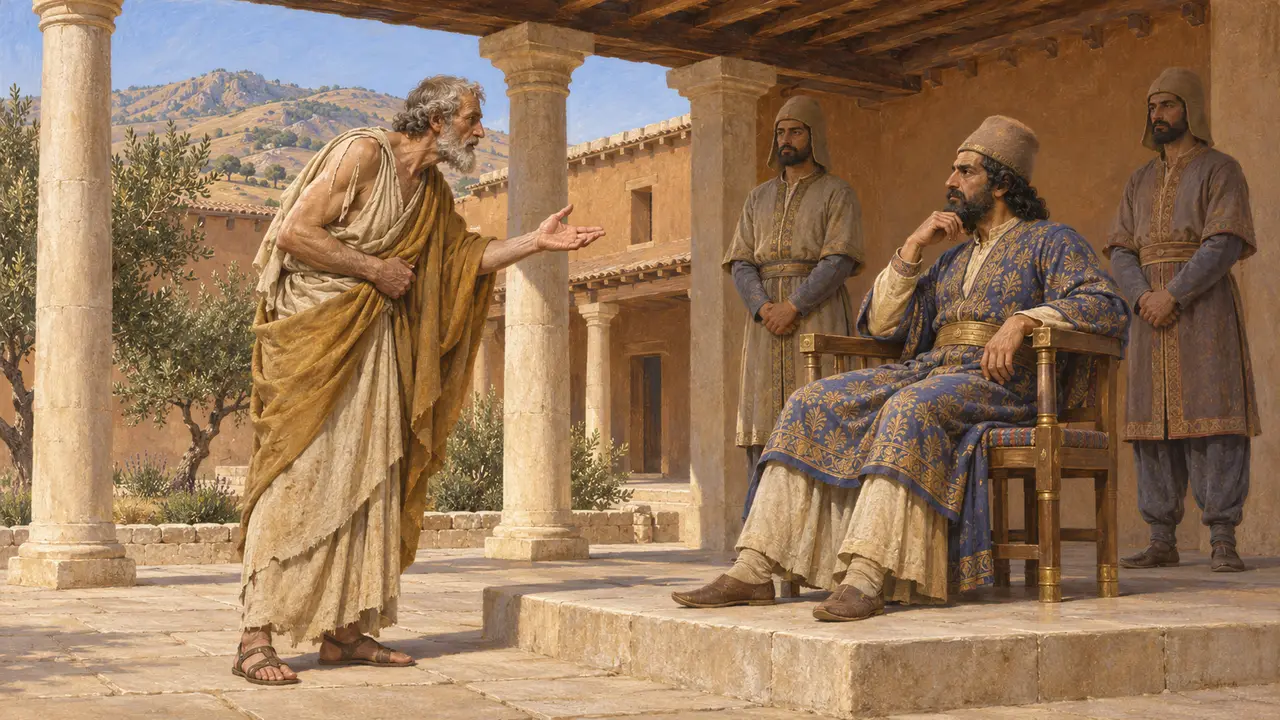
Ancient accountHippias ruled Athens until 510, when he was driven out with Spartan help and withdrew to Sigeum in the Troad, a town held by his family. Herodotus says he later went to Artaphernes at Sardis and urged the Persians to restore him. Thucydides adds that he went up to Darius and, as an old man, sailed with the Persians in 490. Herodotus says he guided them to Marathon.
Herodotus 5.65; 5.94-96; 6.102; Thucydides 6.59
Did Mardonius end the tyrannies
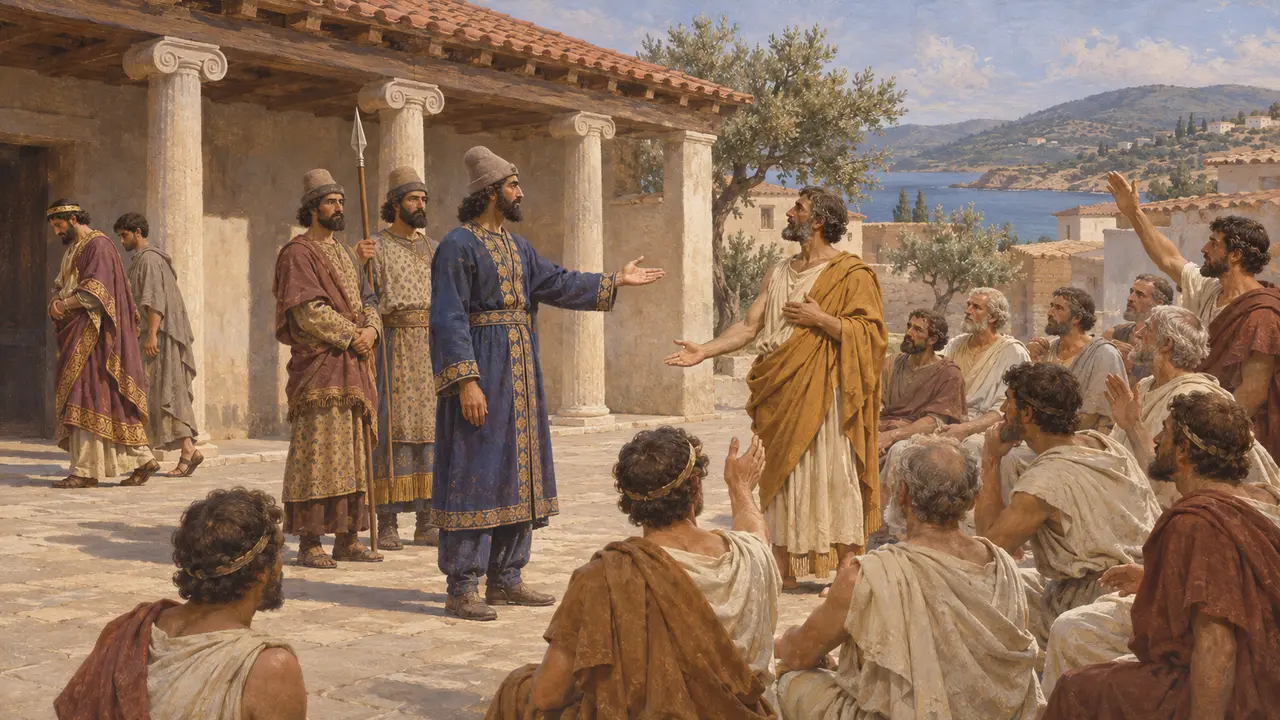
DisputedHerodotus says that in 492 Mardonius deposed the Ionian tyrants and set up democracies, and he expected Greeks who doubted the Persian debate on democracy to find this surprising. Yet Persian-backed tyrants appear again in his later books: Strattis still ruled Chios in 479, and the Persians made Theomestor ruler of Samos after Salamis. Historians debate how far the change went, and whether Persia simply backed whatever local regime kept tribute and order.
Herodotus 6.43; 8.85; 8.132; P. Briant, From Cyrus to Alexander, 2002
Secret messages and omens
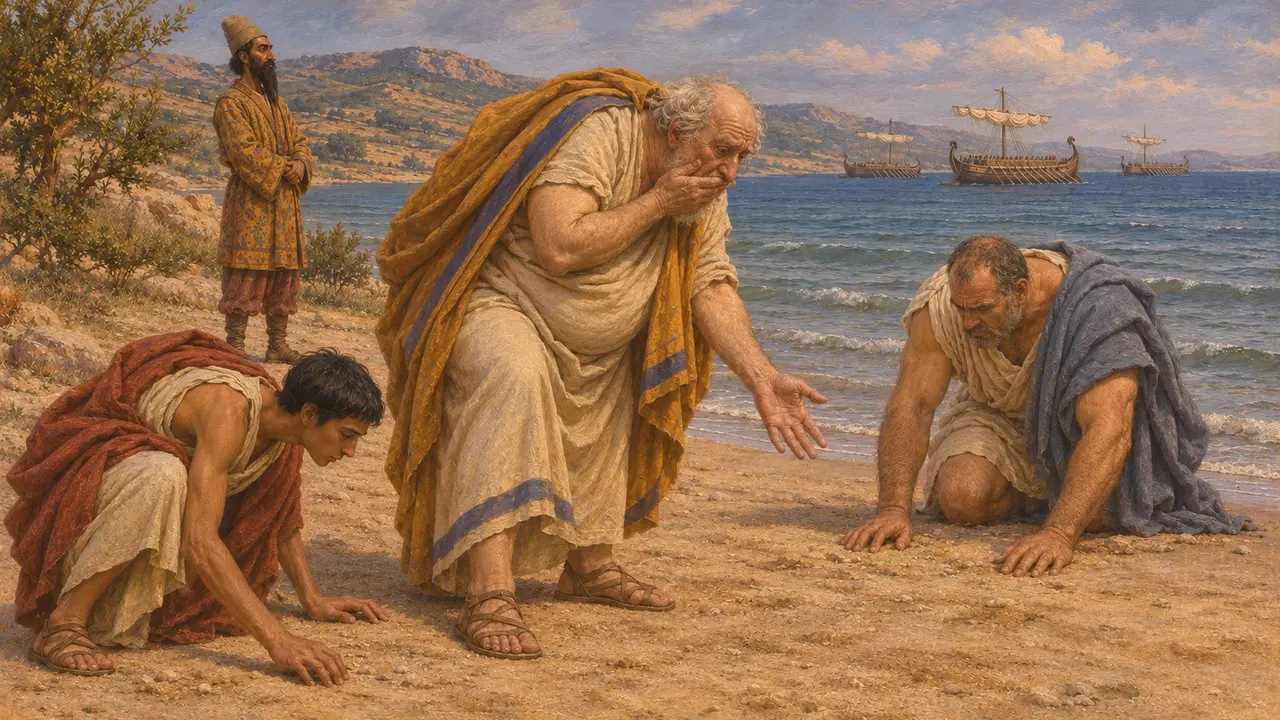
Later legendHerodotus tells that Histiaeus, held at Susa, shaved a slave's head, tattooed a message urging revolt on his scalp and sent him to Aristagoras once the hair grew back. He also tells that Hippias, landing at Marathon, sneezed out a loose tooth that was lost in the sand and took it as a sign that he would never recover Athens. Both stories have the shape of moral tales.
Herodotus 5.35; 6.107
Sources
- Herodotus 4.137-138; 5.11-38; 5.65; 5.94-96; 6.42-43; 8.85; 8.132
- Thucydides 6.59
- P. Briant, From Cyrus to Alexander, 2002
- A. Andrewes, The Greek Tyrants, 1956