Encyclopedia › Battles and events
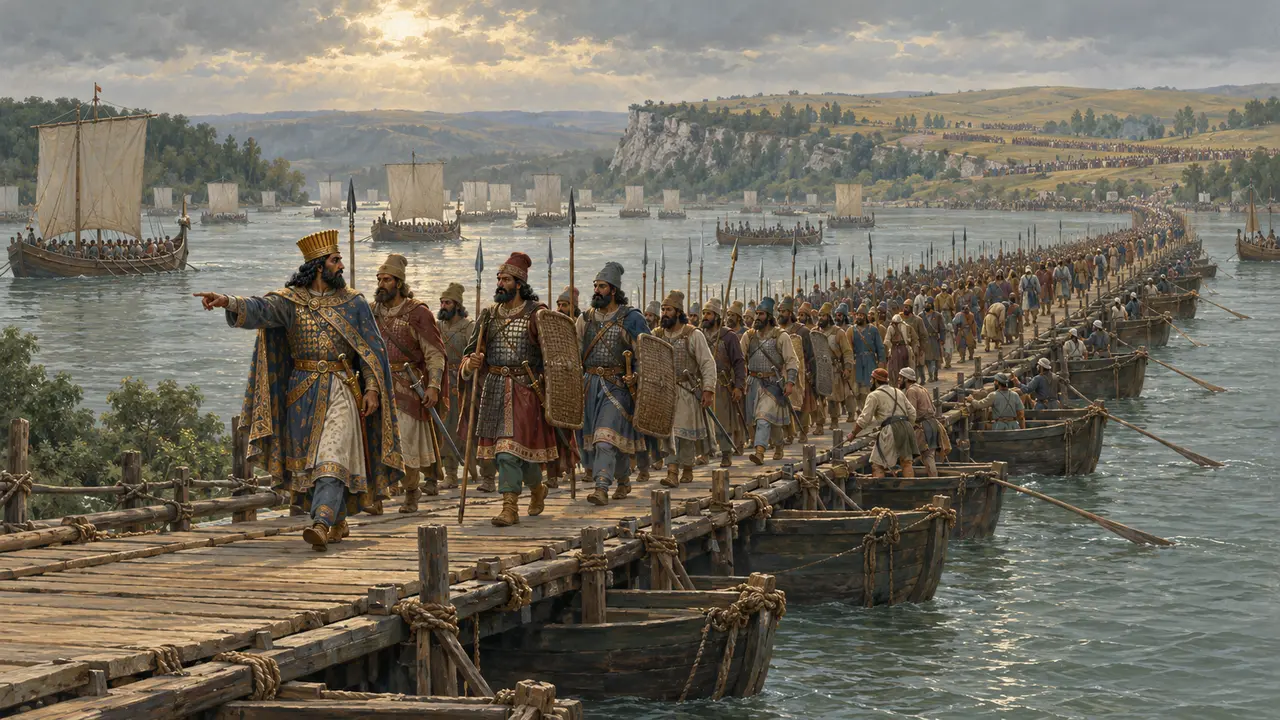
Darius's Scythian campaign
Darius's march across the Bosporus and the Ister against the Scythians, about 513 BCE
In the game: Level 6: The Bridge of Boats
In about 513 Darius led an army out of Asia, across the Bosporus and the Ister, into the steppe north of the Black Sea. The Scythians refused battle and wore his army down, and he returned without a victory. The campaign still left Persia with a foothold in Europe, in Thrace and along the Hellespont.
In the game: The Ister level is built around the campaign: the Scythians burn the grass, fill the wells, send a bird, a mouse, a frog and five arrows, and will not fight. The game credits Darius with Thrace; Herodotus gives much of it to Megabazus.
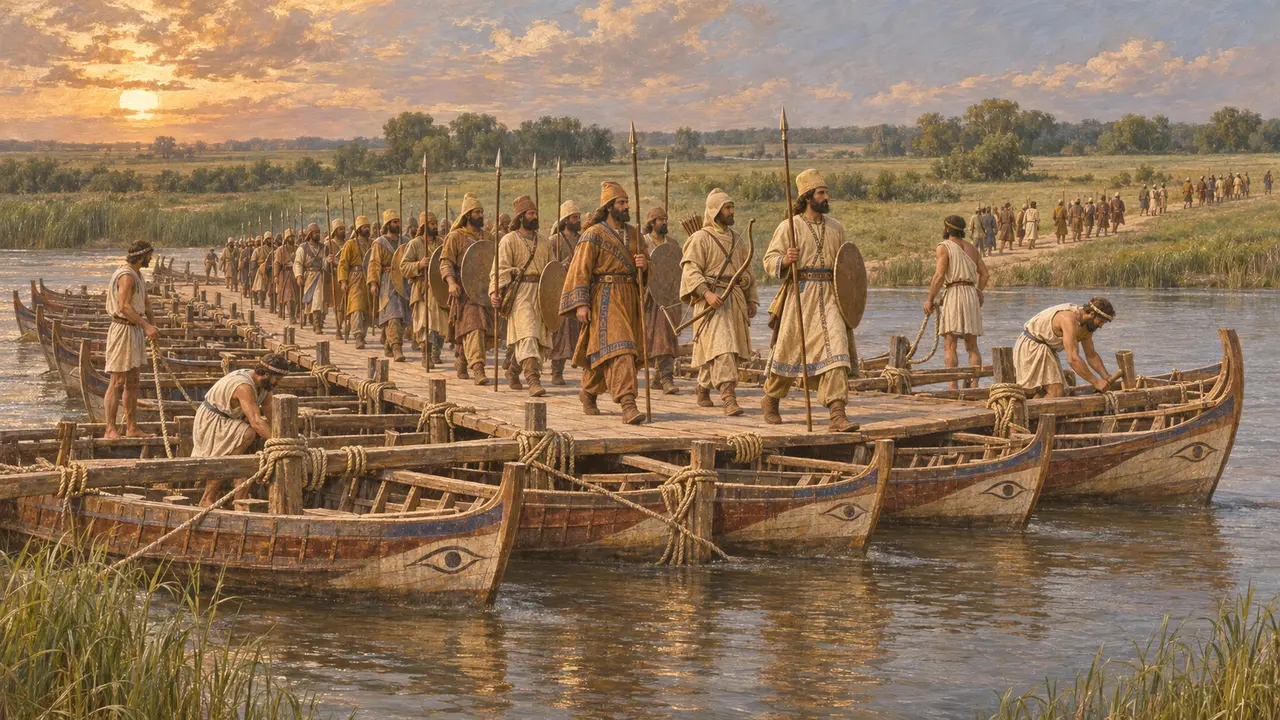
The march to the Ister
Ancient accountHerodotus says Darius crossed the Bosporus on a bridge of boats built by Mandrocles of Samos, while the Ionian fleet sailed up the Black Sea to the mouth of the Ister. He counts 700,000 men and 600 ships, figures modern historians judge far too high. On the march through Thrace the Getae resisted and were subdued. At the Ister the Ionians made a bridge of their ships, and the army crossed into Scythian land.
Herodotus 4.83-98
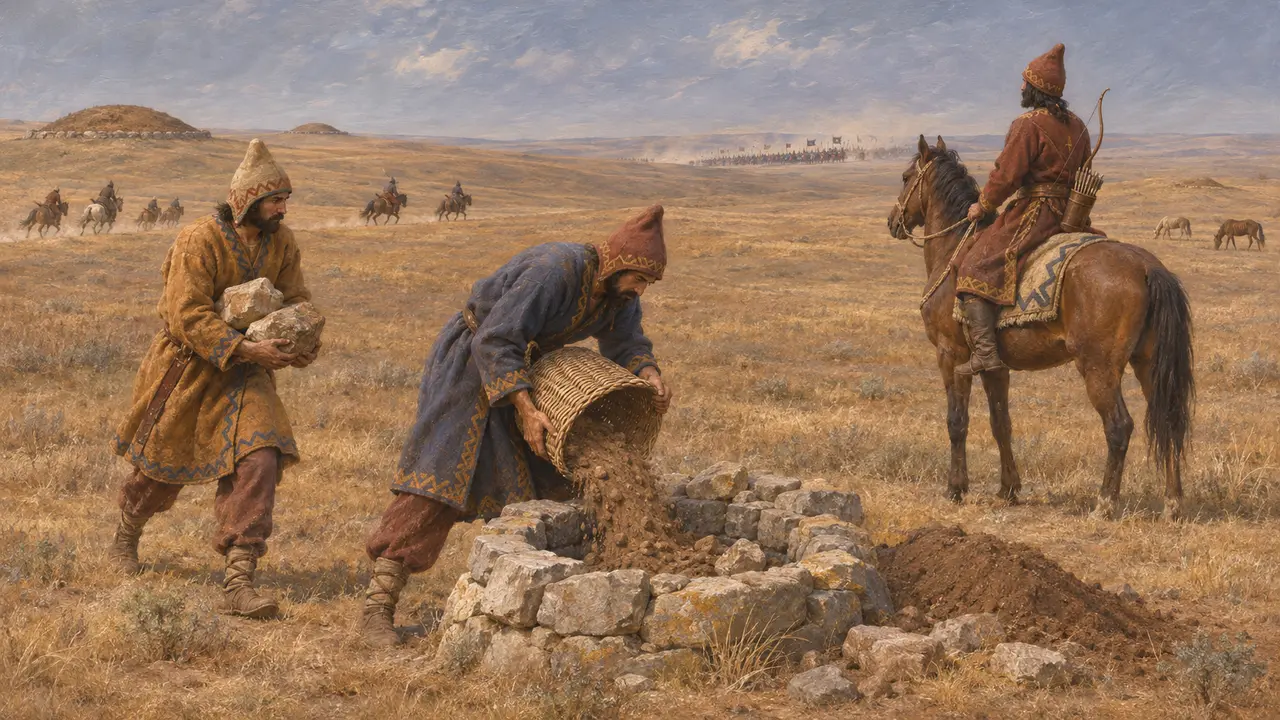
A war without a battle
Ancient accountHerodotus tells that the Scythians, whose kings included Idanthyrsus, chose not to meet the Persians in open battle. They withdrew ahead of the army, filled in wells and springs, stripped the grazing and harried Persian foragers with their horsemen. When Darius told Idanthyrsus to fight or submit, the king replied that the Scythians had no towns or sown fields to lose and would fight only if their fathers' tombs were touched.
Herodotus 4.120-128
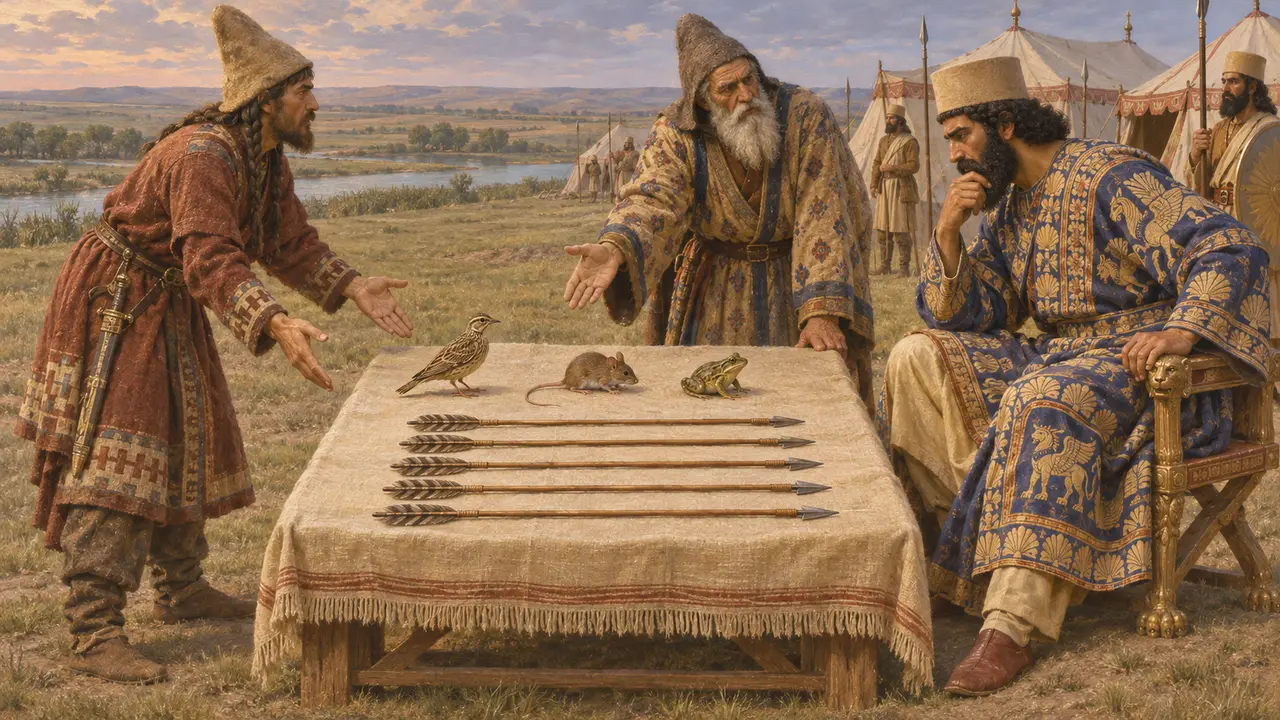
The bird, the mouse, the frog and the arrows
Later legendThe Scythians then sent Darius a bird, a mouse, a frog and five arrows. In Herodotus's telling Darius read them as an offer of earth and water, but Gobryas warned that unless the Persians could fly like birds, hide in the ground like mice or leap into lakes like frogs, they would never get home. Herodotus wrote the story down some eighty years later. It has the shape of a riddle tale, and no Persian source mentions it.
Herodotus 4.131-132
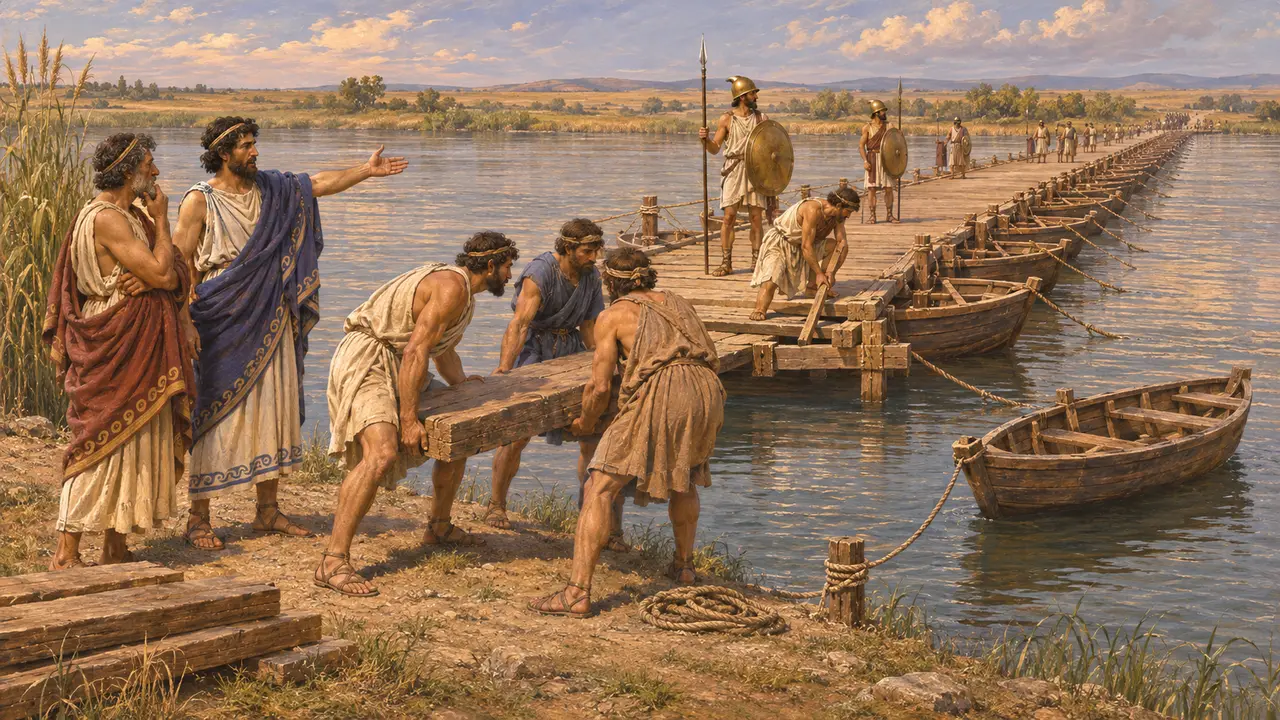
The Ionians and the bridge
DisputedHerodotus says the Ionians were left to guard the bridge for sixty days. Miltiades of Athens, then ruler of the Chersonese, urged them to break it and strand the King, but Histiaeus of Miletus argued that the tyrants owed their power to Persia. The Ionians took apart only the northern end to deceive the Scythians and kept the crossing for the retreat. Many historians doubt Miltiades' part, thinking it grew from his later need to excuse his service to Persia.
Herodotus 4.136-142
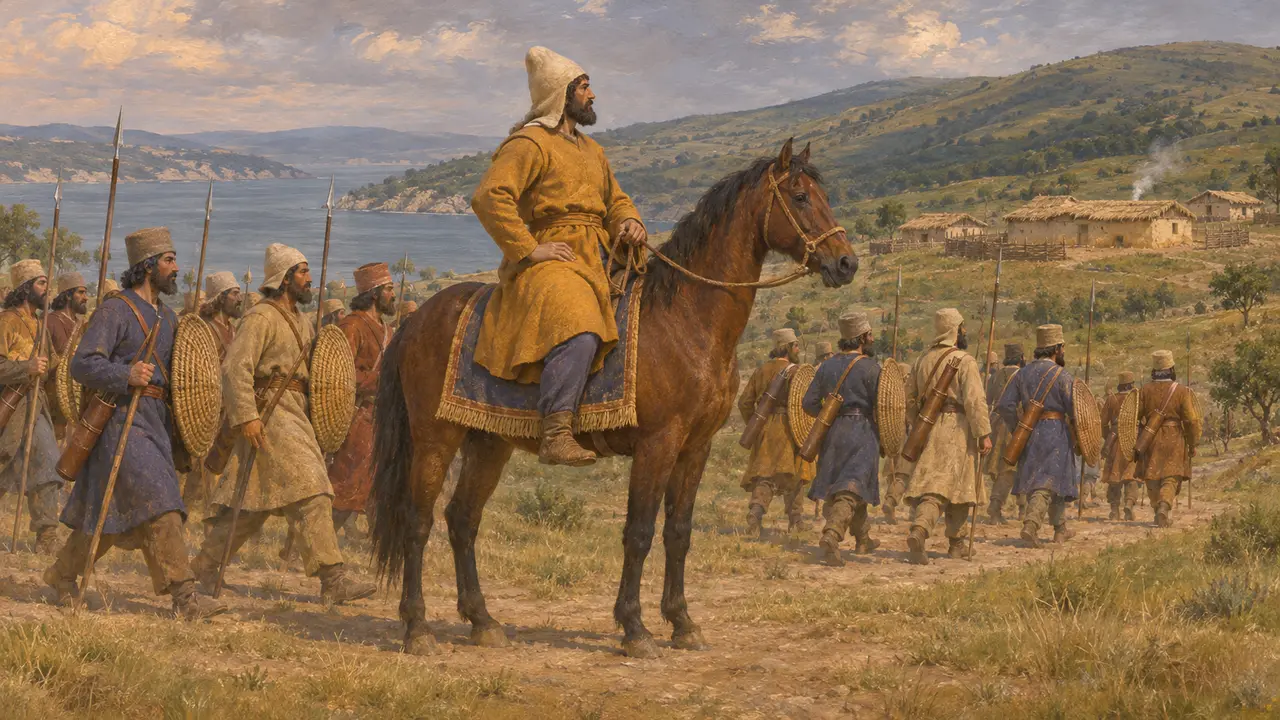
Aims, route and results
DisputedHerodotus frames the campaign as revenge for an old Scythian raid on Media, but historians still argue over its aims and its exact date. His account of a march beyond the Tanais is widely doubted. Darius's inscriptions describe no such war, though the list at Naqsh-e Rostam names Saka beyond the sea, perhaps the Scythians of Europe. Megabazus, left in Europe with troops, went on to subdue much of Thrace and the Hellespont region.
Herodotus 4.1; 4.122-124; 4.143-144; 5.1-2; DNa
Sources
- Herodotus, Histories 4.1; 4.83-144
- Herodotus, Histories 5.1-2
- DNa
- P. Briant, From Cyrus to Alexander, 2002
- A. Kuhrt, The Persian Empire: A Corpus of Sources from the Achaemenid Period, 2007