Encyclopedia › Battles and events
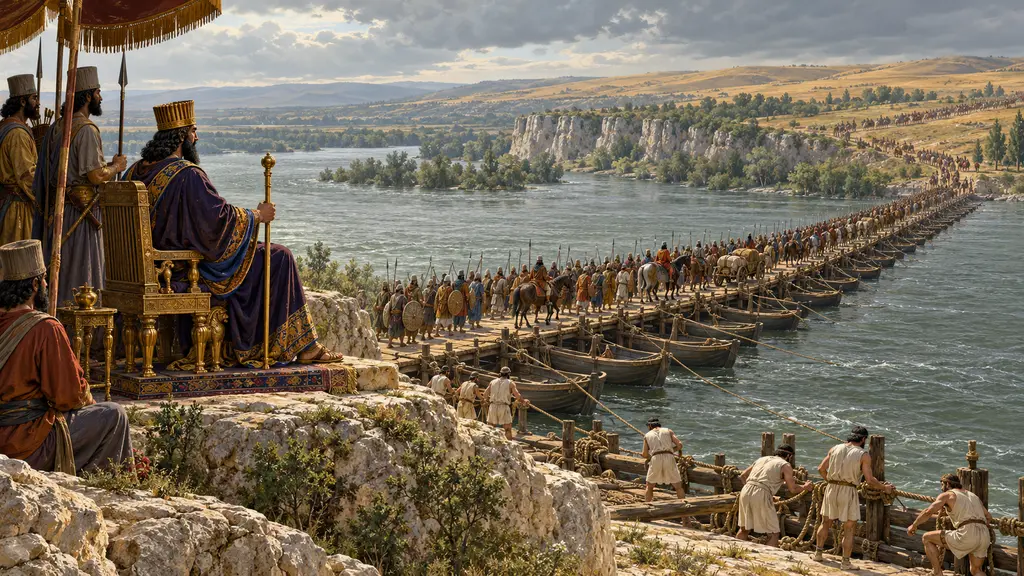
The bridging of the Bosporus
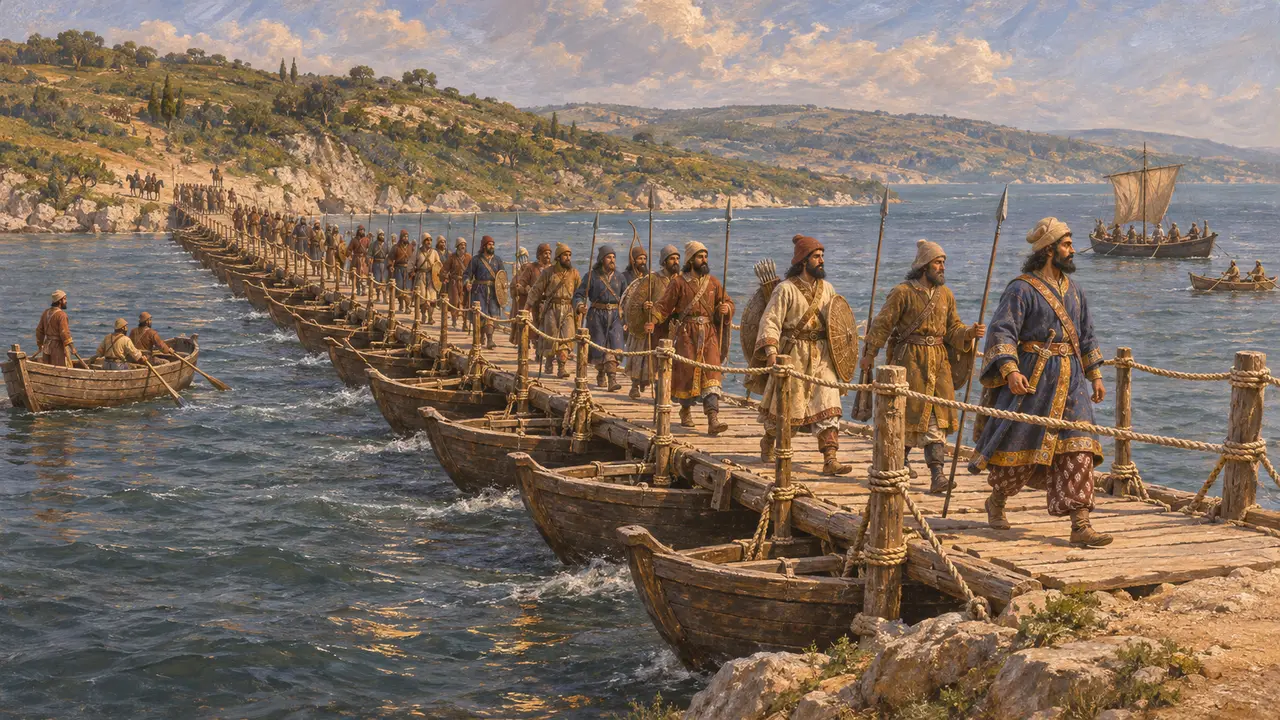
Darius's bridge of boats between Asia and Europe, about 513 BCE
In the game: Level 6: The Bridge of Boats
At the start of his campaign against the Scythians, about 513, Darius had a bridge of boats laid across the Bosporus so that his army could march from Asia into Thrace. The engineer was a Greek, Mandrocles of Samos. Herodotus is the main source for the crossing. Xerxes would bridge the Hellespont with boats in a similar way a generation later.
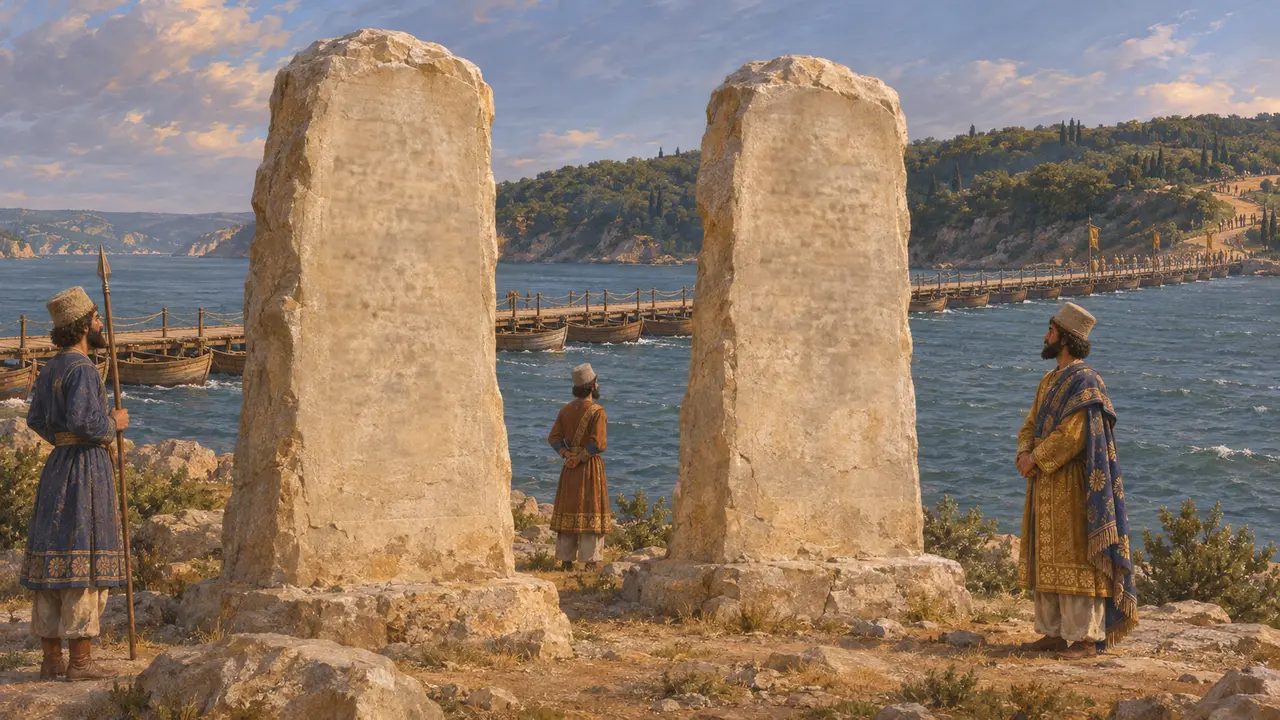
In the game: The game shows Mandrocles bridging the strait, Darius watching the army cross and the two inscribed pillars, following Herodotus 4.87-88. The firm date of 513 is a simplification; the year is only approximate.
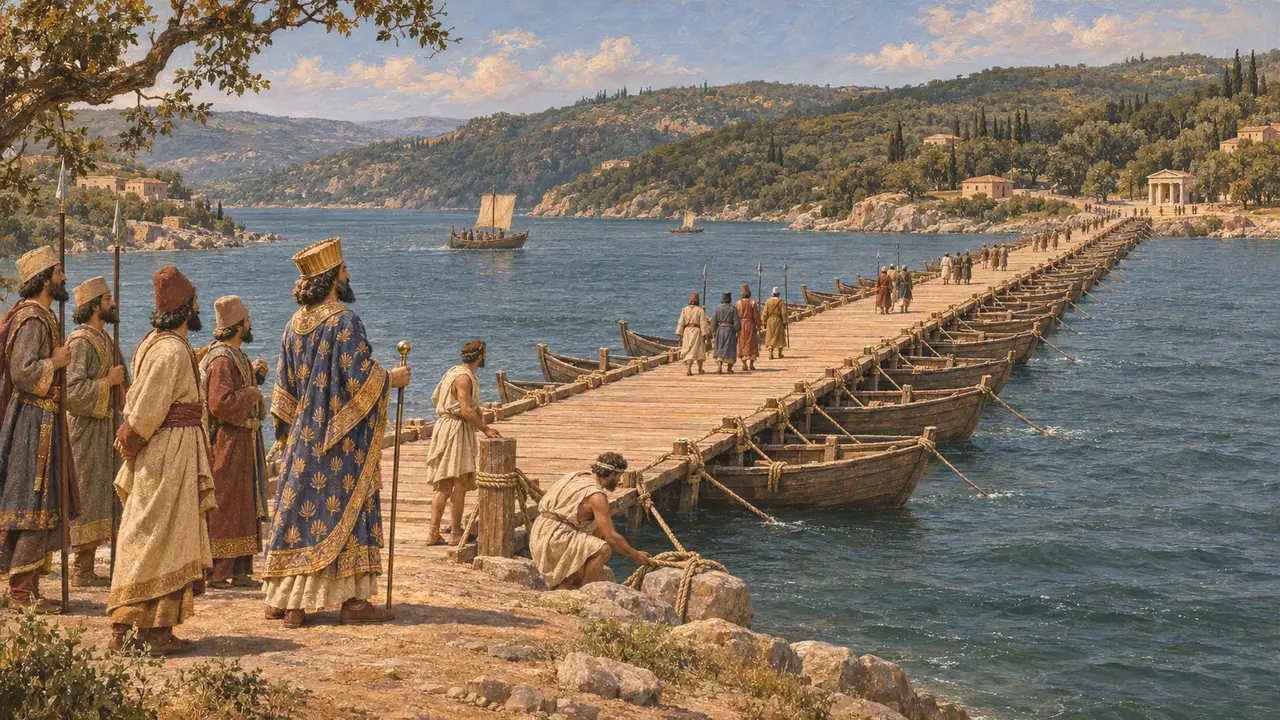
The crossing as Herodotus tells it
Ancient accountHerodotus says Darius marched from Susa to Chalcedon, sailed out to view the Black Sea, and then returned to the bridge Mandrocles had built. He gives the strait's width at its narrowest as four stades, well under a kilometre. By his own reckoning the bridge lay about midway between Byzantium and the temple at the strait's mouth. The Ionian fleet meanwhile sailed on to bridge the Ister.
Herodotus 4.85-89
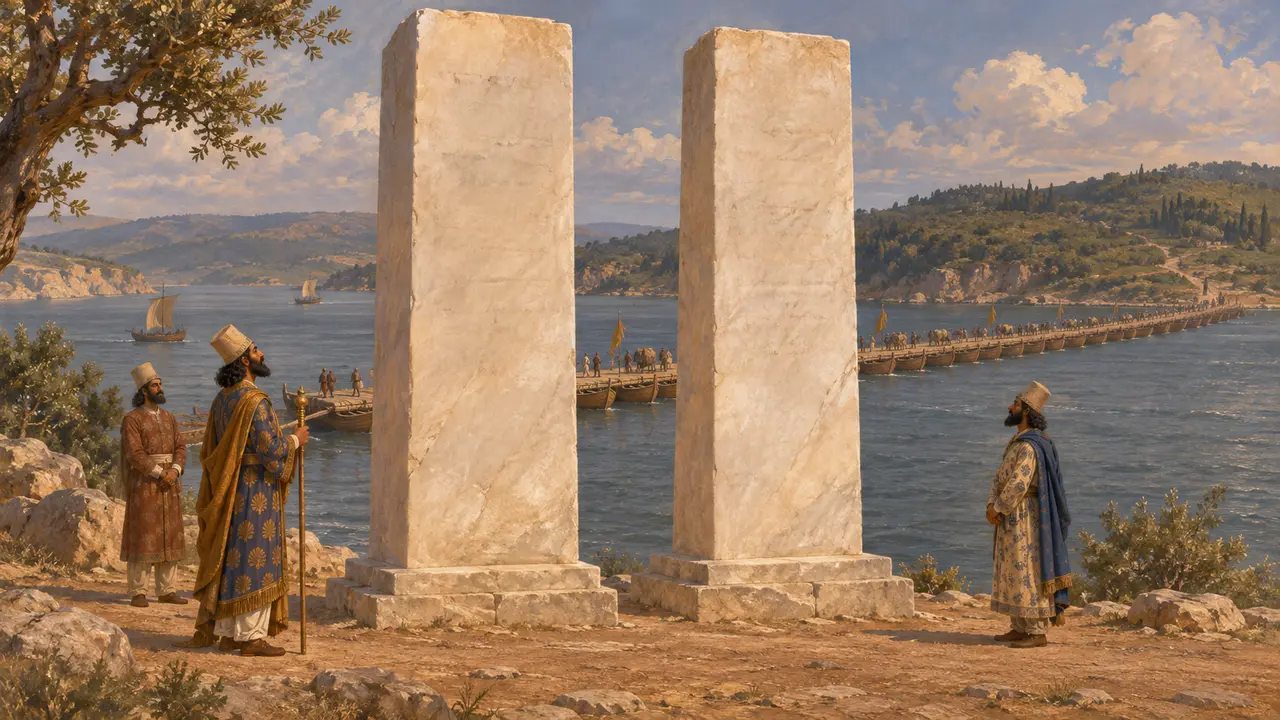
The two pillars of white stone
Ancient accountAccording to Herodotus, Darius set up two pillars of white stone by the Bosporus. They were carved in Assyrian and Greek letters with the names of all the peoples in his army. He adds that the Byzantines later carried the stones into their city for an altar of Artemis, leaving one stone covered in Assyrian letters beside a temple of Dionysus. No fragment of either pillar has been found.
Herodotus 4.87
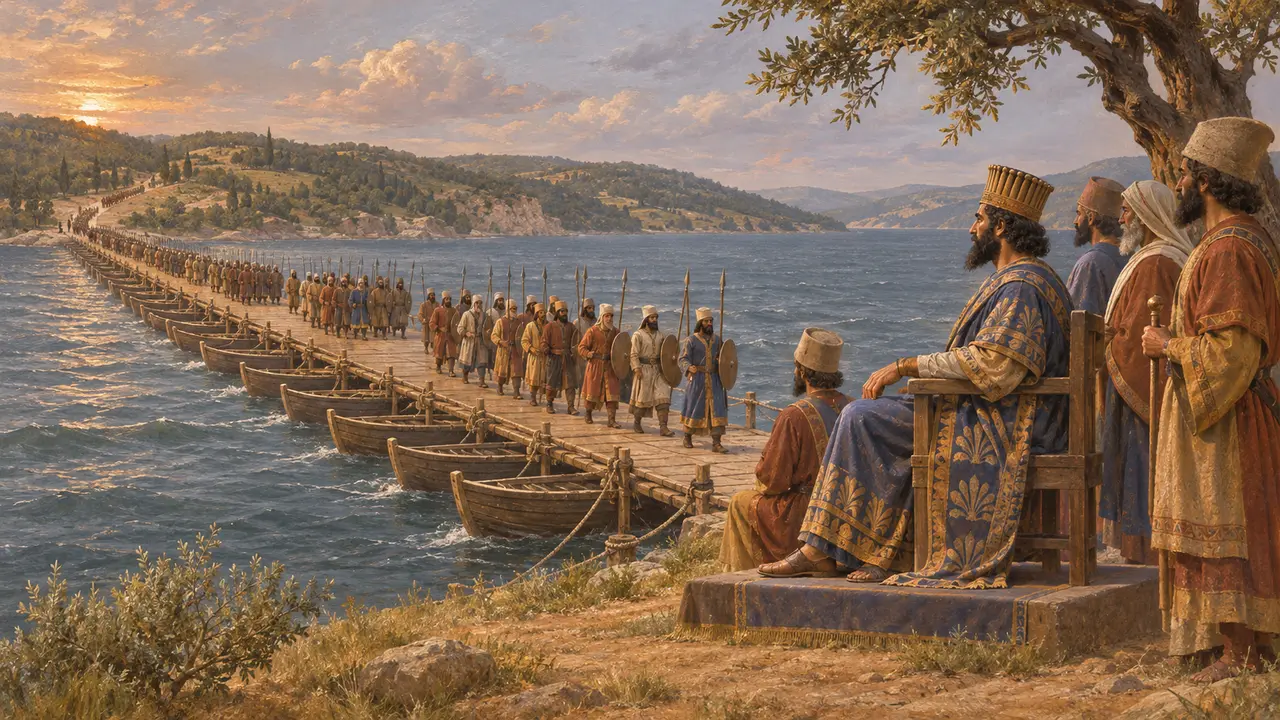
Mandrocles' picture at Samos
Ancient accountHerodotus says Darius rewarded Mandrocles generously. With part of the reward the engineer paid for a painting of the whole scene: the bridge, the army crossing and the King seated watching. He dedicated it in the temple of Hera at Samos with a verse inscription naming himself and Darius, which Herodotus quotes.
Herodotus 4.88
Date, numbers and the Persian silence
DisputedHerodotus gives Darius 700,000 men and 600 ships. Historians treat these figures as greatly exaggerated. The year is uncertain, usually put at about 513 or 512. No Persian inscription describes the bridge, though Darius's tomb inscription lists Saka beyond the sea and Skudra among his lands, which many scholars link to this campaign in Europe.
Herodotus 4.87; DNa; P. Briant, From Cyrus to Alexander, 2002
What the Assyrian letters were
DisputedMost scholars take Herodotus's Assyrian letters to mean cuneiform. Others note that Greek writers also used the phrase for Aramaic script, as Thucydides does for a captured Persian letter. If it was cuneiform, the language might have been Akkadian, Elamite or Old Persian, as on Darius's other monuments. Since the pillars are lost, the wording cannot be checked against the royal inscriptions.
Thucydides 4.50; P. Briant, From Cyrus to Alexander, 2002
Sources
- Herodotus 4.85-89
- DNa
- P. Briant, From Cyrus to Alexander, 2002
- Thucydides 4.50
- M. Waters, Ancient Persia: A Concise History of the Achaemenid Empire, 550-330 BCE, 2014