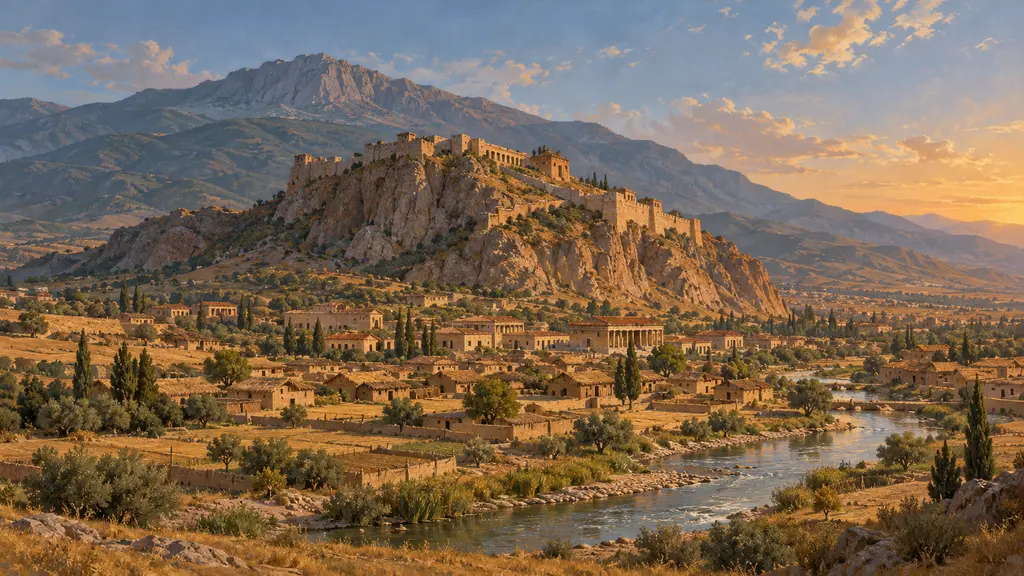
The Hermus river
The great river of Lydia, on whose plain Sardis stands, 6th-5th century BCE
The Hermus, now the Gediz, is the largest river of Lydia. It flows west past Sardis to the sea near Phocaea, and the Pactolus joins it below the city. Its broad plain fed Sardis, and there Cyrus's camels routed Croesus's horse about 547.
In the game: The Hermus is the Sardis level's river: its plain is the level's farmland, and its ferrymen and figs appear in the chatter.
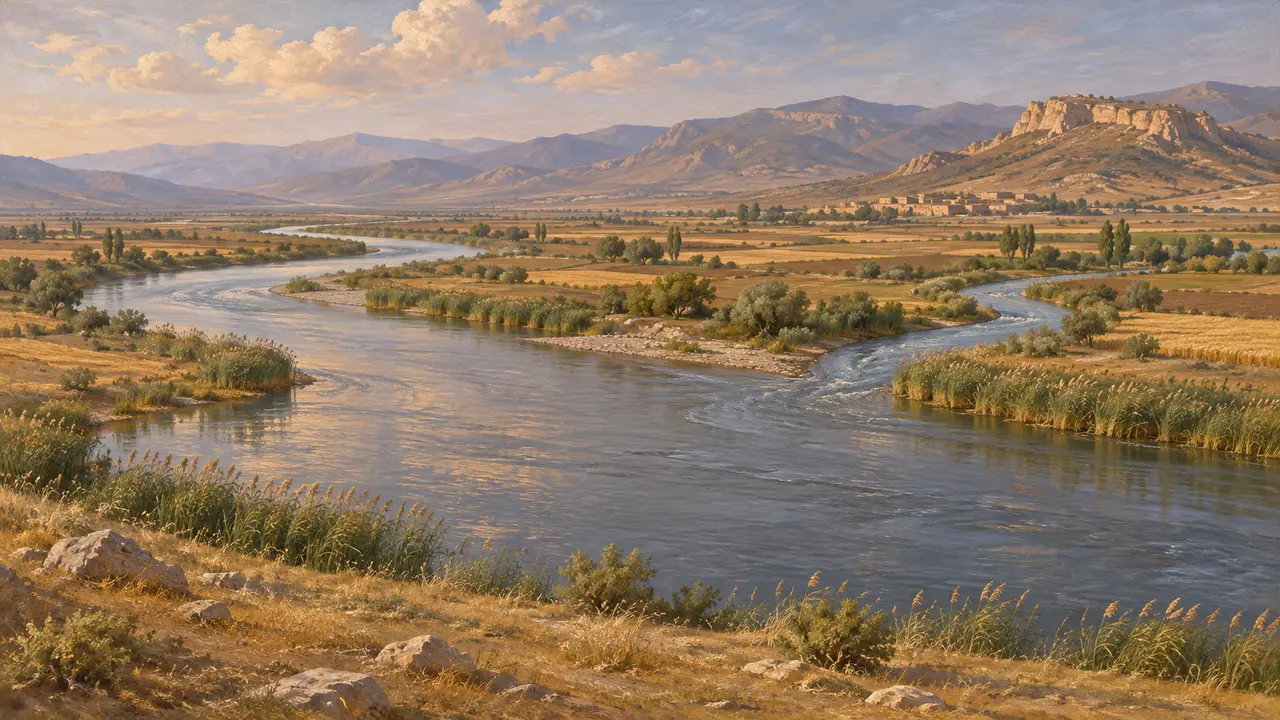
The river of the plain
Ancient accountHerodotus describes the plain before Sardis as wide and open, crossed by rivers, the Hyllus among them, that flow into the largest, the Hermus. He says the Hermus comes down from the mountain sacred to the Mother of Dindymus and runs into the sea by Phocaea.
Herodotus 1.80
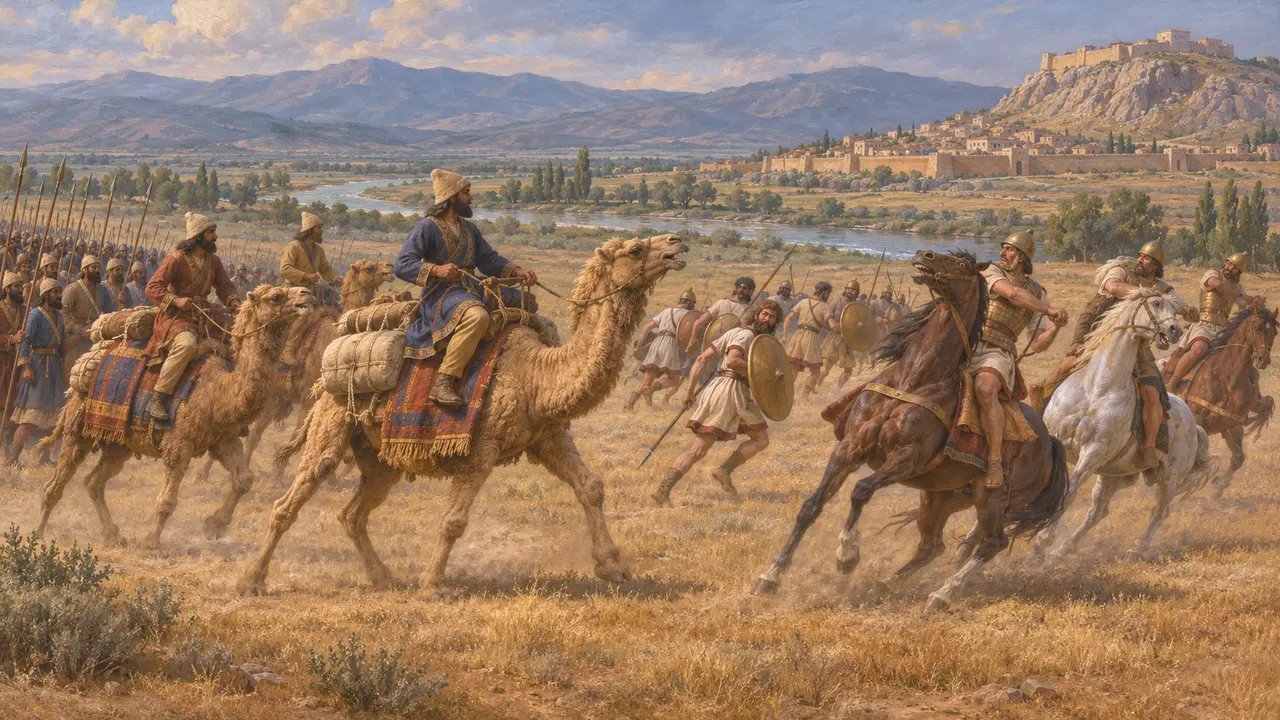
The battle on the plain
Ancient accountOn that plain, Herodotus says, Cyrus set men on his baggage camels in front of his army, on Harpagus's advice. The Lydian horses could not bear the smell and sight of the camels and turned, and the Lydians fought on foot and were driven into Sardis.
Herodotus 1.80
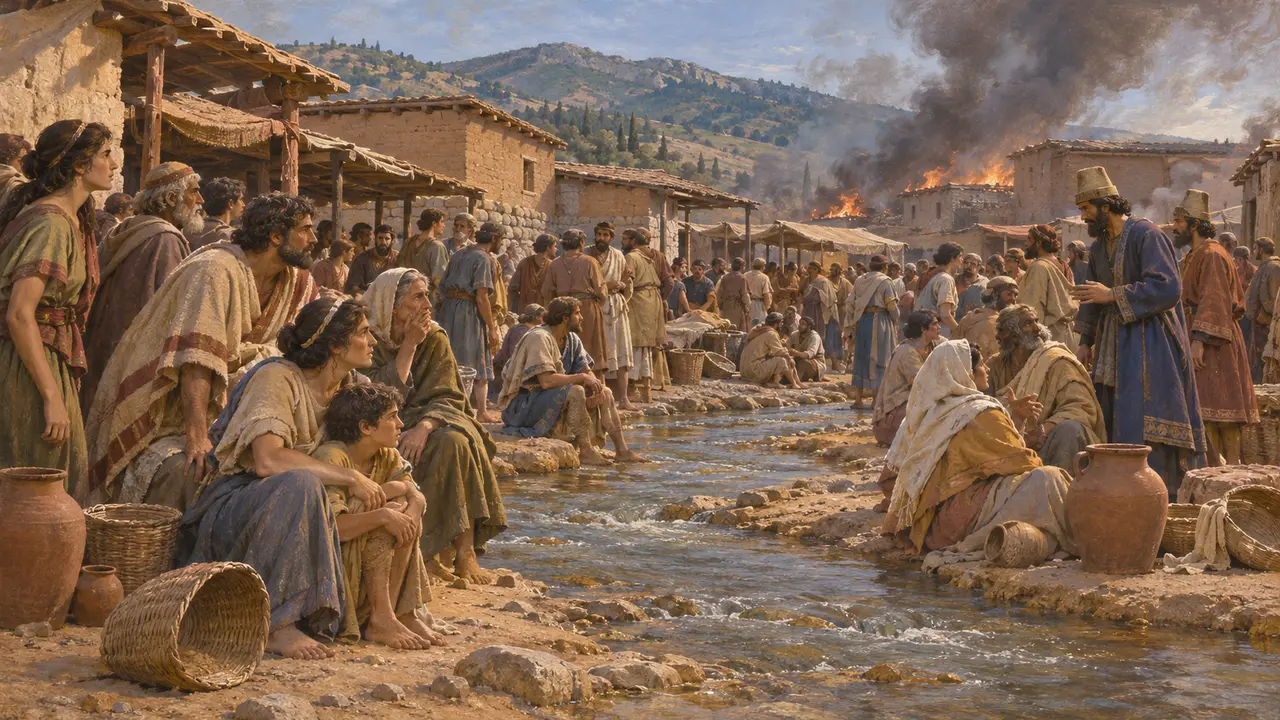
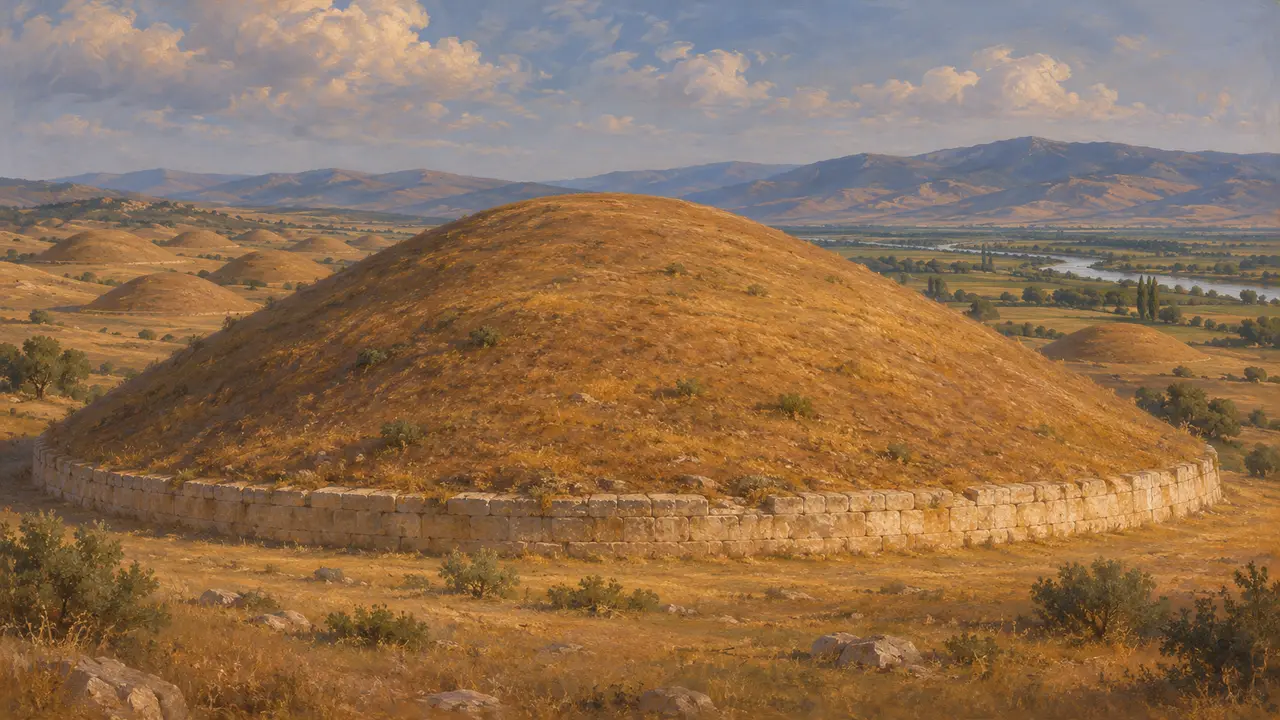
The royal tombs above it
In the recordNorth of the Hermus lies the great Lydian cemetery of Bin Tepe, with the mound Herodotus calls the tomb of Alyattes, father of Croesus, one of the largest tumuli of the ancient world. Its earth and stone base survive, as he describes.
Herodotus 1.93; excavations at Bin Tepe
Sources
- Herodotus 1.80, 1.93, 5.101
- C. H. Greenewalt and others, excavations at Sardis