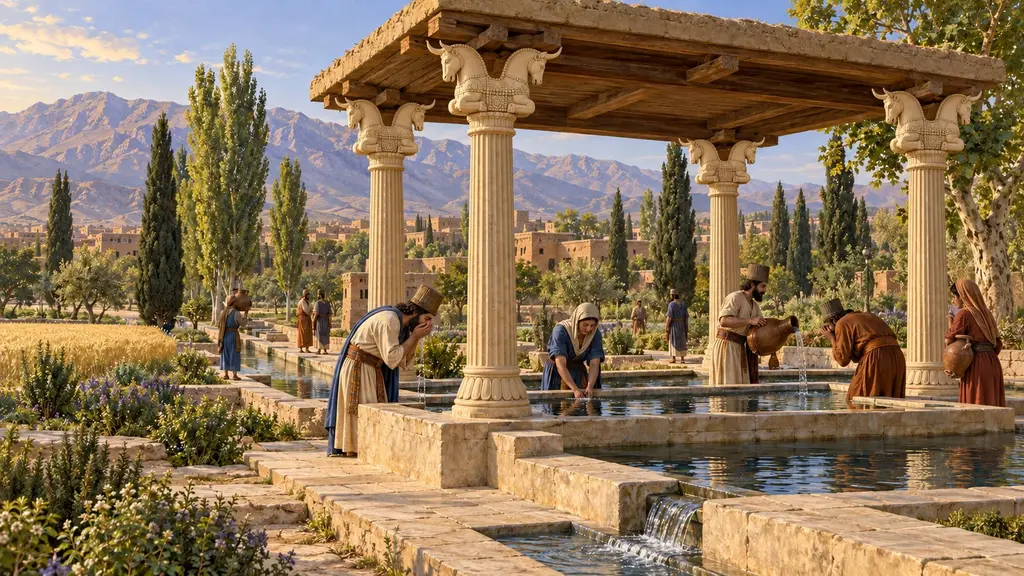
Fountain House
Roofed public fountain of the Greek cities, sixth to fifth centuries BCE
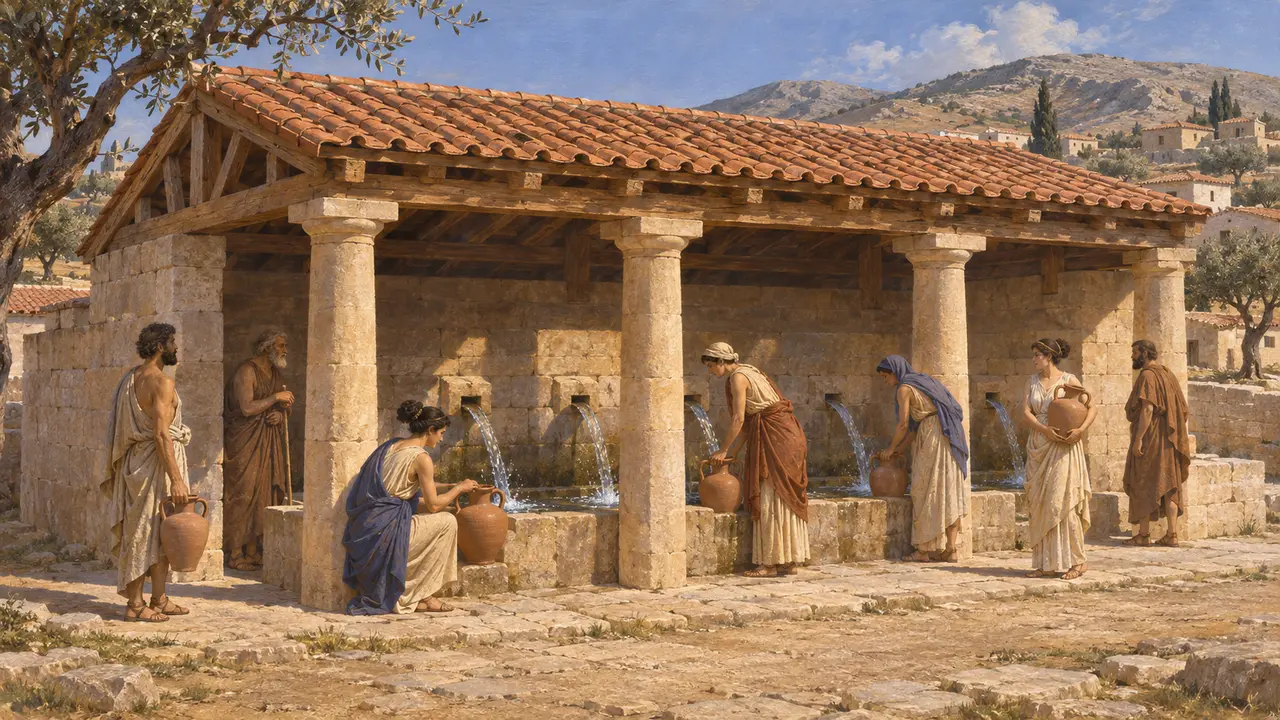
A fountain house was a roofed building where spring water, often brought by underground pipes, ran from spouts into basins for people to fill their jars. Several Greek tyrants of the later sixth century built them as public works, and Athens's Enneakrounos, the Nine Spouts, was the best known. They gave towns clean water and served as daily meeting places.
In the game: In the Sardis and Greek levels the Water House takes this form; homes within six cells wash here and Noble Residences need one. Thucydides 2.15 says Nine Spouts, not Nine Springs, and mentions rites, not washing.
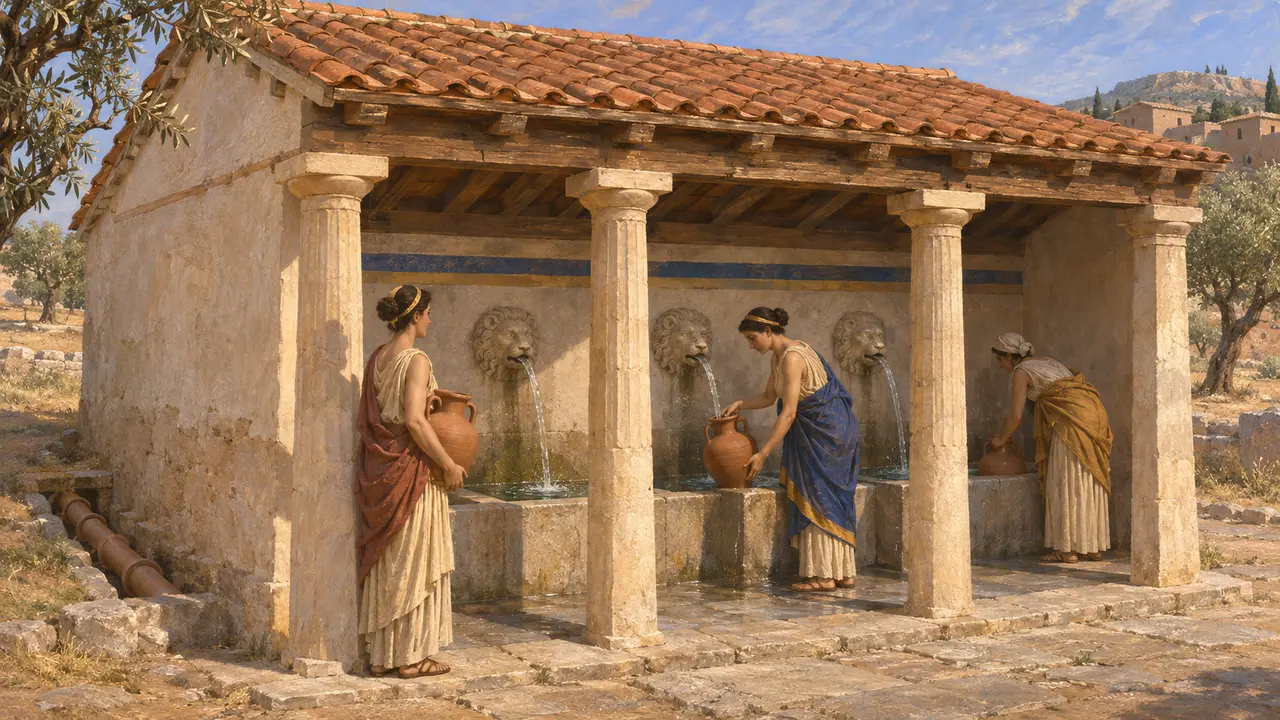
Spouts, basins and pipes
In the recordExcavated examples share a common plan: a roofed hall, often with a columned front, where water ran from spouts, sometimes shaped as lion heads, or gathered in draw-basins. In the Athenian Agora a line of terracotta pipes, laid in a rock-cut channel in the later sixth century, fed the Southeast Fountain House. Painted Athenian water jars of the late sixth century often show women filling their jars at such buildings.
J. M. Camp, The Athenian Agora, 1986
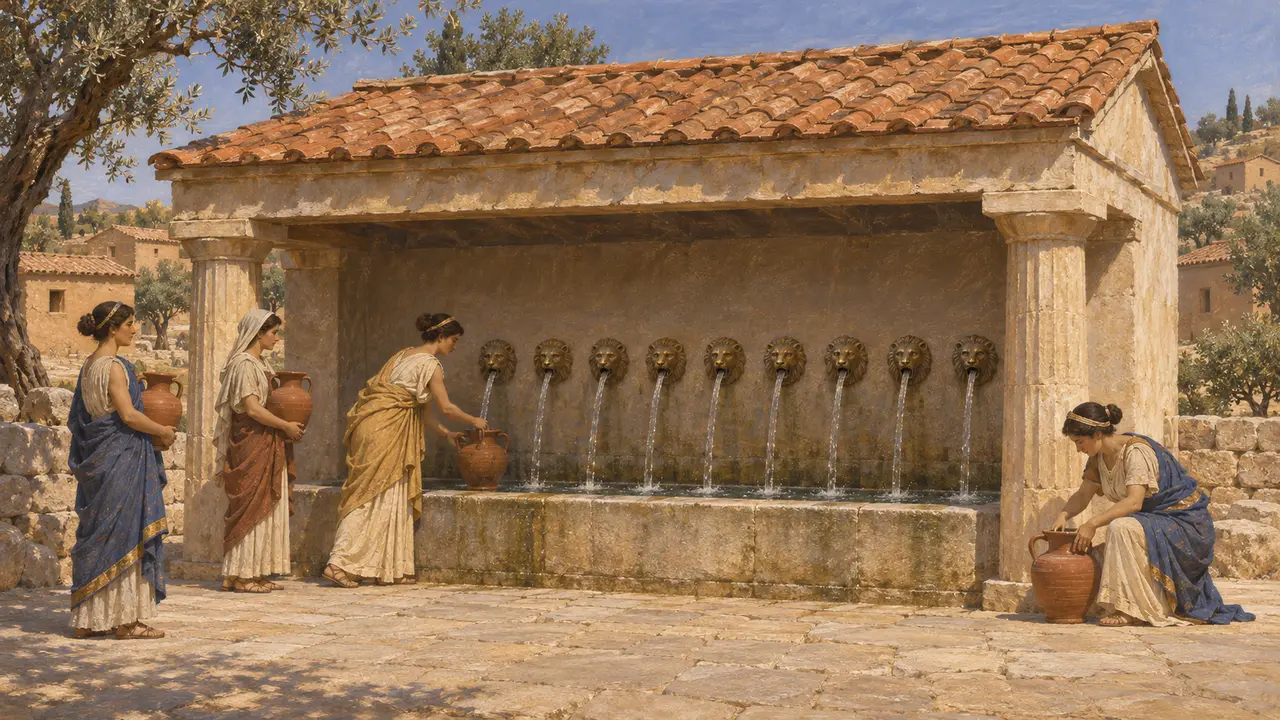
Thucydides on the Nine Spouts
Ancient accountThucydides describes a fountain in old Athens that the tyrants had fitted out, so that it was called Enneakrounos, the Nine Spouts. Before that, he says, the springs lay open and were called Kallirrhoe. He adds that Athenians still used its water before weddings and for other sacred rites, a custom he takes as proof of where the early city lay.
Thucydides 2.15
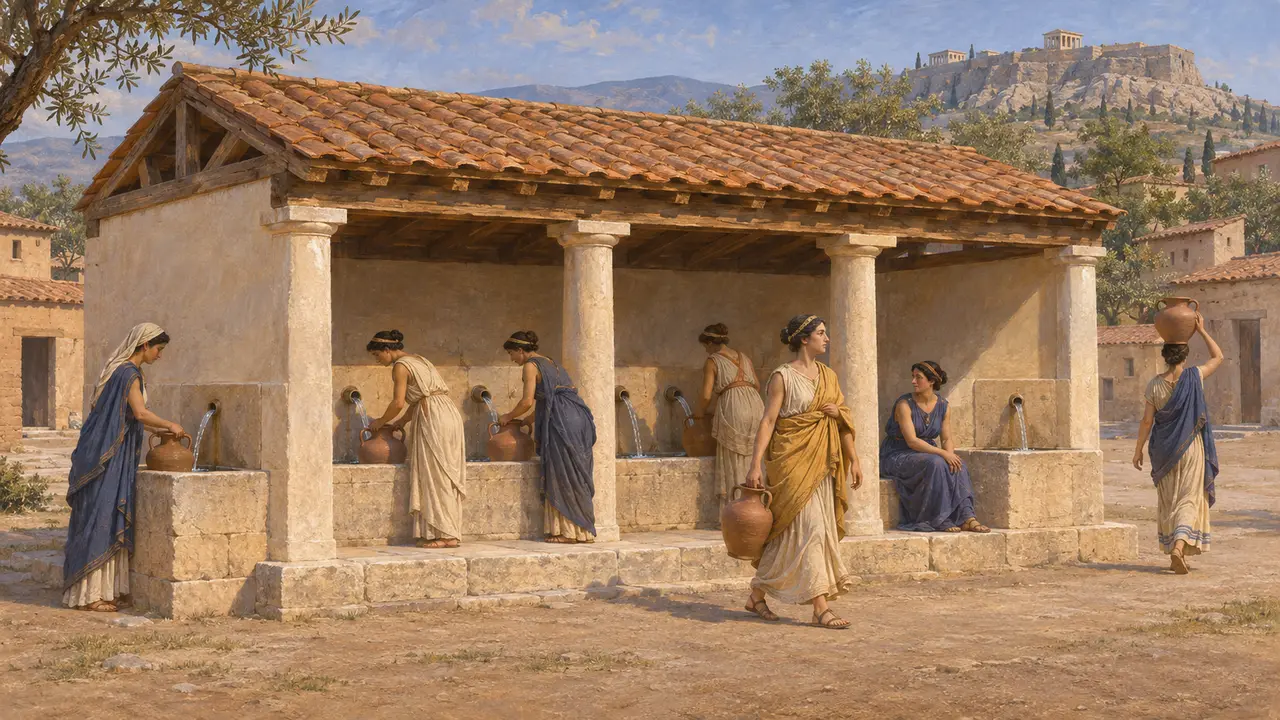
Where was the Enneakrounos
DisputedThucydides links the fountain with the old shrines south of the Acropolis, and its earlier name, Kallirrhoe, was later given to a spring in the bed of the Ilissos. Pausanias, writing in the second century CE, puts the Enneakrounos near the Agora. Agora excavators have often matched his account with the Southeast Fountain House of about 530 to 520, while others place the Pisistratid fountain by the Ilissos. The question is not settled.
Thucydides 2.15; Pausanias 1.14.1
Tyrants and public water
Ancient accountWater supply was a favoured public work of sixth-century tyrants. Herodotus praises the tunnel that Eupalinus of Megara cut through a hill on Samos to bring water to the city. He does not name the ruler, but the tunnel is usually dated to the time of Polycrates. Pausanias credits Theagenes, tyrant of Megara, with a fountain house there. Such works probably won rulers goodwill and displayed their resources.
Herodotus 3.60; Pausanias 1.40.1
The daughters at the fountain
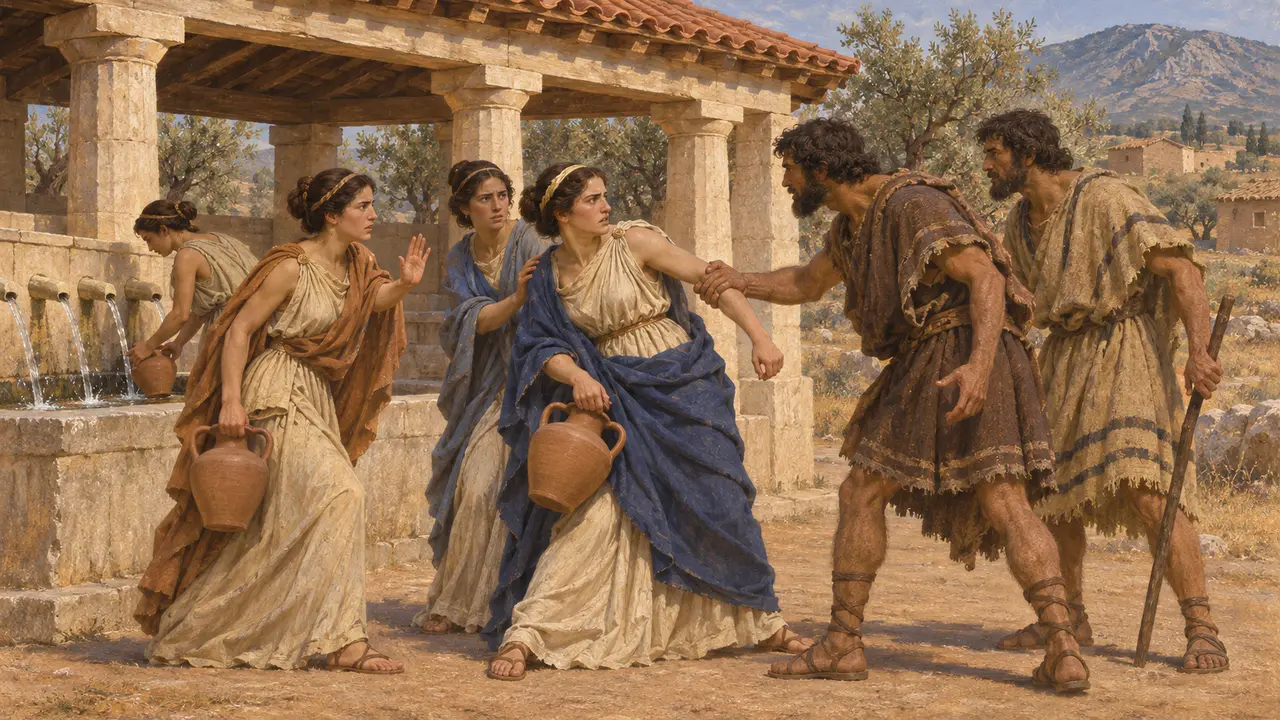
Later legendHerodotus reports an Athenian tale of the distant past. Athenian girls went to fetch water at the Enneakrounos, since, he explains, there were no household slaves in those days, and Pelasgian settlers living below Mount Hymettus assaulted them. For this the Pelasgians were driven from Attica. Herodotus also gives Hecataeus's version, in which the Athenians expelled them out of envy for their well-worked land.
Herodotus 6.137
Sources
- Thucydides 2.15
- Pausanias 1.14.1
- Herodotus 6.137
- Herodotus 3.60
- Pausanias 1.40.1
- J. M. Camp, The Athenian Agora, 1986