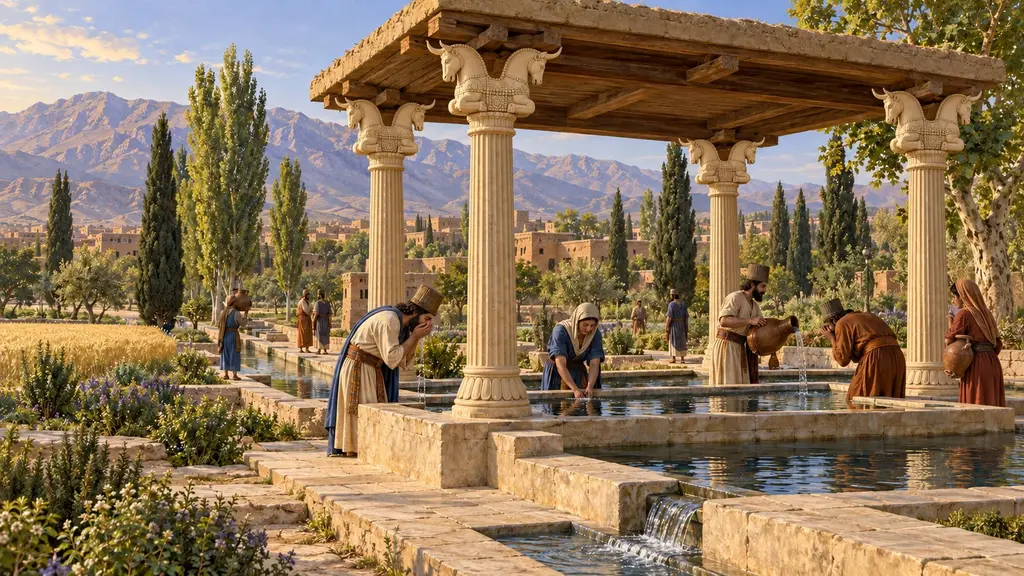
River Steps
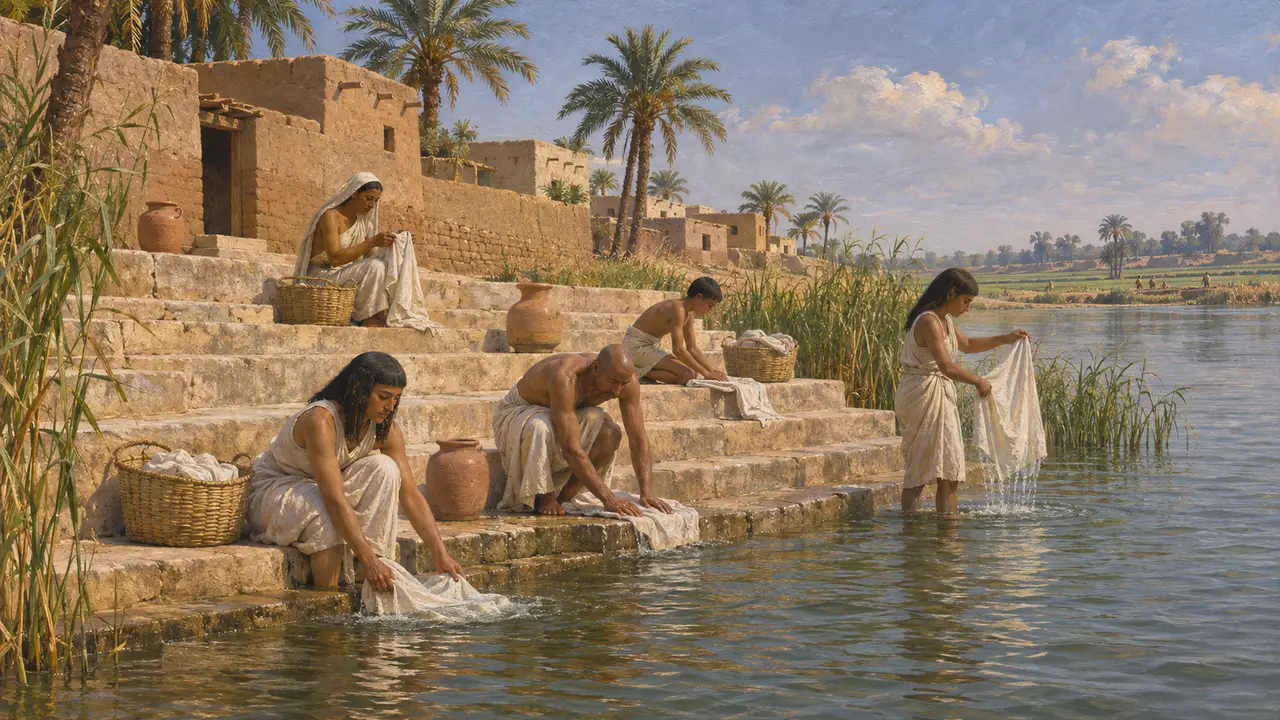
Riverside landing for washing and laundry on the Nile, Memphis, about 525 BCE
Memphis, the old capital of Egypt that Cambyses took in 525, stood on the west bank of the Nile, and its people drew water, bathed and washed their clothes at the river and its canals. Linen was the common cloth of Egypt, and keeping it clean was a daily chore for most people and a religious duty for priests. The game's River Steps stand for these riverside washing places.
In the game: The River Steps are Memphis's Water House: houses within six cells wash here and Noble Residences need one. The game gathers into one building what Memphites did all along the river and its canals.
Clean linen in Herodotus
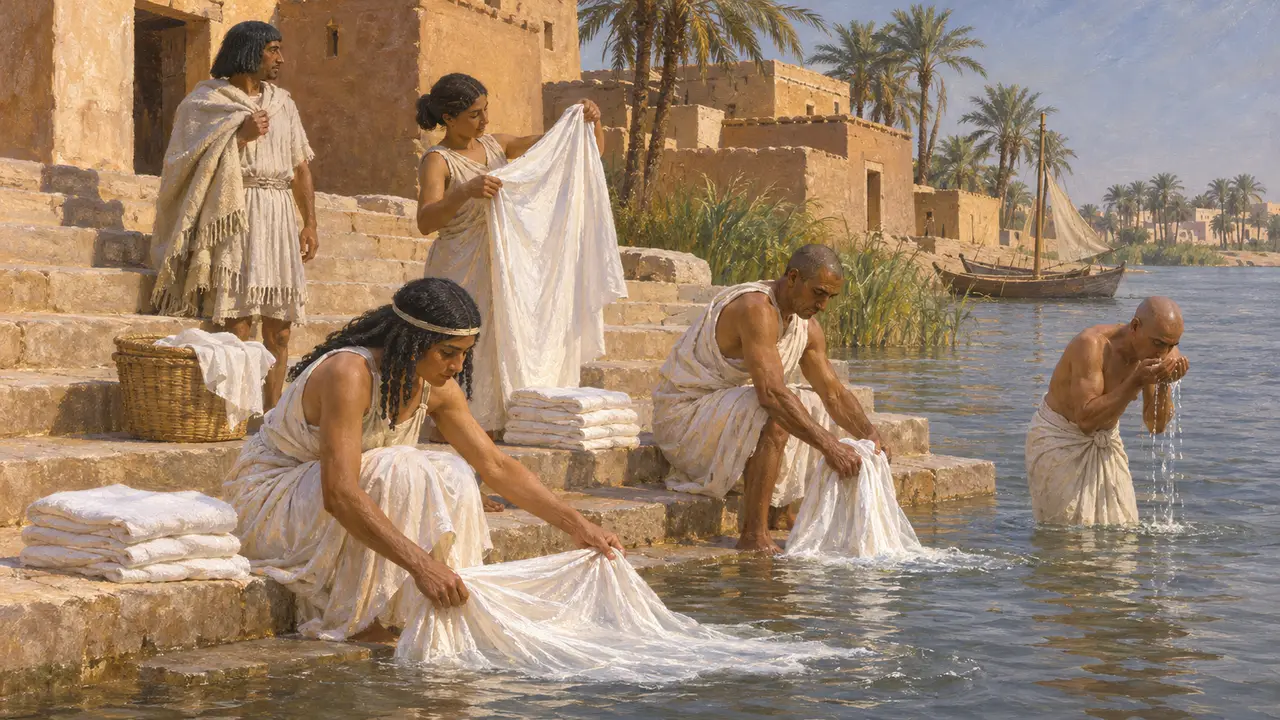
Ancient accountHerodotus visited Egypt some decades after the Persian conquest. He says the Egyptians wore linen and took special care to keep it freshly washed. In the same passage he says priests shaved their bodies and bathed in cold water twice by day and twice by night. Elsewhere he describes a fringed linen tunic worn with a white woollen cloak over it, and notes that wool was not taken into temples or buried with the dead.
Herodotus 2.37; Herodotus 2.81
The washerman in Egyptian evidence
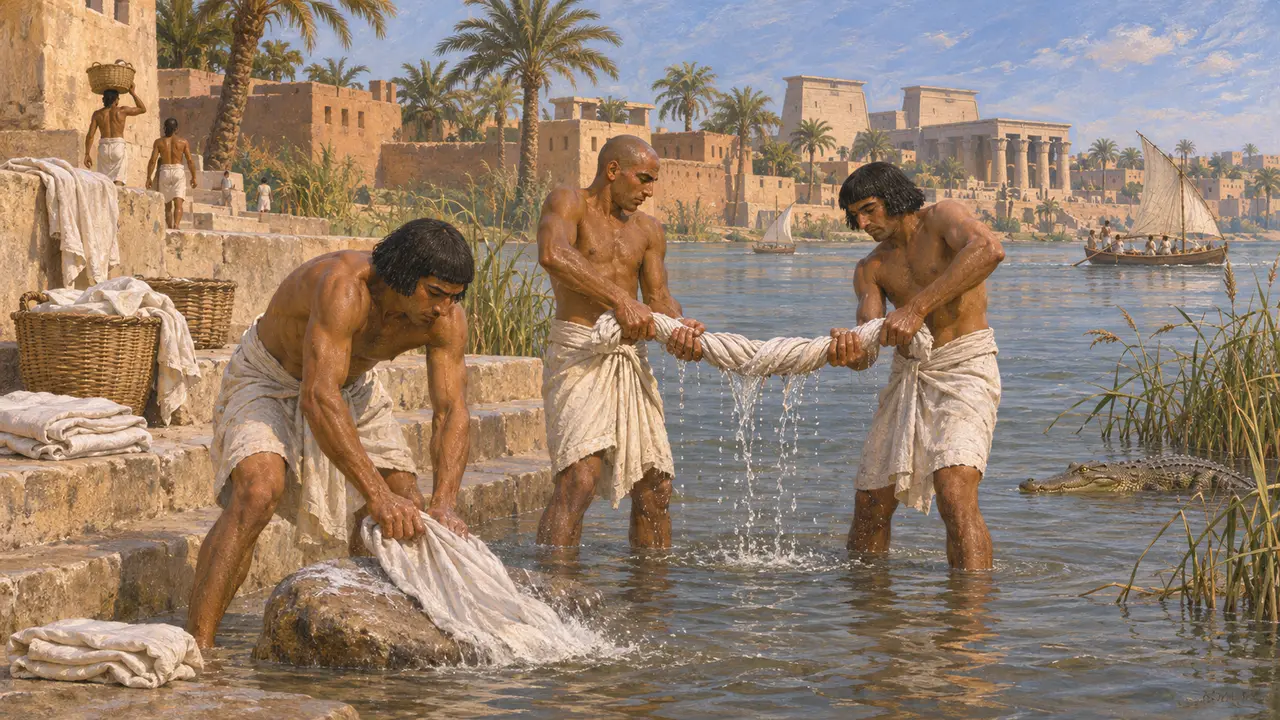
In the recordEgyptian evidence much older than the Persian period shows that laundering was a trade, and Middle Kingdom tomb paintings at Beni Hasan show men beating and wringing cloth. The Satire of the Trades, a school text that praises the scribe's life by mocking other trades, pictures the washerman at work on the riverbank with crocodiles nearby. The satire exaggerates, but it confirms that men did laundry at the water's edge.
Satire of the Trades (Instruction of Khety), in M. Lichtheim, Ancient Egyptian Literature I, 1973; P. E. Newberry, Beni Hasan
Memphis and its river
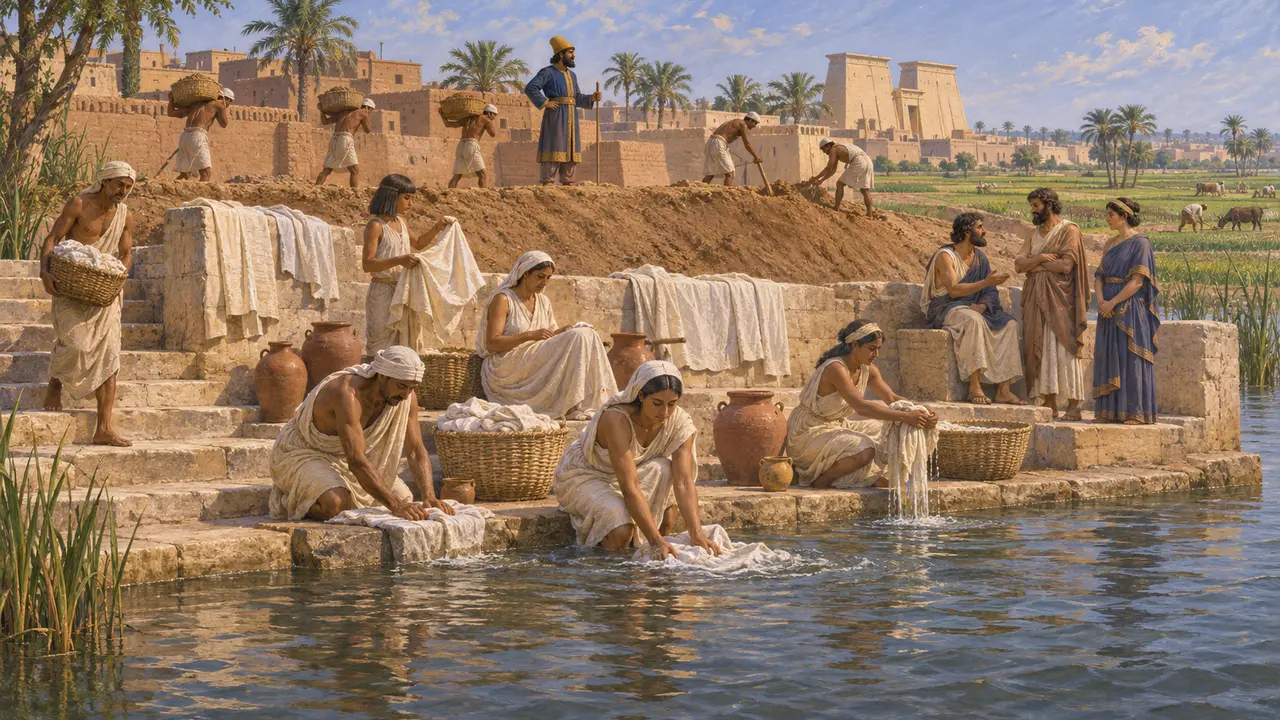
Ancient accountHerodotus says Memphis was built on land won from the Nile when its first king, Min, dammed the river and turned its course. He adds that the Persians of his own day still strengthened this dyke every year. He also says that Amasis moved communities of Carians and Ionians to Memphis to serve as his guard, so the town by the river held foreign settlers as well as Egyptians.
Herodotus 2.99; Herodotus 2.154
What survives at Memphis
DisputedNo excavated washing steps from Persian-period Memphis are known. Over the centuries the Nile has moved eastward, and much of the ancient riverside now lies under silt and fields near Mit Rahina, so its quays and landings are reconstructed rather than seen. Stone stairs to the water are known from Egyptian temple quays and from the Nilometer at Elephantine that Strabo describes. How ordinary townspeople reached the river at Memphis remains uncertain.
D. Jeffreys, The Survey of Memphis I, 1985; Strabo 17.1.48
Sources
- Herodotus 2.37, 2.81, 2.99, 2.154
- M. Lichtheim, Ancient Egyptian Literature I, 1973
- D. Jeffreys, The Survey of Memphis I, 1985
- Strabo 17.1.48
- P. E. Newberry, Beni Hasan