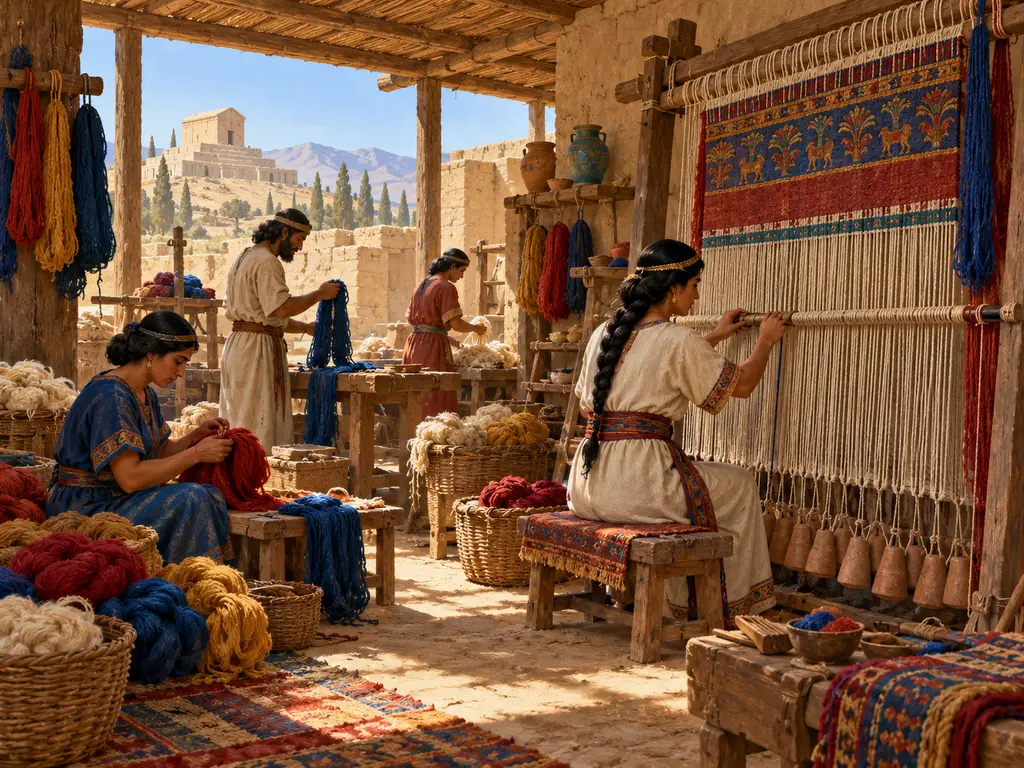
Weaver's Workshop
Spinning and weaving of wool and linen across the Persian empire, about 550-479 BCE
Cloth was among the most valuable goods of the ancient Near East, and spinning and weaving took up a large share of ordinary labour. In the Achaemenid empire weaving went on in households, in temple workshops and on the King's estates. Fine garments served as wages, dowries, offerings to the gods and gifts from the King to men he wished to honour.
In the game: The game's workshop spins and weaves wool into cloth for Elder's Houses. This simplifies: much cloth was linen, above all in Egypt, and most weaving was done in homes, temples and royal estates, not in shops.
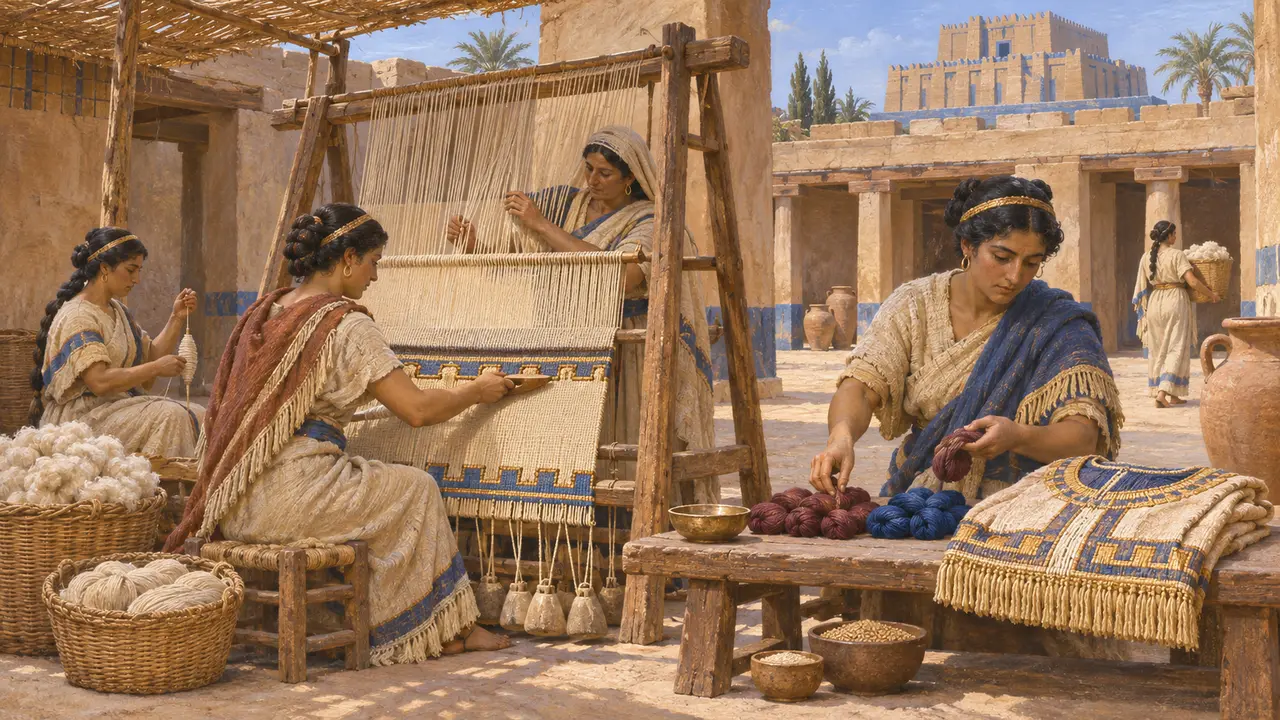
Wool, linen and dye in the temples
In the recordBabylonian temple archives of the sixth century, from the Ebabbar at Sippar and the Eanna at Uruk, record weavers who were paid in rations and issued wool, linen and dyed yarn. They made garments for the statues of the gods, which were dressed in new clothing at set festivals. Wool dyed red-purple and blue was costly and carefully counted. These records continued into the years of Persian rule after Cyrus took Babylon in 539.
S. Zawadzki, Garments of the Gods, 2006; P.-A. Beaulieu, The Pantheon of Uruk during the Neo-Babylonian Period, 2003
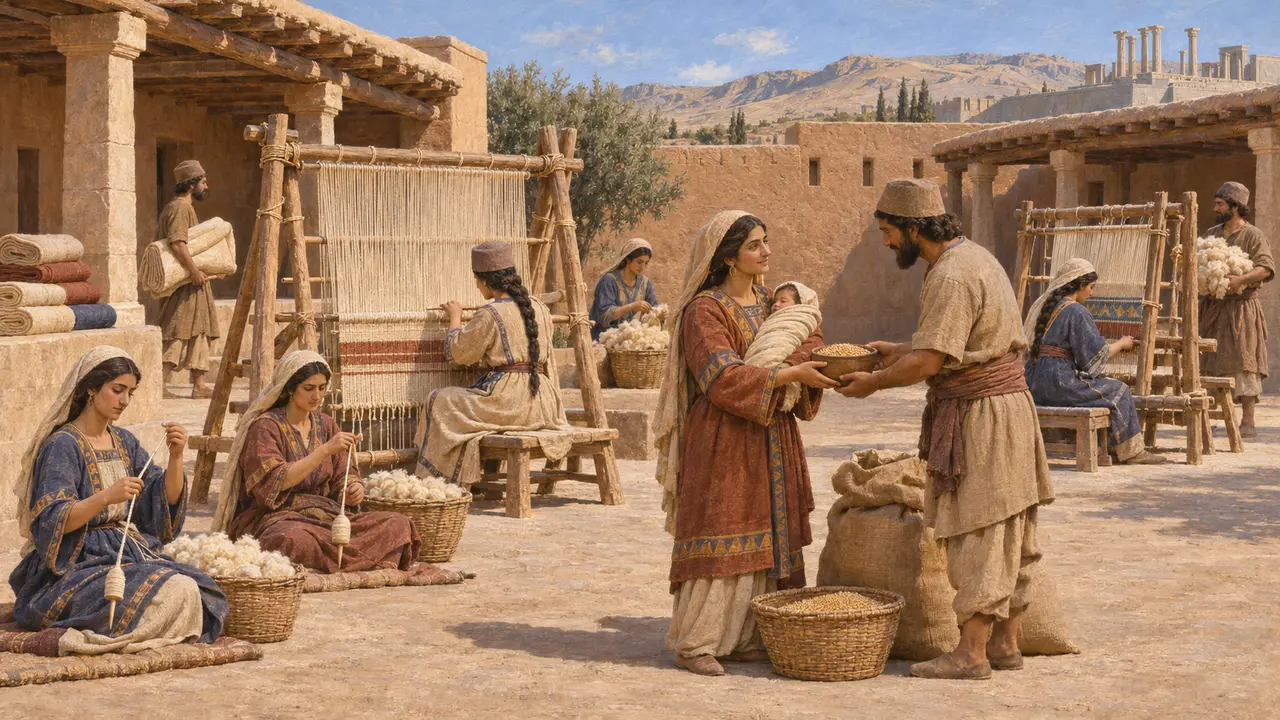
Workers on the King's estates
DisputedThe Persepolis Fortification tablets, from about 509 to 494, record rations for large groups of workers, men and women, on royal estates in Persis. Some female groups are called pashap, a word that several scholars connect with making garments, though its exact meaning is still debated. Mothers in these groups received extra rations after childbirth, which shows that women were a settled part of the workforce.
M. Brosius, Women in Ancient Persia, 1996; P. Briant, From Cyrus to Alexander, 2002
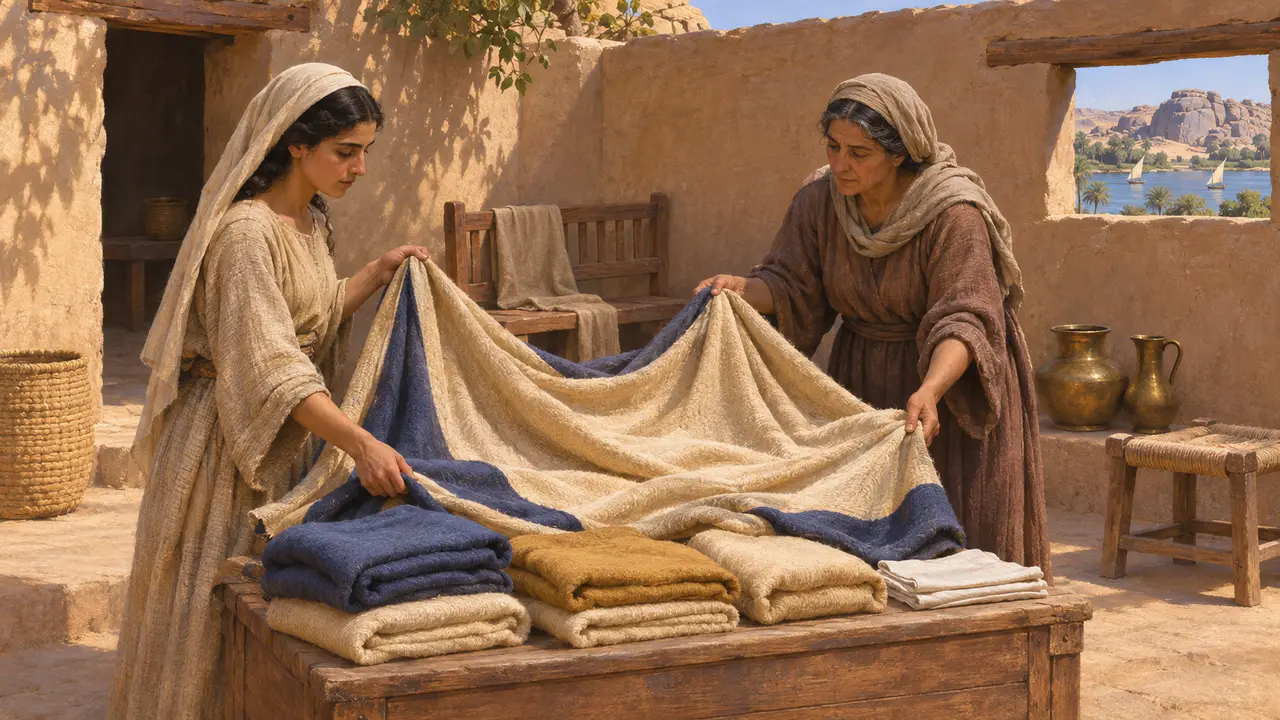
Cloth as household wealth
In the recordAramaic papyri from the Jewish garrison at Elephantine in Egypt list garments among a bride's dowry, each valued in silver. The marriage contract of Mibtahiah and Eshor was written in the mid-fifth century, a little after the game's period. It names several garments, mostly of wool, beside bronze vessels and furniture. Clothing was treated as property worth recording, like any other valuable goods.
Elephantine papyri, marriage contract of Mibtahiah (TAD B2.6)
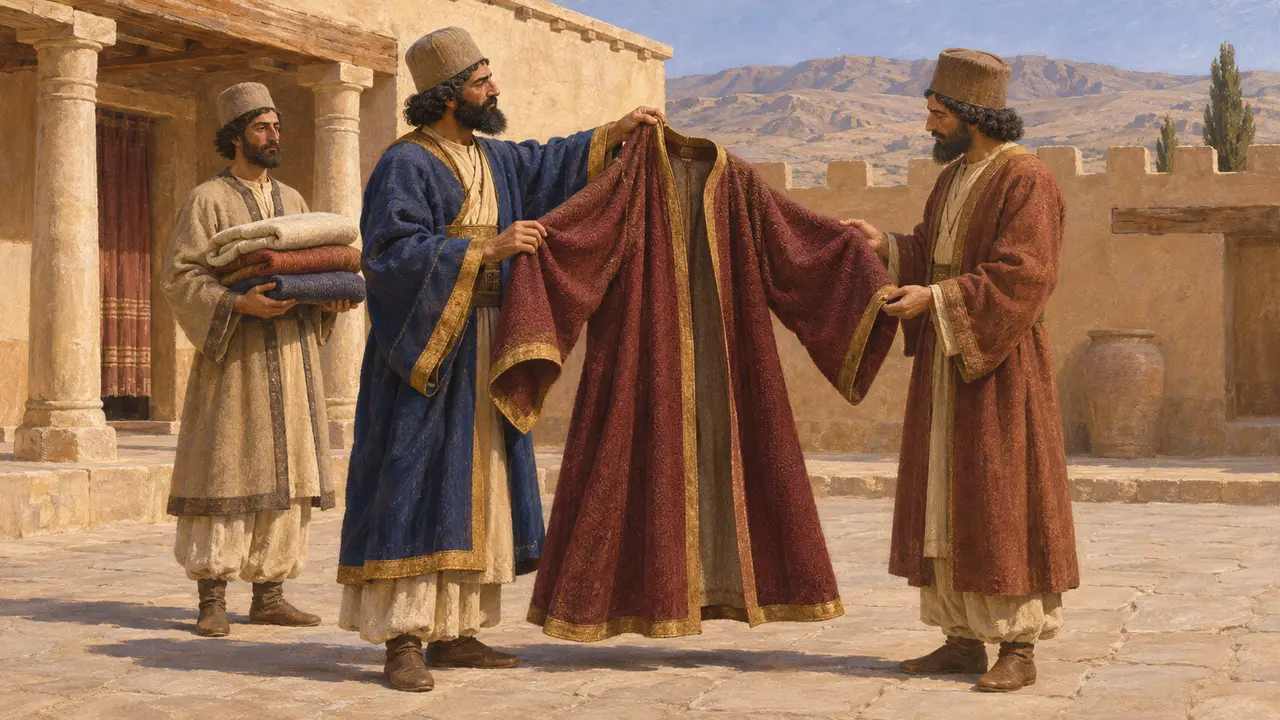
Robes as gifts of the King
Ancient accountHerodotus says the Persians took up Median dress, and that the family of Otanes received a Median robe from the King every year as a mark of honour. He also tells how Cambyses sent a purple cloak among his gifts to the Ethiopian king. He describes Babylonian men wearing a linen tunic to the feet, a woollen tunic over it and a white cloak, which shows both fibres in daily use.
Herodotus 1.135; Herodotus 3.84; Herodotus 3.20; Herodotus 1.195
Sources
- P. Briant, From Cyrus to Alexander, 2002
- S. Zawadzki, Garments of the Gods, 2006
- M. Brosius, Women in Ancient Persia, 1996
- Herodotus 1.135, 1.195, 3.20, 3.84
- Elephantine papyri, marriage contract of Mibtahiah (TAD B2.6)
- P.-A. Beaulieu, The Pantheon of Uruk during the Neo-Babylonian Period, 2003