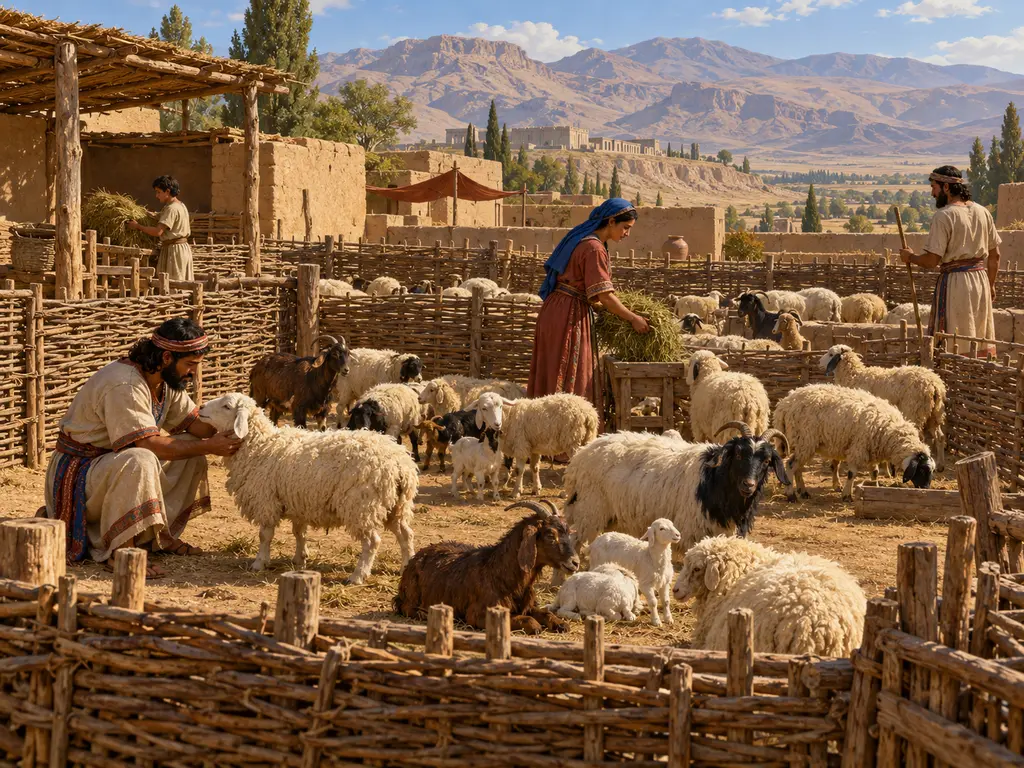
Livestock Pen
Sheep and goat herding across the Achaemenid empire, 6th to 5th century BCE
Sheep and goats were kept in every province of the Persian empire. They gave meat for royal tables and offerings, milk, skins, goat hair and wool for cloth. The Persepolis tablets count flocks held by the administration in Persis, and Babylonian temple archives show flocks entrusted to herdsmen who owed fixed returns of young animals and wool.
In the game: The pen keeps sheep and goats, sends wool to the weavers and culls the flock for meat. This is simplified: goats give hair rather than wool, and many real flocks probably moved between seasonal pastures rather than living in a fixed pen.
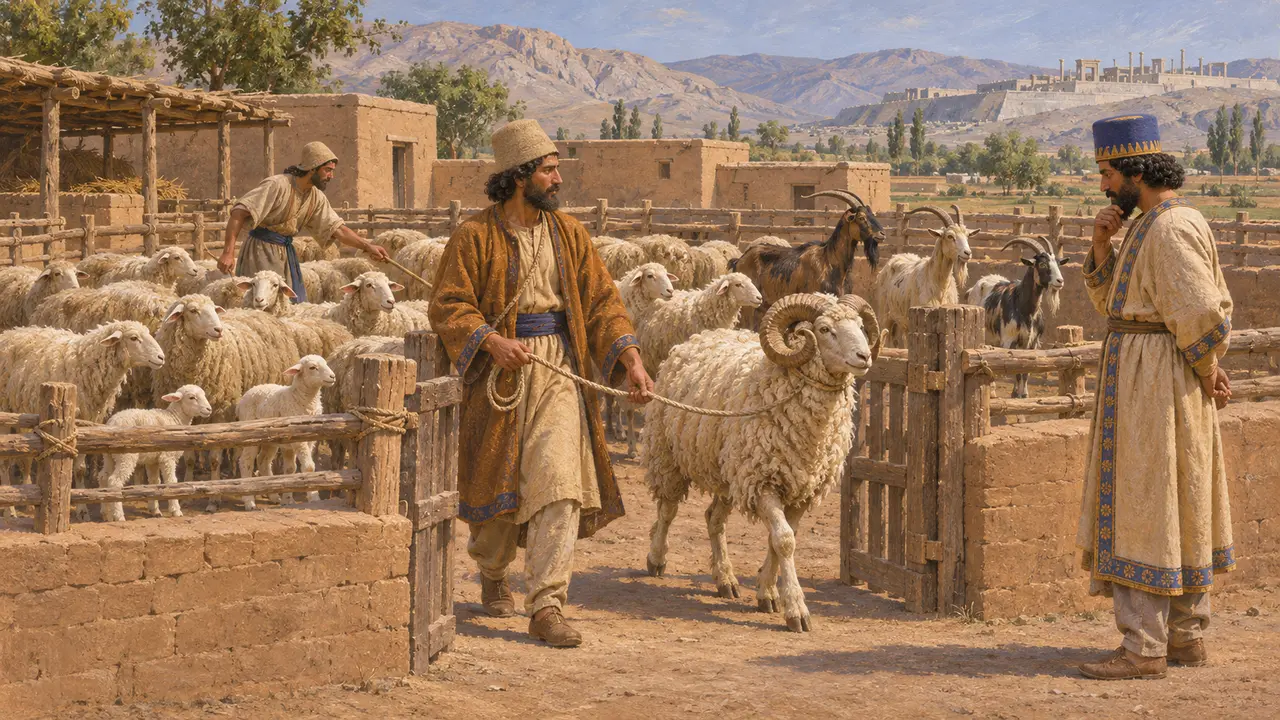
Flocks in the records of Persepolis
In the recordThe Elamite tablets of the Persepolis Fortification archive, written in about 509 to 493, record sheep and goats held by the administration around Persepolis. Animals were counted by kind, age and sex, and issued to officials and the royal household, and for offerings to the gods. On the Apadana reliefs at Persepolis, several subject delegations lead rams as gifts for the King.
R. T. Hallock, Persepolis Fortification Tablets, 1969; W. Henkelman, The Other Gods Who Are, 2008; E. F. Schmidt, Persepolis I, 1953
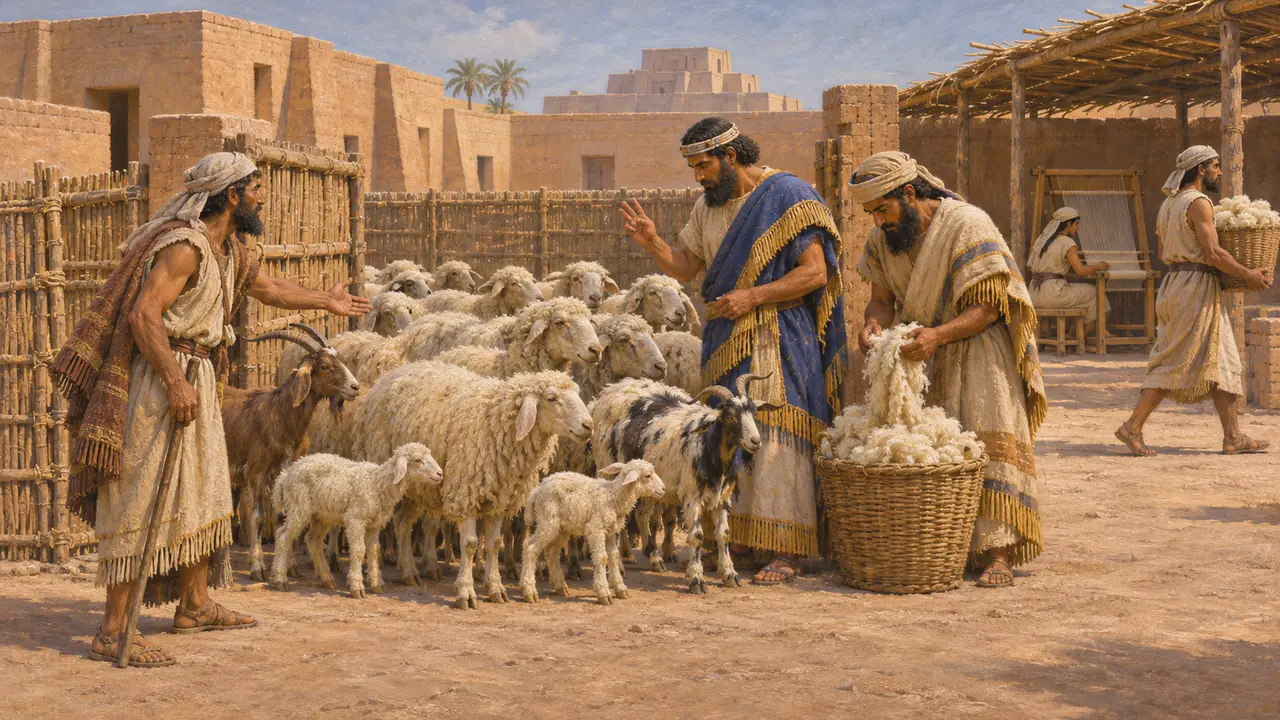
Temple herds of Babylonia
In the recordThe Eanna temple at Uruk owned large flocks, which it handed to herdsmen under contract. Each herdsman owed a set number of young animals and a quantity of wool, and inspectors checked the flocks and chased up losses. These records run on without a break into the reigns of Cyrus and Cambyses, showing that Persian rule left the system in place. Temple wool went to weavers who made garments for the gods' statues.
M. Kozuh, The Sacrificial Economy, 2014
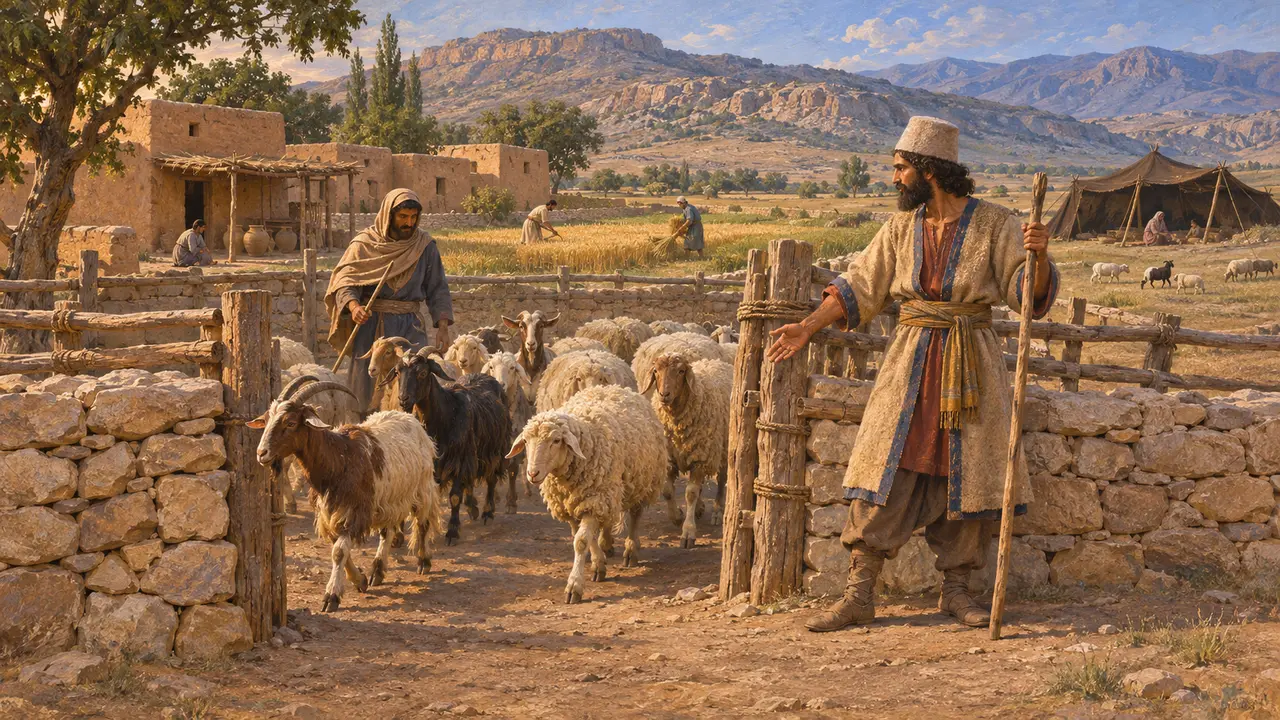
Herding peoples of Persis
Ancient accountHerodotus lists the Persian tribes and says that four of them, the Dai, Mardi, Dropici and Sagartians, were nomads, while others, such as the Panthialaei, Derusiaei and Germanii, were farmers. His picture is a Greek outsider's, but it fits a Persis where settled farming and herding existed side by side.
Herodotus 1.125
Moving with the seasons
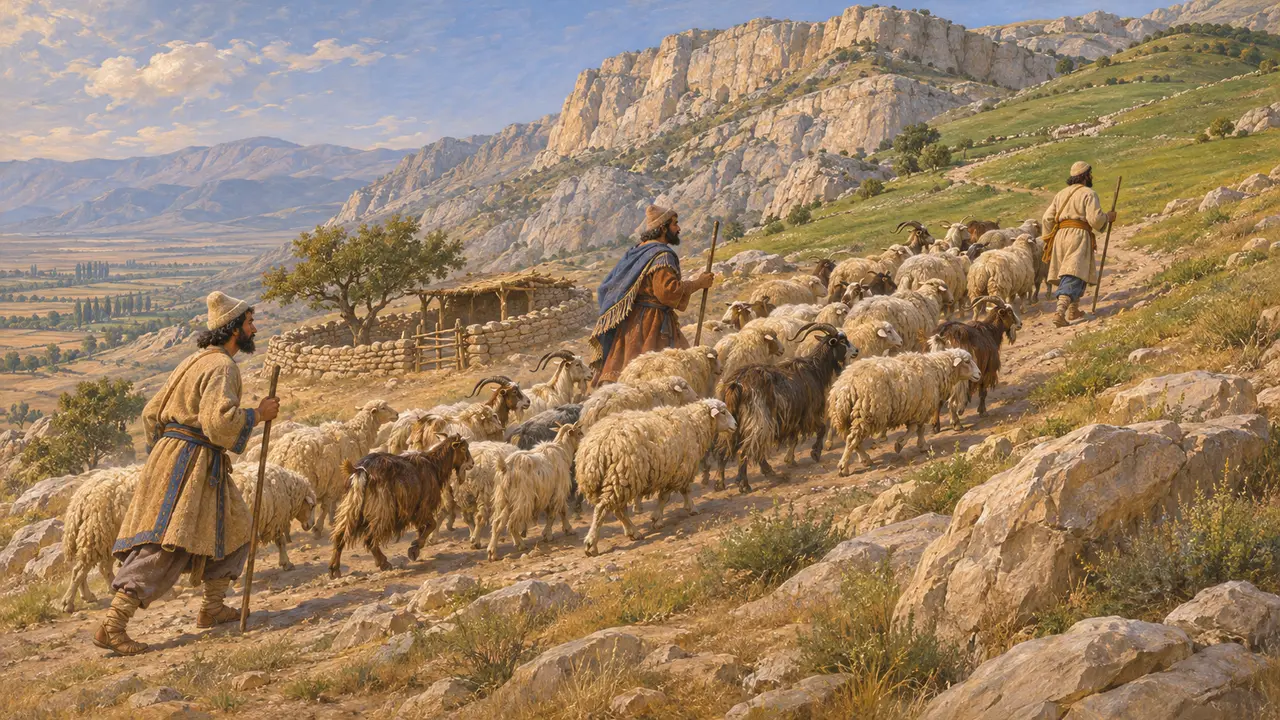
DisputedHistorians usually assume that flocks in Persis moved between lowland winter grazing and highland summer pasture, as herds in the region did in later times. The tablets do not describe these routes directly, and scholars still argue over how far the early Persians were pastoral nomads and how far settled farmers. It is also unclear how often wool was shorn with blades or plucked by hand, as older Mesopotamian practice had been.
P. Briant, From Cyrus to Alexander, 2002
Cyrus and his father's flocks
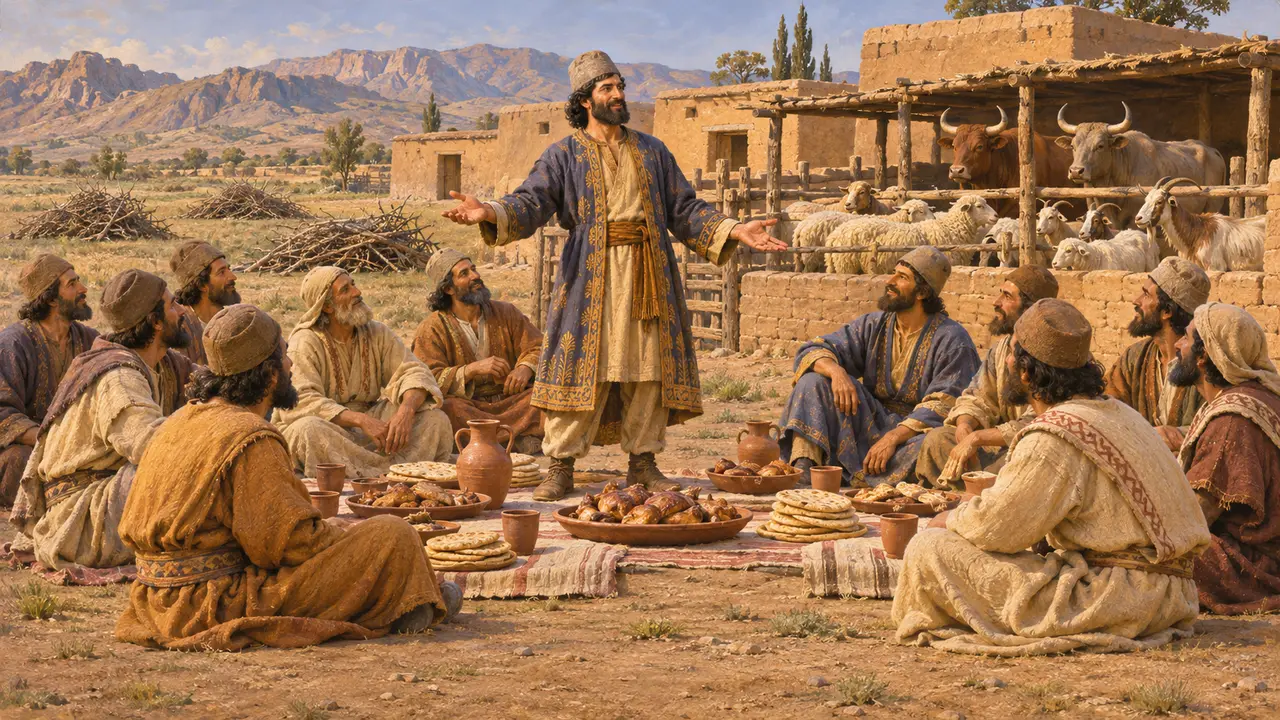
Later legendHerodotus tells how Cyrus, planning revolt against the Medes, made the Persians clear a field of thorns one day and the next day feasted them on his father's goats, sheep and oxen. He then asked which day they preferred, offering freedom as the feast and Median rule as the toil. The story is a moral tale, not a record, but it assumes that a Persian noble's wealth lay in his herds.
Herodotus 1.126
Sources
- R. T. Hallock, Persepolis Fortification Tablets, 1969
- M. Kozuh, The Sacrificial Economy, 2014
- W. Henkelman, The Other Gods Who Are, 2008
- P. Briant, From Cyrus to Alexander, 2002
- Herodotus 1.125-126
- E. F. Schmidt, Persepolis I, 1953