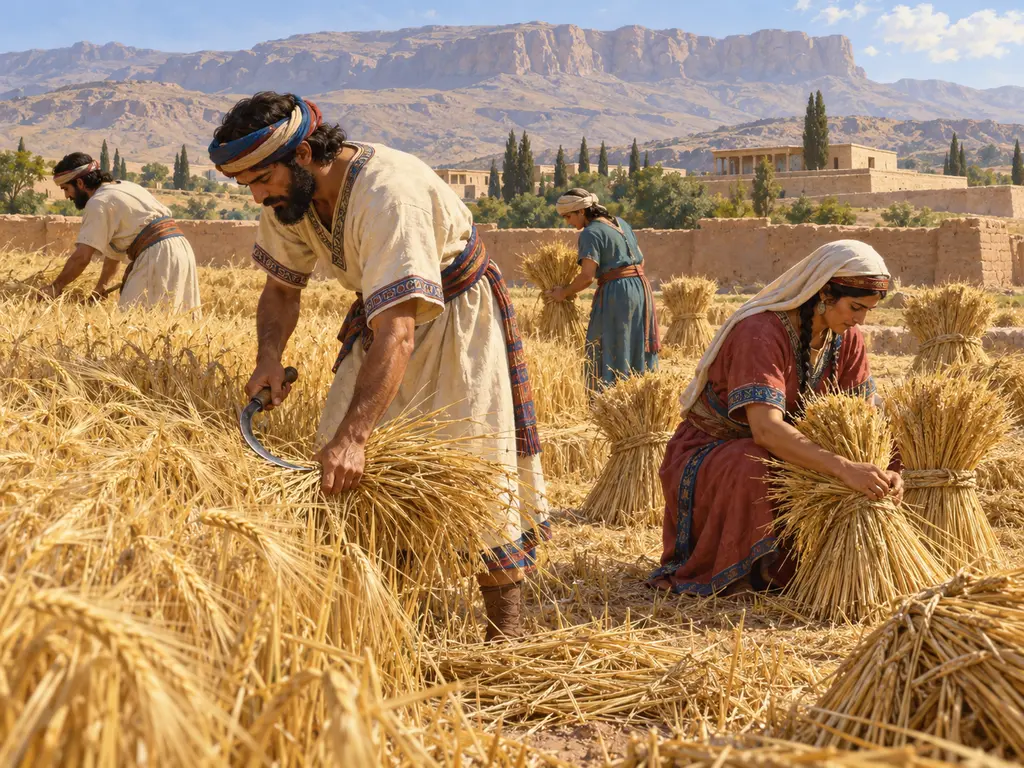
Barley Farm
Grain fields of Persis and the wider empire, 6th-5th century BCE
In the game: Level 2: The Spear-bearer
Barley was the main grain of the Achaemenid heartland and much of the empire. It fed workers, soldiers, animals and the royal table, and it served as a measure of payment. The clay archives of Persepolis show barley moving through the King's storehouses on a vast scale, which makes it one of the best documented parts of Persian life.
In the game: The game's farm grows barley on canal-watered land near the Pulvar and carts it to a granary. The game simplifies a system that the tablets show was run through royal storehouses and scribal accounts.
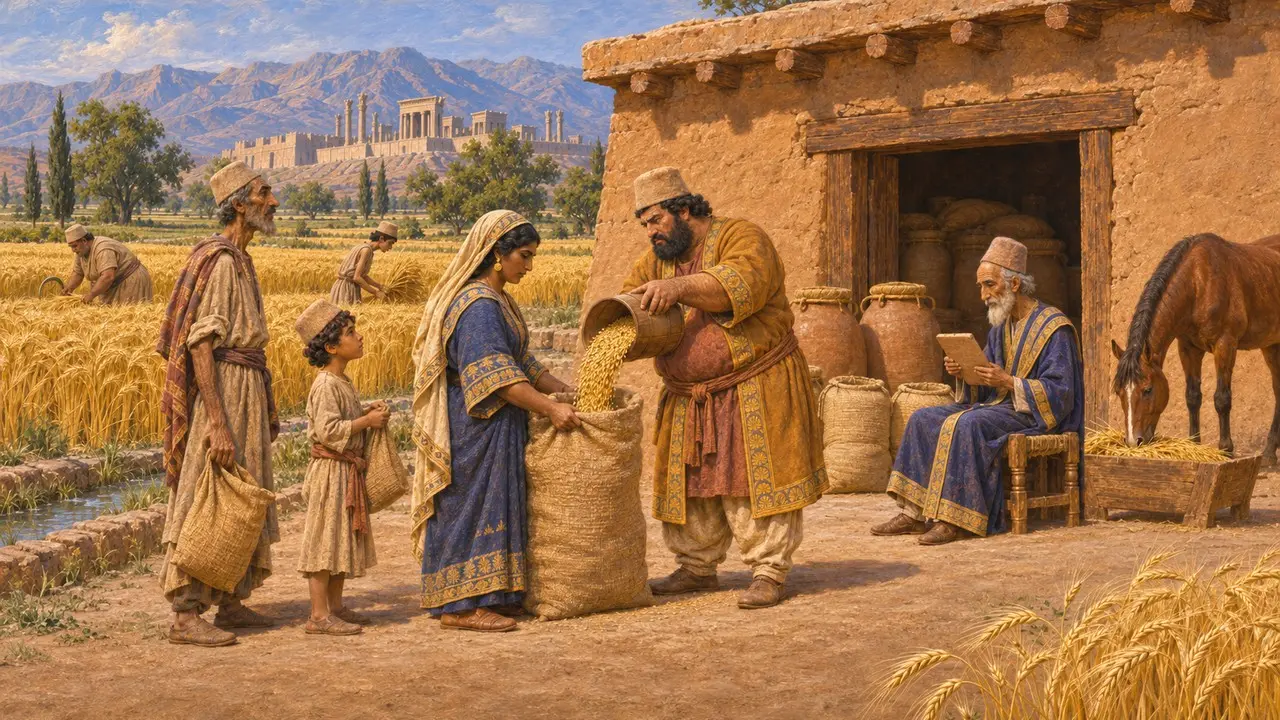
Barley in the Persepolis tablets
In the recordThe Persepolis Fortification tablets, written mostly in Elamite in the years around 509-493, record grain more often than any other commodity. Barley was issued as monthly rations to workers, including men, women and children, as seed for sowing and as fodder for horses and other animals. Officials logged deliveries, stores and payments place by place across Persis and towards Elam.
R. T. Hallock, Persepolis Fortification Tablets, 1969
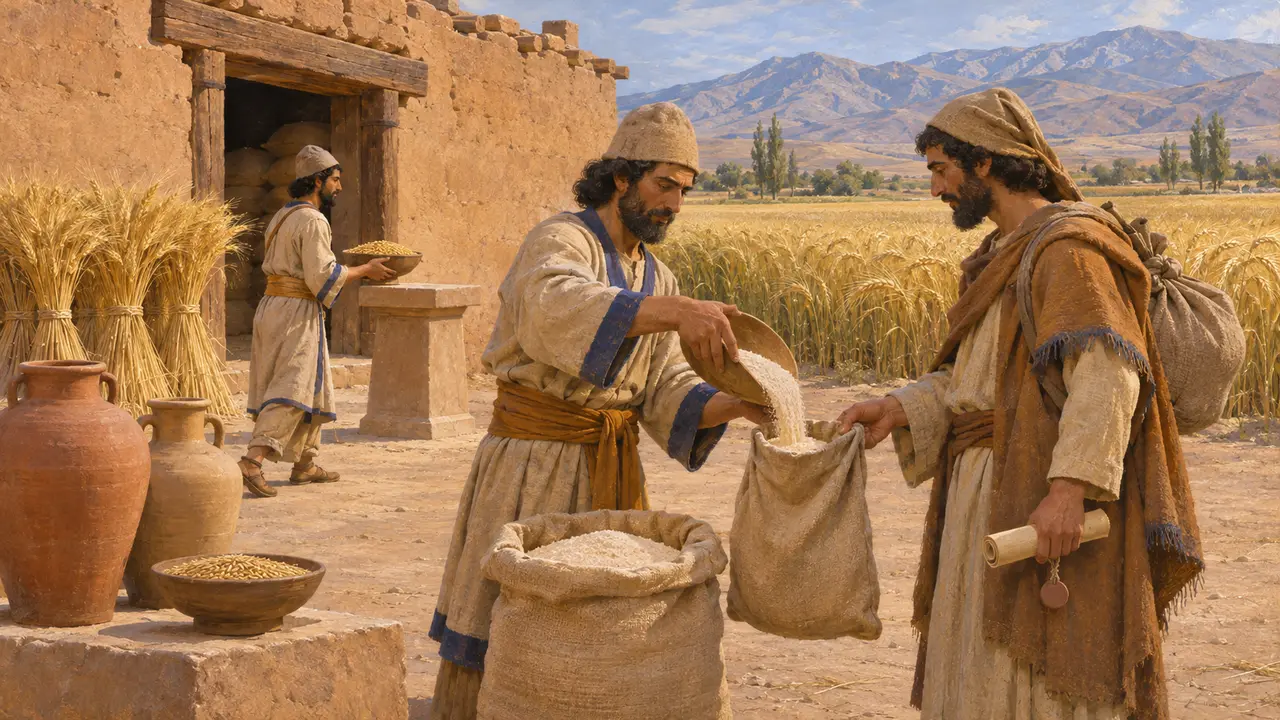
Grain for gods, guests and the road
In the recordThe same archive shows barley given for offerings to several gods, Elamite and Iranian alike. Travellers on the roads who carried sealed documents drew rations, mostly flour made from grain, along with beer and wine. Barley was also brewed into beer, which appears among the commodities the administration handled. Grain was therefore a tool of government as well as food.
W. Henkelman, The Other Gods Who Are, 2008
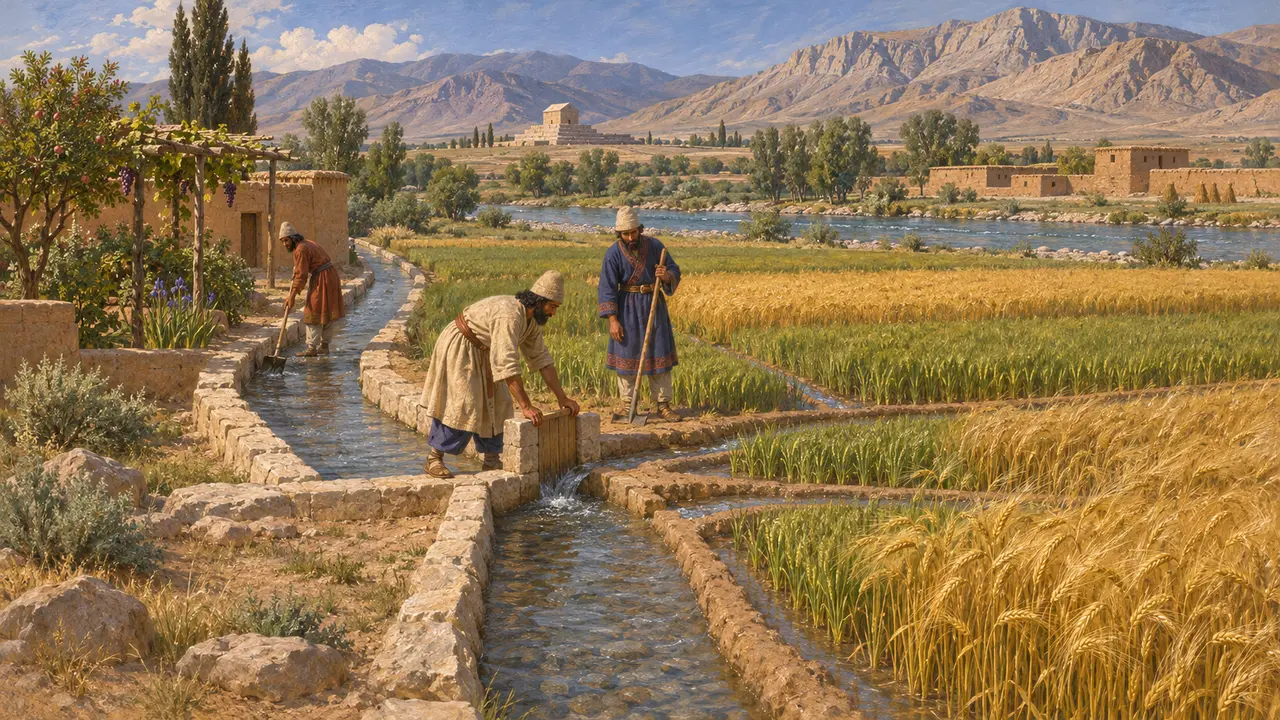
Fields and water in the highland plains
In the recordPersis has cold winters and dry summers, so reliable harvests depended on rivers and channels. At Pasargadae, beside the Pulvar, excavators found stone water channels running through the royal gardens, evidence of careful water management under Cyrus. Later surveys of the plains around Persepolis have recorded ancient canals and dams, though dating each work precisely is often difficult.
D. Stronach, Pasargadae, 1978
Farming land under the empire in Babylonia
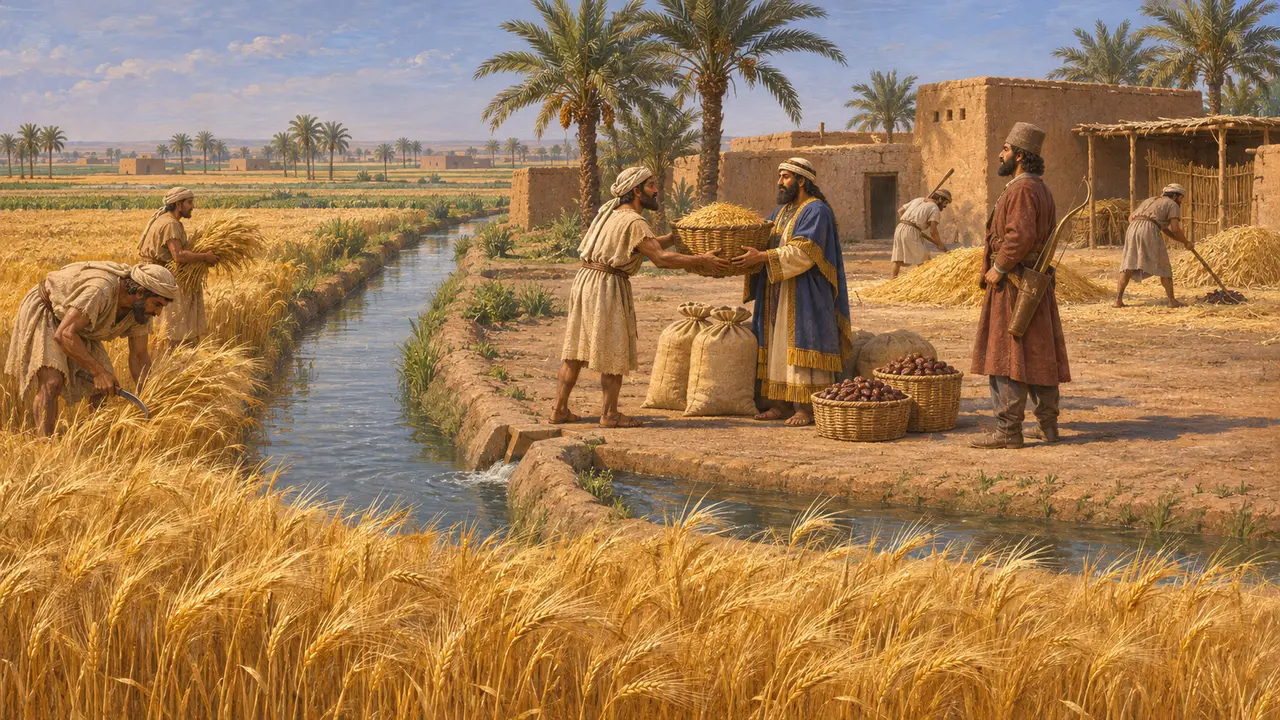
In the recordIn Babylonia the Murashu archive from Nippur dates to about 455-403, later than the game's period. It shows land granted to soldiers and dependants in return for military service and taxes, known as bow land, horse land and chariot land. The Murashu firm leased such holdings, supplied water, seed and animals, and collected barley and dates as rent. The texts show how imperial landholding and irrigation were tied together.
M. W. Stolper, Entrepreneurs and Empire, 1985
Greek reports of yields and water
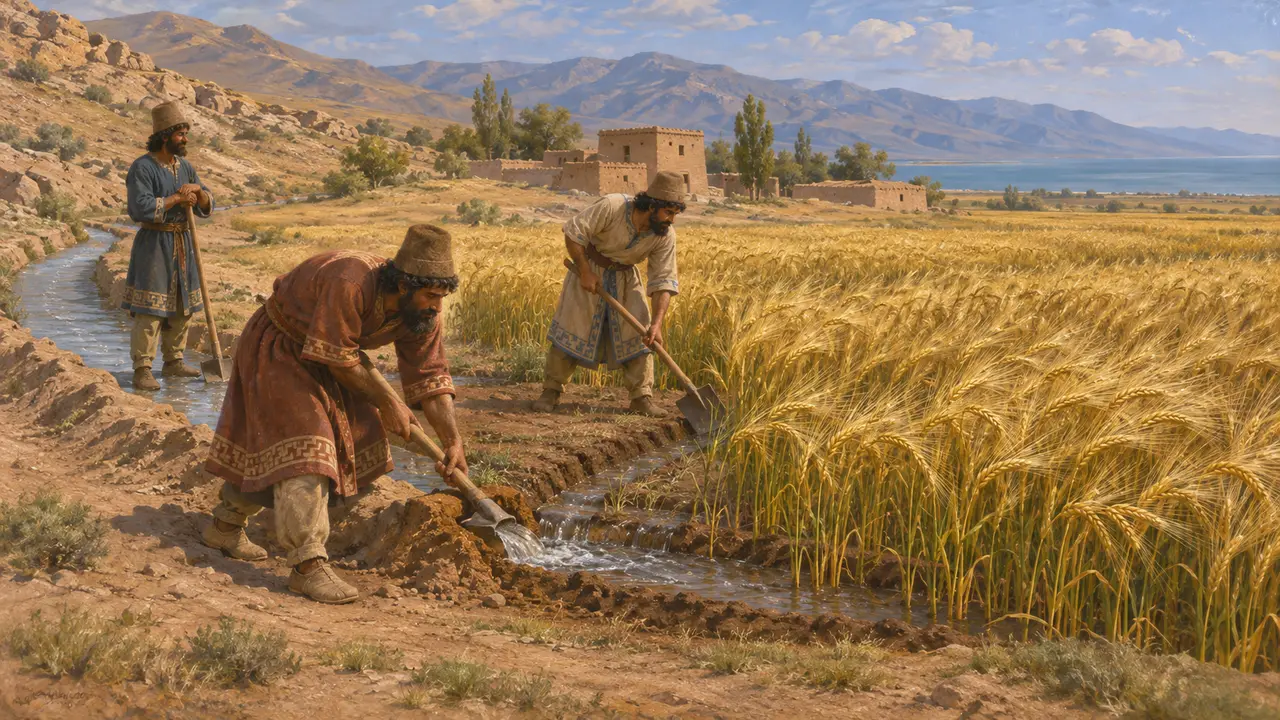
DisputedHerodotus says Babylonian fields returned two hundred and sometimes three hundred times the seed, a figure historians regard as greatly exaggerated. Polybius, writing centuries later, says the Persians granted the use of land for five generations to anyone who brought water to unwatered ground in the dry country south of the Caspian. Scholars debate whether this refers to underground channels and whether such channels were already widespread under the Achaemenids.
Herodotus 1.193; Polybius 10.28
Sources
- R. T. Hallock, Persepolis Fortification Tablets, 1969
- W. Henkelman, The Other Gods Who Are, 2008
- M. W. Stolper, Entrepreneurs and Empire, 1985
- D. Stronach, Pasargadae, 1978
- Herodotus 1.193
- Polybius 10.28