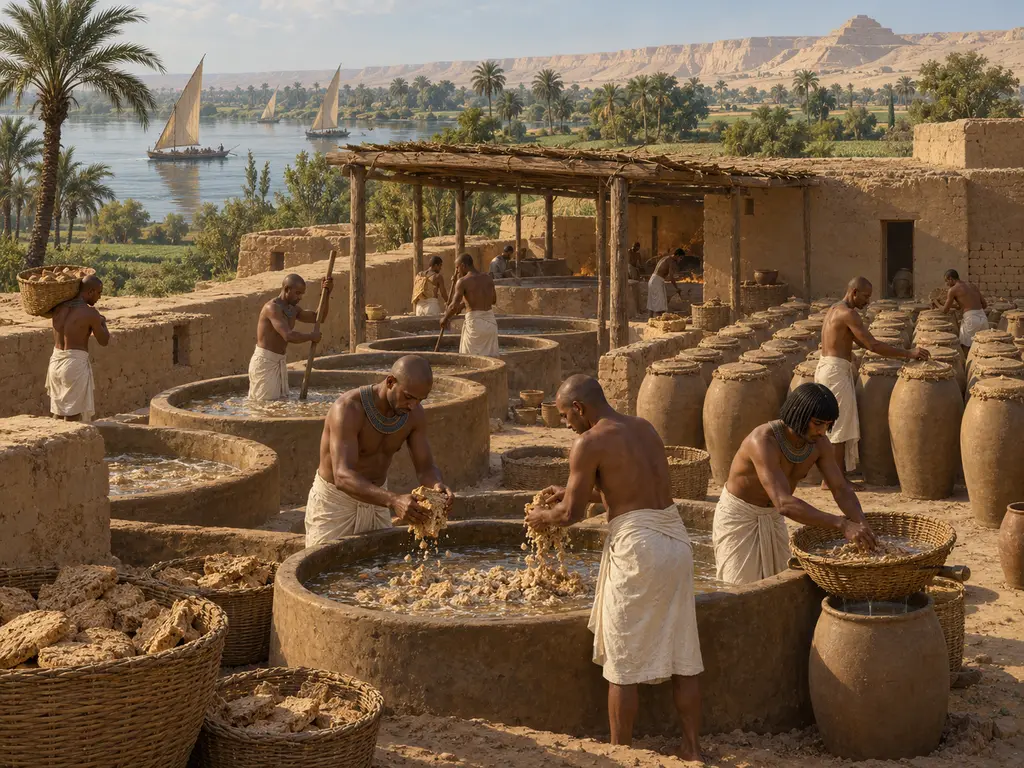
Brewery
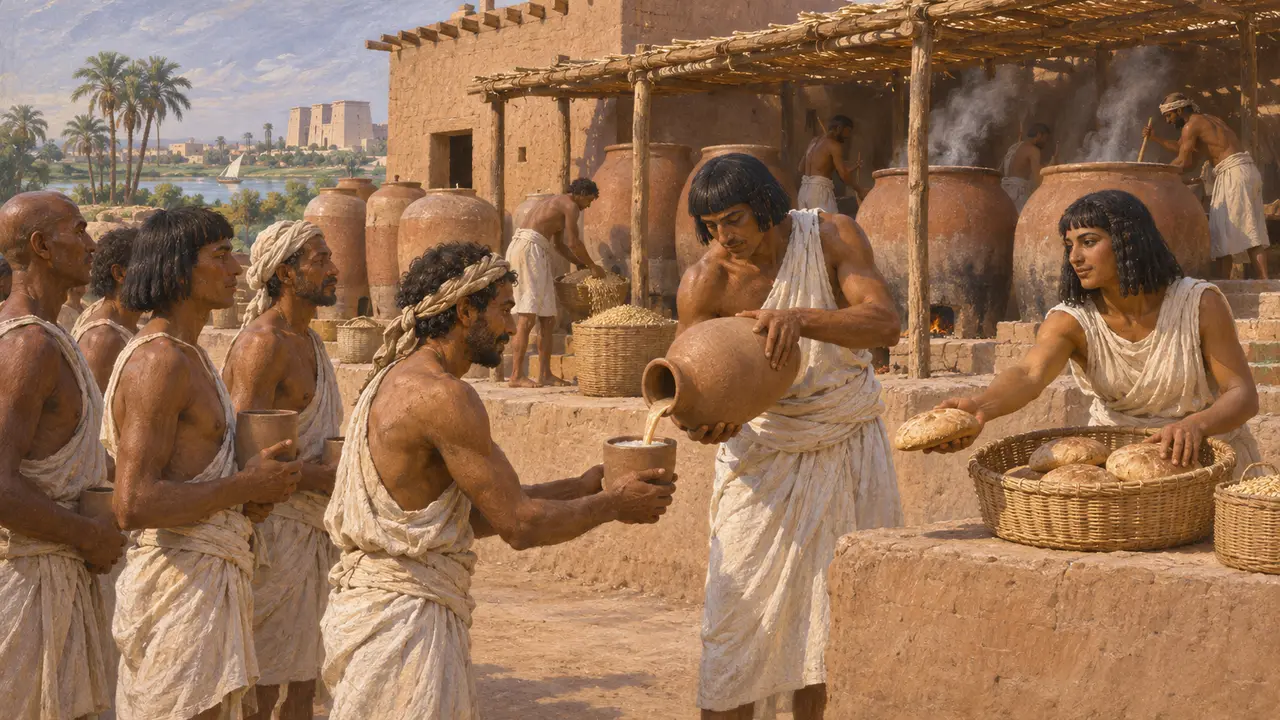
Workshop making barley and emmer beer, Memphis, Egypt, about 525 BCE
In the game: Level 2: The Spear-bearer
Beer was the everyday drink of Egypt, brewed from barley and emmer wheat in households, temples and estates for thousands of years before the Persians arrived. It was food as much as drink. Rations for workers and officials were counted in loaves and jugs of beer, and the Persian conquerors found a brewing system already old when they took Memphis in 525.
In the game: Breweries take barley from granaries and supply beer to Noble Residences, only in the Memphis level. The game's bread-and-jar method is the older textbook picture; residue studies suggest malted grain was also used, and emmer as well as barley.
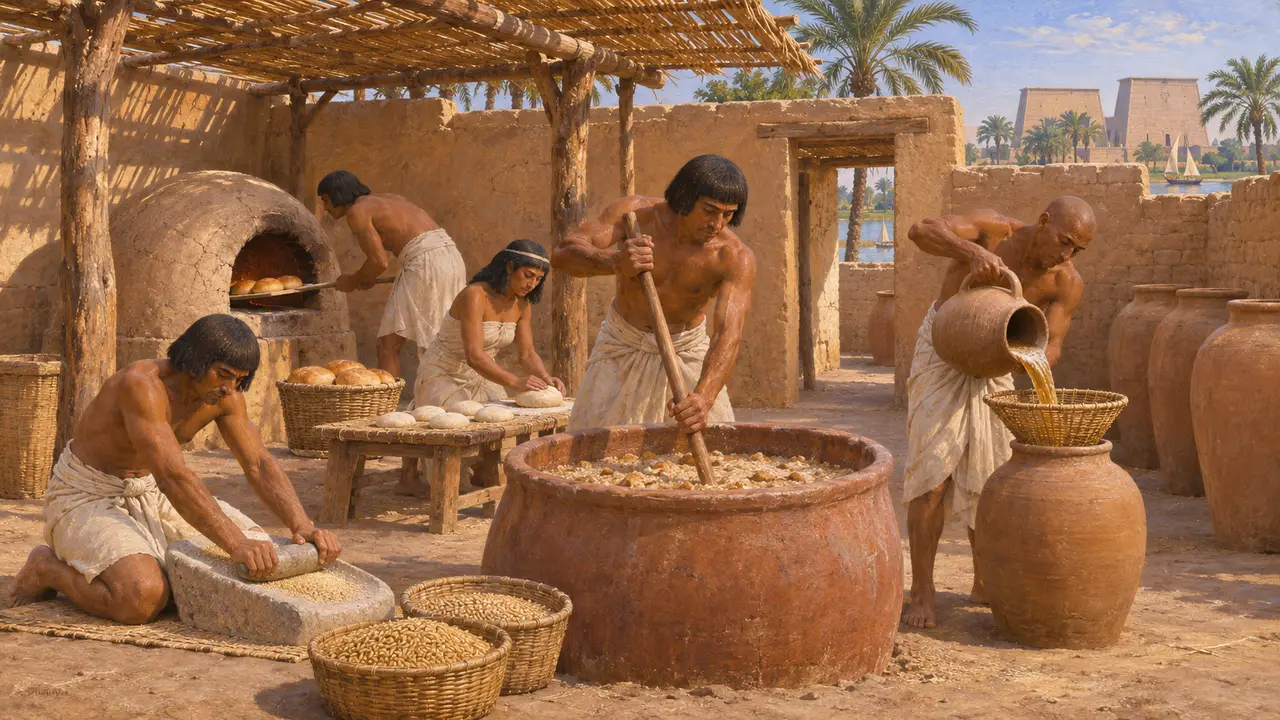
Beer in tomb scenes and models
In the recordEgyptian tombs show brewing from the Old Kingdom onward. Painted and carved scenes, and wooden models placed in burials, show workers grinding grain, shaping and baking loaves, mashing them in vats and pouring the liquid into jars. A well-known model of a combined bakery and brewery comes from the Middle Kingdom tomb of the official Meketre at Thebes and survives today.
H. E. Winlock, Models of Daily Life in Ancient Egypt from the Tomb of Meket-Re' at Thebes, 1955
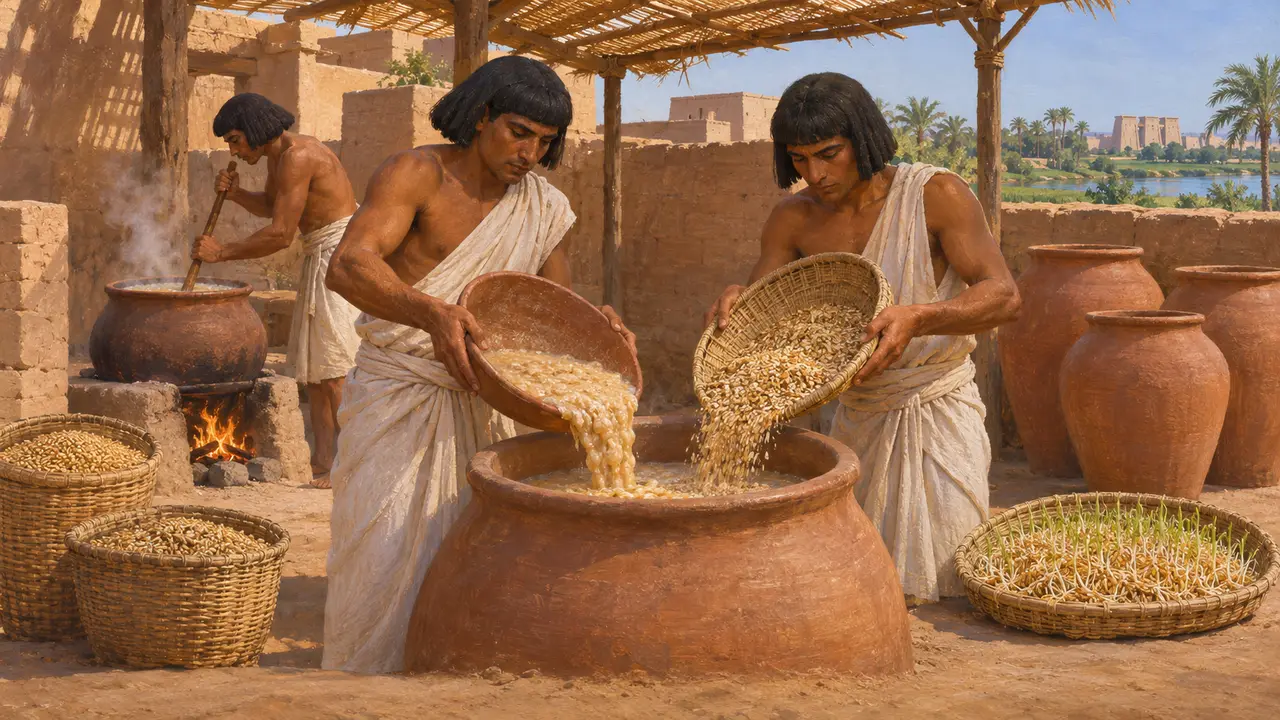
How the beer was really made
DisputedScholars long held that Egyptian beer was made by crumbling half-baked bread into water and letting it ferment. Microscope study of residues in brewing vessels from Amarna and Deir el-Medina found instead a mix of malted grain and cooked grain, with no clear sign of bread. Many now think methods varied, and that the bread scenes may show only part of the process.
D. Samuel, Investigation of ancient Egyptian baking and brewing methods by correlative microscopy, Science, 1996
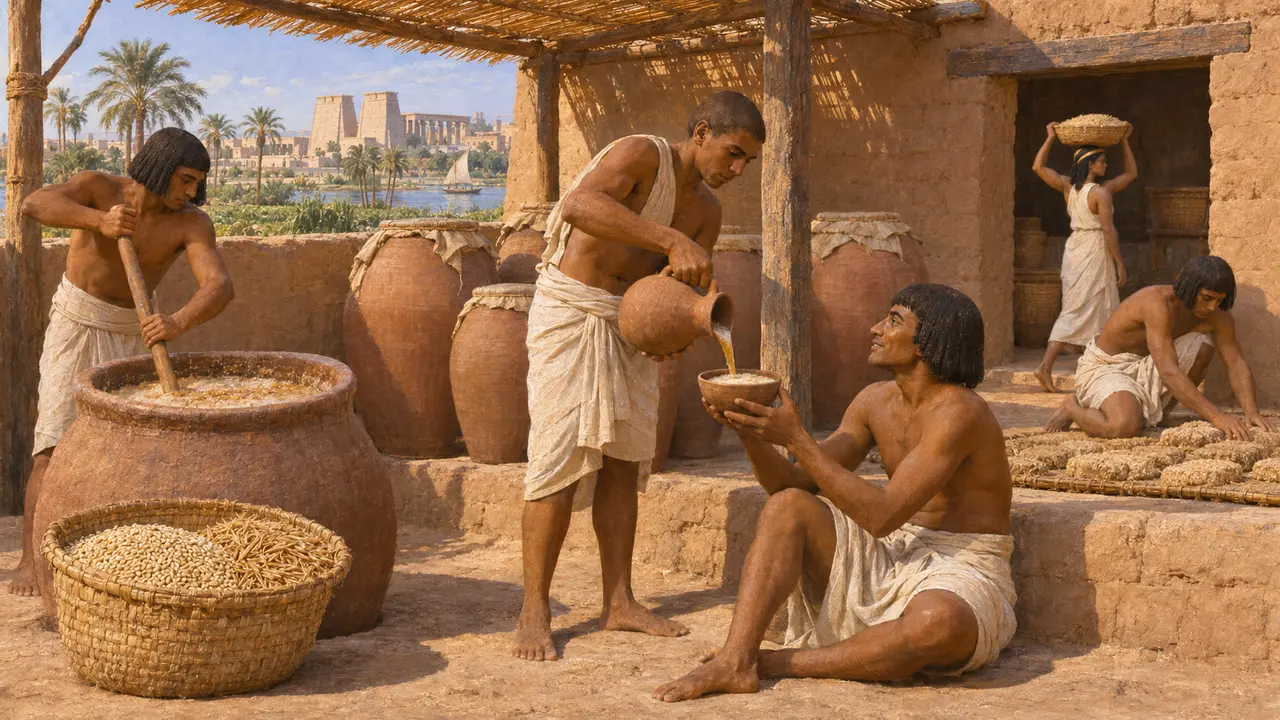
Herodotus on barley wine
Ancient accountHerodotus, who says he visited Egypt, probably in the mid-fifth century, about two generations after the Persian conquest, reports that the Egyptians drank a wine made from barley because the country had no vines. The drink he means is beer. His reason is wrong, since Egypt grew grapes and made wine for the elite, but his note shows how ordinary beer drinking looked to a Greek visitor.
Herodotus 2.77
Beer as wages and rations
In the recordAcross Egyptian history, labour was paid largely in bread and beer, and ration records from workers' villages such as Deir el-Medina list both. The Persian administration ran a similar system in its own heartland. The Persepolis Fortification tablets, written in Elamite in the reign of Darius, record issues of grain, wine and beer to workers, travellers and officials.
R. T. Hallock, Persepolis Fortification Tablets, 1969
The goddess who drank red beer
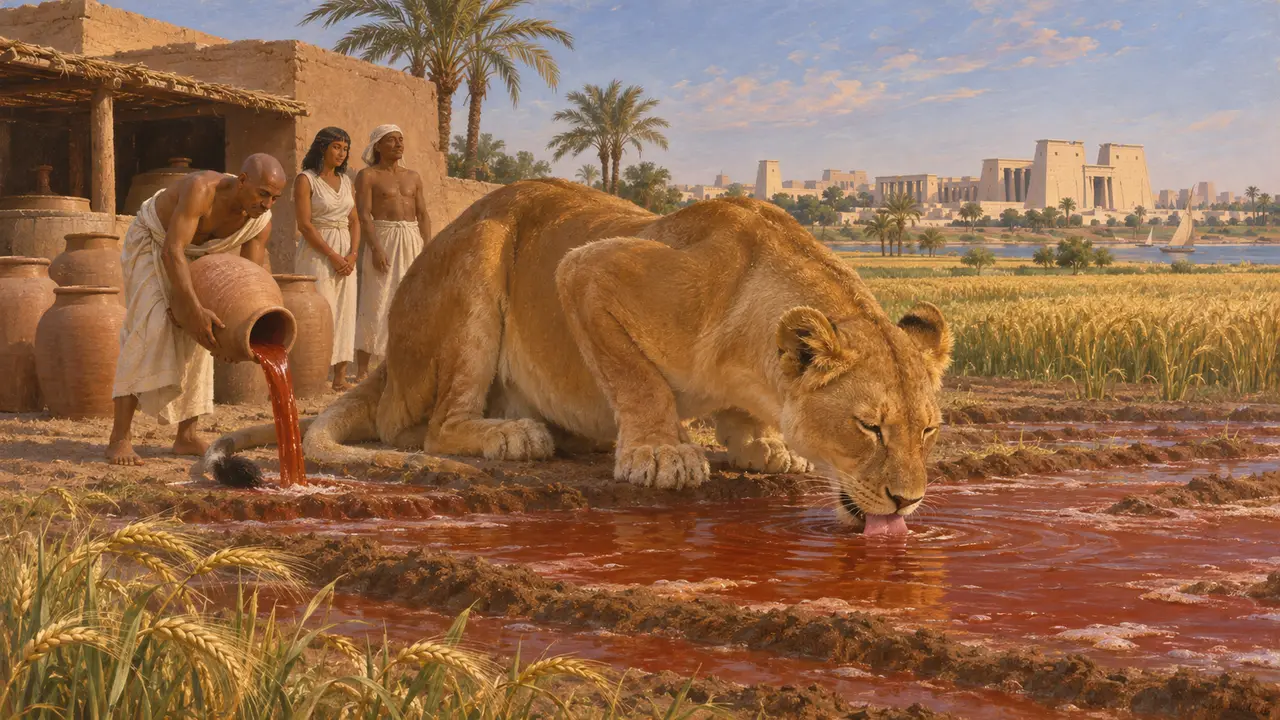
Later legendAn Egyptian myth, written in New Kingdom royal tombs, tells how the sun god Ra sent his fierce Eye, the goddess Hathor in the form of the lioness Sekhmet, to destroy rebellious humans. To stop the slaughter he had beer dyed red with ochre and poured over the fields. Thinking it was blood, the goddess drank it, grew drunk and calm, and spared mankind.
Book of the Heavenly Cow (New Kingdom royal tombs)
Sources
- D. Samuel, Brewing and baking, in P. Nicholson and I. Shaw (eds), Ancient Egyptian Materials and Technology, 2000
- D. Samuel, Investigation of ancient Egyptian baking and brewing methods by correlative microscopy, Science, 1996
- Herodotus 2.77
- H. E. Winlock, Models of Daily Life in Ancient Egypt from the Tomb of Meket-Re' at Thebes, 1955
- R. T. Hallock, Persepolis Fortification Tablets, 1969
- W. Henkelman, The Other Gods Who Are, 2008