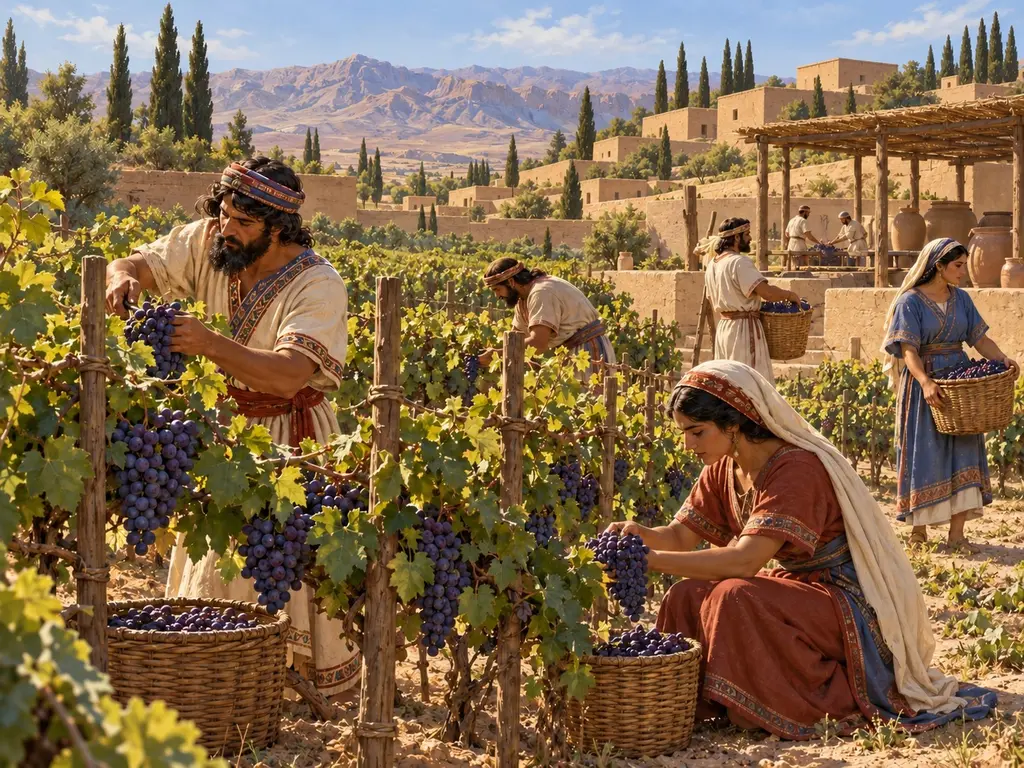
Vineyard
Grape-growing and winemaking on the estates of the Persian empire, 6th to 5th century BCE
Vines were grown in the uplands of Persis, in Media, Armenia, Syria and Anatolia, and wine was one of the main goods counted by the royal storehouses. Administrative tablets from Persepolis show wine moving through the King's economy as pay, travel supplies and offerings. Greek writers saw heavy drinking as a mark of Persian luxury.
In the game: The game's Vineyard trains vines on posts, presses the grapes and ferments the wine on the estate for Noble Residences. In the tablets wine also went to some workers, travellers and gods, not only to the elite.
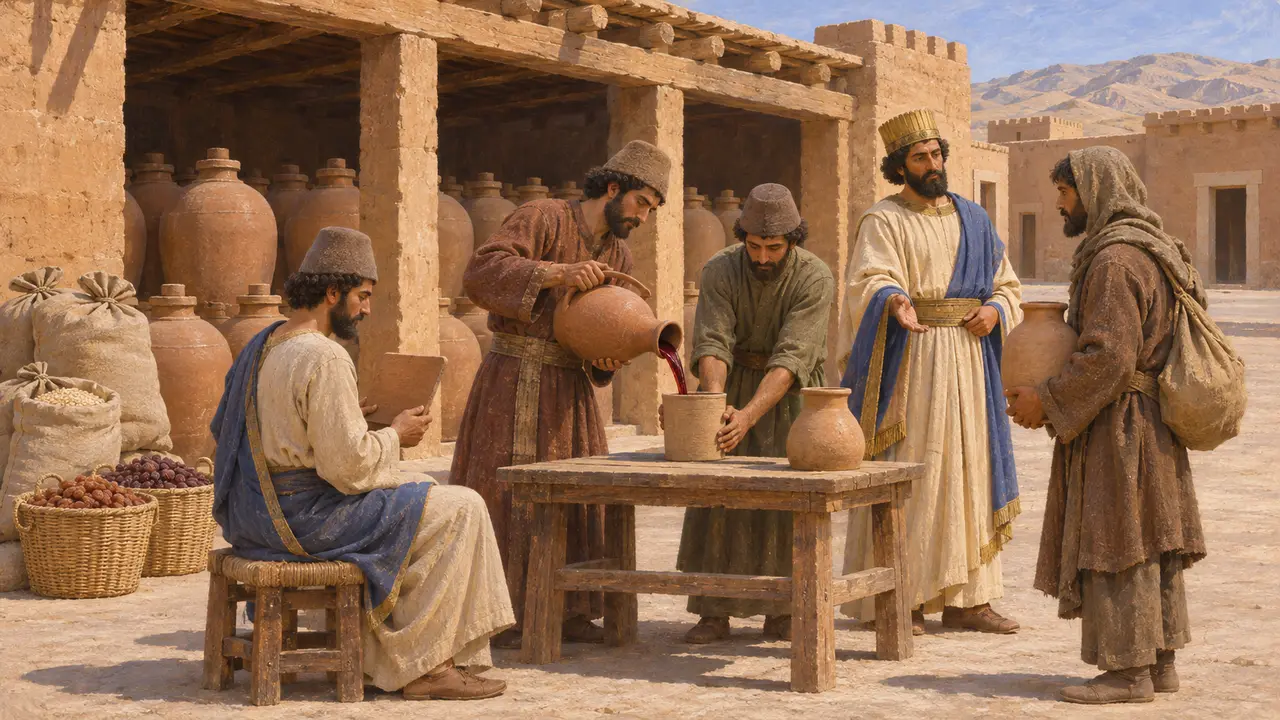
Wine in the Persepolis tablets
In the recordThe Elamite Fortification tablets, written at Persepolis between about 509 and 493, record wine collected into royal stores and paid out again. It went to officials, to travellers on the roads, to some groups of workers and to the households of royal women. Wine also appears among the goods issued for offerings to several gods. The tablets show it as a managed commodity, stored and accounted for alongside grain, beer and fruit.
R. T. Hallock, Persepolis Fortification Tablets, 1969; W. Henkelman, The Other Gods Who Are, 2008
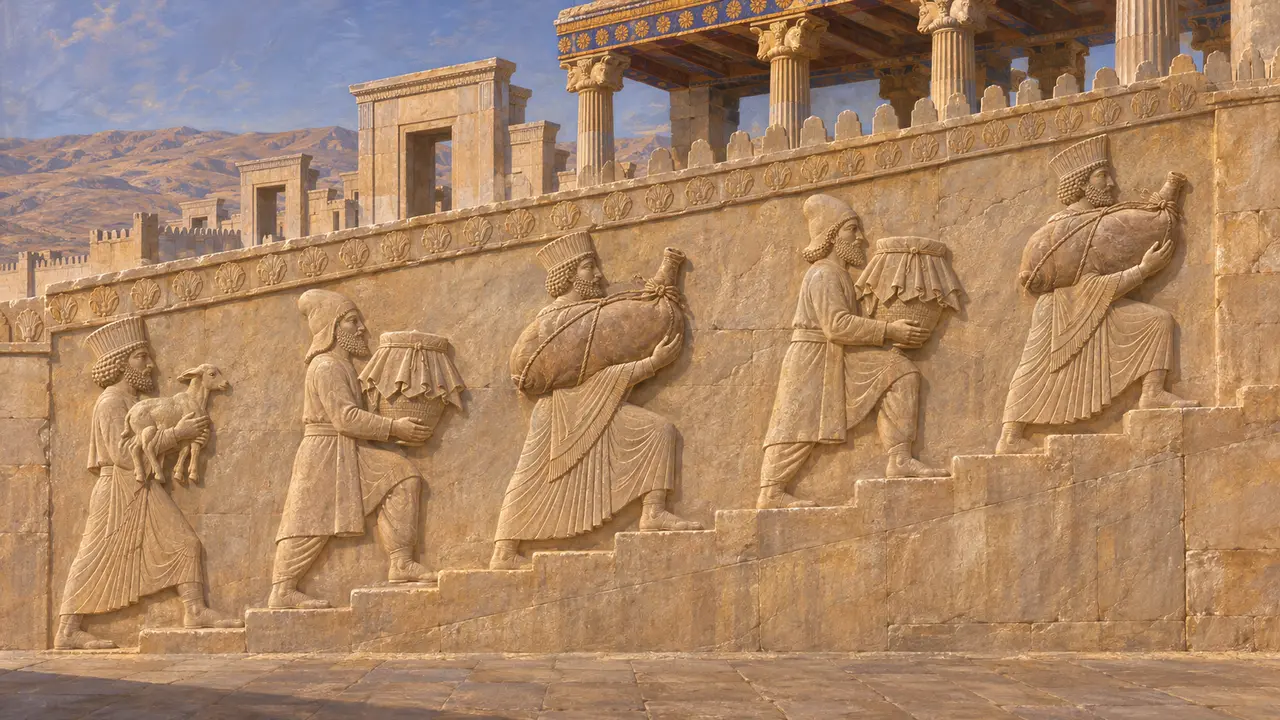
Servants carrying wine at Persepolis
In the recordOn the stairways of Darius's palace at Persepolis, and on later palace stairways there, carved servants climb towards the royal rooms. They carry young animals, covered vessels and wineskins, bringing food and drink up for the King's table. The reliefs survive in place today and fit the tablets' picture of a court supplied with wine.
E. F. Schmidt, Persepolis I, 1953
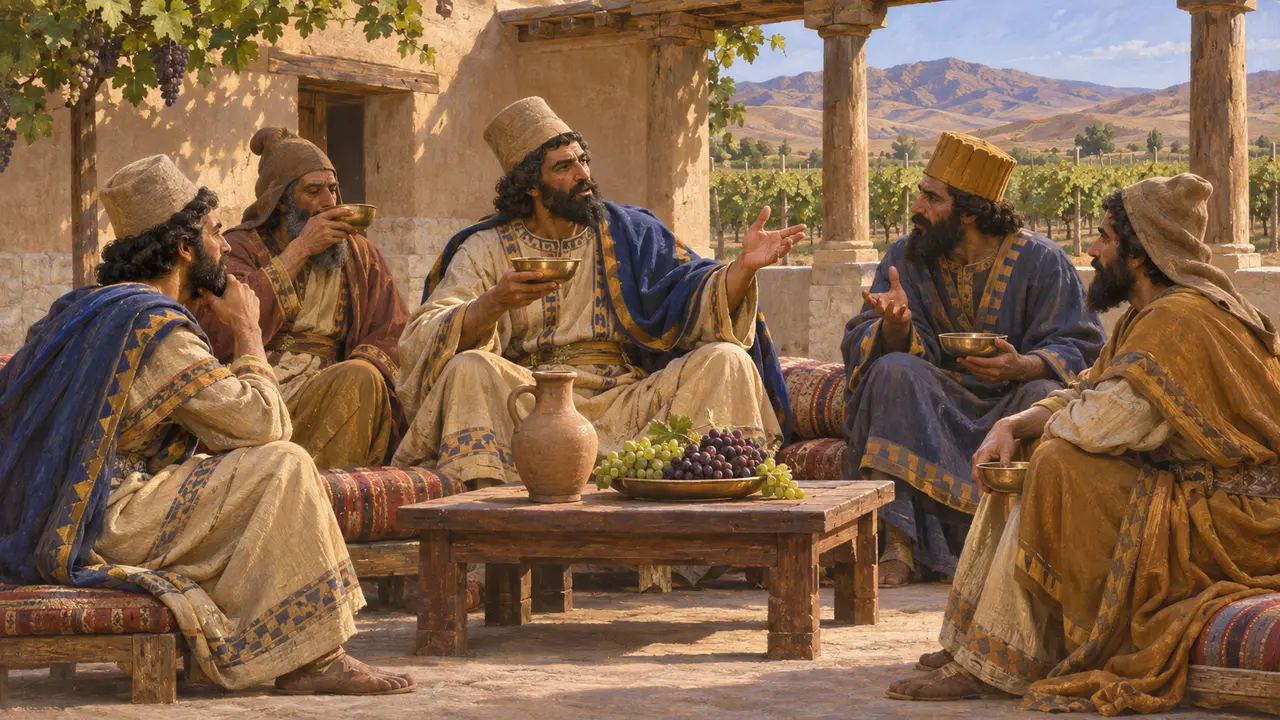
Persian drinking in Herodotus
Ancient accountHerodotus says the Persians were very fond of wine. He claims that they debated serious matters while drunk and then reconsidered the decision when sober, or the other way round. Greek writers often used Persian feasting to suggest softness and excess, so the description says as much about Greek attitudes as about Persian custom.
Herodotus 1.133
Where the vine did not thrive
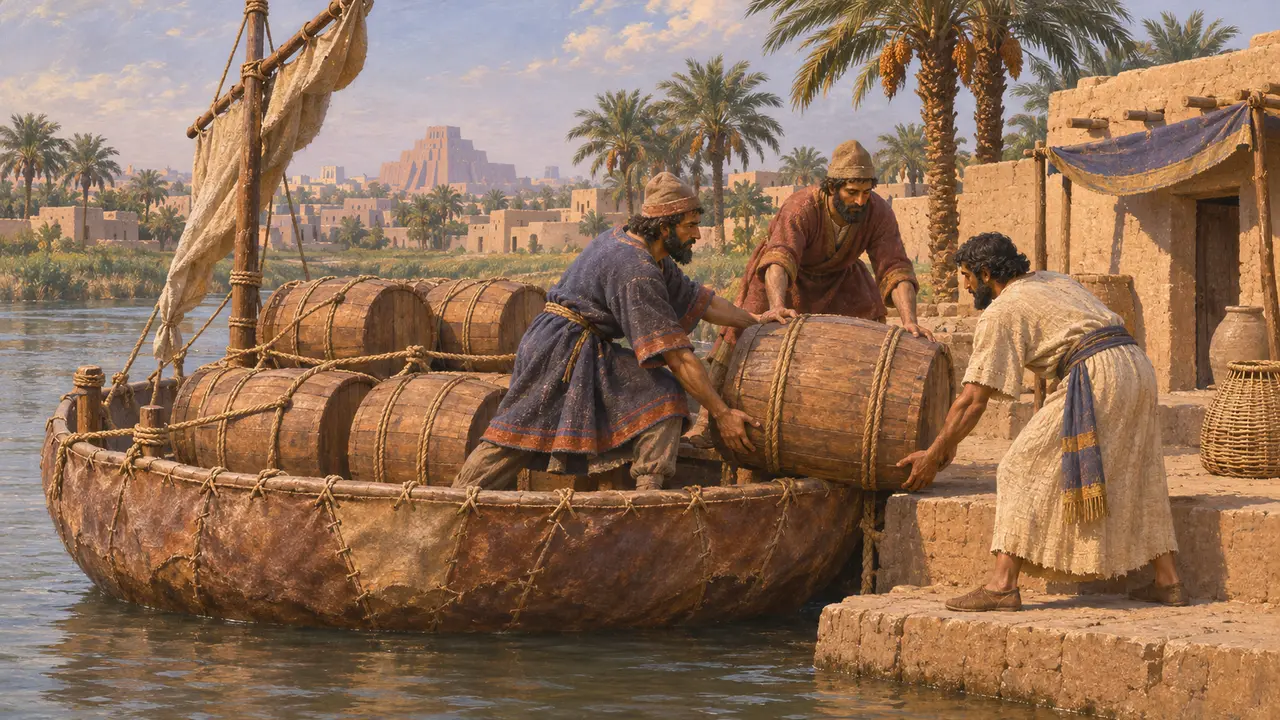
DisputedHerodotus says Babylonia grew no vines and drank date-palm wine, and that grape wine came down the river from Armenia in boats loaded with palm-wood casks. He also says Egypt had no vines, though elsewhere he mentions grape wine given to priests. Egyptian tomb paintings and labelled wine jars show that vineyards had long existed in the Delta and the oases. Egypt also imported wine in jars from Greece and Phoenicia.
Herodotus 1.193-194; Herodotus 2.37; Herodotus 2.77; Herodotus 3.6
Wine as warning and trap
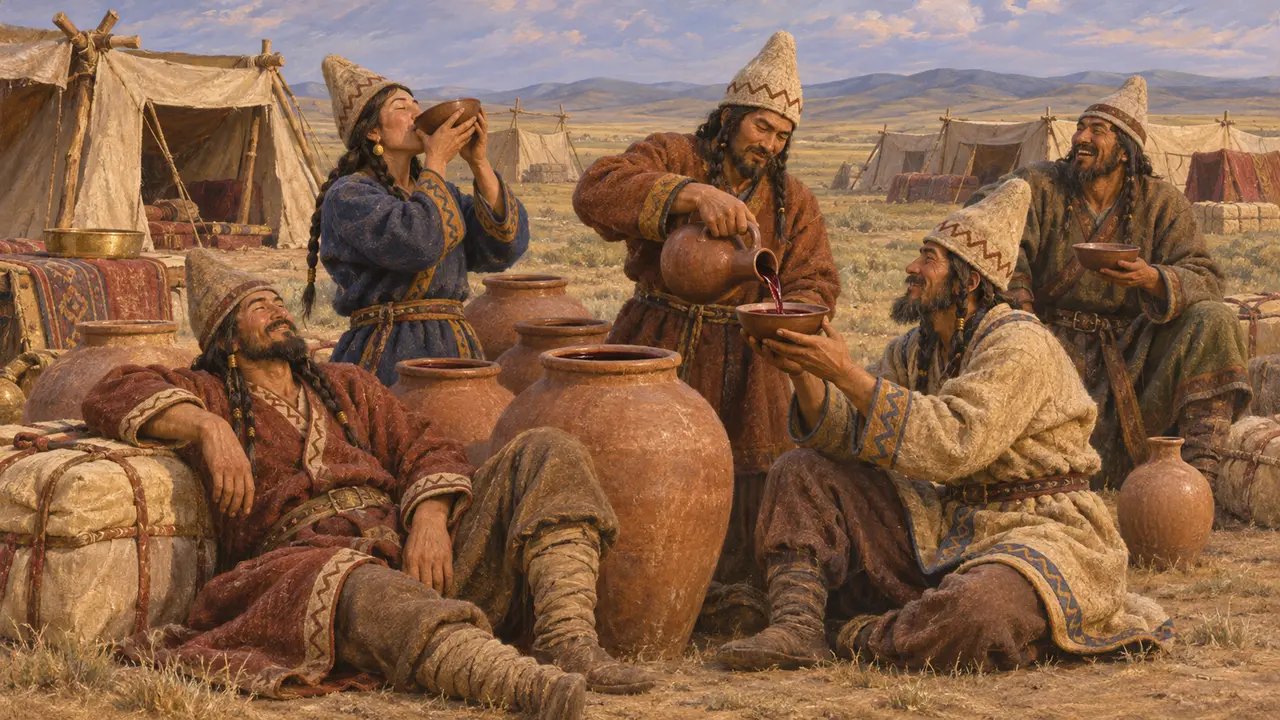
Later legendHerodotus tells two moral tales about wine. Before Croesus attacked Cyrus, a Lydian named Sandanis warned him that the Persians drank water, not wine, and had nothing worth taking. Later, Cyrus was said to have left a camp full of wine for the Massagetae, who drank it and were slaughtered. Both stories are built to make a point about luxury and ruin, not to record events.
Herodotus 1.71; Herodotus 1.207-211
Sources
- R. T. Hallock, Persepolis Fortification Tablets, 1969
- W. Henkelman, The Other Gods Who Are, 2008
- Herodotus 1.133
- Herodotus 1.193-194
- Herodotus 2.77
- P. Briant, From Cyrus to Alexander, 2002