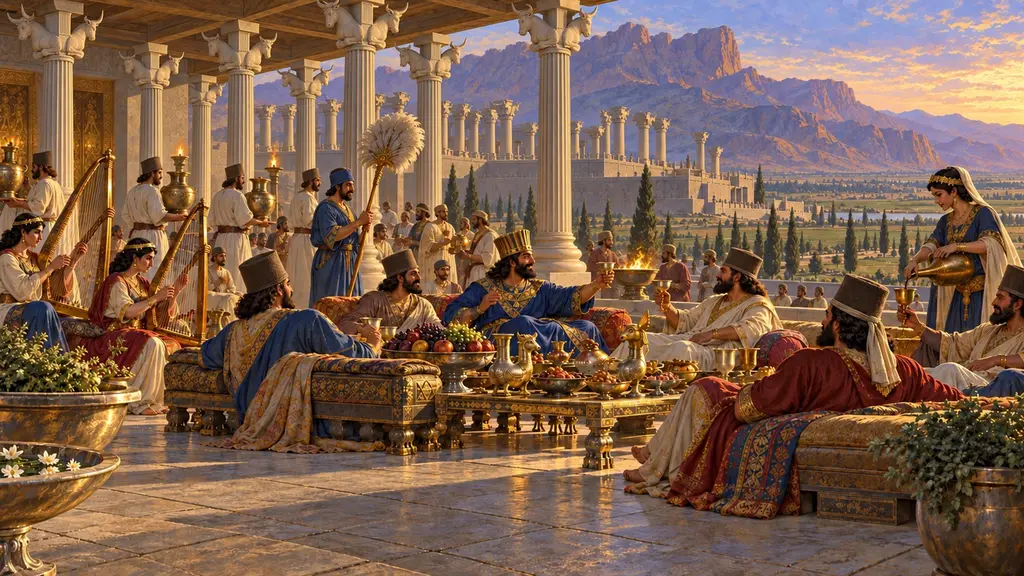
Feasting Hall
Banquets of Persian households and the royal court, 6th and 5th centuries BCE
Feasting was one of the main ways Persian households and the royal court showed rank and rewarded loyalty. Herodotus describes birthday banquets with animals roasted whole and heavy drinking. The Persepolis tablets show the king's table drawing on great stores of grain, wine, beer and livestock, which historians think was shared out to those he favoured.
In the game: The Feasting Hall is a service building whose hosts invite the houses they pass, and its birthday note follows Herodotus 1.133. No such building type is known: Persians feasted in palace halls, courtyards, tents and homes.
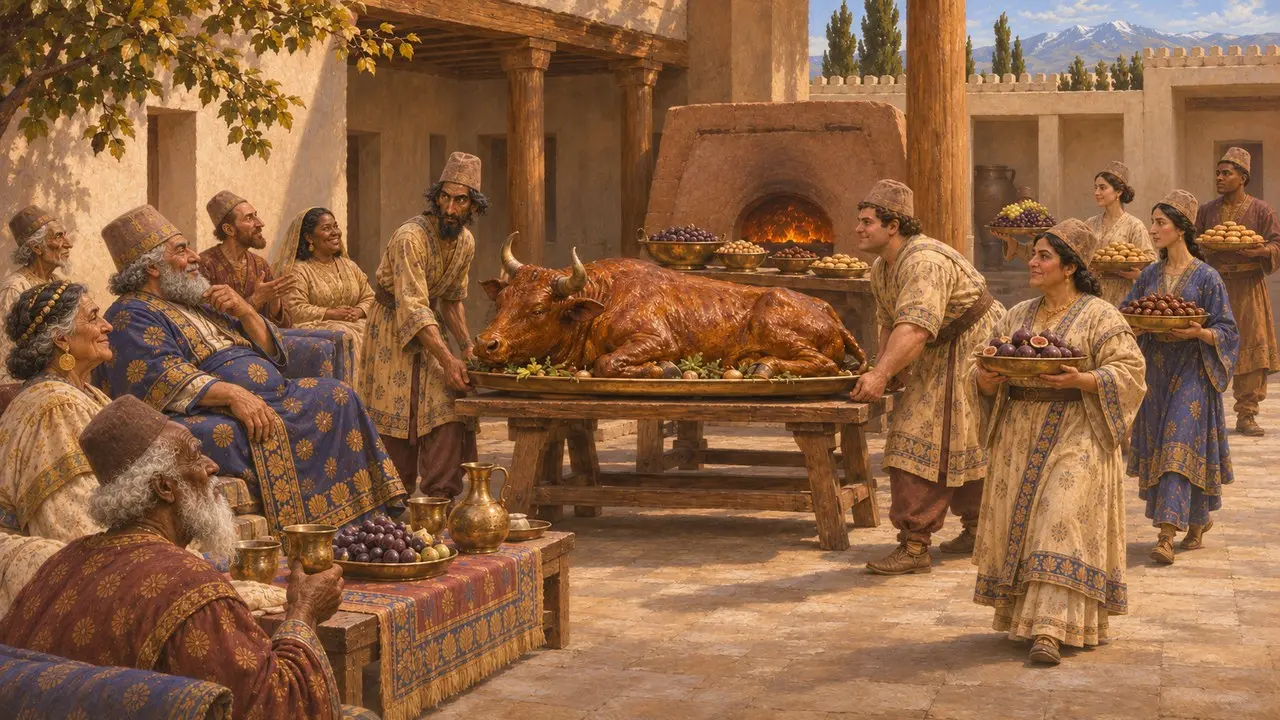
Birthdays and whole roasts
Ancient accountHerodotus says the Persians honoured their own birthday above every other day. A rich household roasted an ox, a horse, a camel or a donkey whole in an oven, while poorer families served smaller animals such as sheep. Main dishes were few, but many extra courses followed one after another. The Persians, he adds, said that Greeks left the table still hungry because nothing worth eating came after the main meal.
Herodotus 1.133
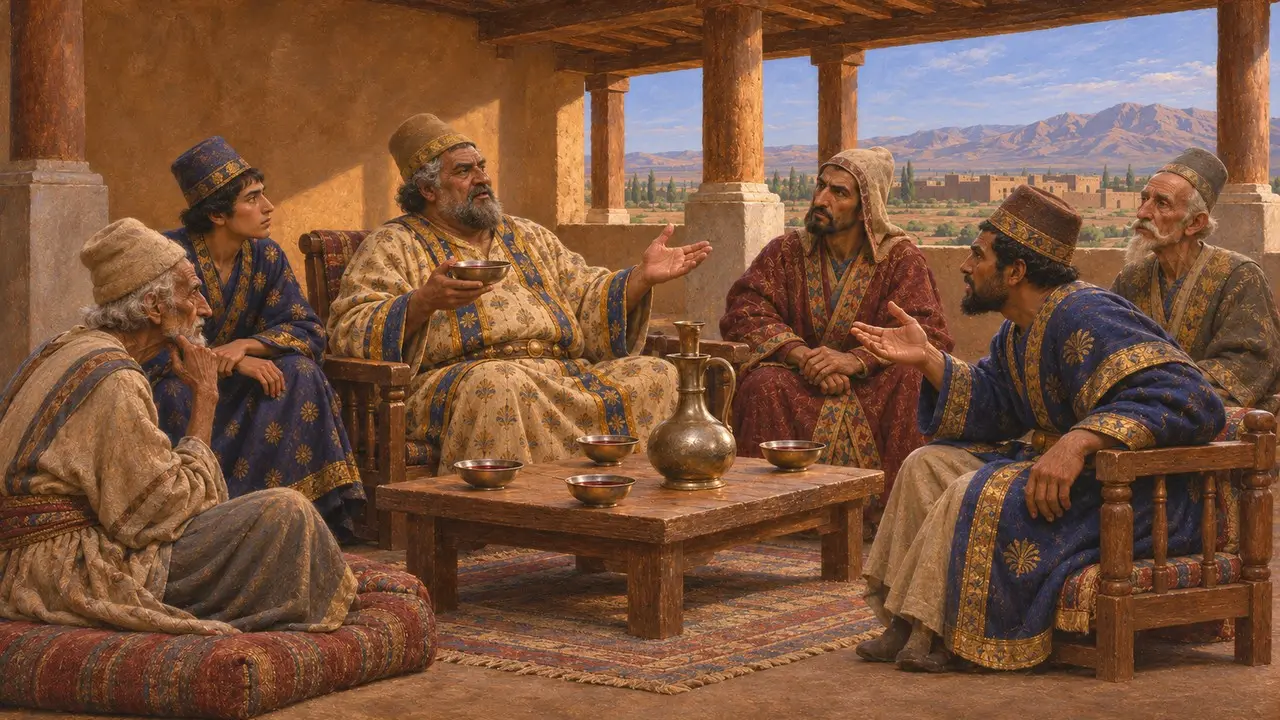
Wine and council
Ancient accountHerodotus also reports that Persians were very fond of wine and that they debated their most serious affairs while drinking. The next day the master of the house where they had met put the decision to them again when they were sober, and they kept it only if it still pleased them. A choice first made sober was tested again over wine. Some historians suspect a Greek stereotype here, but Herodotus presents it as settled custom.
Herodotus 1.133
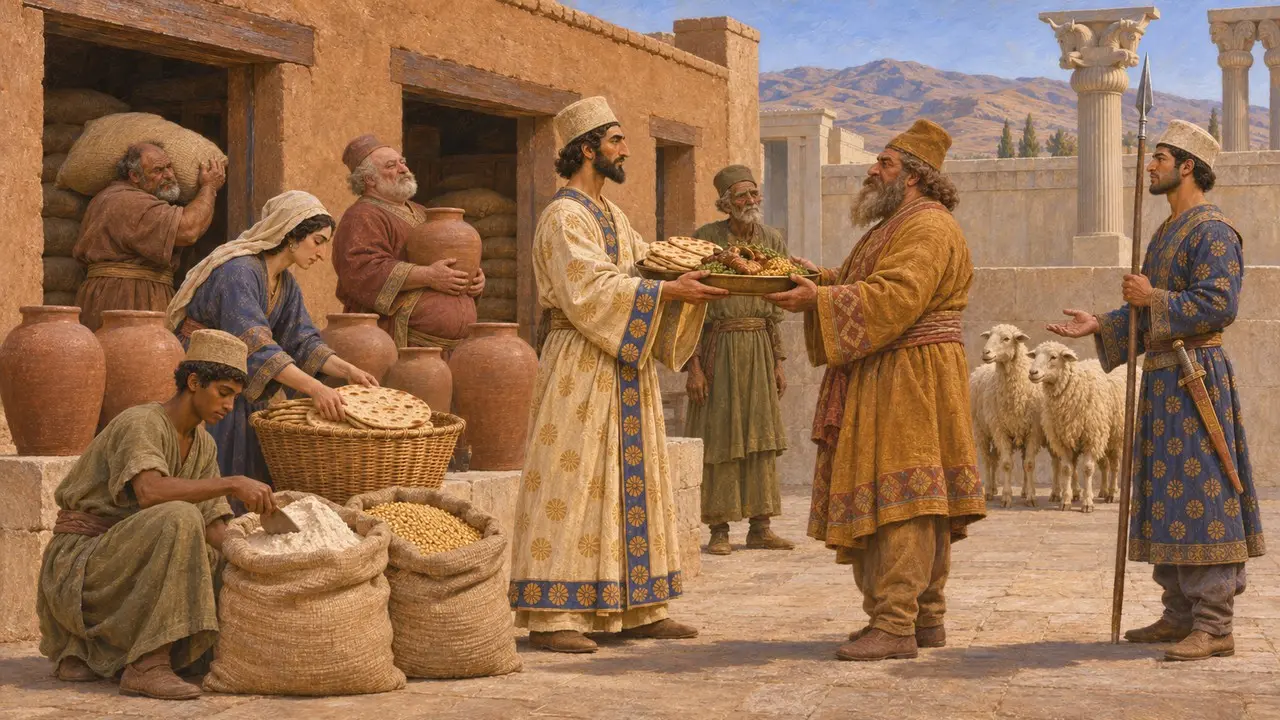
Supplies for the king's table
In the recordThe Persepolis Fortification tablets record grain, flour, wine, beer and animals issued for the king and the royal household, including when the court travelled. Other tablets record food issued for offerings to the gods, which Wouter Henkelman argues was afterwards eaten by those taking part. He has also argued that the royal table worked as a system of redistribution, with food passed on from the court to nobles and guards as a sign of the king's favour.
Persepolis Fortification tablets; W. Henkelman, Consumed before the King, 2010
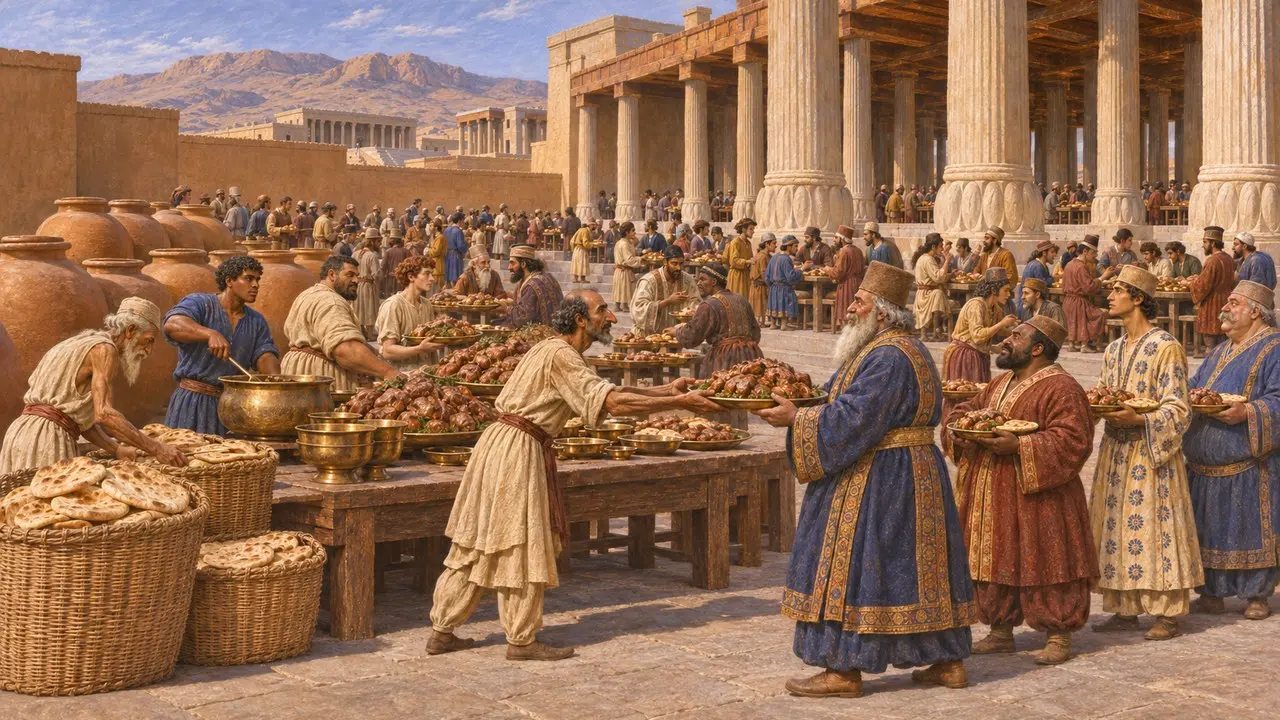
The size of the King's dinner
DisputedAthenaeus, writing around 200 CE, cites Ctesias and Dinon for the claim that the king dined with 15,000 people at a cost of 400 talents. Heracleides of Cyme, also quoted by him, says about a thousand animals were slaughtered daily and much of the food went to guards and troops. Polyaenus tells of a bronze pillar at Persepolis listing the dinner's provisions. Some treat these figures as Greek exaggeration, while Briant reads them as counting all fed from royal stores.
Athenaeus, Deipnosophists 4.145-146; Polyaenus, Stratagems 4.3.32; P. Briant, From Cyrus to Alexander, 2002
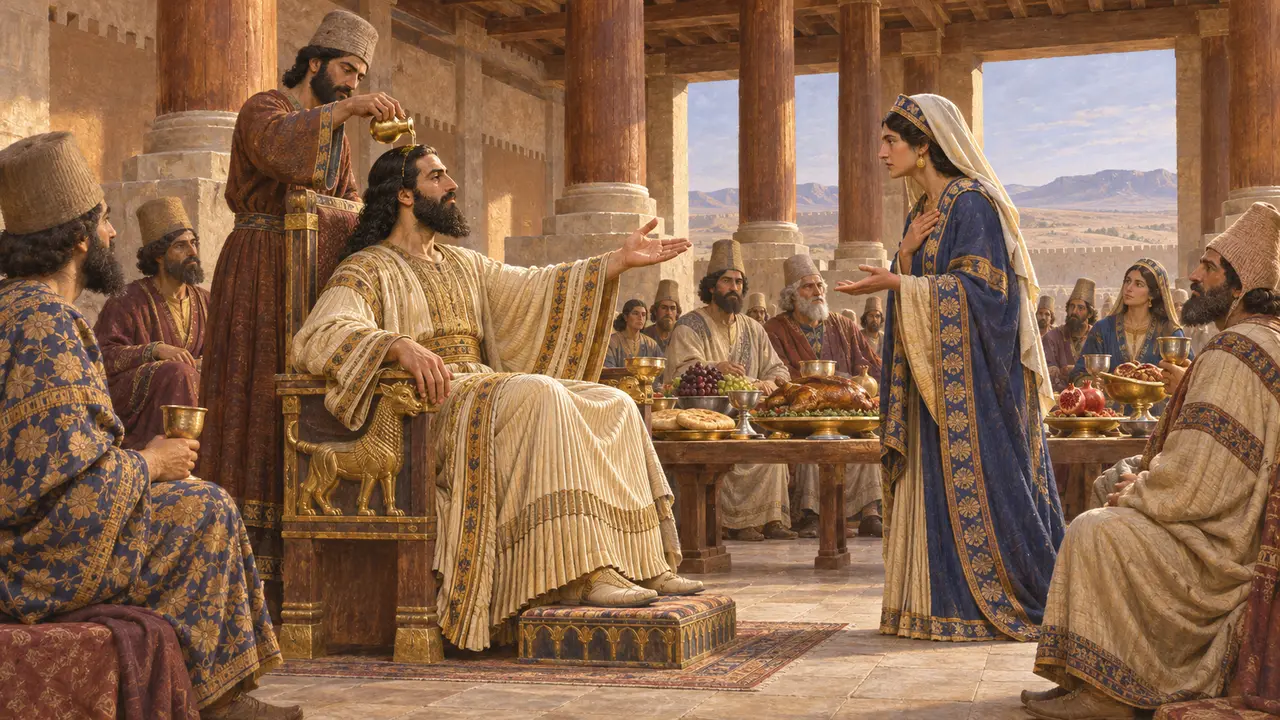
Xerxes' birthday feast
Later legendHerodotus says that once a year, on the king's birthday, the Persians held a royal feast called tykta, which he renders as perfect. On that day the king anointed his head and granted the requests of his guests. In his story, Queen Amestris used the custom to claim the wife of Masistes, and cruelty followed. The tale is shaped as a moral drama of court passion. The custom of birthday gifts may be real, but the story cannot be checked.
Herodotus 9.110-112
Sources
- Herodotus 1.133
- Herodotus 9.110-112
- W. Henkelman, Consumed before the King, 2010
- P. Briant, From Cyrus to Alexander, 2002
- Athenaeus, Deipnosophists 4.145-146
- Polyaenus, Stratagems 4.3.32