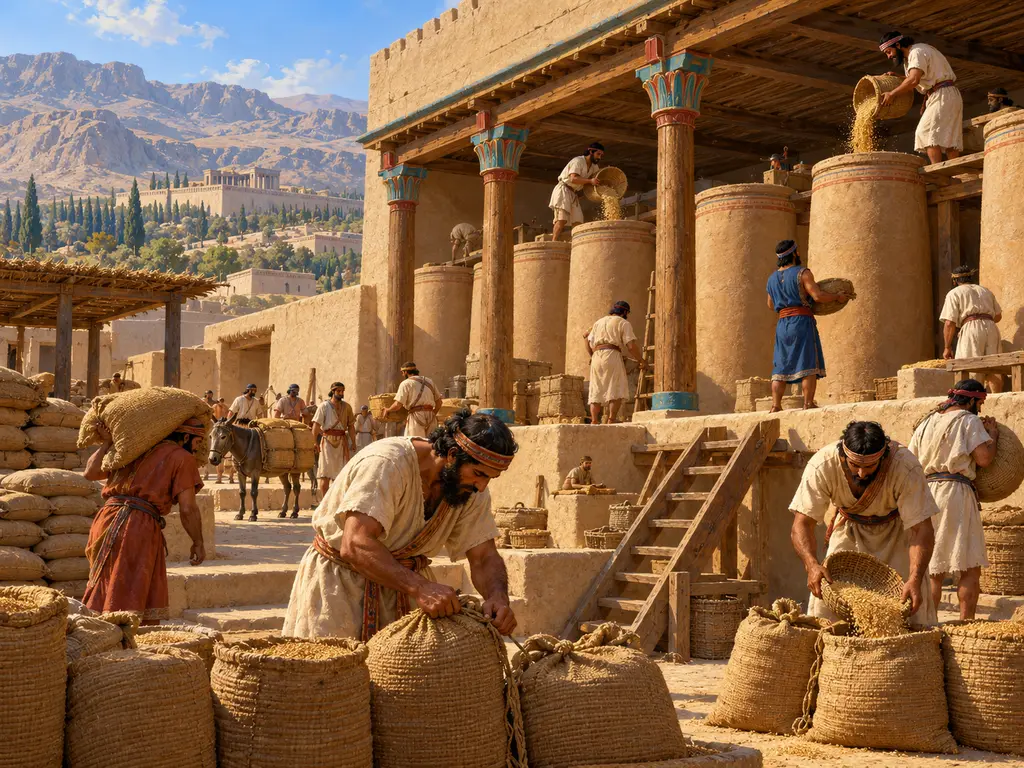
Granary
Royal grain stores of the Achaemenid empire, about 530-479 BCE
Barley was the staple of Persis. The King's administration collected it as tax and produce from royal estates, held it in stores across the countryside and paid it out as rations to workers, officials, travellers and animals. Clay tablets from Persepolis show this system at work, and Greek writers describe the great stockpiles that fed the King's armies.
In the game: The game's granary stores barley and up to 160 fruit, and bazaar buyers collect food from it. In Persis most stored grain went out as fixed rations rather than through a market, so the bazaar link is a simplification.
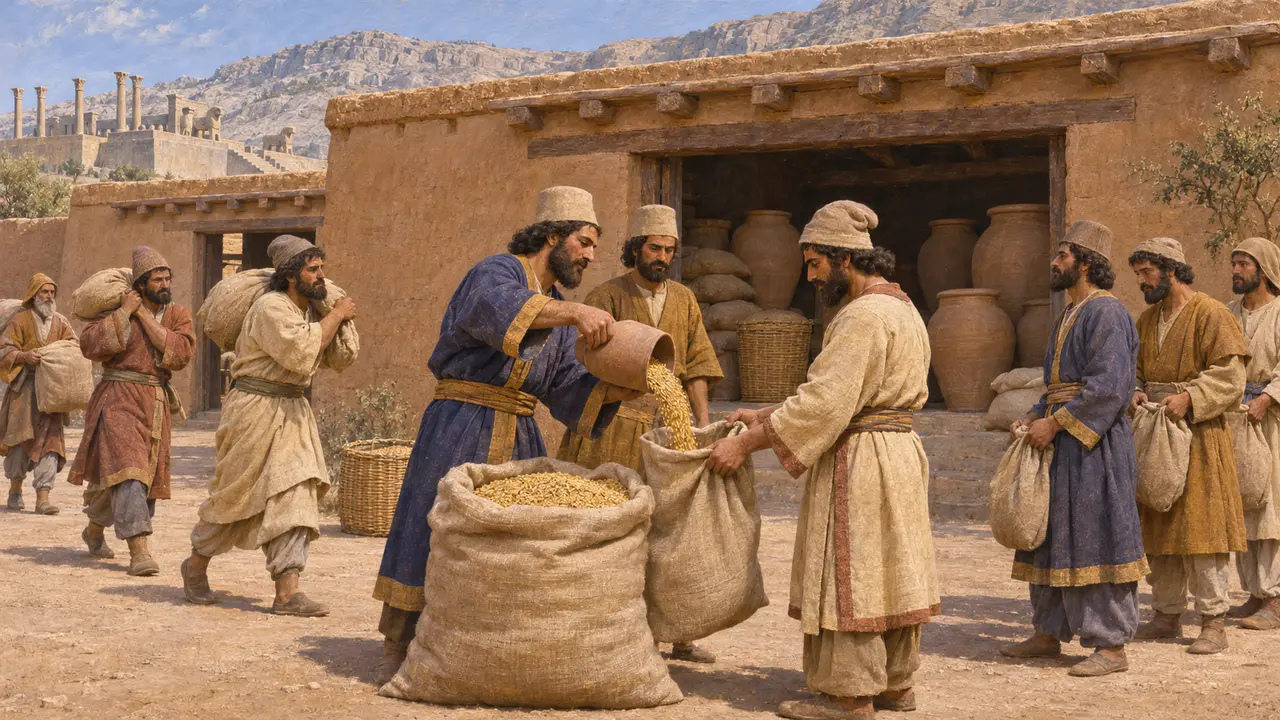
Barley in the Fortification tablets
In the recordThe Persepolis Fortification archive, written mostly in Elamite between about 509 and 493, records grain arriving from farmers and estates and being held by named suppliers at many places around Persepolis. From these stores barley went out as monthly rations to work groups, as travel rations, as fodder, as seed, and as offerings for the gods.
Persepolis Fortification tablets; R. Hallock, Persepolis Fortification Tablets, 1969
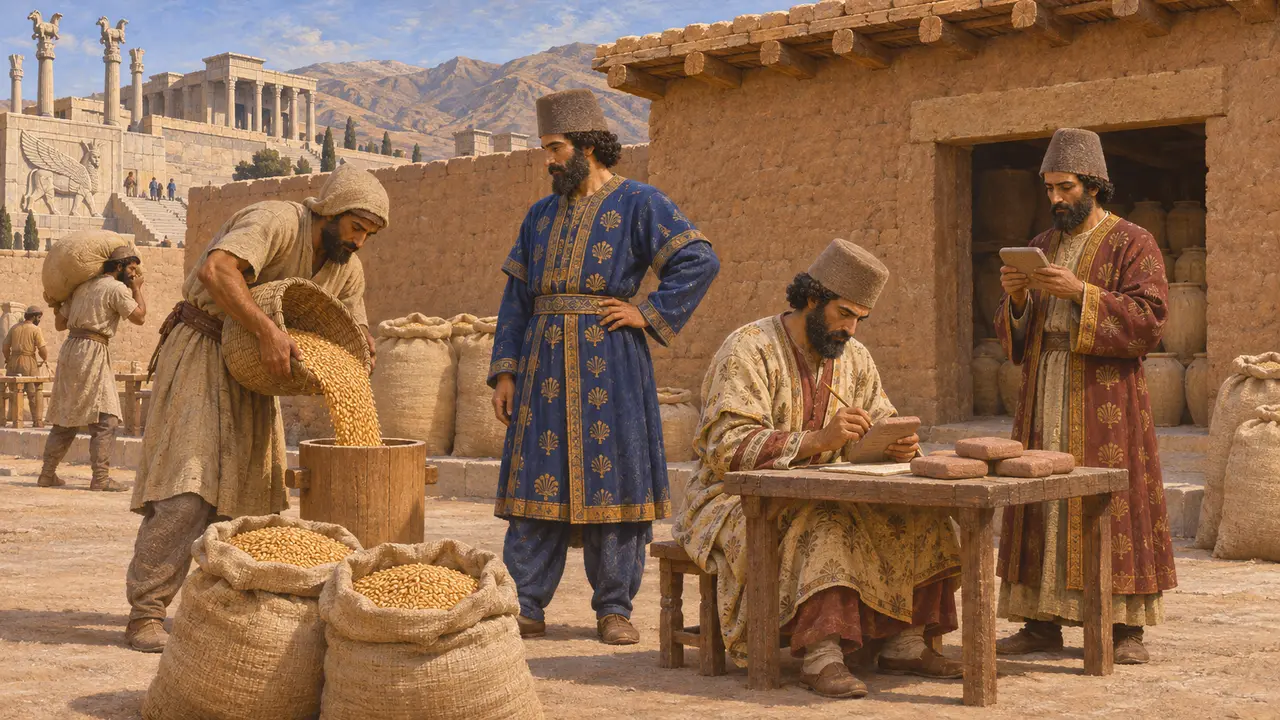
Who kept the stores
In the recordEach store had an official who answered for what came in and went out. Scribes wrote receipts and accounts that were later checked, and the whole system answered to a senior director, Parnaka, during much of the archive's span. The aim was to know where every measure of grain had gone.
W. Henkelman, The Other Gods Who Are, 2008; P. Briant, From Cyrus to Alexander, 2002
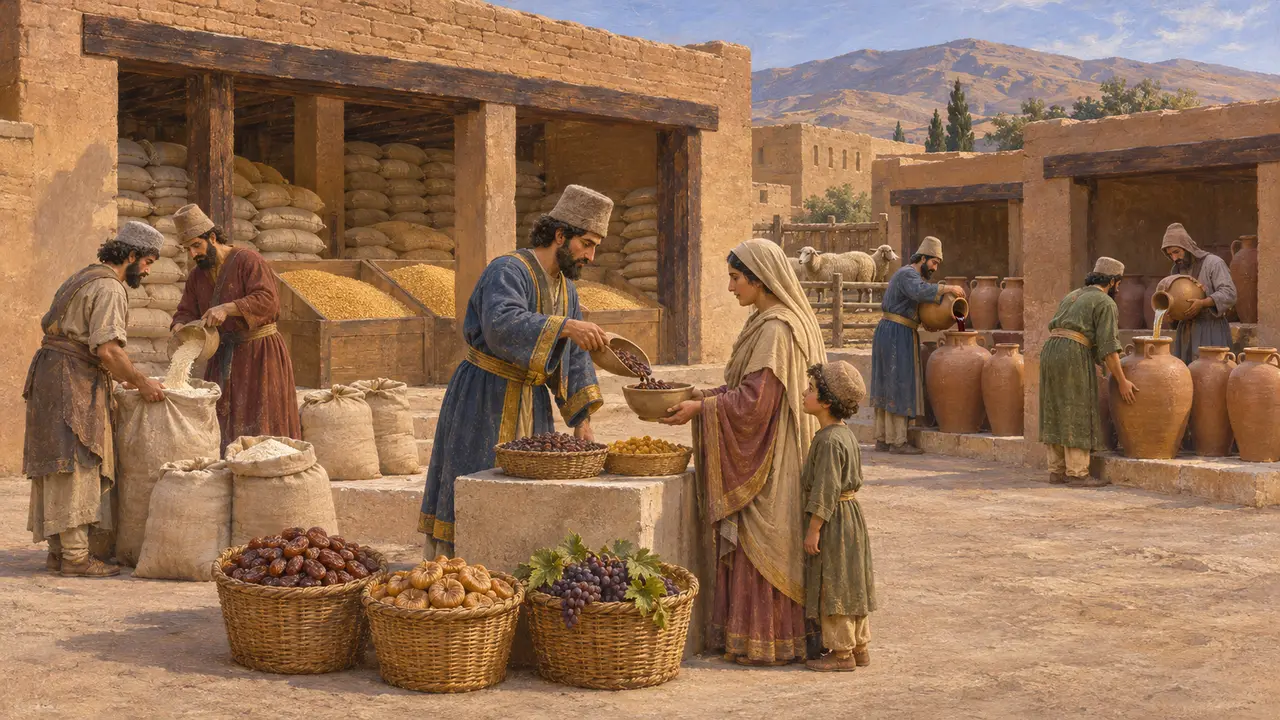
Fruit, wine and other goods
In the recordThe tablets also track fruit, wine, beer, flour and livestock, usually in their own separate accounts and handled by their own officials. Grain was by far the largest item, but a worker's ration could include other foods, and special rations went to mothers, skilled craftsmen and high officials.
R. Hallock, Persepolis Fortification Tablets, 1969
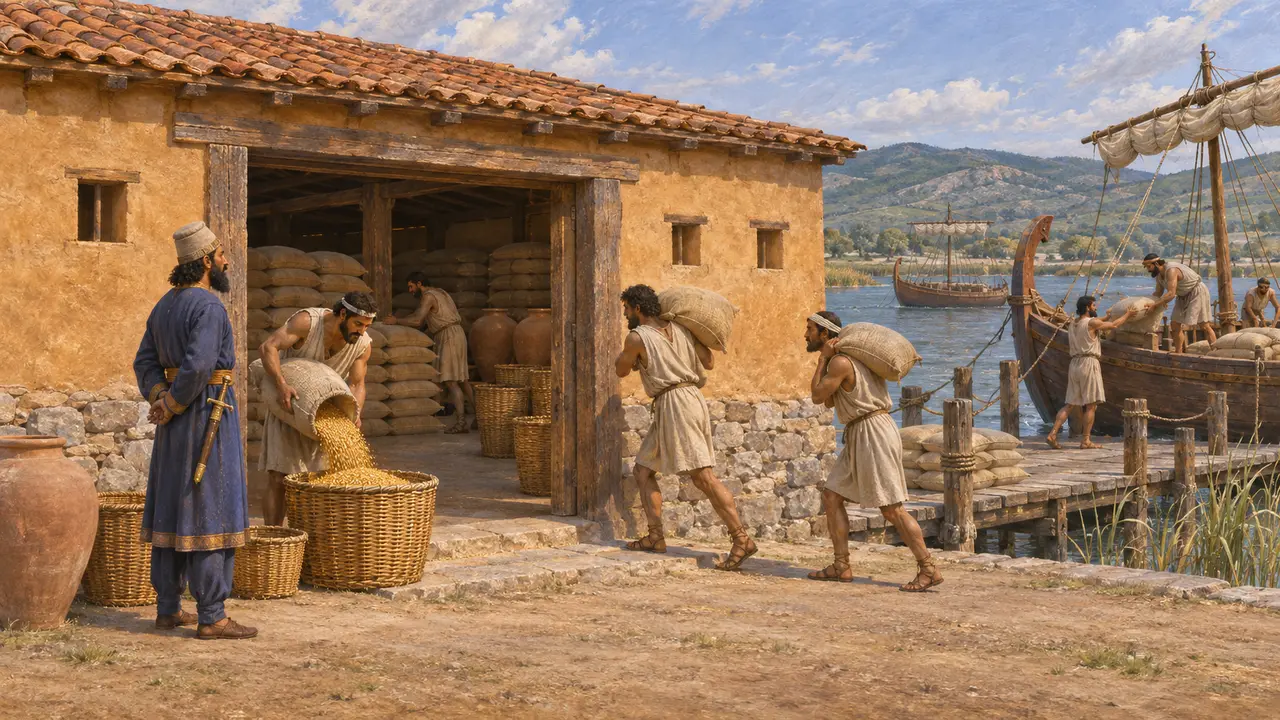
Stockpiles for the King and his armies
Ancient accountHerodotus says Babylonia supplied food for the King and his army for four months of every year. Before Xerxes marched on Greece, he says, grain and other provisions were gathered in depots along the Thracian coast, at places such as Doriscus and Eion on the Strymon, brought by ship from across Asia.
Herodotus 1.192; Herodotus 7.25
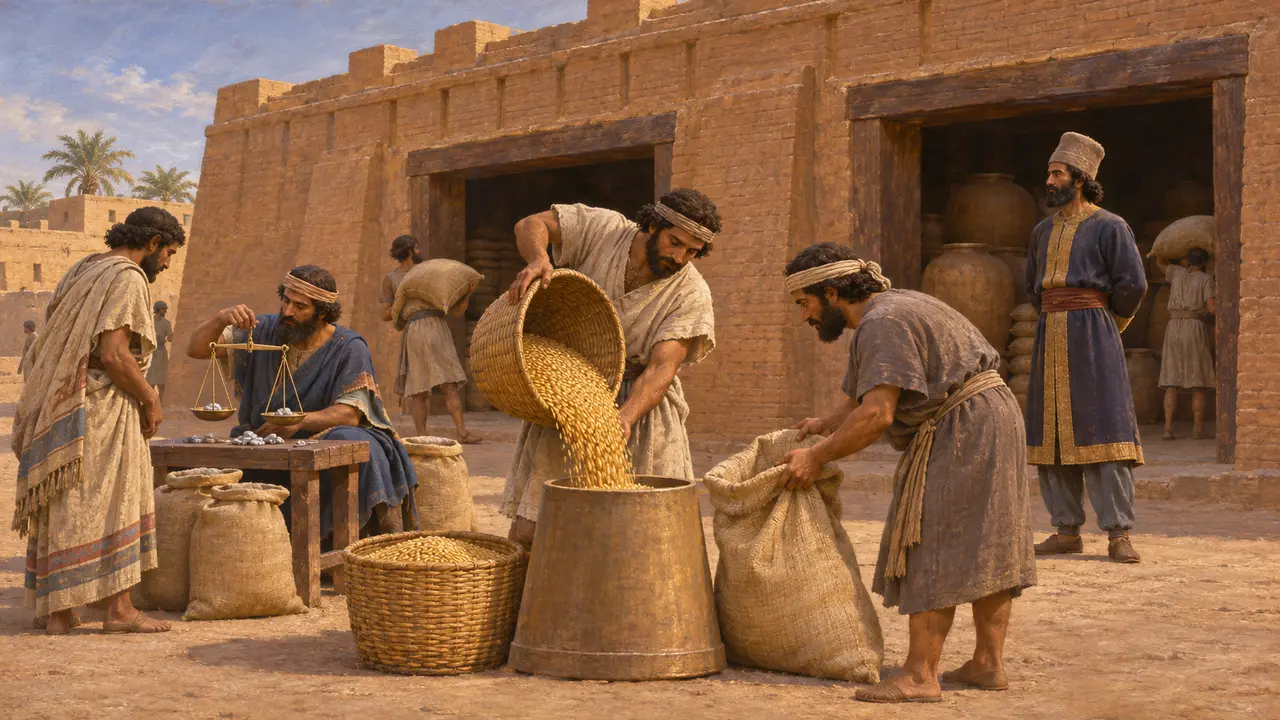
Rations or markets
DisputedHerodotus tells how Cyrus mocked the Greeks for their marketplaces, and he adds that the Persians did not use markets at all. The Persepolis tablets do show an economy run largely on rations, but Babylonian business archives record barley bought, sold and lent for silver. Historians still debate how much grain moved through official stores and how much through trade.
Herodotus 1.153; M. Jursa, Aspects of the Economic History of Babylonia in the First Millennium BC, 2010
Sources
- R. Hallock, Persepolis Fortification Tablets, 1969
- W. Henkelman, The Other Gods Who Are, 2008
- P. Briant, From Cyrus to Alexander, 2002
- Herodotus 1.153; 1.192; 7.25
- M. Jursa, Aspects of the Economic History of Babylonia in the First Millennium BC, 2010