Bazaar
Markets and the exchange of goods in the Achaemenid empire, 6th to 5th century BCE
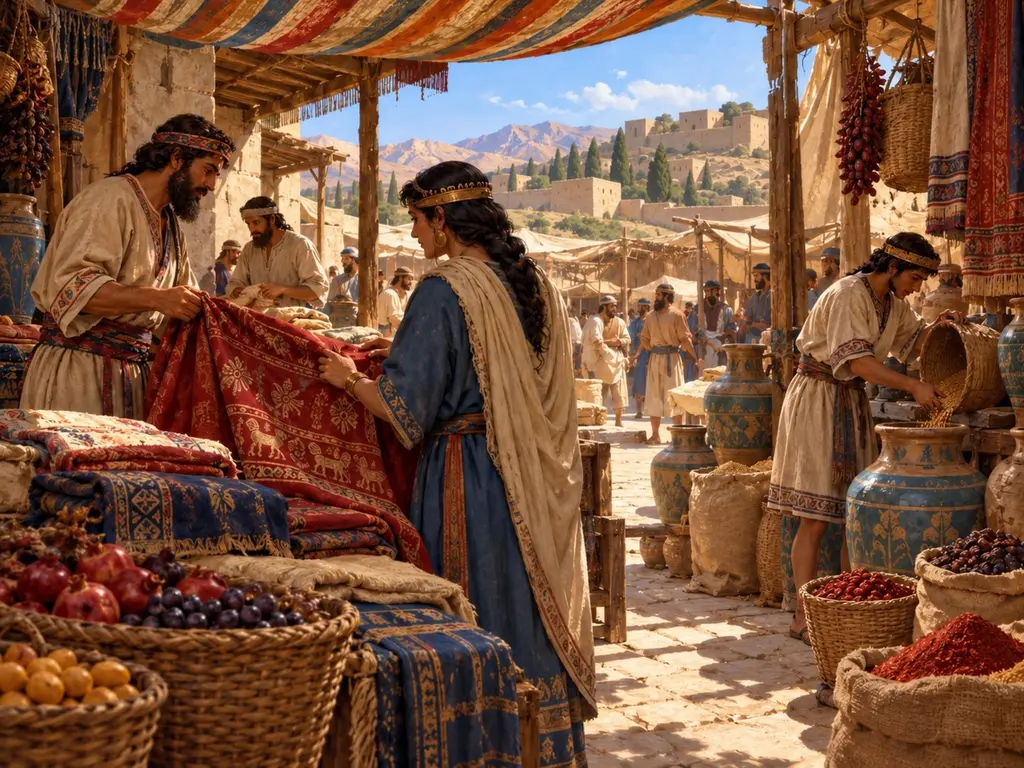
The word bazaar comes from Persian bāzār, Middle Persian wāzār, but the covered market halls it now suggests belong to much later centuries. Under the early Achaemenid kings, goods moved in two ways: through busy markets in old trading cities such as Babylon and Sardis, and through rations issued from royal stores in the Persian heartland. How the two fitted together shows how the empire fed its people.
In the game: Buyers fetch goods from storage and a trader carries them door to door, serving about 15 houses. This is a simplification: no such rounds are known, and in Persis many workers drew rations from royal stores.
Cyrus and the Greek marketplace
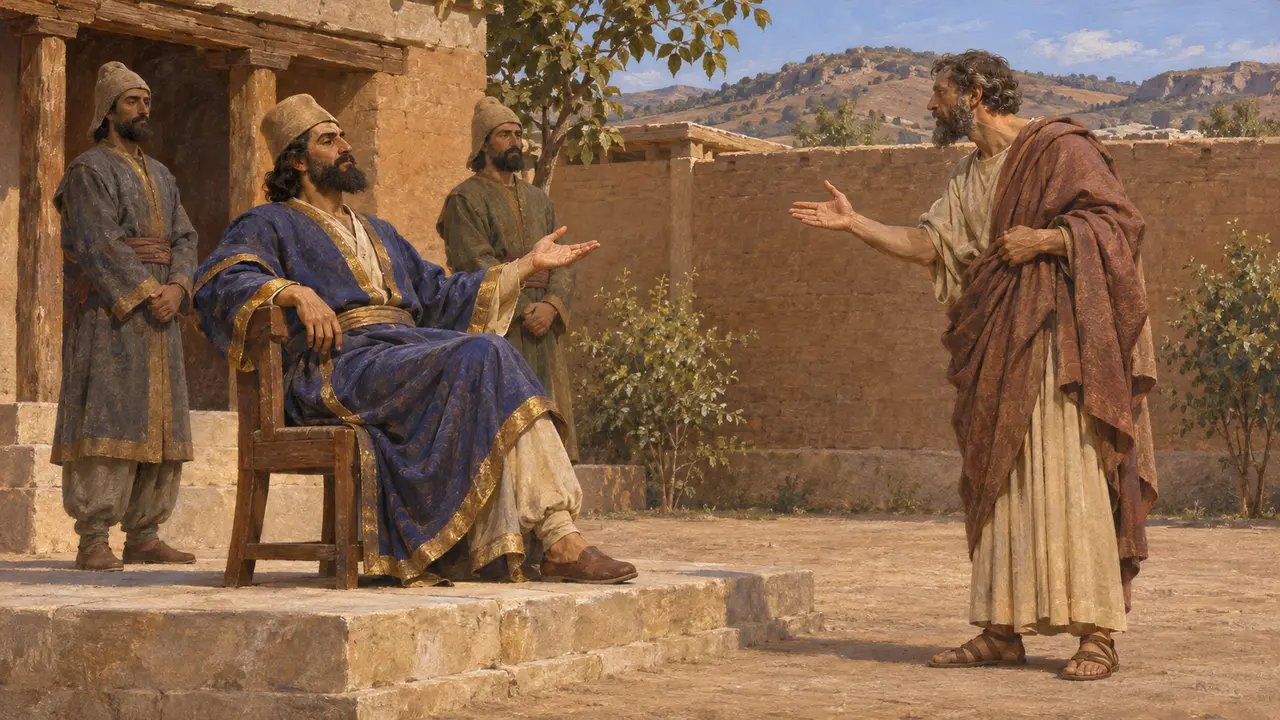
Ancient accountHerodotus tells that when a Spartan herald warned Cyrus not to harm the Greek cities, Cyrus scorned people who kept a place in the middle of their city where they met to cheat one another under oath. Herodotus explains that the Persians did not use markets and had no marketplace of their own. The story is a Greek view of Persian custom, set against the Greek agora.
Herodotus 1.153
Lydian traders and the agora of Sardis
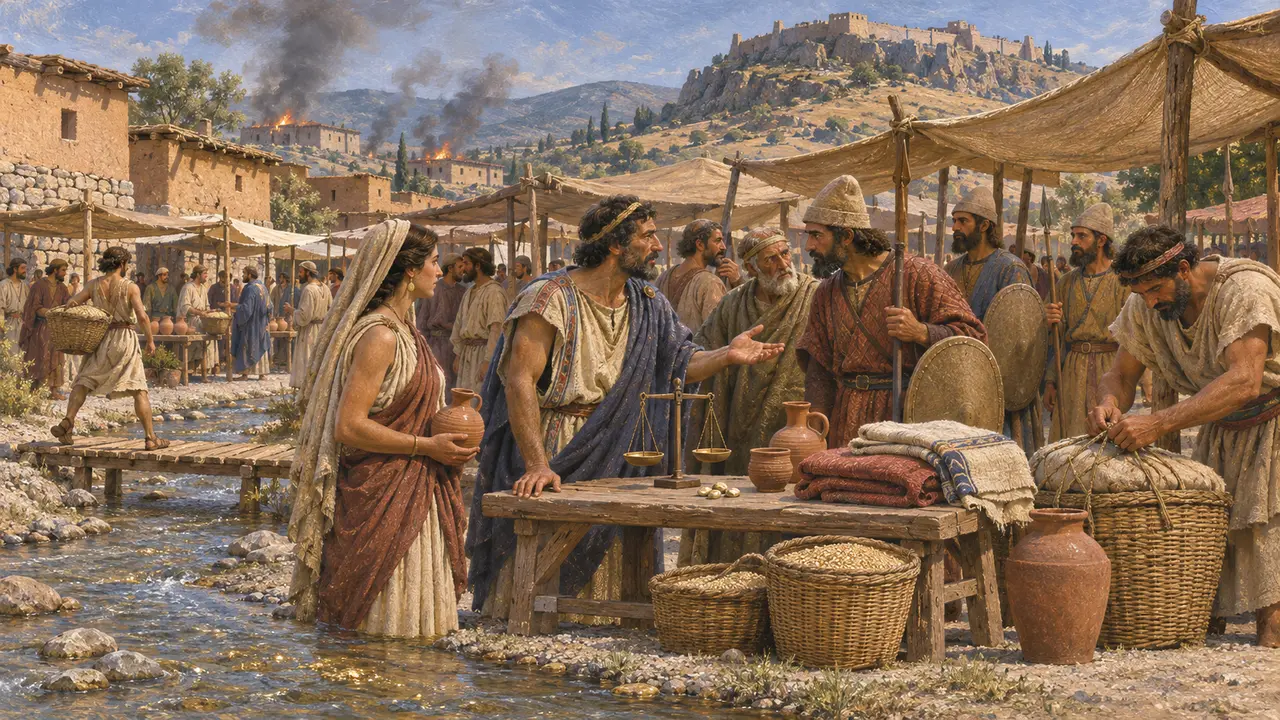
Ancient accountHerodotus says the Lydians were the first people known to strike coins of gold and silver and the first retail traders, though the earliest Lydian coins were in fact electrum. He describes the marketplace of Sardis with the gold-bearing Pactolus flowing through it. There the trapped Lydians and Persians gathered to defend themselves when Ionians, Athenians and Eretrians burned the city in 498. Under Persian rule Sardis was the seat of the satrap of Lydia.
Herodotus 1.94; Herodotus 5.101
Rations from the royal stores
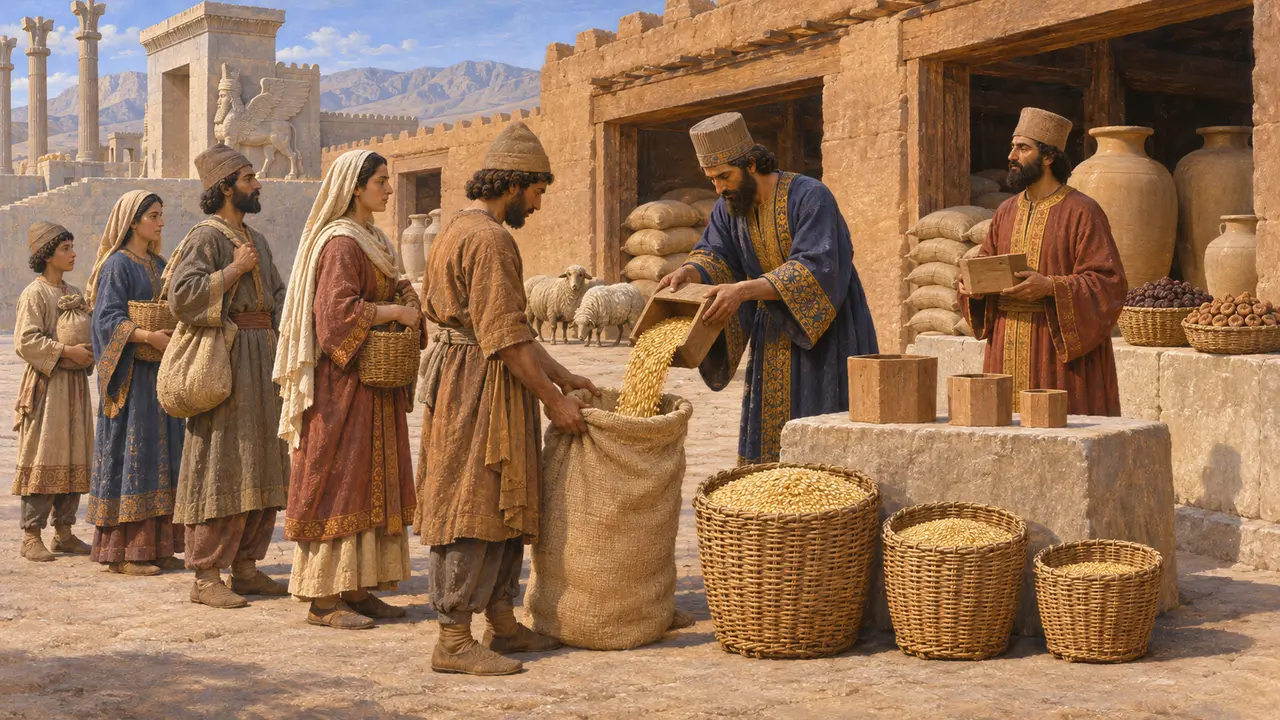
In the recordThe Persepolis Fortification tablets, written in Elamite in the reign of Darius, record barley, wine, beer, flour, fruit and livestock issued from royal stores to workers, travellers and officials. Workers received monthly rations graded by rank, sex and age rather than buying food in a market. The later Treasury tablets show some wages paid partly in silver, reckoned against set amounts of sheep or wine.
R. T. Hallock, Persepolis Fortification Tablets, 1969; G. G. Cameron, Persepolis Treasury Tablets, 1948
Buying and selling in Babylonia
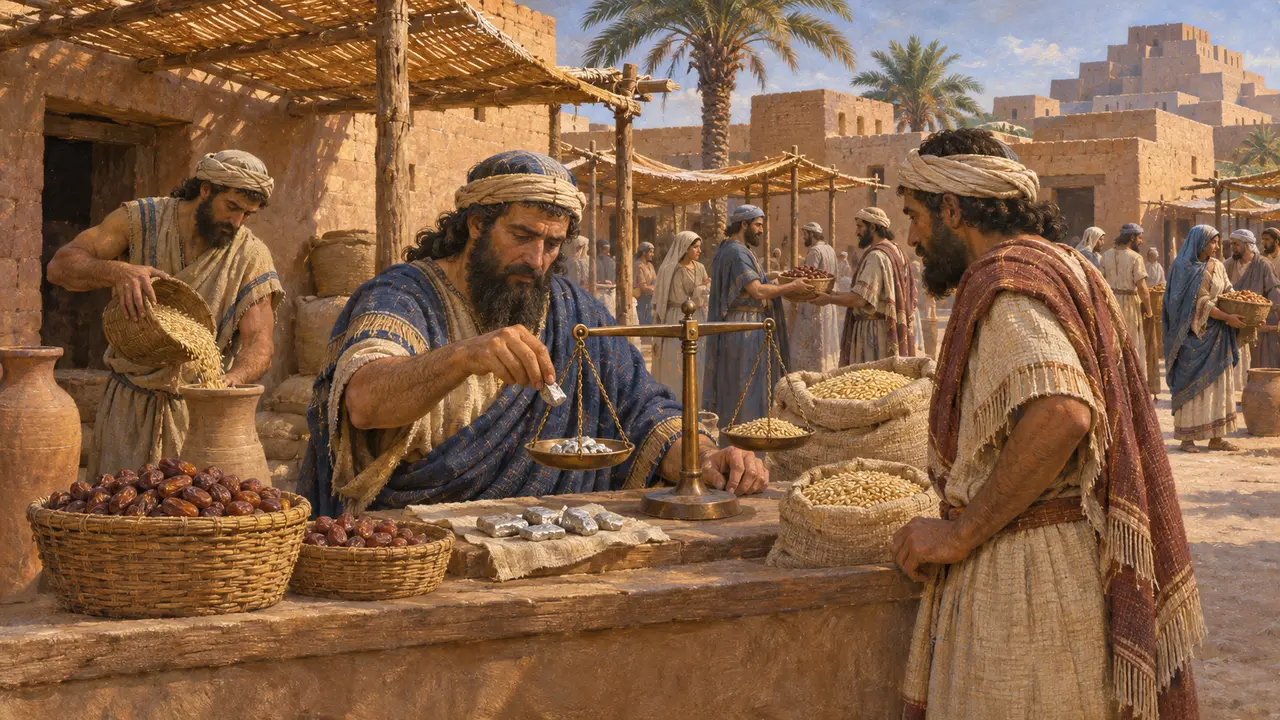
In the recordBabylonian business archives tell a different story. The Egibi family of Babylon bought and sold dates, barley and houses, lent silver and rented out property. The later Murashu firm of Nippur managed land and leased it for rent in produce and silver. Weighed silver served as money and prices moved with supply, so markets were part of everyday life in the province.
M. Jursa, Aspects of the Economic History of Babylonia in the First Millennium BC, 2010
How far markets reached
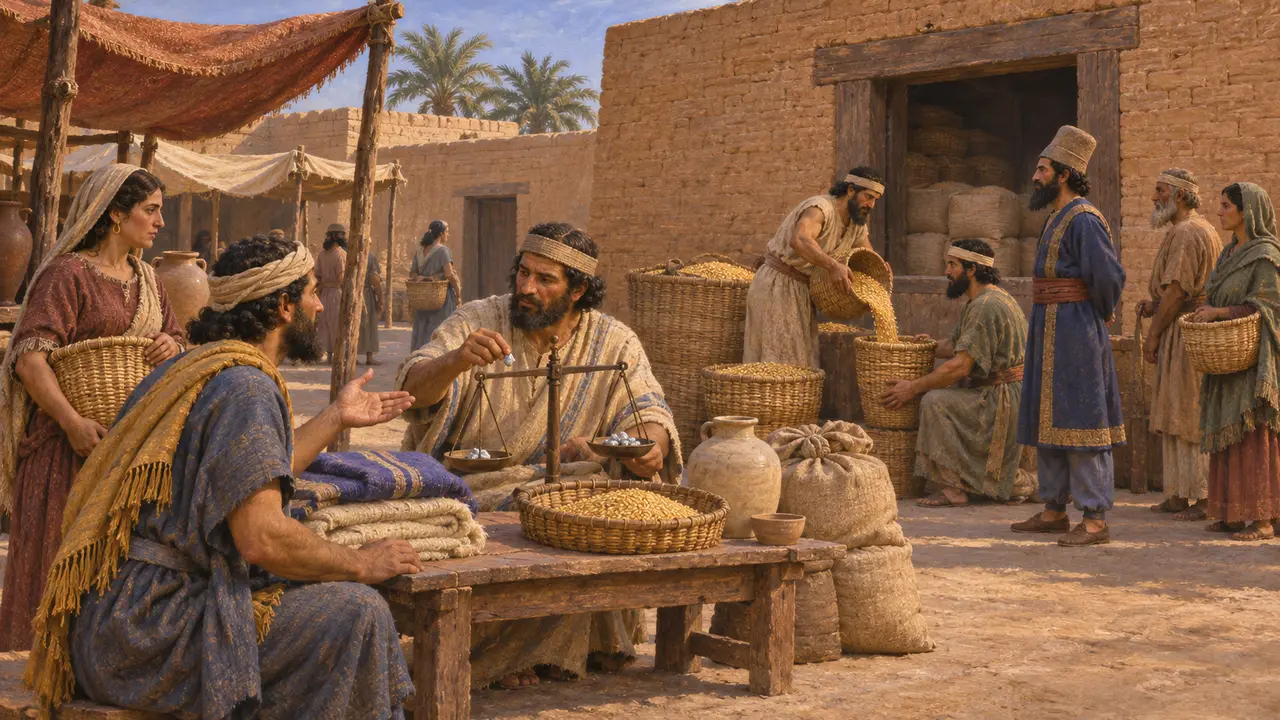
DisputedHistorians still debate how much of the empire's economy ran through markets and how much through royal and temple redistribution. Some stress the Persepolis ration system and the King's control of stores. Others point to the Babylonian evidence for price-setting markets and the growing use of silver. Most now accept that both systems worked side by side, in proportions that differed from region to region.
P. Briant, From Cyrus to Alexander, 2002; M. Jursa, Aspects of the Economic History of Babylonia in the First Millennium BC, 2010
Xenophon's free square
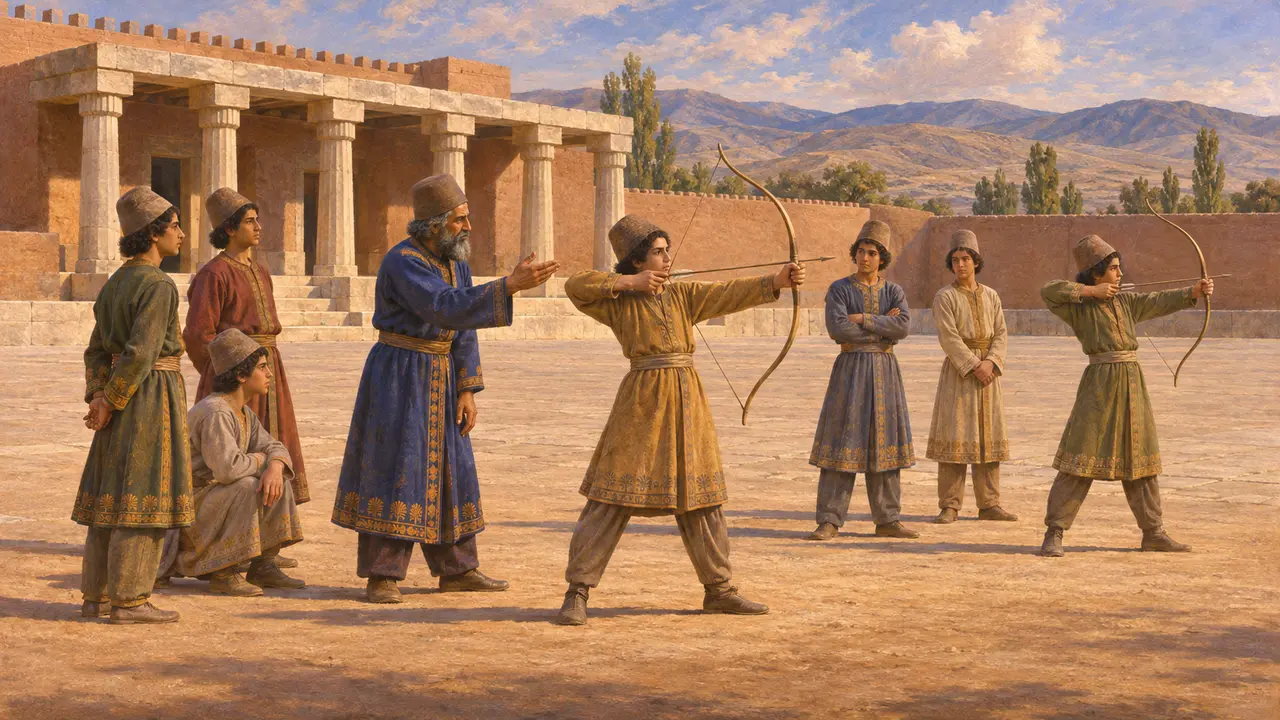
Later legendXenophon, writing about a century and a half after Cyrus, describes an ideal Persia in which a free square near the palace was kept clear of goods and traders so that their noise would not disturb the training of the young. The Cyropaedia is a moral and political romance, and this picture of Persian life is shaped to teach virtue rather than to record practice.
Xenophon, Cyropaedia 1.2.3
Sources
- Herodotus 1.153
- R. T. Hallock, Persepolis Fortification Tablets, 1969
- M. Jursa, Aspects of the Economic History of Babylonia in the First Millennium BC, 2010
- P. Briant, From Cyrus to Alexander, 2002
- G. G. Cameron, Persepolis Treasury Tablets, 1948
- Xenophon, Cyropaedia 1.2.3