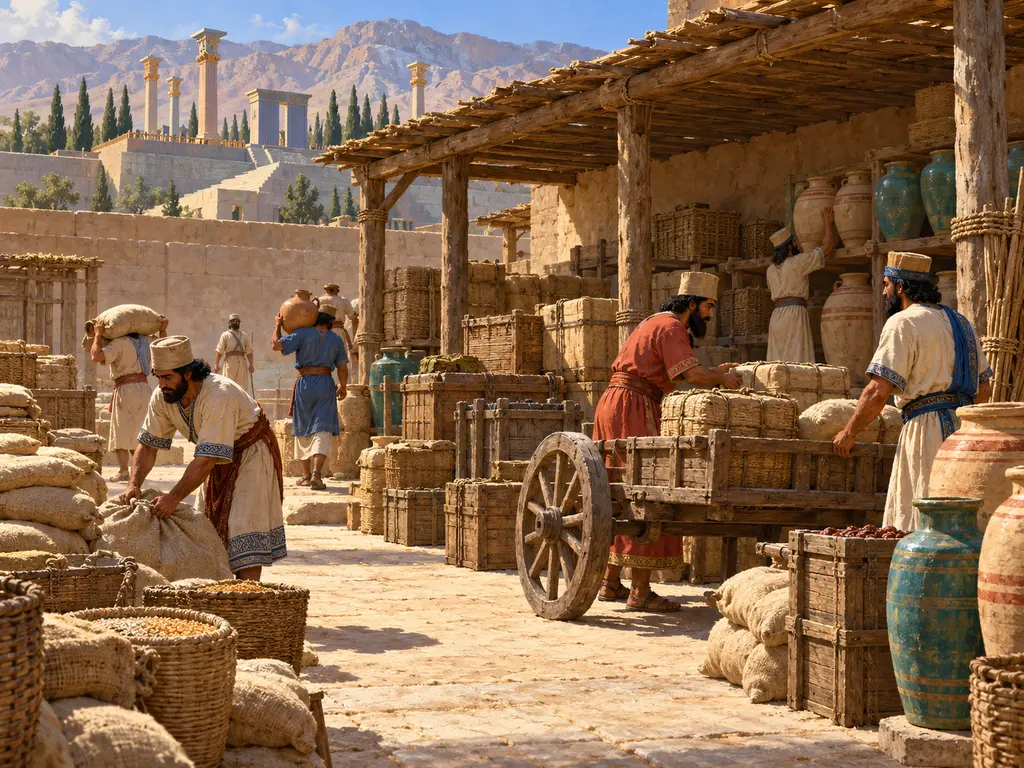
Storeyard
Royal stores for materials and goods in the Persian empire, about 530-479 BCE
The Persian kings ran an economy of stores. Grain, wine, timber, stone, cloth and weapons were received, counted, kept and issued by officials who wrote down each movement. These stores fed workers, supplied building sites and armed troops, and the surviving records from Persepolis show how closely the system was managed.
In the game: The Storeyard keeps timber, clay, pottery, limestone, arms, wool, cloth and wine together, with caps on bulk goods so space stays for pottery, cloth and wine. Real Persian stores were spread across many offices and places.
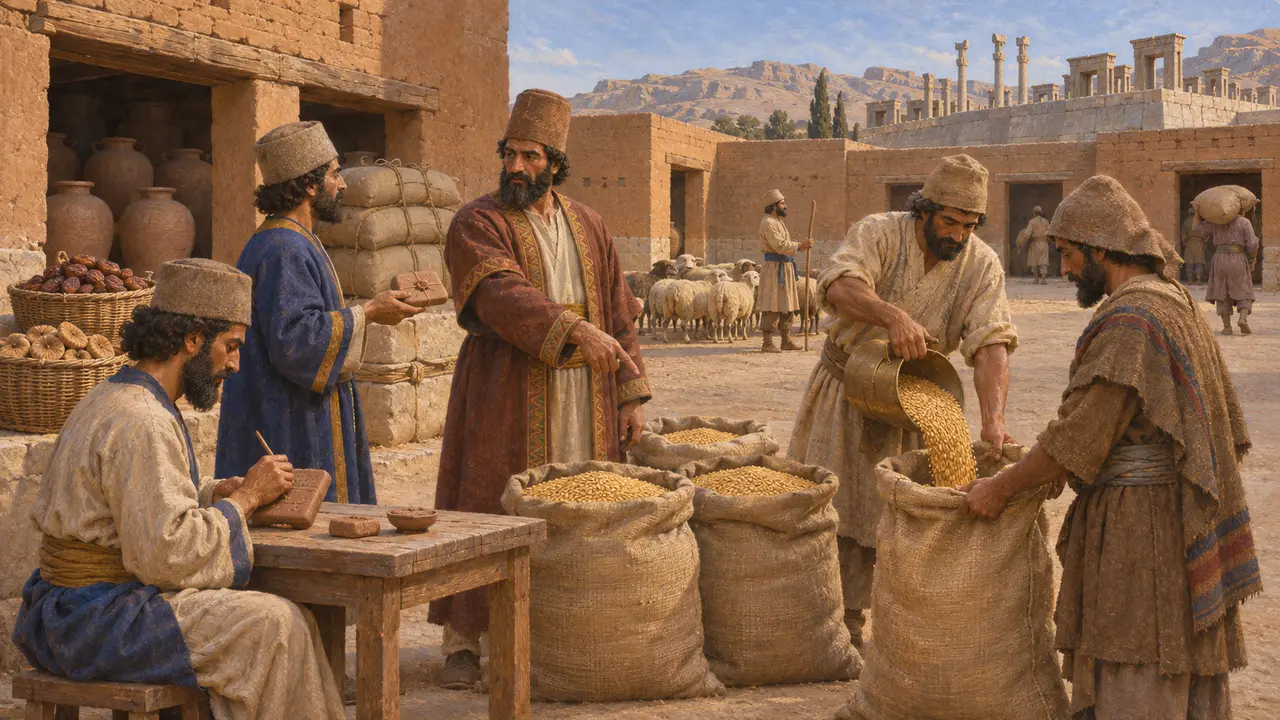
Goods counted in and out
In the recordThe Persepolis Fortification tablets were written mostly in Elamite between about 509 and 493. They record goods received into store and issued from it across Persis. Named suppliers held grain, wine, beer, fruit and livestock at many local places and released them on sealed orders. Each transfer was noted, so that stock could be checked against what had gone out as rations or travel supplies.
R. Hallock, Persepolis Fortification Tablets, 1969
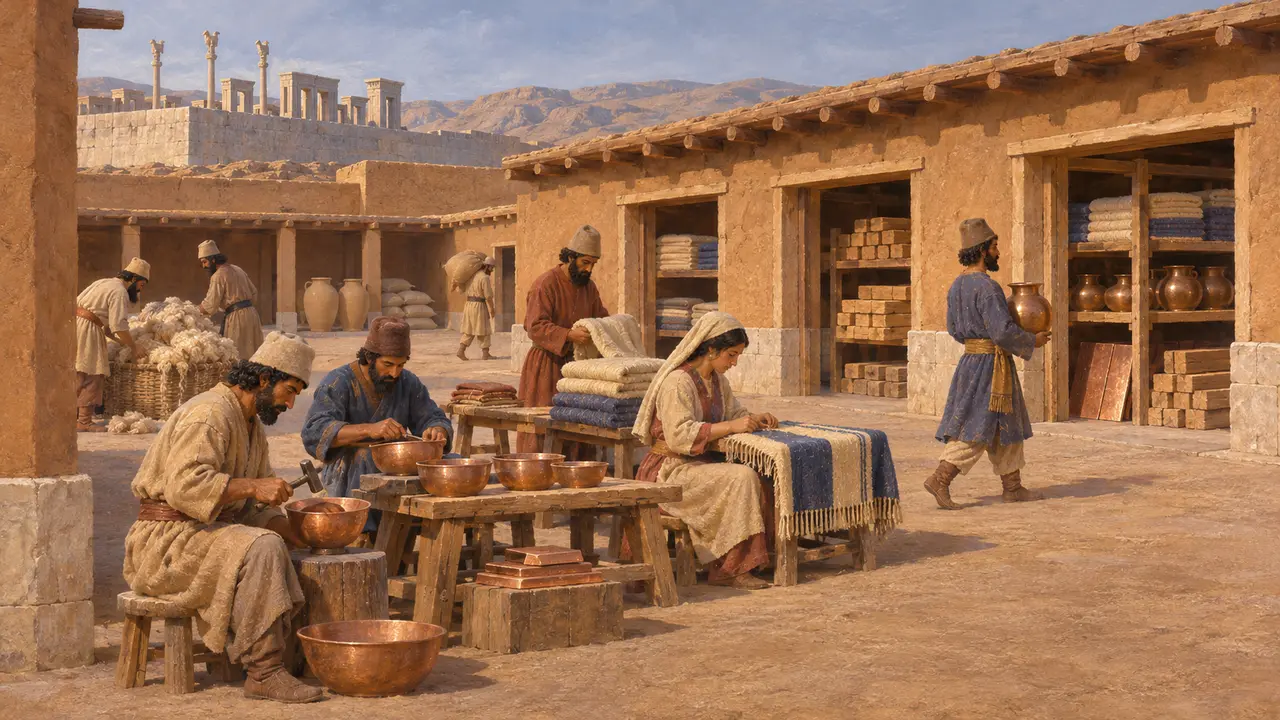
Storehouses that were also workshops
DisputedThe tablets use the Elamite word kapnuški, usually translated treasury, for institutions at Persepolis, Shiraz and other places. Some held valuables and materials, while others employed groups of workers who made goods. Historians still debate how far these were storehouses, workshops or both at once, and how they related to the stores of grain and wine.
P. Briant, From Cyrus to Alexander, 2002
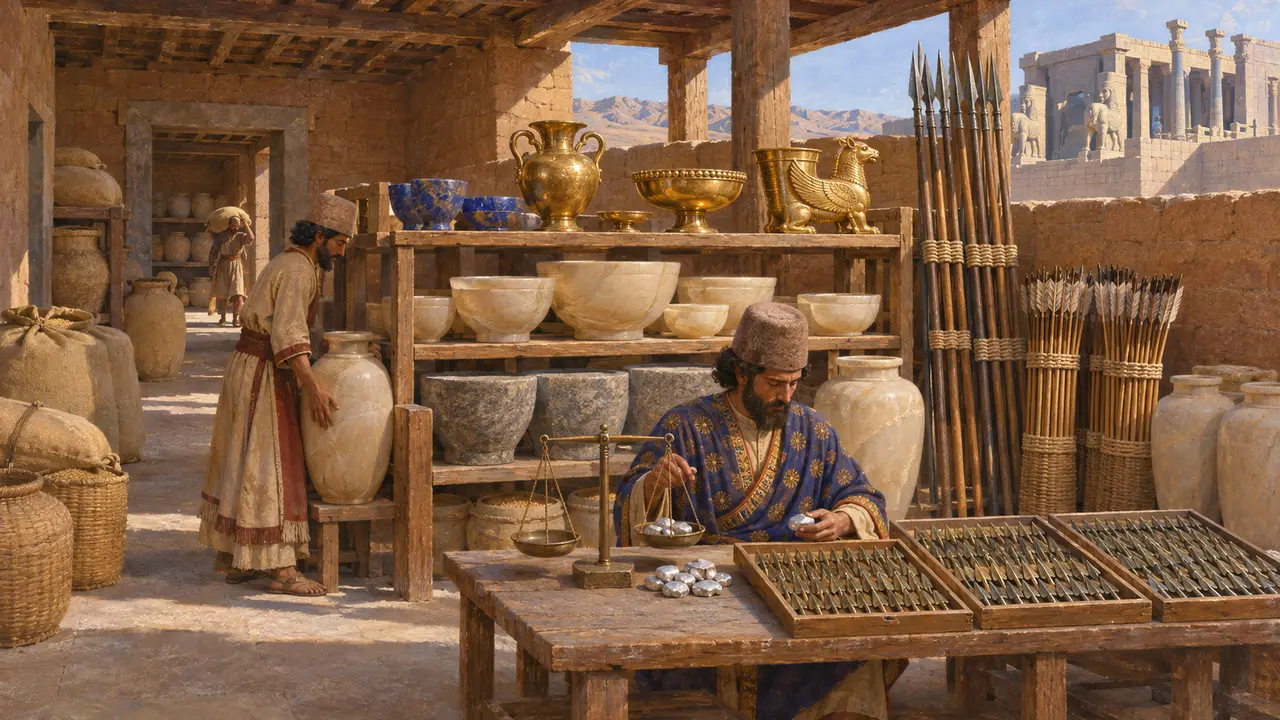
The Treasury at Persepolis
In the recordExcavators of the Treasury on the Persepolis terrace found storerooms that had held stone vessels, objects probably brought as gifts or tribute, and large numbers of weapons, including thousands of arrowheads. Most of what survived reflects the building as Alexander left it in 330. A separate group of tablets found there, dating from 492 to the 450s, records silver paid to workers on royal building projects, partly in place of rations in kind.
E. Schmidt, Persepolis II, 1957; G. Cameron, Persepolis Treasury Tablets, 1948
Materials gathered from afar
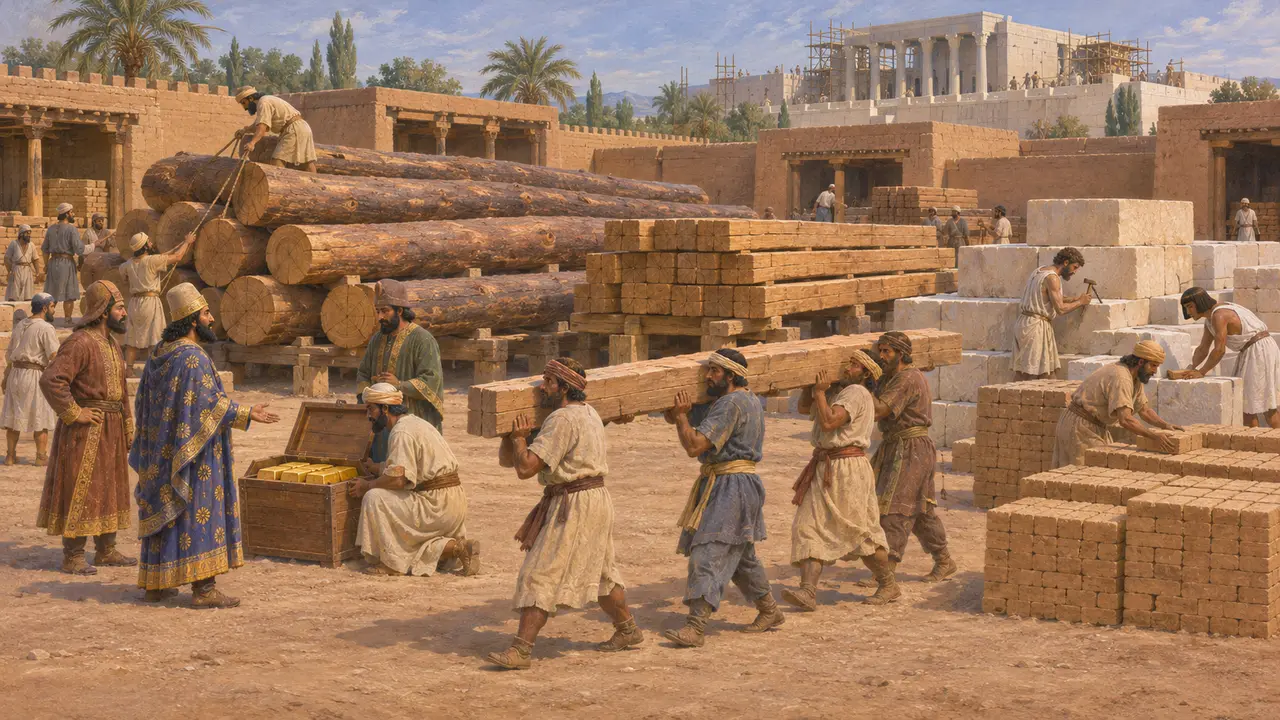
In the recordDarius's foundation charter from Susa lists where his building materials came from. It names cedar from Lebanon, other timber from Gandara and Carmania, gold from Sardis and Bactria, and stone and brick worked by peoples from across the empire. Materials on this scale had to be gathered and kept at the building site until the craftsmen needed them.
DSf
The King's treasure in jars
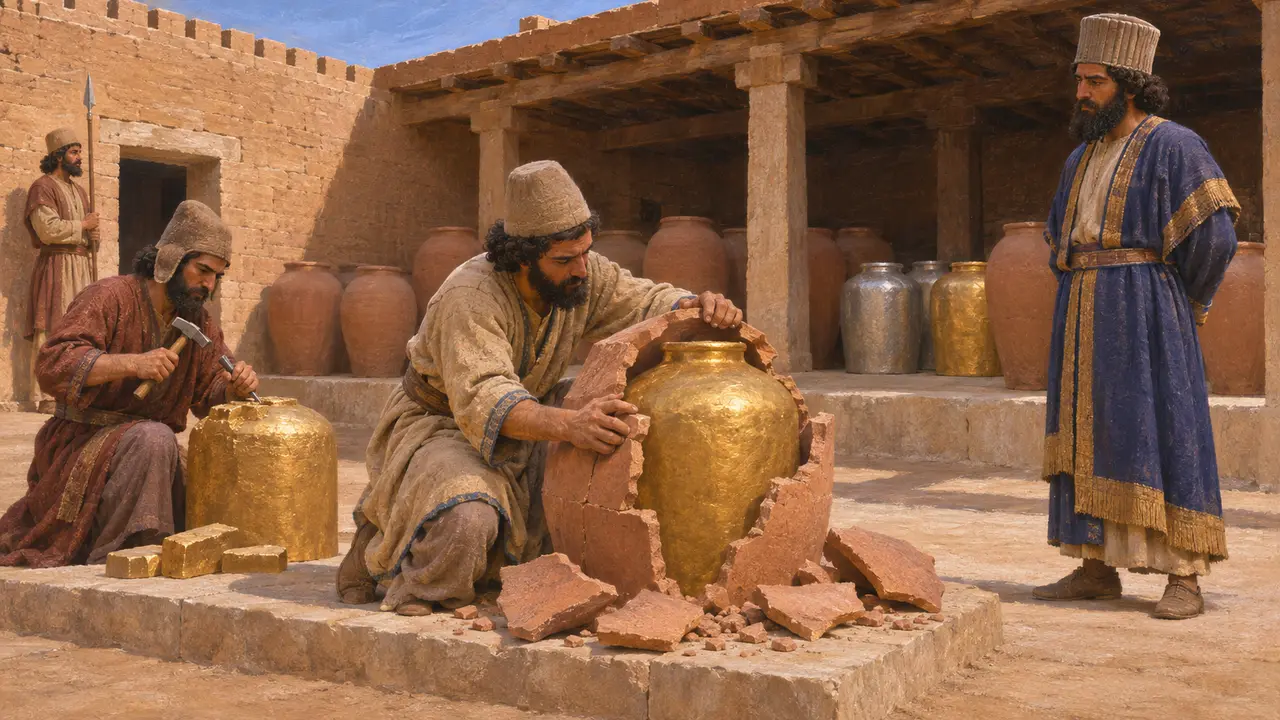
Ancient accountHerodotus says that the King stored the tribute he received by melting the metal and pouring it into earthenware jars. Once it had set, the jars were broken away, and pieces were cut from the solid mass when money was needed. The story may be simplified, but it reflects a Greek view of Persian wealth kept in store rather than spent at once.
Herodotus 3.96
Sources
- R. Hallock, Persepolis Fortification Tablets, 1969
- E. Schmidt, Persepolis II, 1957
- G. Cameron, Persepolis Treasury Tablets, 1948
- DSf
- Herodotus 3.96
- P. Briant, From Cyrus to Alexander, 2002