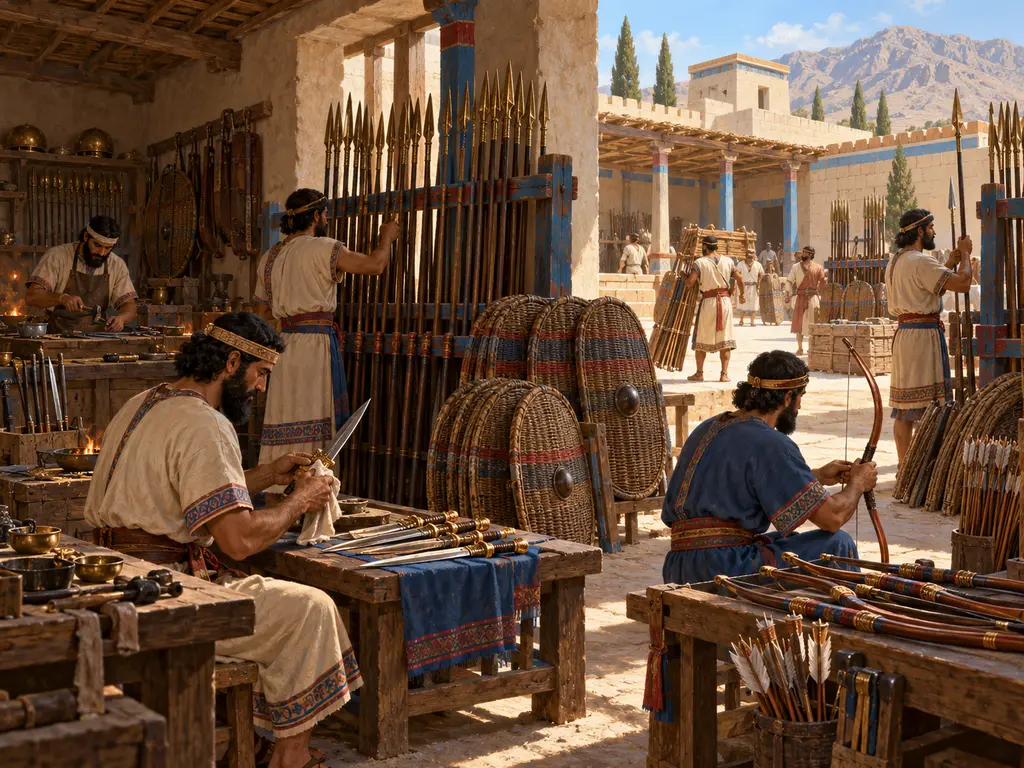
Armoury
Workshops and stores for the King's weapons, Persian empire, about 550-479 BCE
In the game: Level 2: The Spear-bearer
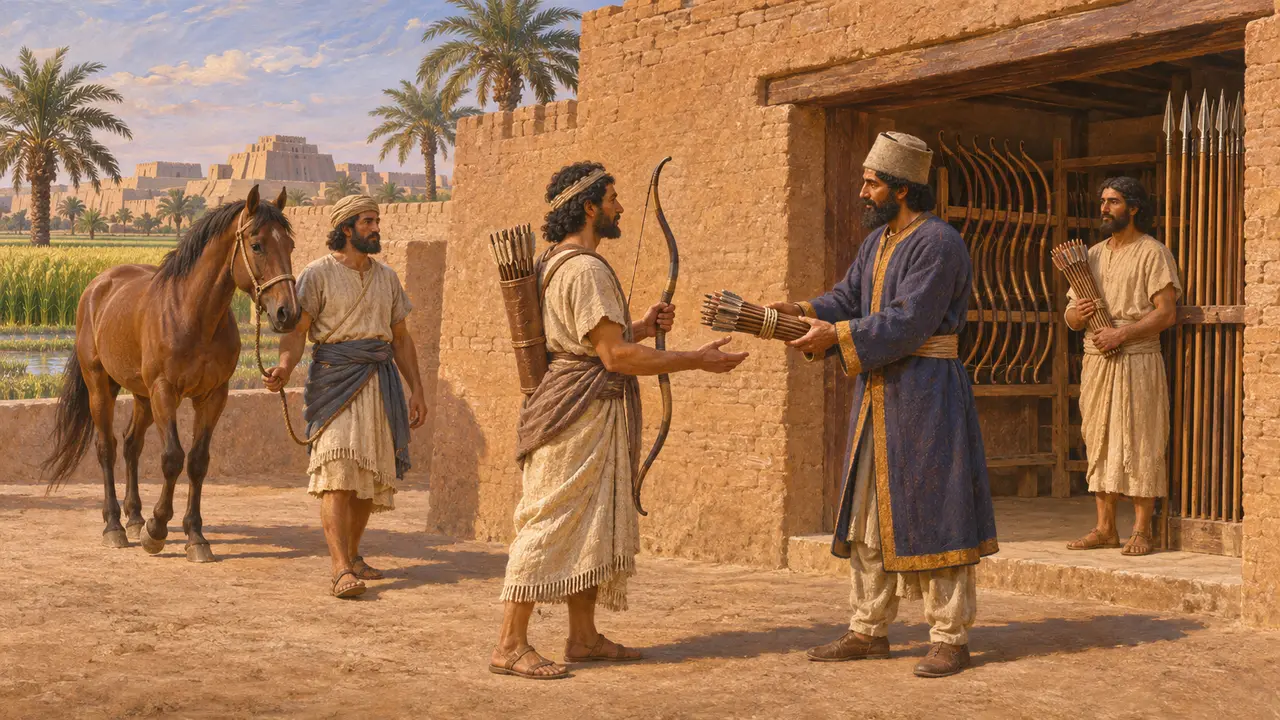
The Persian army fought mainly with the bow, the short spear and the wicker shield, and these had to be made and stored in great numbers. Excavated weapon stores, temple archives and Greek descriptions show that arms came from royal stores, from temple and craft workshops, and from soldiers who equipped themselves.
In the game: The Armoury turns timber into spears, shields and bows, and carts take them to the barracks. This simplifies history: real arms also needed bronze, iron, horn and sinew, and many soldiers brought their own.
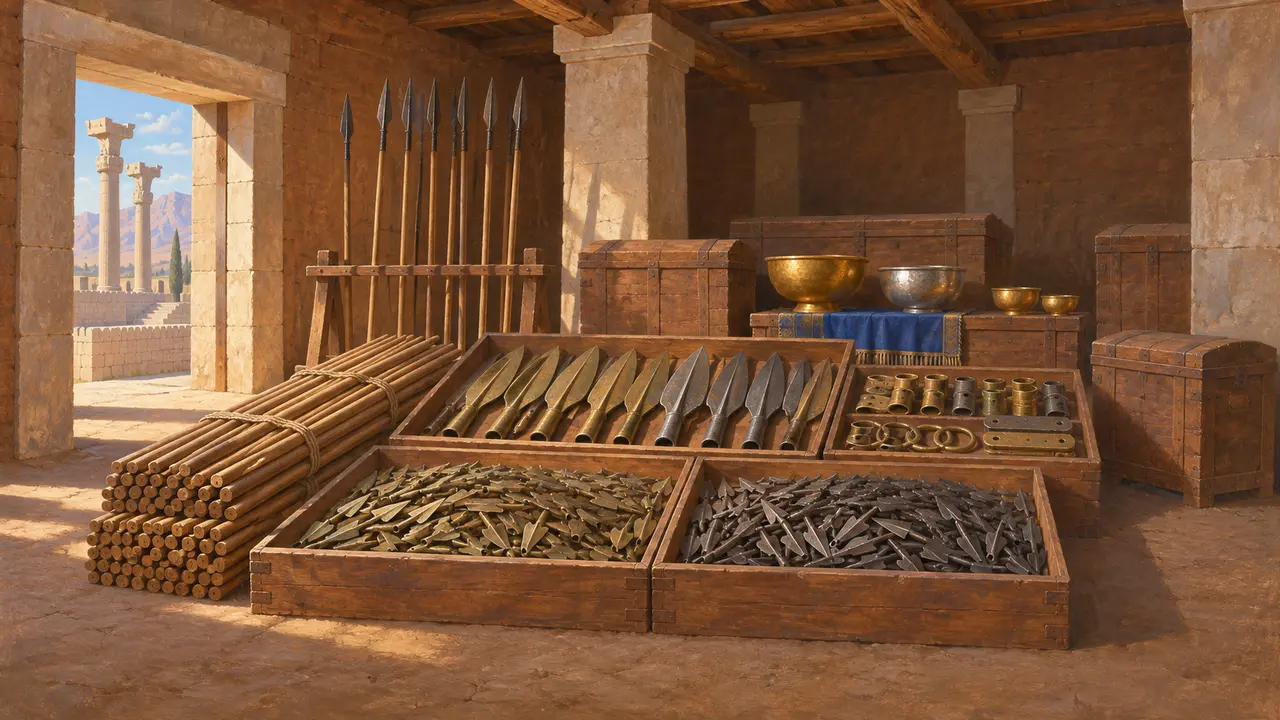
Weapons in the Persepolis Treasury
In the recordExcavators at Persepolis in the 1930s found large numbers of weapons in the Treasury building, among them bronze and iron arrowheads, spearheads and other fittings. The finds show that the King kept stocks of arms at his residences alongside precious goods. They reflect the building as it stood when it was burned in 330, during Alexander's occupation, so they date mostly from well after Darius and Xerxes.
E. F. Schmidt, Persepolis II, 1957
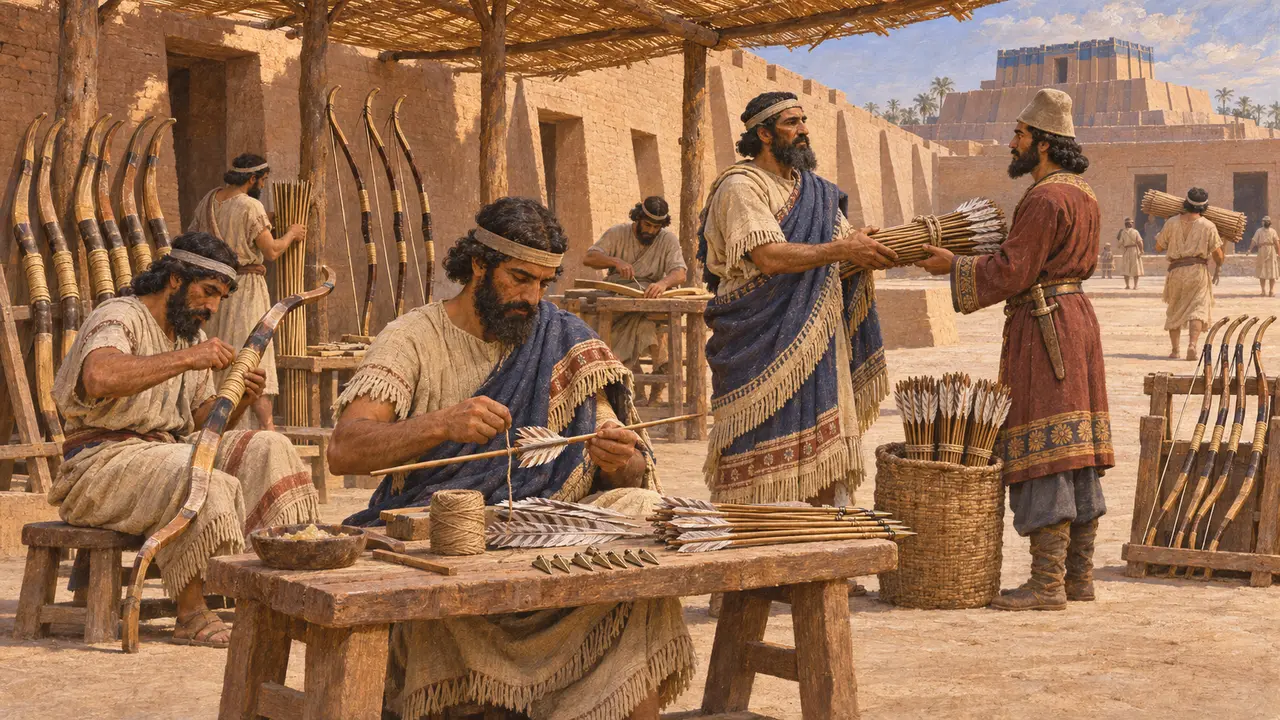
Arrows and bows from Babylonian temples
In the recordCuneiform texts from the Eanna temple at Uruk, from the sixth century and including the reigns of Cyrus and Cambyses, show the temple organising craftsmen to make bows and arrows and sending them for royal service. Arms production was therefore spread across the empire's existing institutions, not confined to one royal workshop. The temple carried this work as part of its obligations to the King.
K. Kleber, Tempel und Palast, 2008
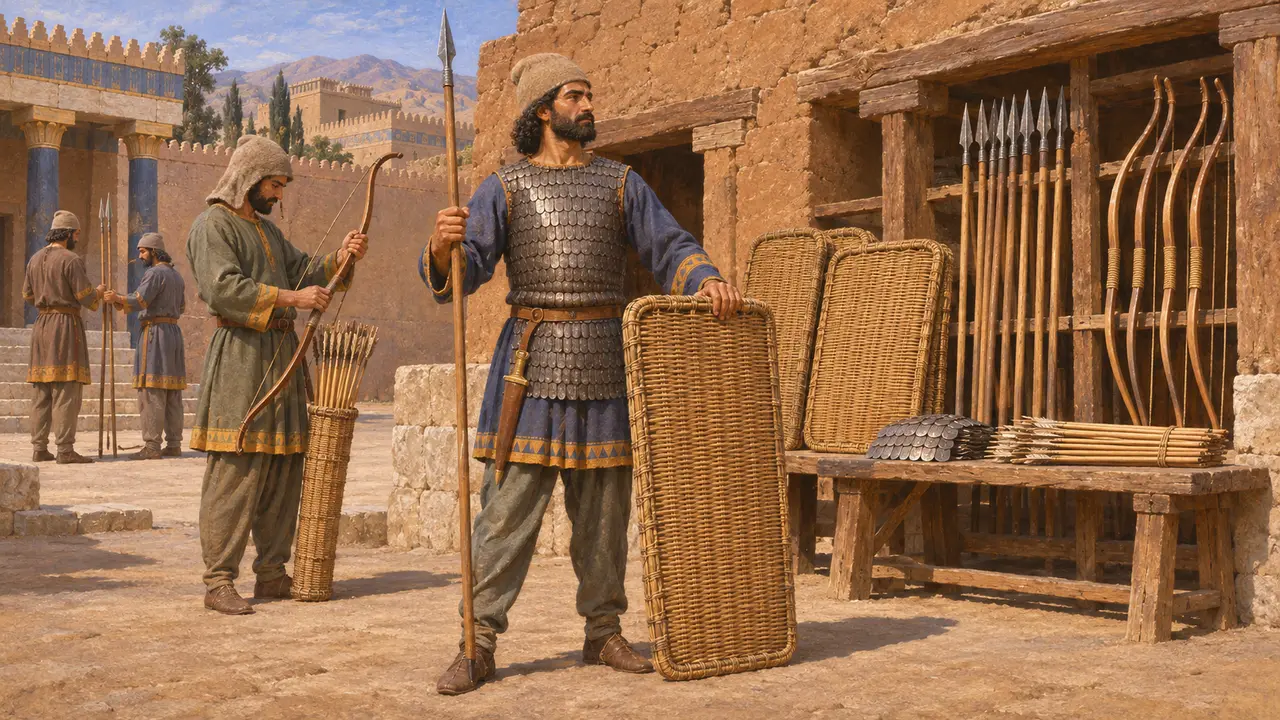
What the Persians carried
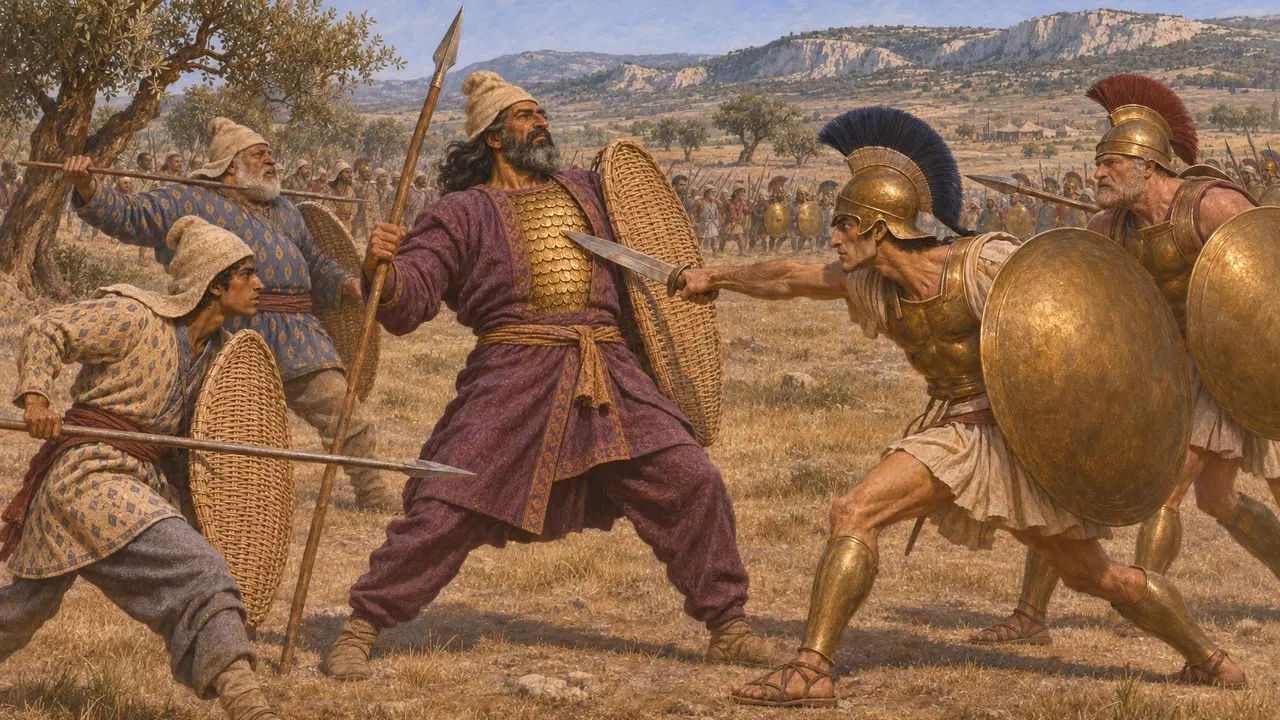
Ancient accountHerodotus, listing Xerxes' army in 480, says the Persians wore soft felt caps, sleeved tunics with iron scale armour, and trousers. He says they carried wicker shields, short spears, large bows with cane arrows, and daggers hung at the right thigh. On this description, most of the gear was wood, cane and wicker, with metal for points, blades and armour scales.
Herodotus 7.61
Light armour against the hoplites
Ancient accountHerodotus says that at Plataea in 479 the Persians were as brave and strong as the Greeks but lacked heavy armour and skill, and so lost in close fighting. He also says the cavalry commander Masistius wore a golden scale corselet under his purple tunic, which turned Greek blows until he was struck in the eye. Greek writers may have stressed the contrast to praise their own hoplites.
Herodotus 9.22; Herodotus 9.62-63
Who paid for the weapons
DisputedBabylonian documents, especially the Murashu archive of the later fifth century, show plots called bow land, horse land and chariot land whose holders owed armed service or its cost. Historians debate how far this system already worked in Darius's time and how much the army relied on it rather than on royal arsenals. Most agree both existed side by side.
M. Stolper, Entrepreneurs and Empire, 1985
Sources
- Herodotus 7.61
- Herodotus 9.22; 9.62-63
- E. F. Schmidt, Persepolis II, 1957
- K. Kleber, Tempel und Palast, 2008
- M. Stolper, Entrepreneurs and Empire, 1985
- P. Briant, From Cyrus to Alexander, 2002