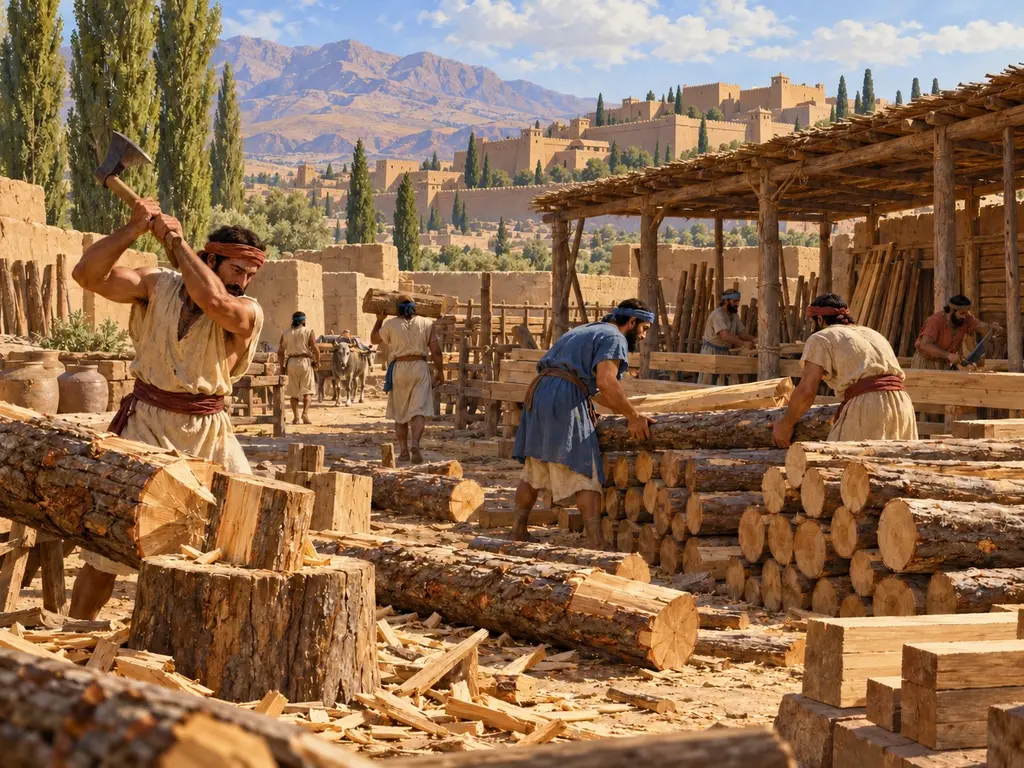
Woodcutter
Felling and supply of timber in the Achaemenid empire, about 530-479 BCE
Timber roofed the halls of the Persian kings, fuelled their brick kilns, built the ships of their fleets and warmed ordinary households. Everyday wood was cut close to home, but the great beams for royal buildings were often hauled across the empire, and Darius boasted of this in his building inscriptions.
In the game: The Woodcutter fells trees near woodland and supplies timber. This is a simplification: local felling gave fuel and lesser timber, while royal palaces drew long cedar and other beams from distant provinces.
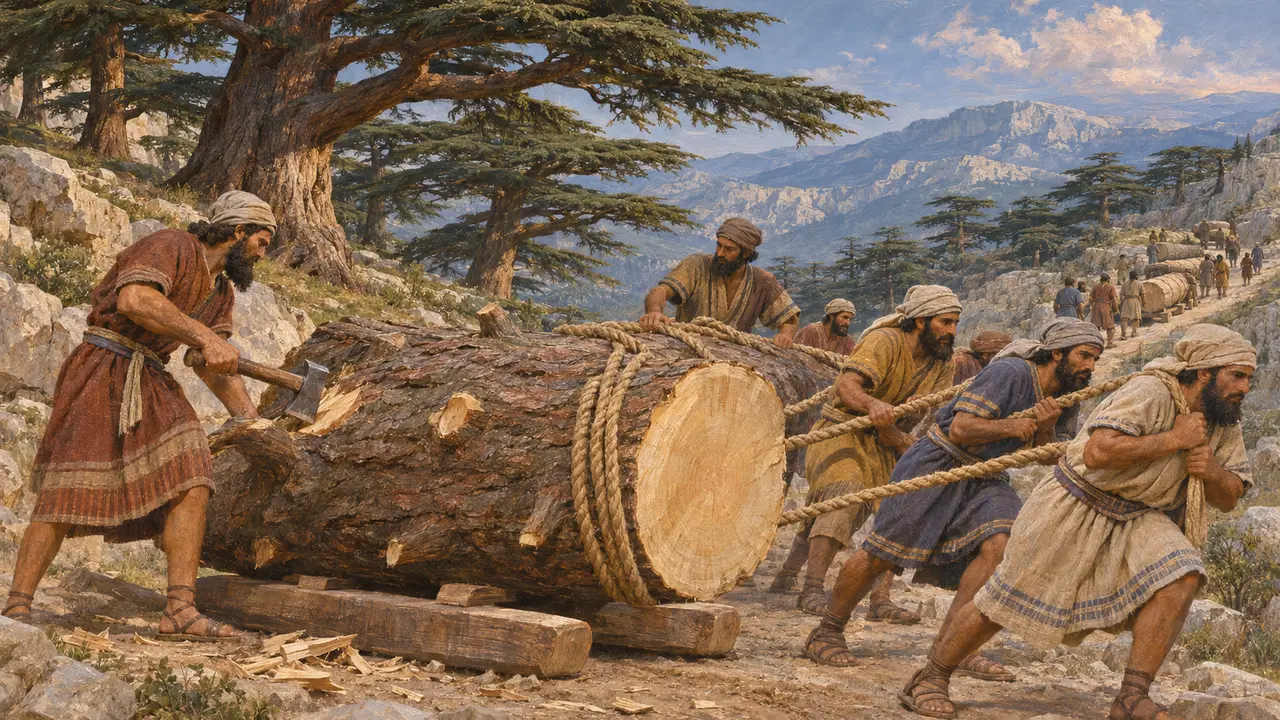
Cedar from Lebanon for Susa
In the recordIn his foundation charter for the palace at Susa, Darius listed where the building materials came from. Cedar was cut on a mountain called Lebanon, carried to Babylon by the Assyrians and taken on to Susa by Carians and Ionians. Another timber, called yaka, came from Gandhara and Carmania. The king presented this long haul as proof of how far his rule reached.
DSf
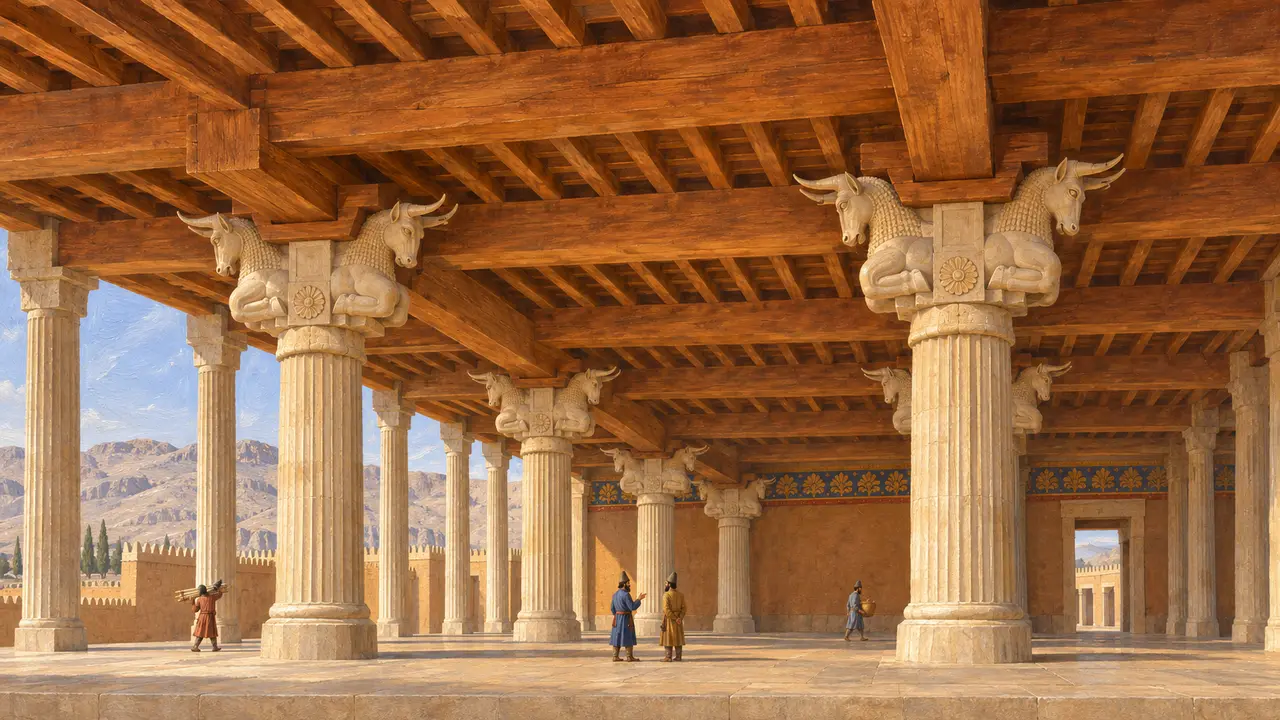
Roof beams of the royal halls
In the recordThe columned halls at Persepolis spanned wide spaces with flat roofs laid on heavy wooden beams resting on the column capitals. When Alexander's army burned Persepolis in 330, much of this woodwork fell and charred. Excavators found burnt timber and thick ash in the destruction layers. These remains show how much wood the terrace buildings held.
E. F. Schmidt, Persepolis I, 1953
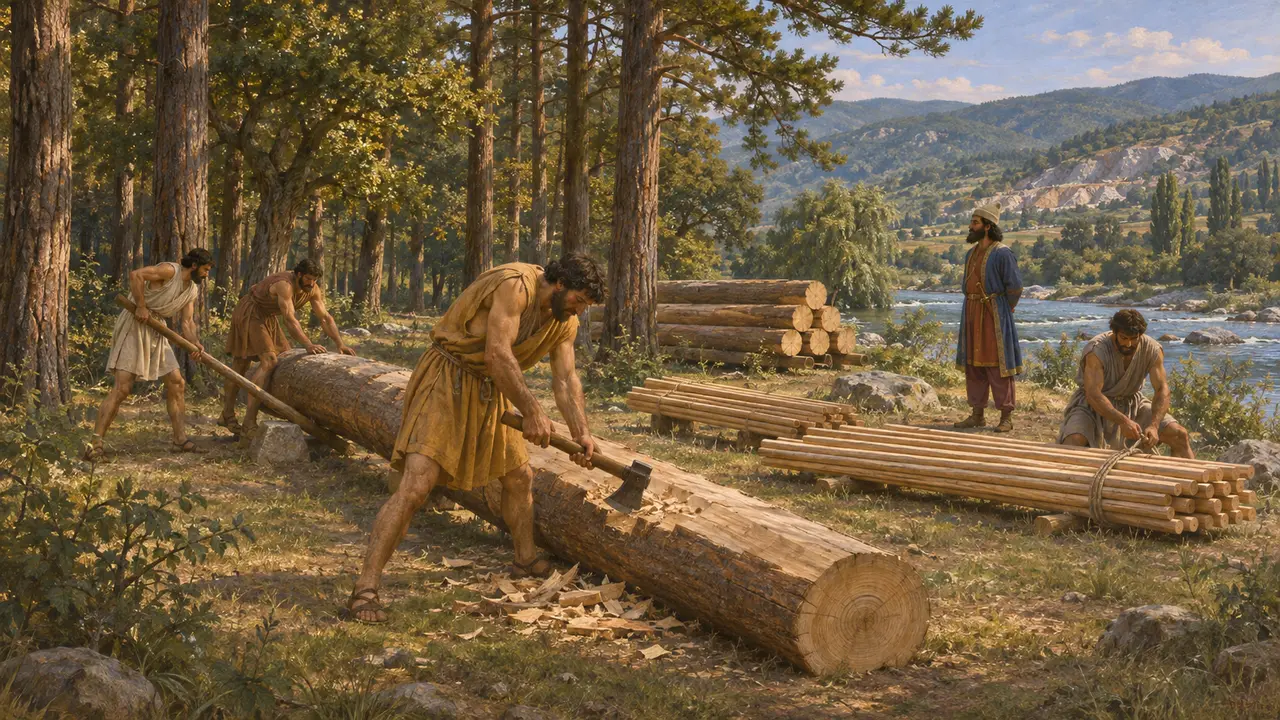
Ship timber in the north Aegean
Ancient accountHerodotus says that Darius granted Histiaeus of Miletus the site of Myrcinus near the Strymon, and that the general Megabazus later warned the King against it. The place, Megabazus said, had plenty of timber for ships and oars, as well as silver mines. The story shows that forests suited to shipbuilding were treated as strategic resources worth controlling.
Herodotus 5.11; 5.23
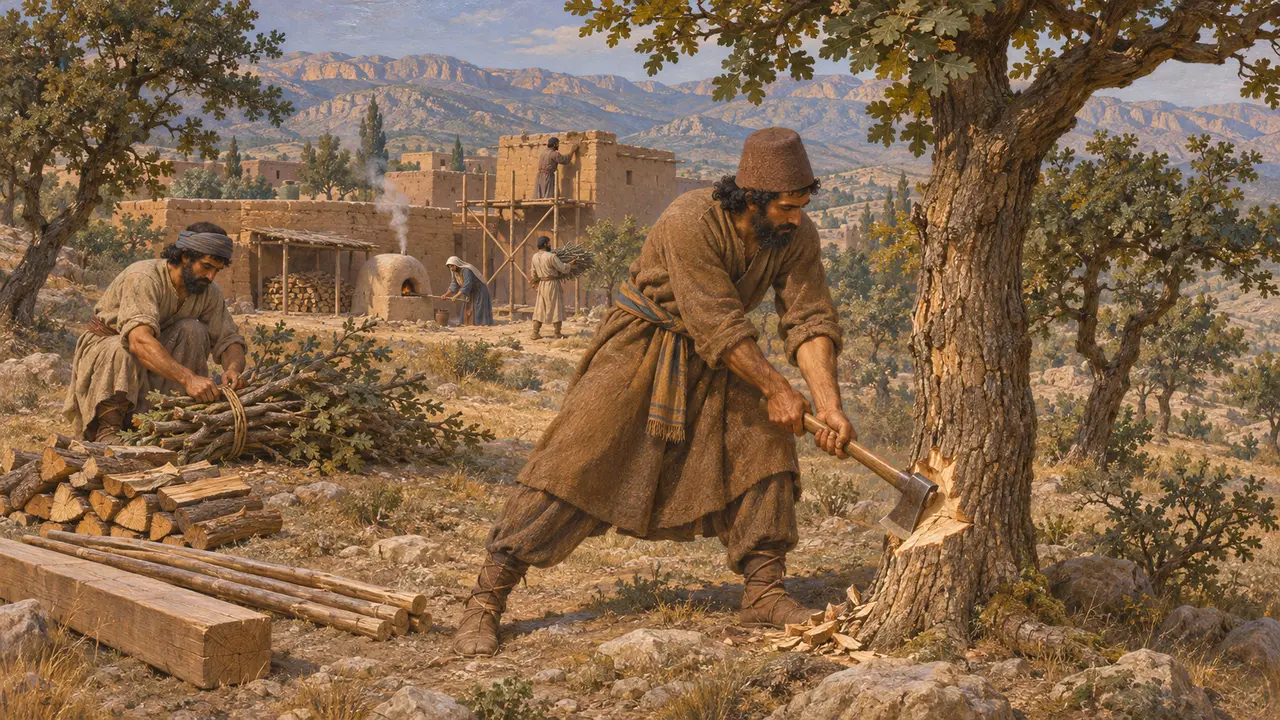
Local woods and everyday fuel
DisputedMost felling served daily needs: fuel for hearths, ovens and kilns, poles for scaffolding and beams for houses. Historians still debate how wooded Persis and the Zagros were in this period and how quickly cutting thinned the oak, juniper and other trees. The written sources say little about ordinary woodcutters, so much of the picture rests on later evidence and environmental studies.
R. Meiggs, Trees and Timber in the Ancient Mediterranean World, 1982
Sources
- DSf
- Herodotus 5.11; 5.23
- E. F. Schmidt, Persepolis I, 1953
- R. Meiggs, Trees and Timber in the Ancient Mediterranean World, 1982
- P. Briant, From Cyrus to Alexander, 2002