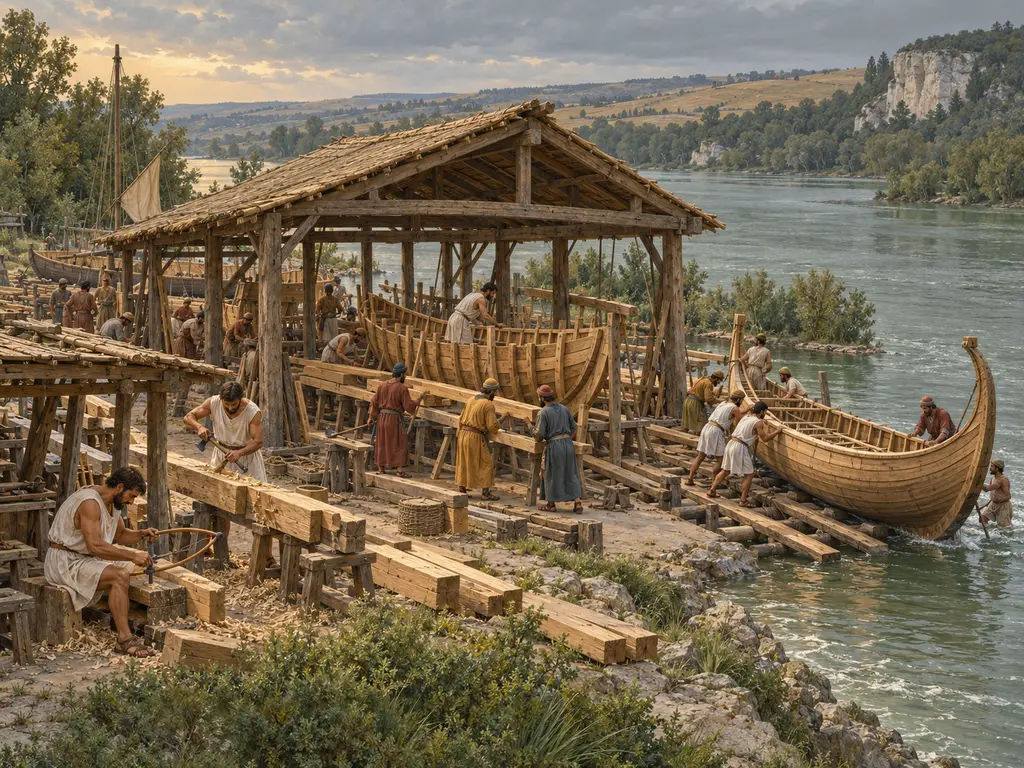
Ionian Shipwrights
Greek ship crews and carpenters who bridged the Ister for Darius, about 513 BCE
In the game: Level 6: The Bridge of Boats
For his campaign against the Scythians, Darius ordered the Greek cities of Ionia and the Hellespont to sail their fleet up the Ister (the Danube) and bridge it. Their shipwrights and crews built the crossing and guarded it, and Herodotus makes the King's safe return depend on their loyalty. The episode shows how the Persian kings drew on the skills of subject peoples for great works.
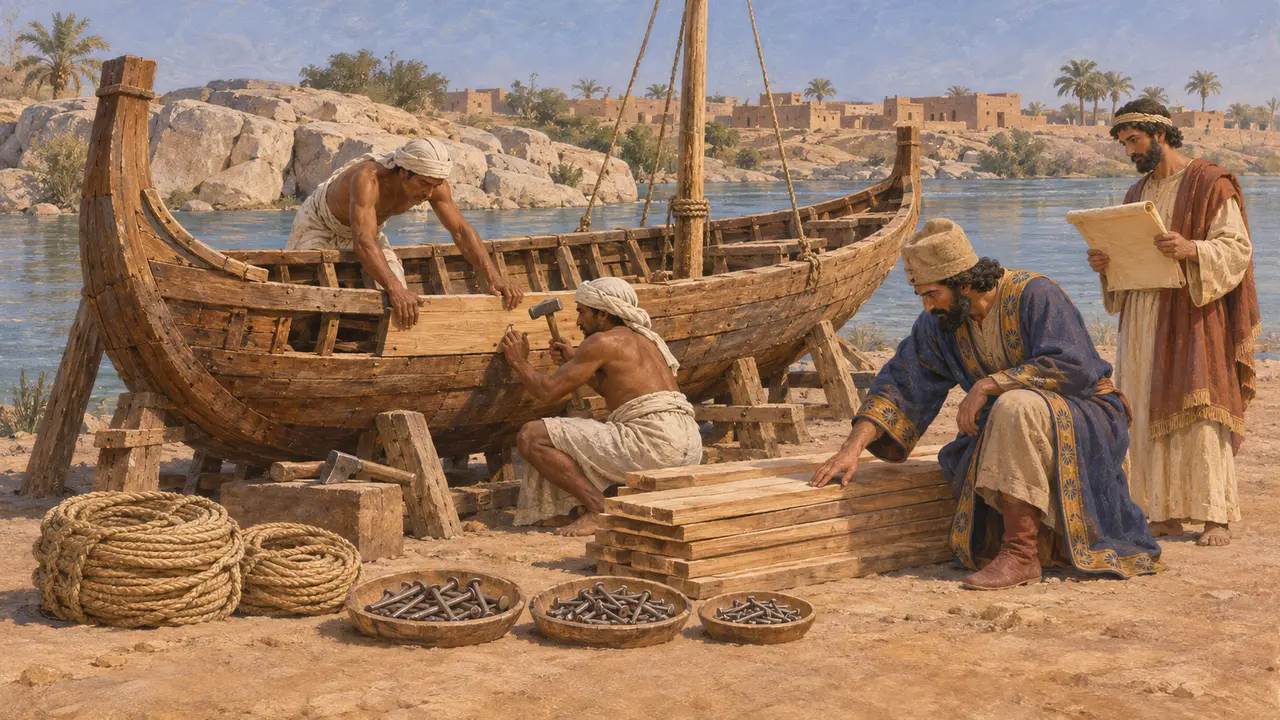
In the game: The game shows shipwrights framing new boats on a riverside slipway from woodcutters' timber. Herodotus says the Ionians sailed their own fleet upriver, and historians think those ships probably formed the bridge, so this is a simplification.
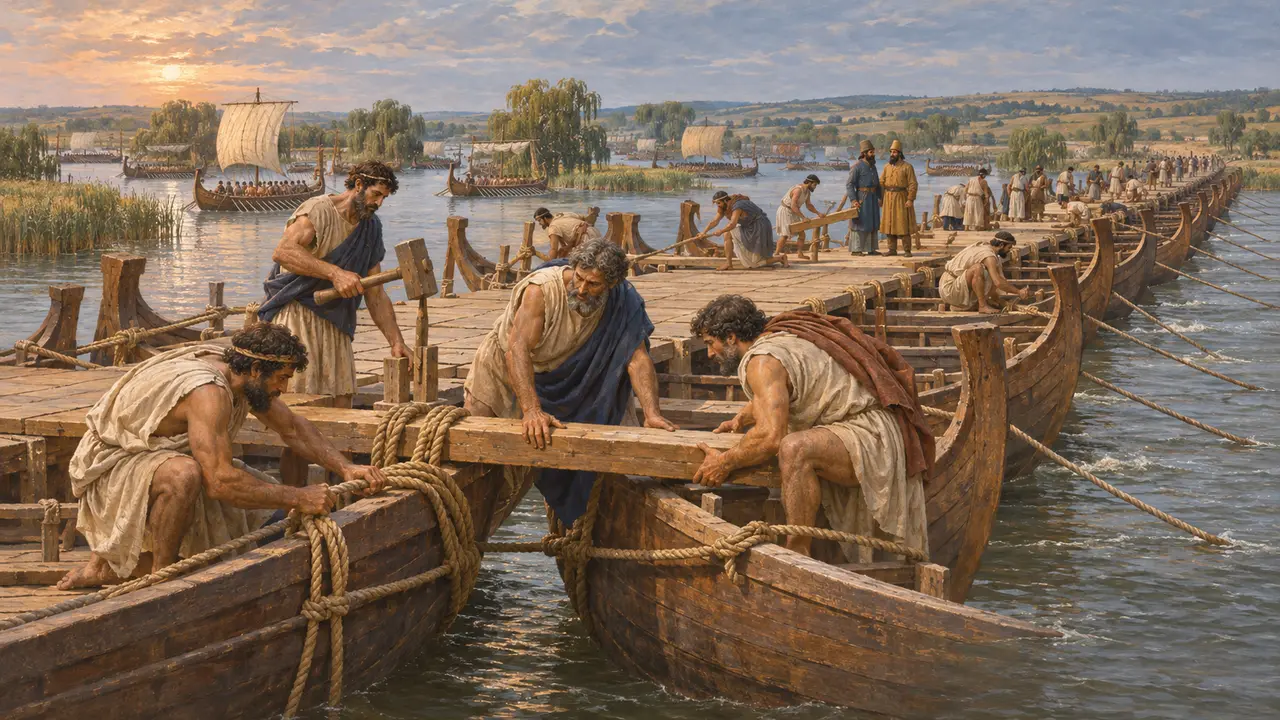
The fleet sent to the Ister
Ancient accountHerodotus says Darius ordered the Ionians, Aeolians and Hellespontine Greeks to sail through the Black Sea to the Ister. They went two days upstream from the sea and bridged the river where its mouths divide. He reports a fleet of 600 ships for the campaign, a figure many historians think too high.
Herodotus 4.87, 4.89
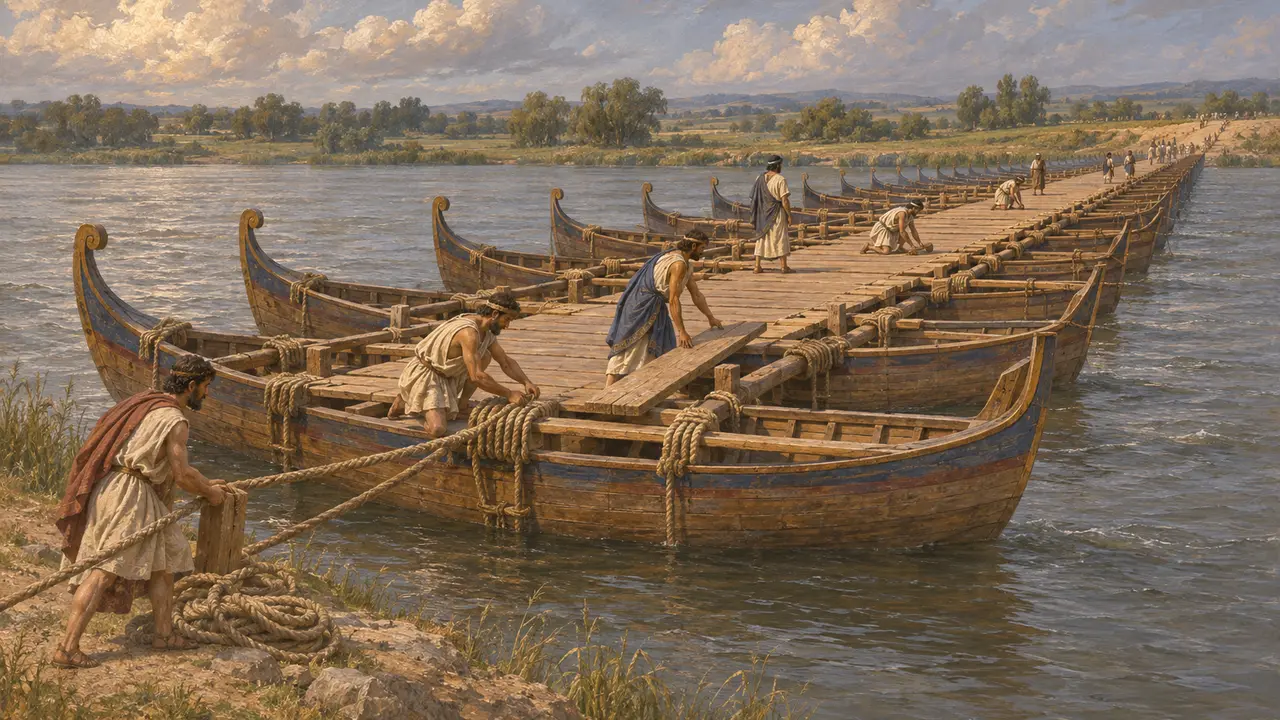
A bridge made from the ships
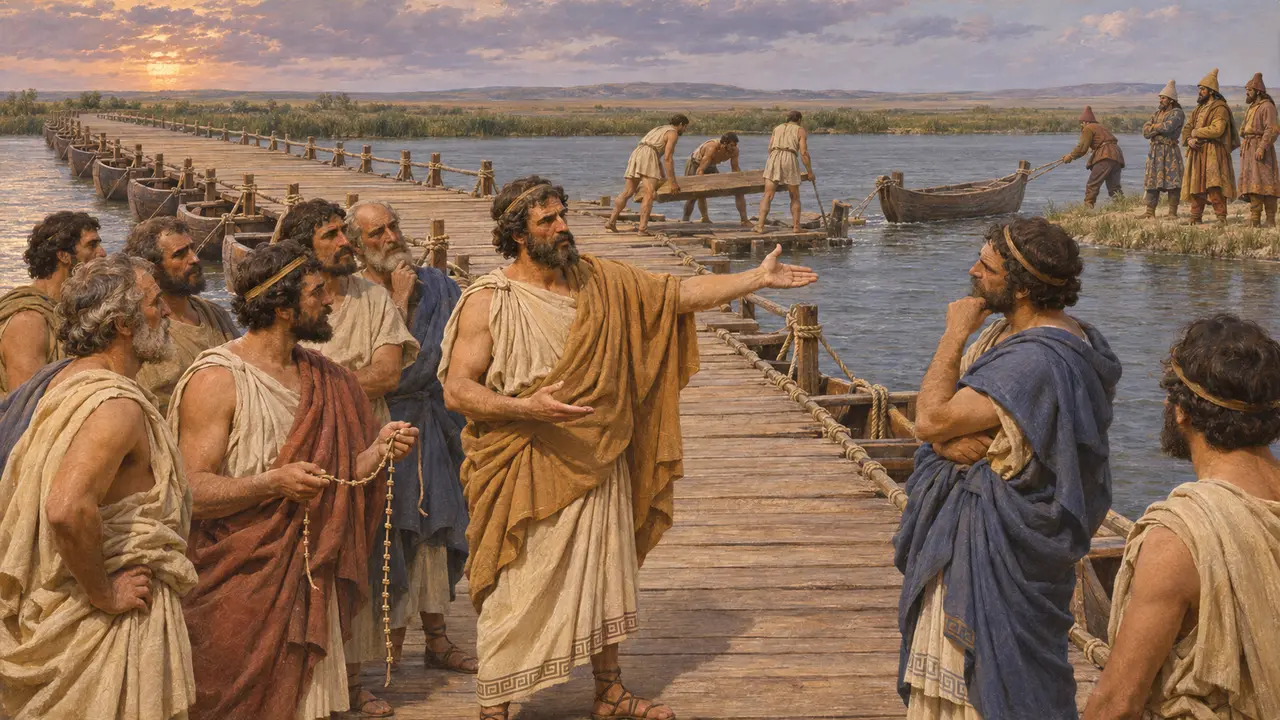
DisputedHerodotus never describes how the Ister bridge was built. He says Darius later told the Ionians to break it and follow him by land with their crews. For that reason most historians think the bridge was a line of the fleet's own ships lashed together, as Xerxes' Hellespont bridges later were. Whether new boats were also built on the spot is unknown.
Herodotus 4.97, 7.36; P. Briant, From Cyrus to Alexander, 2002
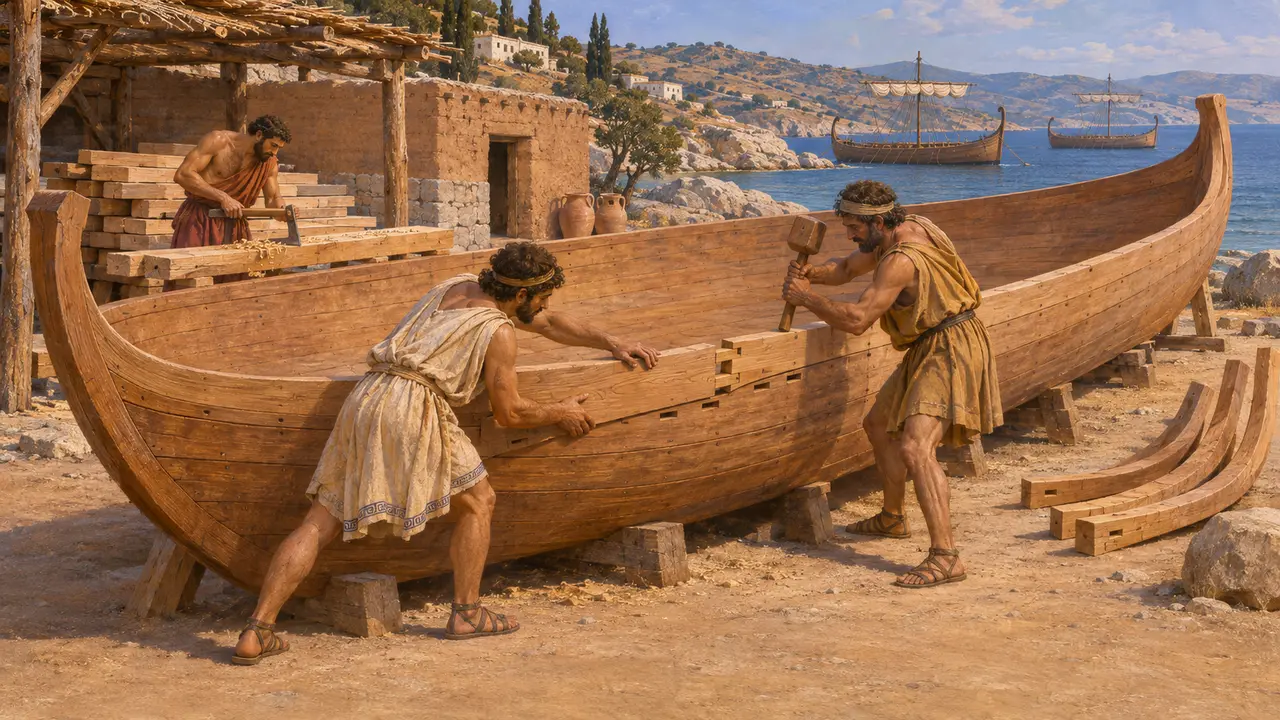
How Ionian ships were built
In the recordExcavated wrecks from the Mediterranean show that hulls of this period were built shell first. Shipwrights joined the planks edge to edge, with mortise-and-tenon joints or, in some older Greek hulls, by sewing, and added the frames afterwards. The work needed seasoned timber, skilled carpenters and time, which makes it likely that an existing fleet was used.
J. R. Steffy, Wooden Ship Building and the Interpretation of Shipwrecks, 1994
Guarding the crossing
Ancient accountHerodotus says Darius gave the Ionians a thong tied with sixty knots and told them to untie one each day and sail home if he had not returned when all were undone. When the Scythians urged them to break the bridge, he reports that Miltiades of Athens agreed but Histiaeus of Miletus persuaded the tyrants to keep it, and only the Scythian end was dismantled.
Herodotus 4.98, 4.136-139
Persian accounting for boats
In the recordA later Aramaic letter from Elephantine, dated 412, records the satrap Arsames ordering the repair of a boat and lists the planks, nails and other materials by number. It comes long after Darius, but it shows how closely Persian officials tracked the materials used on vessels.
TAD A6.2 (B. Porten and A. Yardeni, Textbook of Aramaic Documents from Ancient Egypt)
Sources
- Herodotus 4.87-89, 4.97-98, 4.136-142, 7.36
- P. Briant, From Cyrus to Alexander, 2002
- H. T. Wallinga, Ships and Sea-Power before the Great Persian War, 1993
- J. R. Steffy, Wooden Ship Building and the Interpretation of Shipwrecks, 1994
- L. Casson, Ships and Seamanship in the Ancient World, 1971
- B. Porten and A. Yardeni, Textbook of Aramaic Documents from Ancient Egypt, vol. 1, 1986