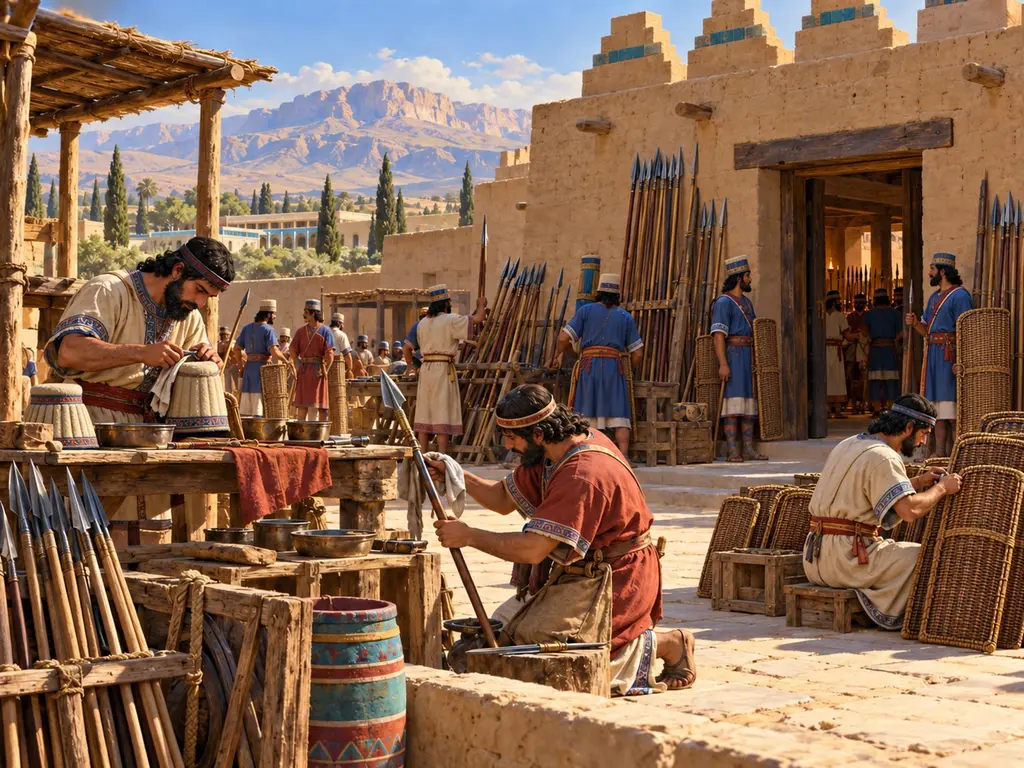
Barracks
Quarters and supply for soldiers of the Achaemenid empire, 6th to 5th century BCE
The Achaemenid kings kept soldiers in fortresses and garrison towns across the empire, fed from royal and provincial stores. Most men who fought for the King, however, did not live in barracks: they held land in return for service or were called up when a campaign was ordered. A building like the game's Barracks was therefore only a small part of how the Persian army was housed, fed and trained.
In the game: The game's Barracks has drill-masters train spearmen from households, supplied by carts of arms and barley. This simplifies history: no Persian building of this exact kind is attested, and most soldiers held service land and trained in youth.
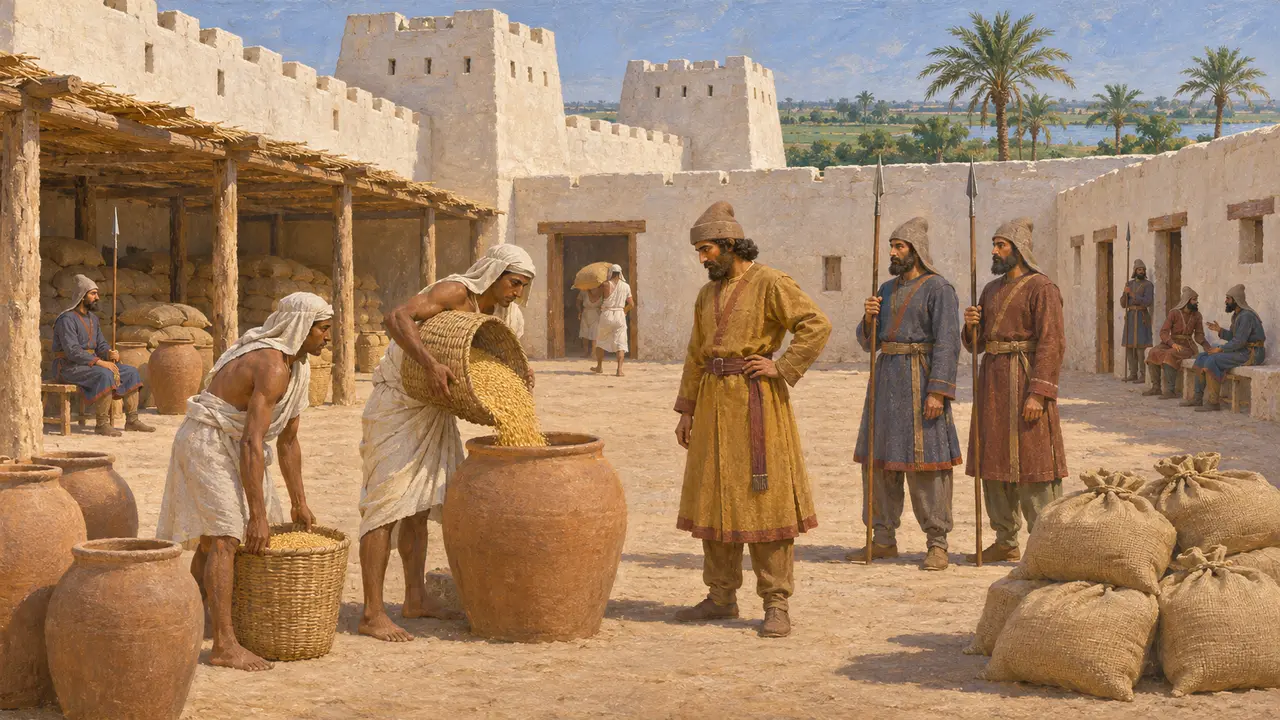
Garrisons in the fortresses
Ancient accountHerodotus says that Persians and their auxiliaries were stationed in the White Fort at Memphis and received 120,000 measures of grain from Egypt, on top of its silver tribute. He also tells how Artaphernes held the citadel of Sardis with a strong force when the Ionians burned the lower city in 498. Troops like these lived in fortified places and were fed by the province, the nearest Achaemenid parallel to a barracks.
Herodotus 3.91; 5.100
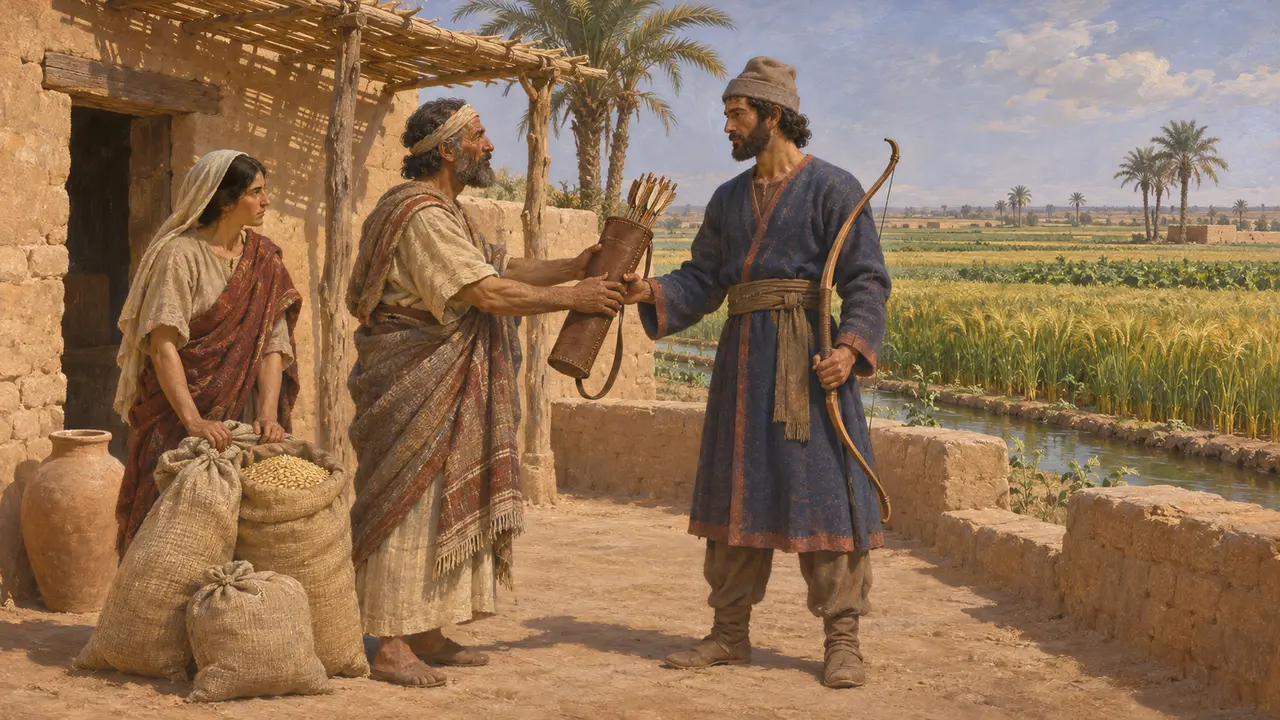
Soldiers on the King's land
In the recordBabylonian documents show land granted in units called bow-land, horse-land and chariot-land, whose holders owed a soldier with his equipment when called. The system was in use by the early reign of Darius. The later Murashu archive shows such holdings grouped into units called hatru, which sometimes paid silver instead of serving. The soldier came from the household and the land, not from a barracks.
M. Stolper, Entrepreneurs and Empire, 1985
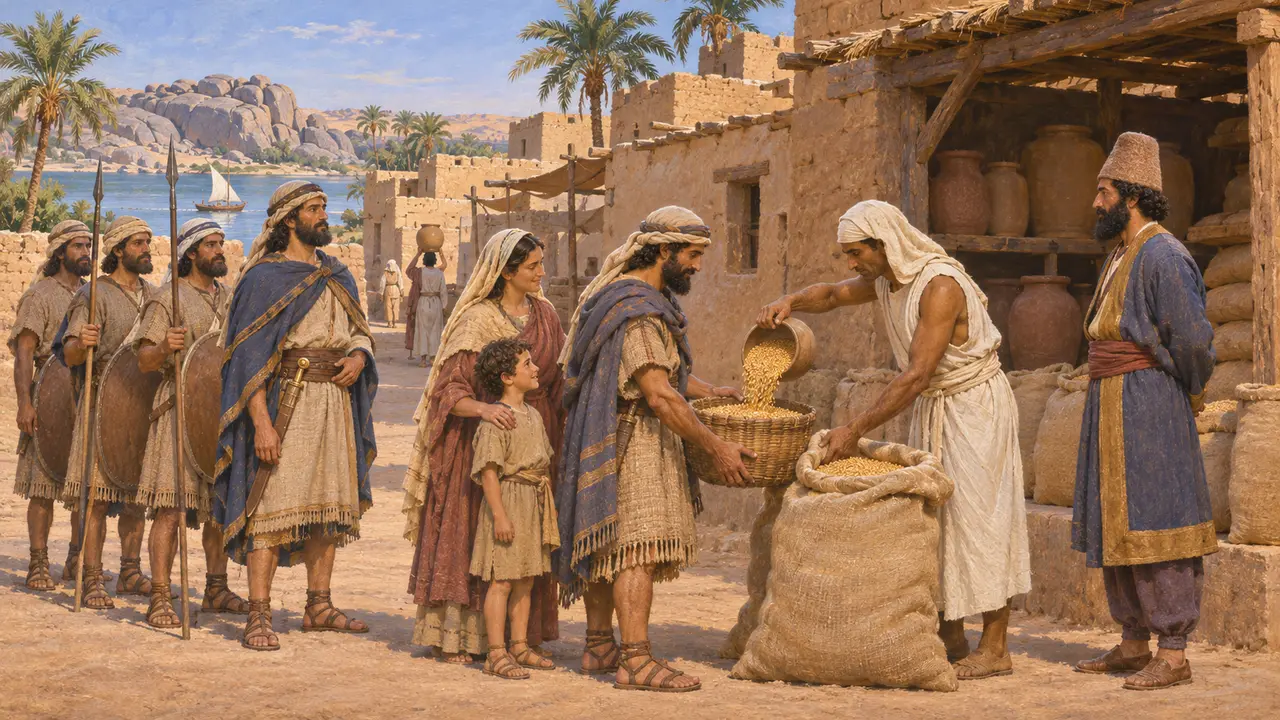
The garrison at Elephantine
In the recordAramaic papyri from Elephantine, on Egypt's southern frontier, record a garrison of Judaean and Aramaean soldiers organised in detachments under commanders. They lived with their families in the town, owned houses, and drew rations from royal stores. Most of the papyri date from later in the 5th century, after the game's period, but they show how a frontier garrison worked in daily life.
B. Porten, Archives from Elephantine, 1968
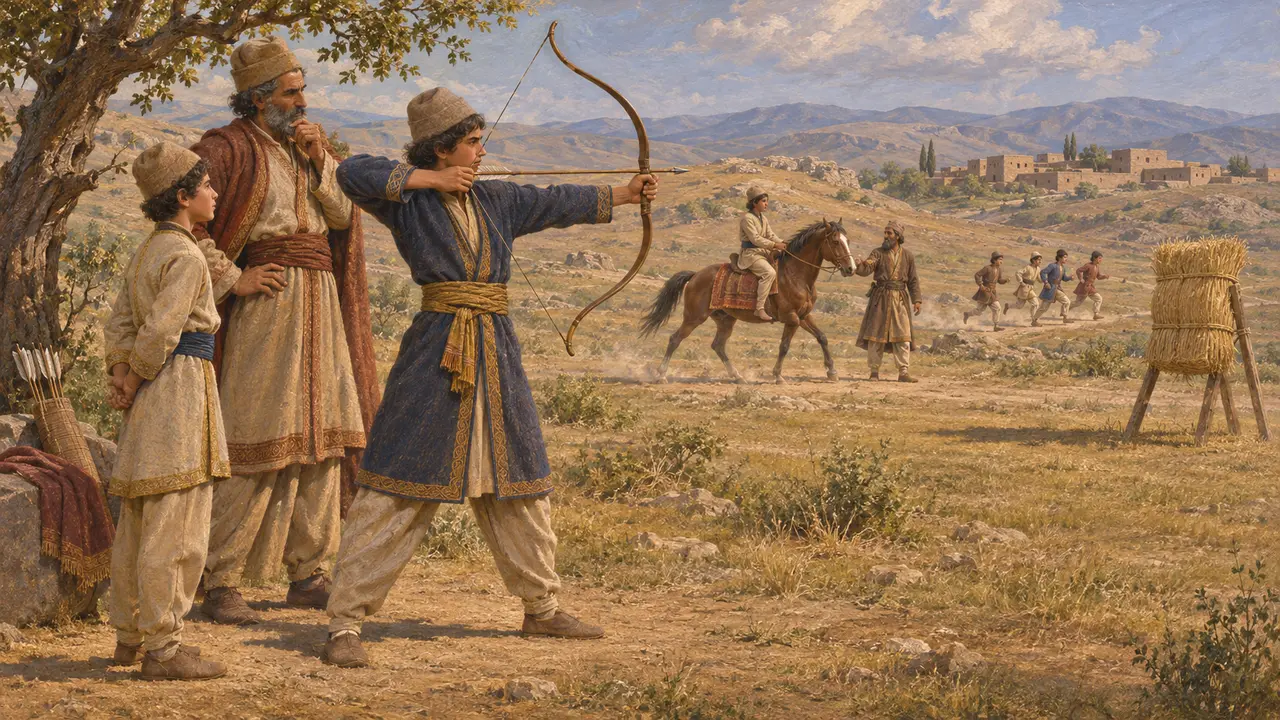
How young Persians learned to fight
Ancient accountHerodotus says Persian boys were taught three things from the age of five to twenty: to ride, to shoot the bow and to tell the truth. Strabo, writing centuries later, describes groups of youths trained in hardship, running and archery under older men. Both describe training as part of growing up, not as drill in a barracks.
Herodotus 1.136; Strabo 15.3.18
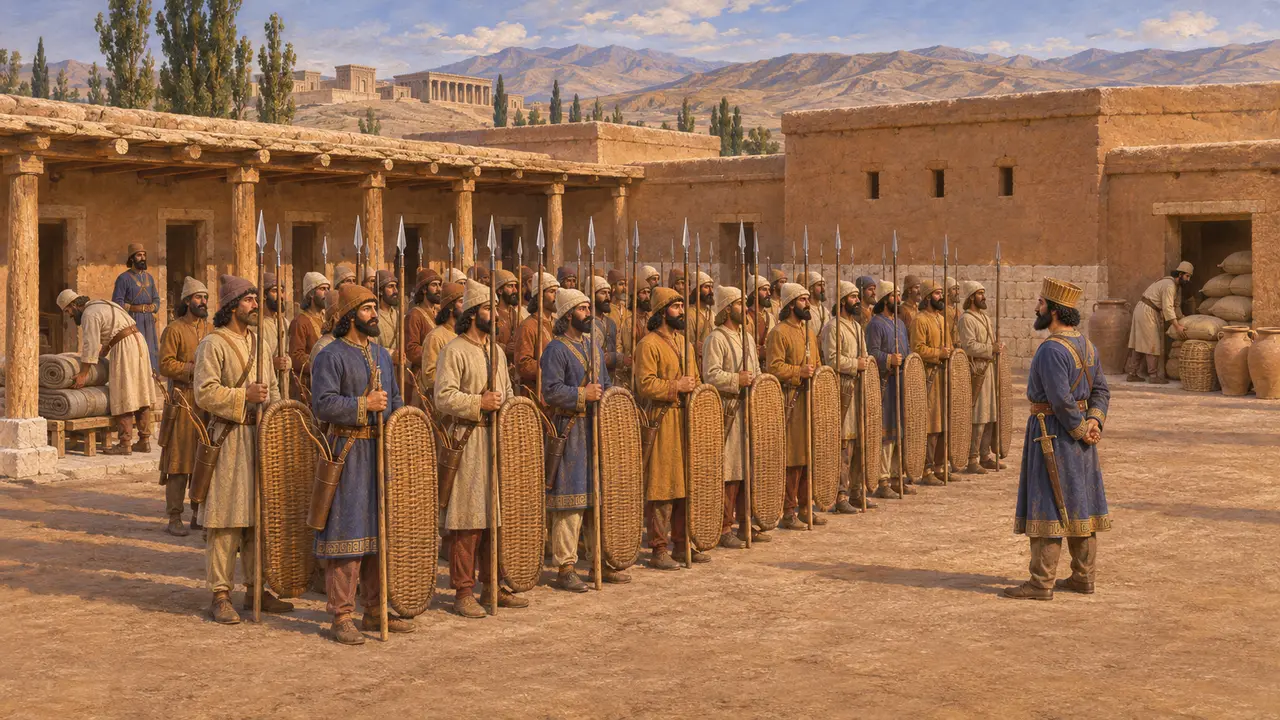
A standing army or a levy
DisputedHerodotus describes the Immortals, 10,000 picked Persian infantry kept always at full strength, and many historians accept a core of permanent royal troops. How large and professional that core was, and how much of any campaign army was a levy called up for the occasion, is still argued. Herodotus's totals for the whole army of Xerxes are widely held to be greatly exaggerated.
Herodotus 7.83; P. Briant, From Cyrus to Alexander, 2002
Sources
- Herodotus, Histories 1.136, 3.91, 5.100, 7.83
- P. Briant, From Cyrus to Alexander, 2002
- M. Stolper, Entrepreneurs and Empire, 1985
- B. Porten, Archives from Elephantine, 1968
- Strabo, Geography 15.3.18