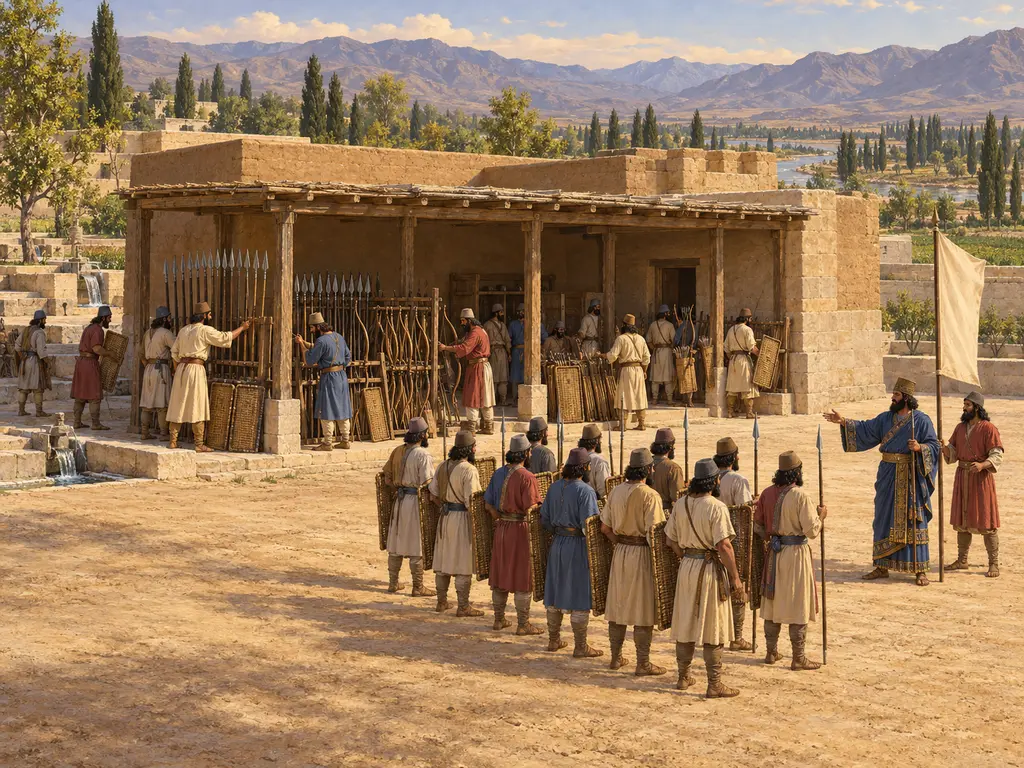
Muster Ground
Assembly place where Persian levies gathered for counting and review, about 530-479 BCE
The Persian kings raised armies by calling men to gather at set places, where they were counted, inspected and put under commanders. The muster linked the King's power to the households that owed him service. It was how an empire of many peoples turned farmers, landholders and subject contingents into a fighting force.
In the game: The Muster Ground calls up to a quarter of the town's men to form up with spear, shield and bow. No ancient source gives a fixed share like this. Real levies drew on service-holdings and royal demands, and their size varied.
The people as the army
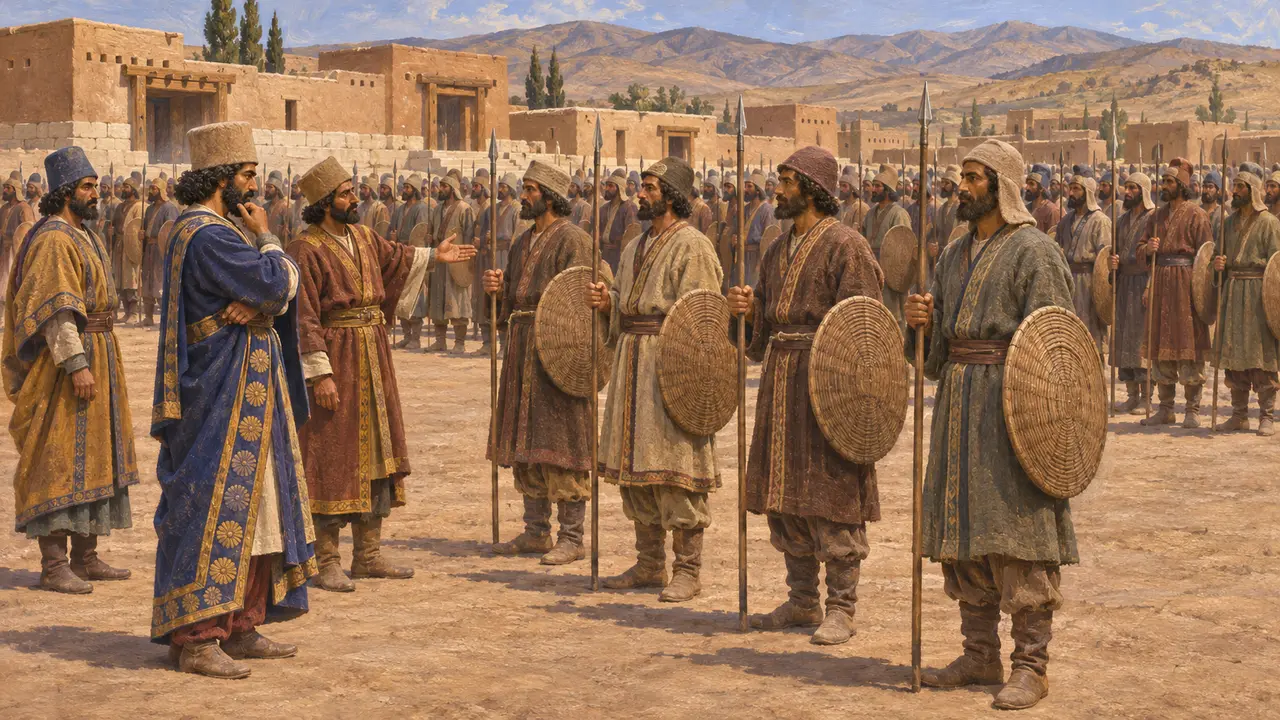
In the recordIn the Behistun inscription, Darius uses the Old Persian word kāra for the body of men he sent against the rebels. The same word can mean both the people and the army. This suggests that, for the Persians, the armed host was the Persian and Median people called out under the King's generals. The inscription names the commanders Darius sent with these forces in 522-521.
DB
Land held in return for service
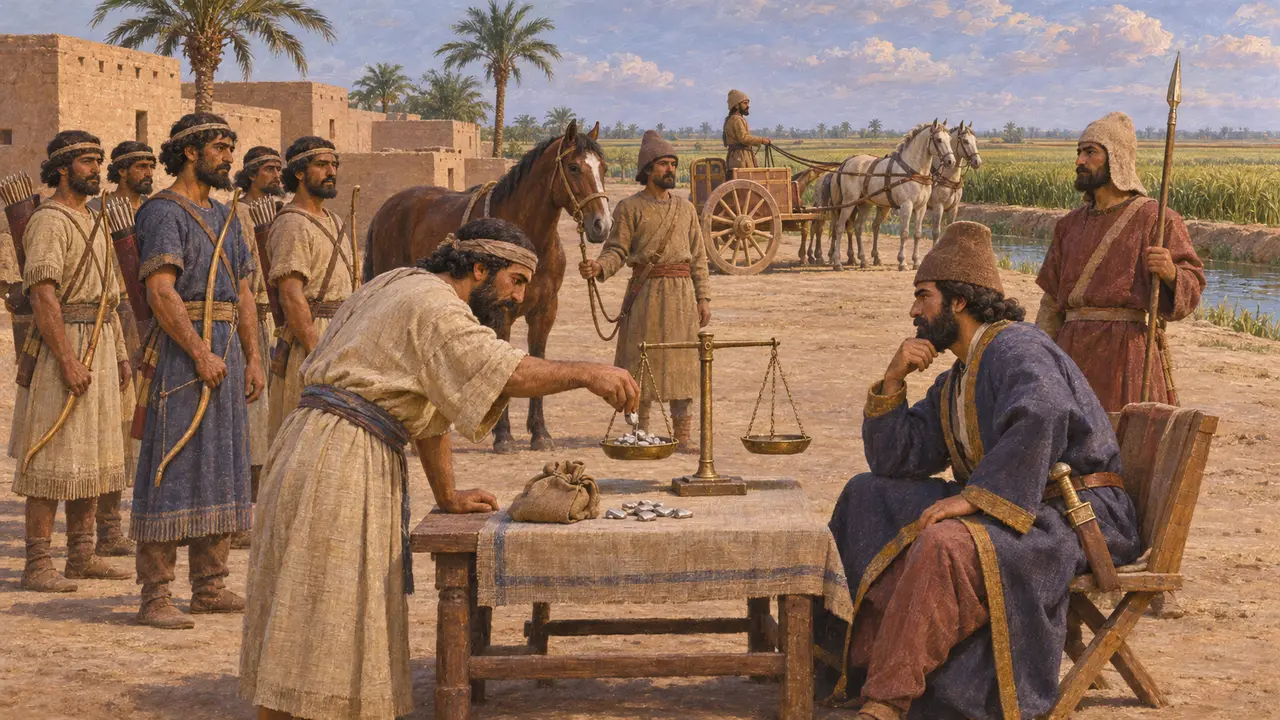
In the recordBabylonian documents show plots of crown land granted as bow-land, horse-land and chariot-land. Holders owed the King a soldier equipped to match the type of land. Over time many paid silver instead of serving in person. The fullest evidence comes from the Murashu archive of Nippur, which dates from later in the fifth century.
M. Stolper, Entrepreneurs and Empire, 1985
Xerxes gathers and counts his host
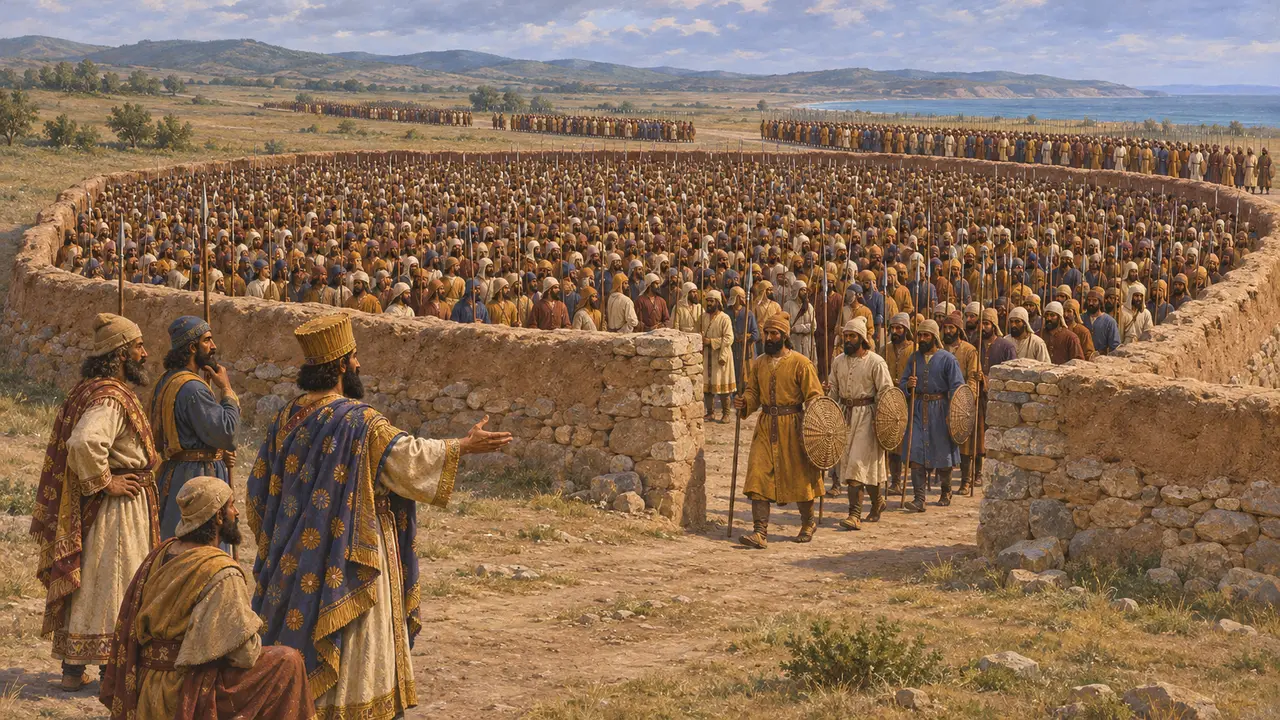
Ancient accountHerodotus says that Xerxes' army for Greece assembled at Critalla in Cappadocia. It was later counted on the plain of Doriscus in Thrace. There, he says, ten thousand men were packed into a space, a wall was built round it, and the enclosure was filled again and again until all had passed through. His total of 1,700,000 foot soldiers is far larger than modern historians accept.
Herodotus 7.26; 7.59-60
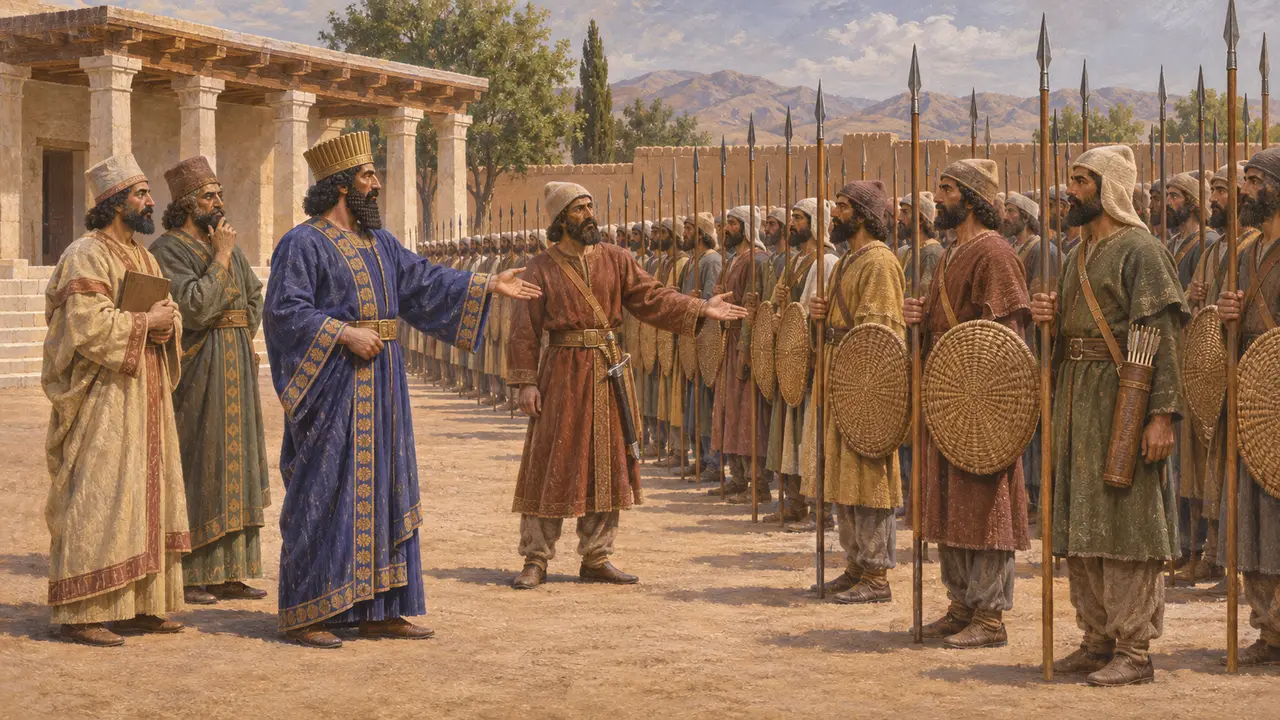
The King's yearly review
Ancient accountXenophon, writing in the fourth century, says the Persian king reviewed the garrison troops he maintained each year. He did this himself near his residence and sent trusted men to review the garrisons further away. He rewarded officers whose men were full in number and well armed, and punished those who neglected them. Xenophon admired the Persians and may have idealised the practice.
Xenophon, Oeconomicus 4
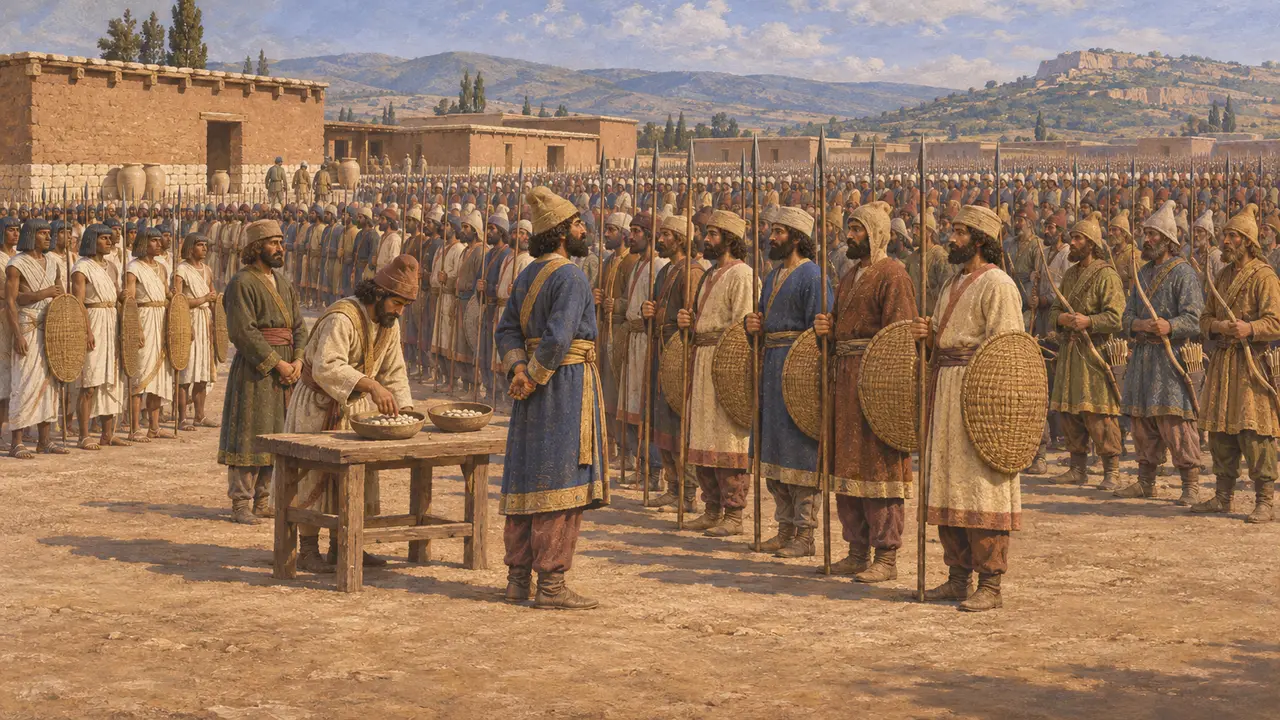
How many answered the call
DisputedHistorians still argue over how large royal levies were and who was called. Some stress Persian and Median core troops and the holders of service-land. Others weigh Herodotus's long lists of subject contingents. Most modern estimates for Xerxes' land army in 480 fall somewhere between about 70,000 and 300,000, far below Herodotus's figure.
P. Briant, From Cyrus to Alexander, 2002
Sources
- Herodotus, Histories 7
- Behistun inscription (DB)
- M. Stolper, Entrepreneurs and Empire, 1985
- Xenophon, Oeconomicus 4
- P. Briant, From Cyrus to Alexander, 2002