Encyclopedia › Soldiers and ships
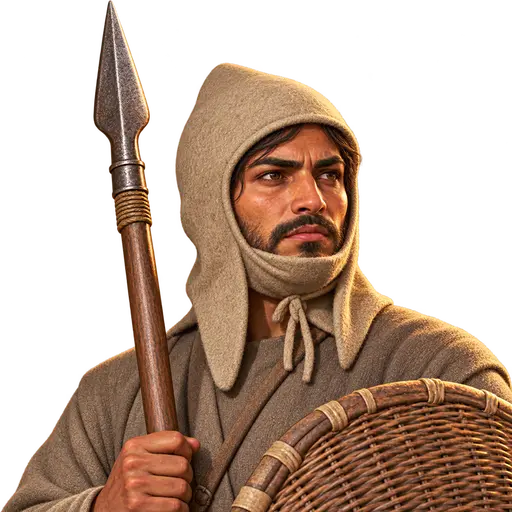
Levy Spearman
Foot soldier raised by obligation for the Achaemenid King's army, about 550-479 BCE
Beyond his guards and standing garrisons, the Persian King raised much of his infantry by levy from Persians, Medes and subject peoples. In Babylonia at least, many such men owed service because they held land on that condition. Levied men filled the great armies of Darius and Xerxes, and Greek writers judged them by how they fared against heavily armoured hoplites.
In the game: In the game, a townsman with spear and wicker shield who holds a line in numbers but breaks against trained men. Historically, much of the levy came from land held for service, and Persian foot often carried bows as well.
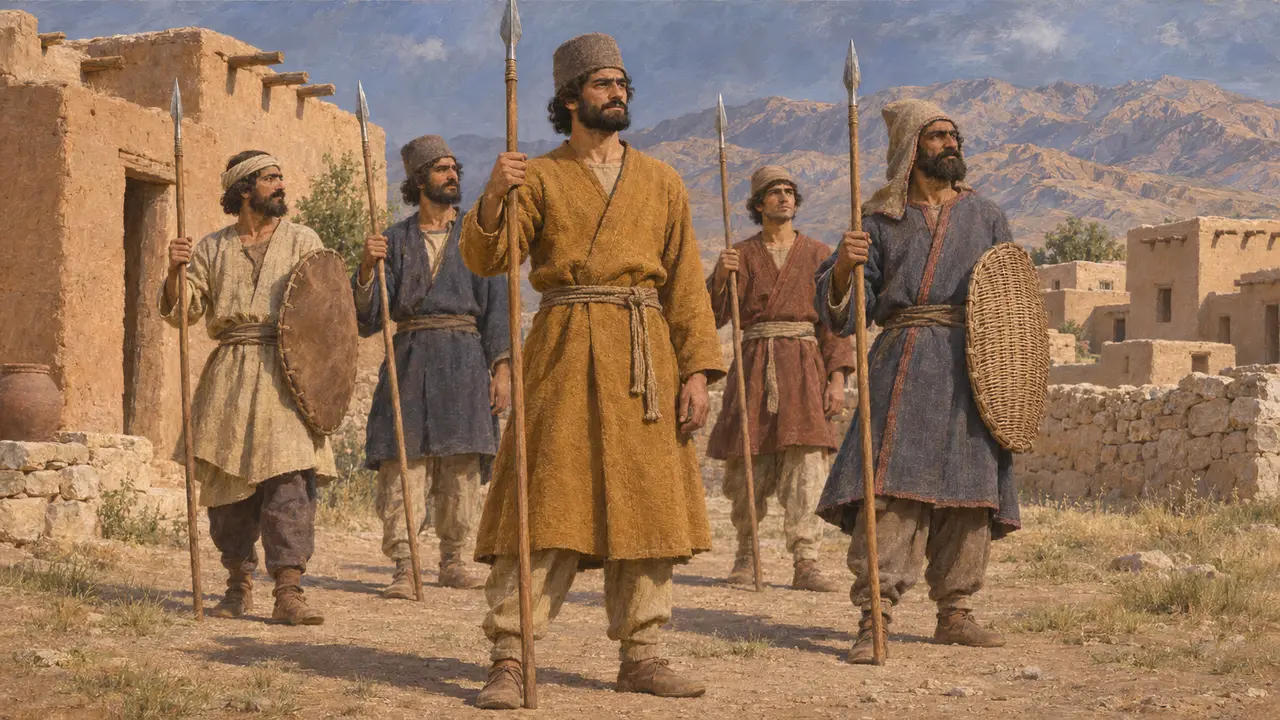
Kara: the people and the army
In the recordIn Old Persian the word kara meant both the people and the army, a sign that fighting men were drawn from the population at large. In the Behistun inscription Darius tells how he sent his generals with the Persian and Median army that stood by him against the rebels of 522-521. The inscription records battles and dates but says little about how these men were armed.
DB
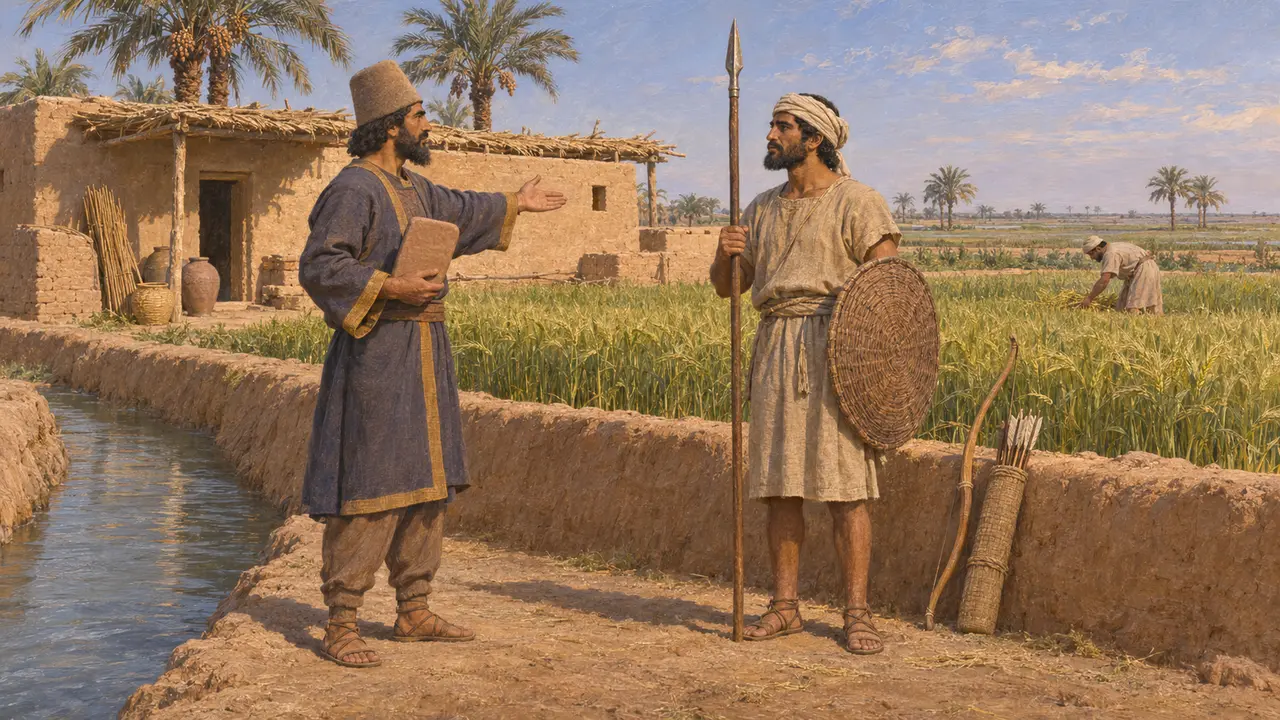
Land held for service
In the recordBabylonian documents show land grants that carried military duty: bow-land, horse-land and chariot-land, whose holders owed a soldier or a payment in silver. The fullest evidence, the Murashu archive from Nippur, dates to the second half of the 400s, after the game's period. Scattered earlier texts suggest bow-land already existed under the first kings, and the system helps explain how the King could call up large numbers of men.
M. Stolper, Entrepreneurs and Empire, 1985
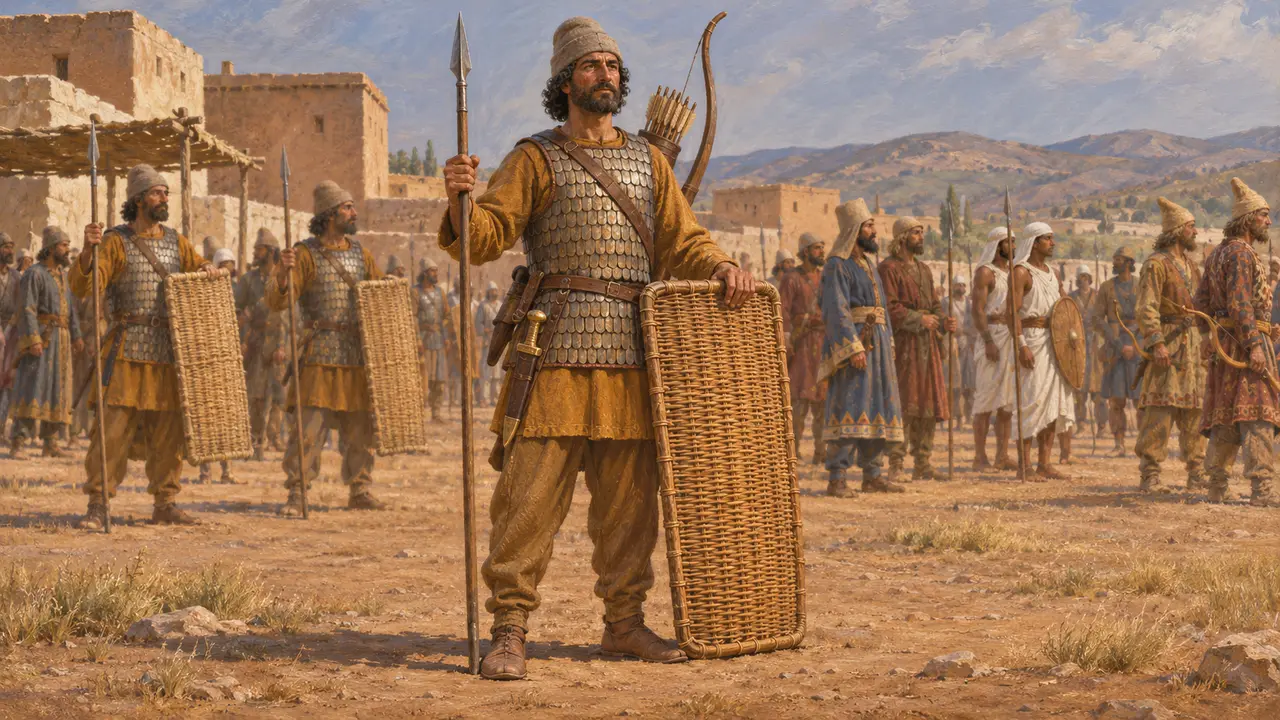
Herodotus on Persian foot
Ancient accountHerodotus says the Persian infantry of Xerxes wore soft felt caps, sleeved tunics and scale armour. He adds that they carried wicker shields, short spears, large bows with cane arrows, and daggers at the right thigh. He then lists dozens of subject contingents, each in its own native gear. His total of 1,700,000 foot soldiers is regarded by historians as greatly exaggerated.
Herodotus 7.60-61
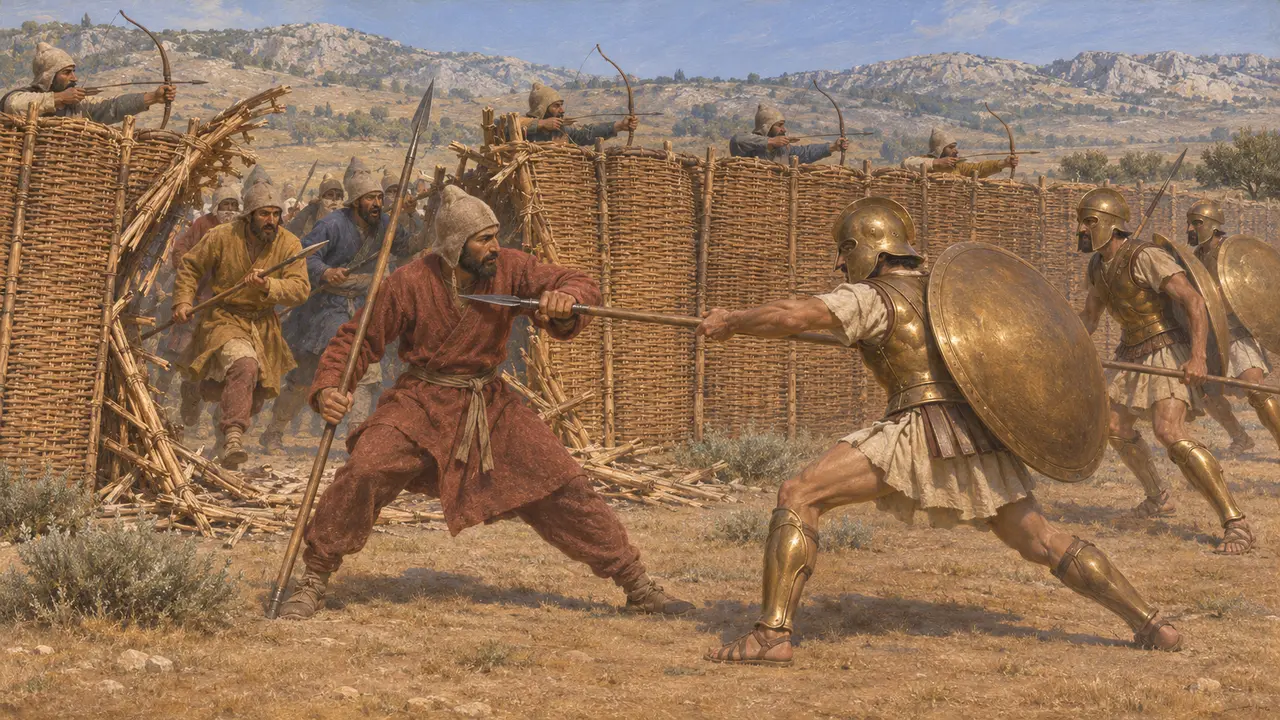
The wicker wall at Plataea
Ancient accountHerodotus tells that at Plataea in 479 the Persians set their wicker shields together as a barrier and shot arrows from behind it. When the Spartans broke through, the Persians fought hand to hand, grabbing at enemy spears. Herodotus says they were not inferior in courage or strength, but lacked armour and skill for close combat and rushed out in small groups.
Herodotus 9.61-63
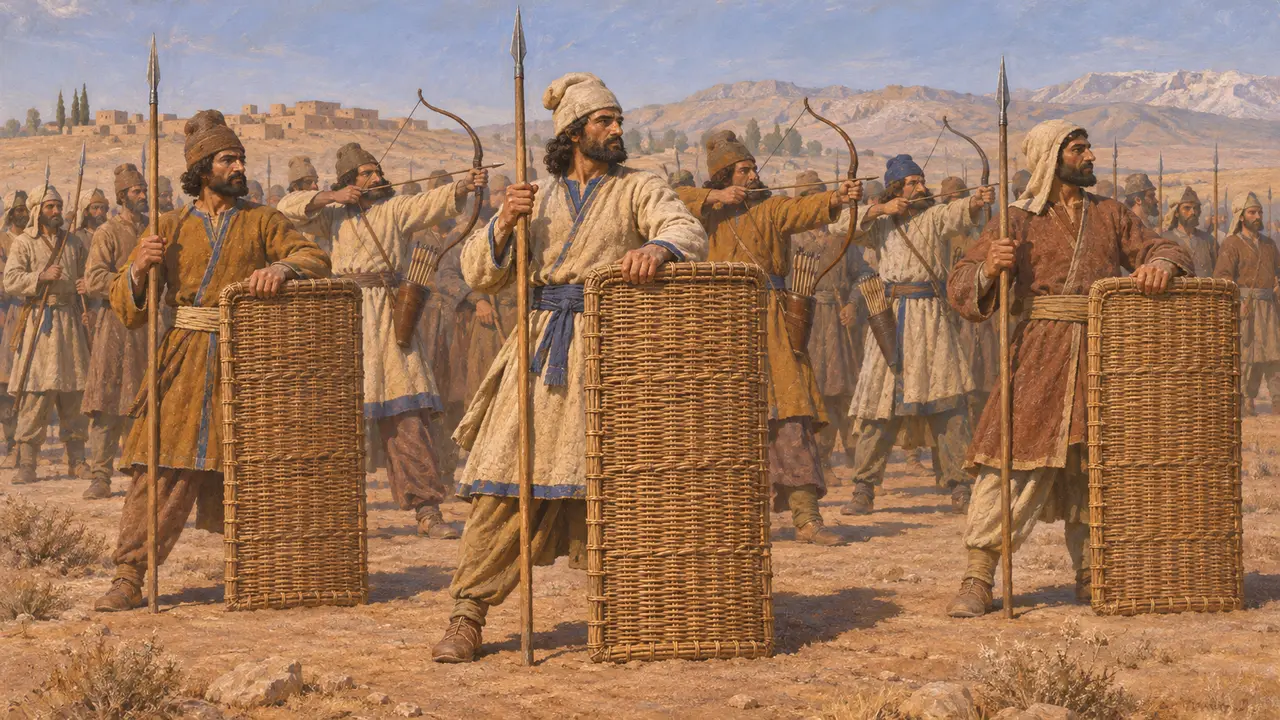
Shield-bearers and archers
DisputedModern writers often call the front-rank shield men sparabara, from a reconstructed Persian word for shield, but the term is not attested as a unit name in the sources. Historians disagree on whether shield-bearers formed a separate rank screening archers or whether every man carried both bow and spear. How much training levied men received, and how far Greek authors understated it, is also debated.
N. Sekunda, The Persian Army 560-330 BC, 1992
Sources
- Herodotus 7.60-61
- Herodotus 9.61-63
- DB
- M. Stolper, Entrepreneurs and Empire, 1985
- N. Sekunda, The Persian Army 560-330 BC, 1992
- P. Briant, From Cyrus to Alexander, 2002