The treasurer
Keeper of the King's silver and stored goods, Persepolis, late 6th-5th centuries BCE
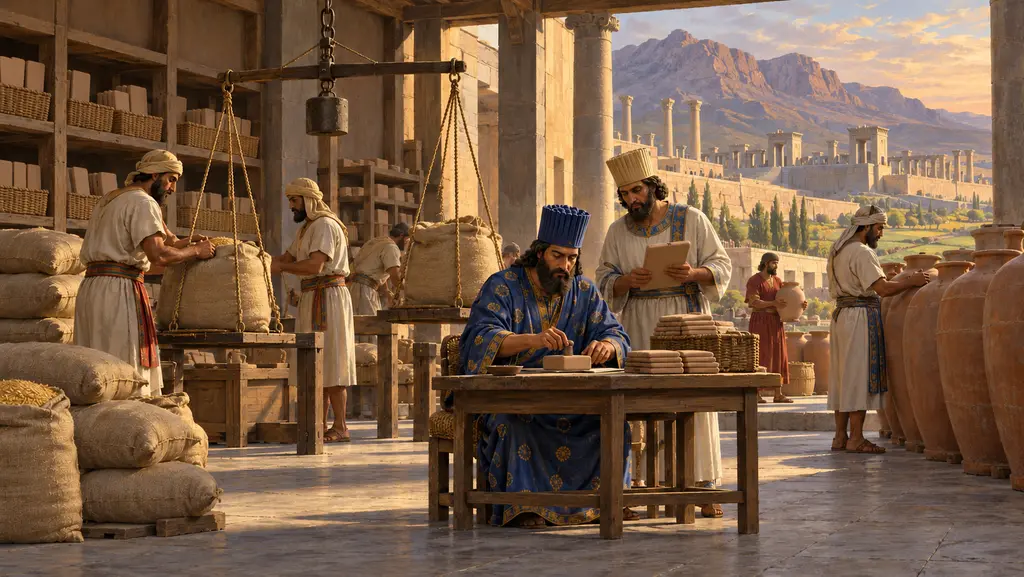
The treasurer, in Persian probably ganzabara, kept the King's treasuries: stores of silver, precious objects and finished goods held at royal centres. At Persepolis the treasurer received written orders, paid workers in weighed silver and managed staff and workshops. The Treasury tablets from his office are among the best evidence for how the Achaemenid court handled wealth.
In the game: The game presents the treasurer as the ganzabara of the Persepolis archive and keeper of the King's treasuries. The archive's evidence for treasuries begins only in 509, so earlier treasurers are not directly documented.
The title in several languages
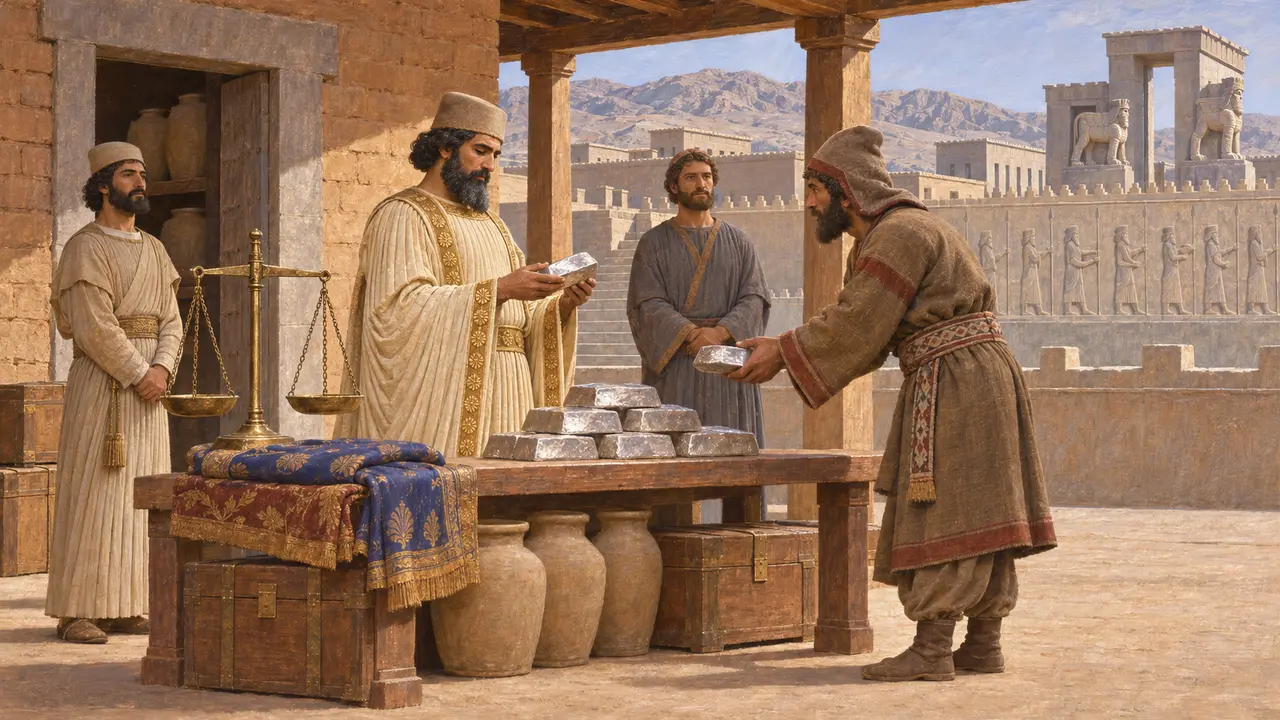
In the recordNo Old Persian inscription spells out the title. Scholars reconstruct it as ganzabara, meaning roughly 'treasure-bearer', from its loan forms: kanzabara in Elamite tablets and ganzabar in Aramaic. The same word appears as gizbar in the Hebrew of the book of Ezra. Its spread through so many languages shows how widely Persian administrative terms travelled.
G. Cameron, Persepolis Treasury Tablets, 1948; Ezra 1:8; P. Briant, From Cyrus to Alexander, 2002
The Persepolis Treasury tablets
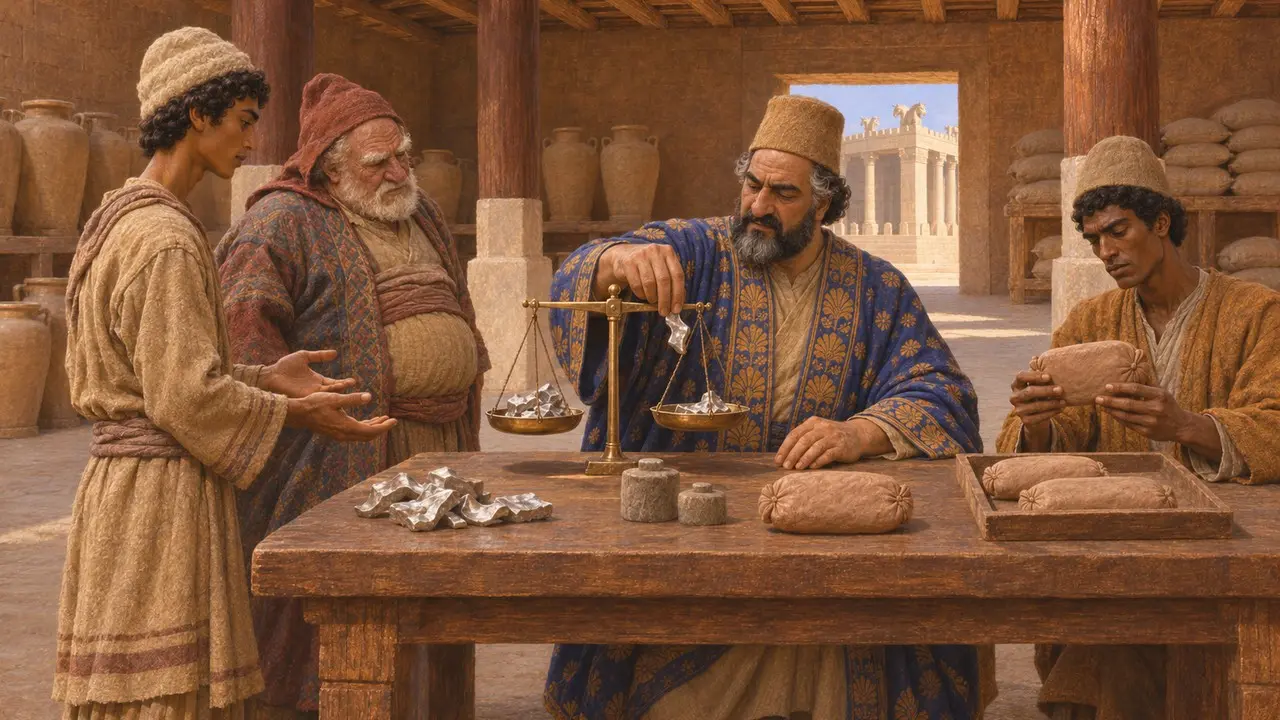
In the recordExcavators working in the Treasury building at Persepolis in the 1930s found several hundred Elamite clay tablets and fragments, dated from 492 to 458. Most are sealed orders telling the treasurer to pay named groups of workers in silver, often as a substitute for part of their sheep or wine rations. The payments were in weighed silver measured in karsha and shekels, not in coins.
G. Cameron, Persepolis Treasury Tablets, 1948; E. Schmidt, Persepolis II, 1957
Treasuries as stores and workshops
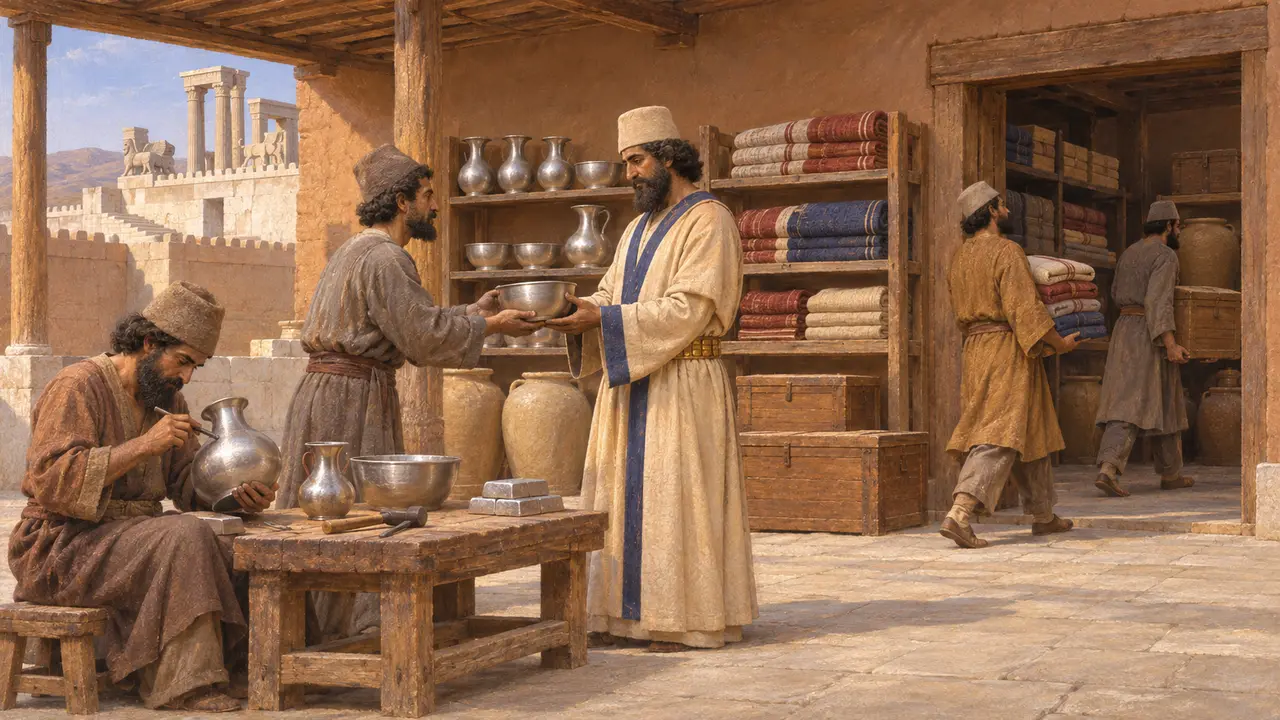
In the recordThe Persepolis Fortification tablets, dated from 509 to 493, mention treasuries, called kapnuški in Elamite, at Persepolis and at other places in Persia. These were not just vaults of bullion. They housed craftsmen and labourers, the so-called treasury workers, and kept finished goods, so the treasurer ran a working establishment as well as a strongroom.
R. Hallock, Persepolis Fortification Tablets, 1969; P. Briant, From Cyrus to Alexander, 2002
Greek writers on the royal hoard
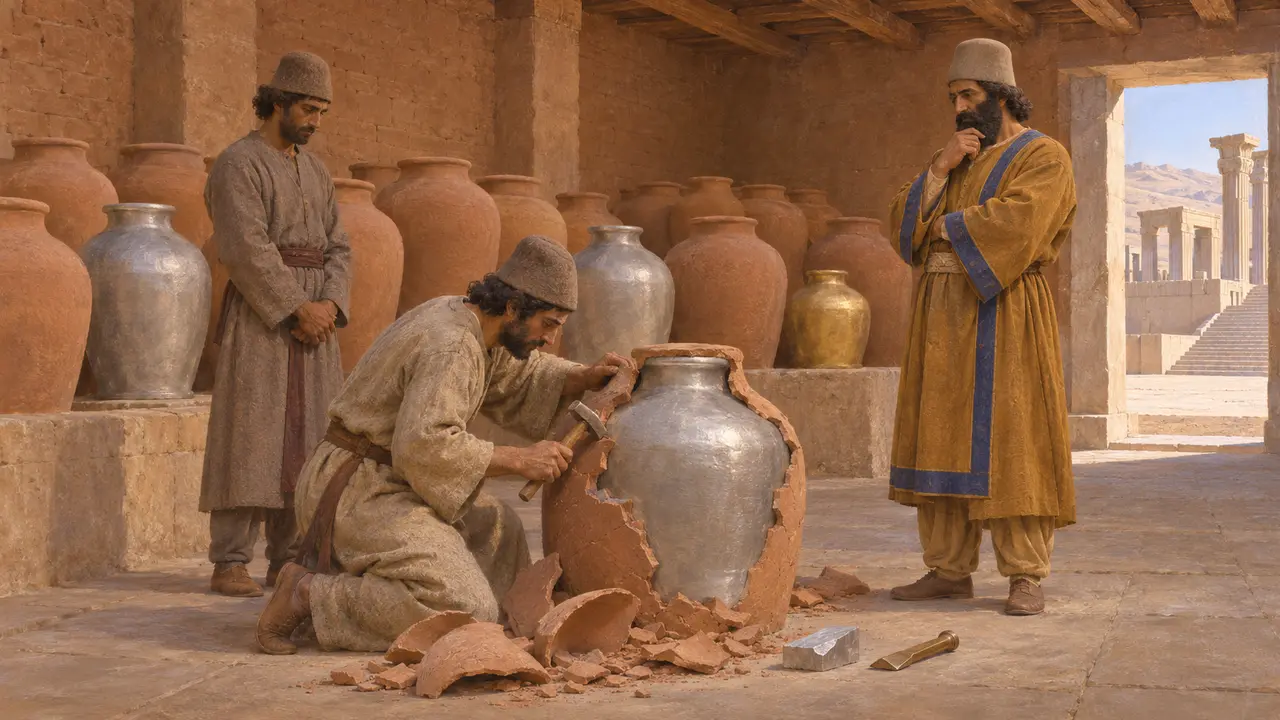
Ancient accountHerodotus says the King melted his tribute silver and gold and poured it into clay jars, then broke the jars away and cut off metal as he needed it. Diodorus reports that Alexander found about 120,000 talents in the treasury at Persepolis in 330. Neither the method Herodotus describes nor the size of the hoard Diodorus gives can be checked against Persian records.
Herodotus 3.96; Diodorus 17.71
The inscribed stone vessels
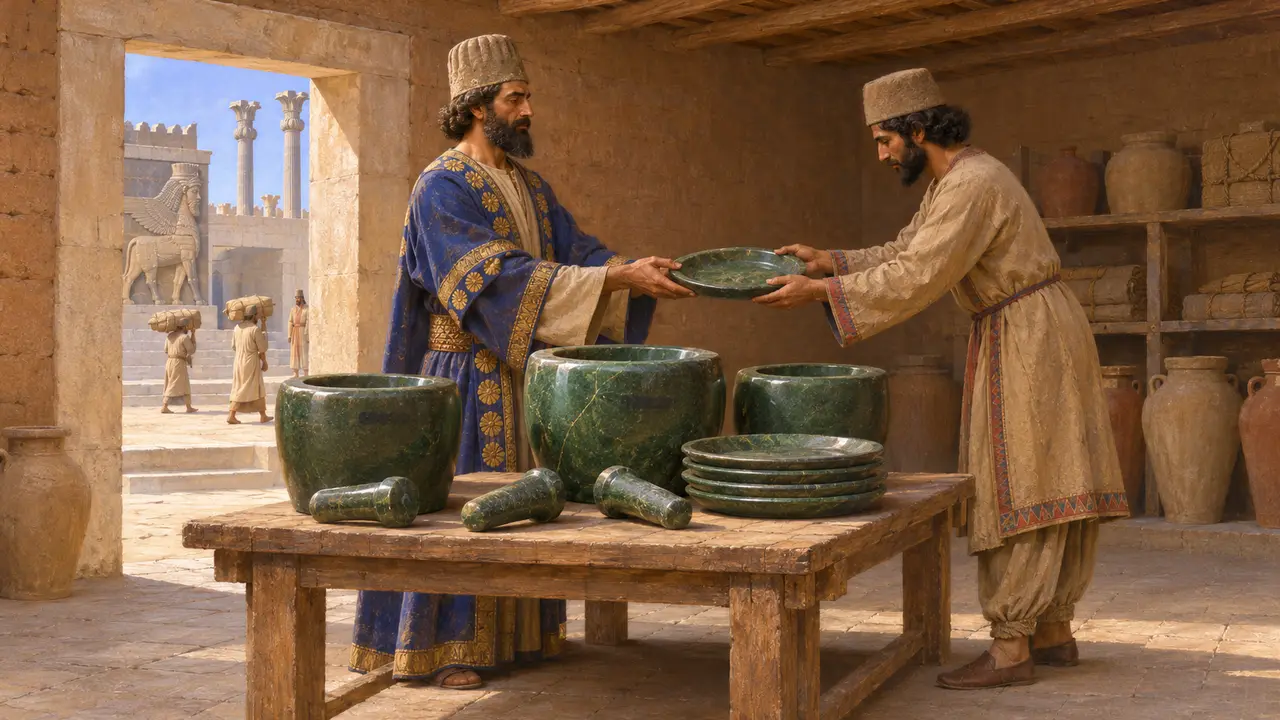
DisputedGreen stone mortars, pestles and plates from the Treasury carry short Aramaic ink notes naming treasurers and sub-treasurers. Their first editor read them as records of a ritual involving the drink haoma. Most later scholars reject this and see the notes as administrative labels for objects handed over to the treasury, so their meaning is still argued.
R. Bowman, Aramaic Ritual Texts from Persepolis, 1970; P. Briant, From Cyrus to Alexander, 2002
Sources
- G. Cameron, Persepolis Treasury Tablets, 1948
- R. Hallock, Persepolis Fortification Tablets, 1969
- E. Schmidt, Persepolis II, 1957
- P. Briant, From Cyrus to Alexander, 2002
- Herodotus 3.96; Diodorus 17.71
- R. Bowman, Aramaic Ritual Texts from Persepolis, 1970