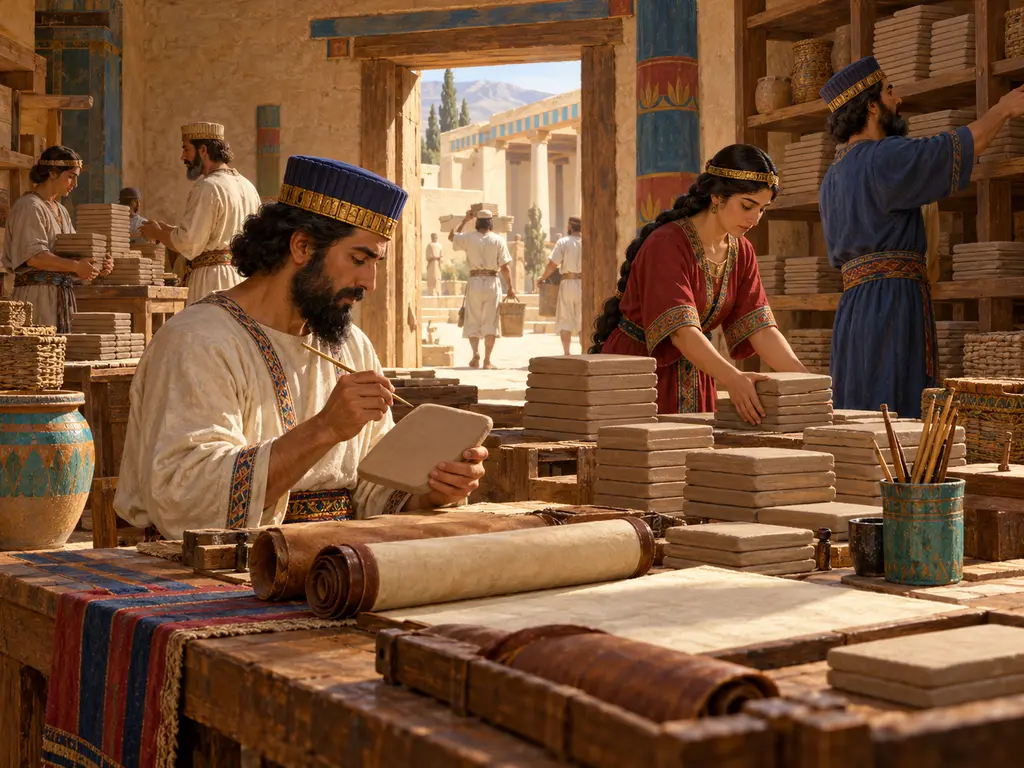
Scribal Office
Writing office for royal records and dues, Achaemenid empire, about 530-479 BCE
In the game: Level 1: The Founder's Tomb
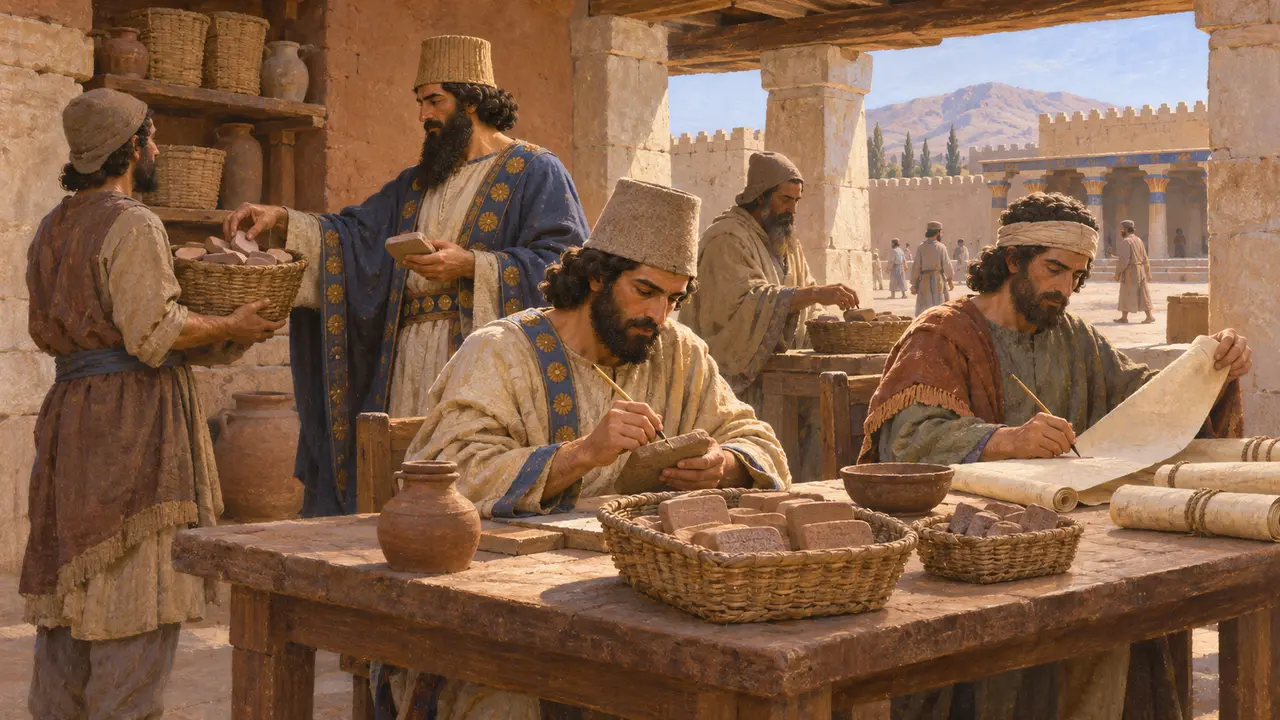
Persian rule ran on written records. Scribes counted rations, livestock, workers, land and dues on clay tablets and leather in several languages, so that officials at Persepolis, Susa or Babylon could check what was owed and what was paid. Without them the King's estates, roads and tribute could not have been managed.
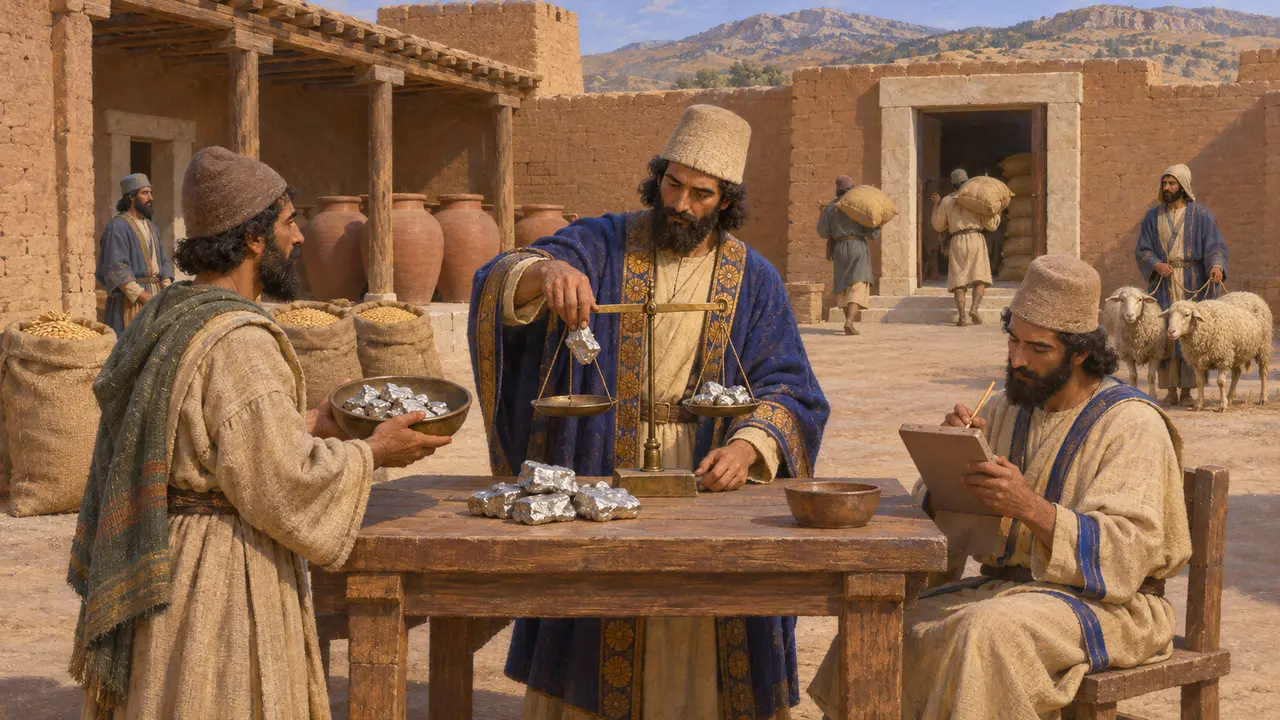
In the game: Scribes register households, and only registered houses pay silver. This simplifies history: Persian dues fell mostly on land, were often paid in grain, livestock or labour, and silver was usually weighed rather than counted as coin, even after Darius's coinage.
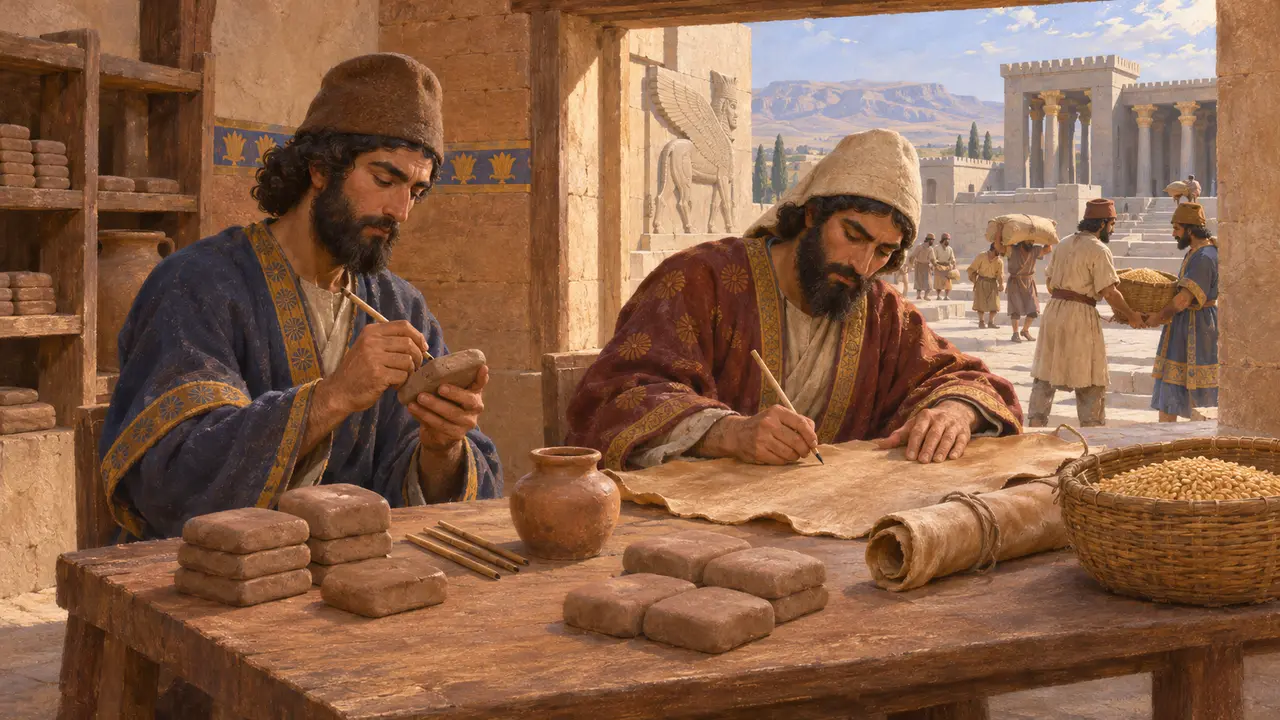
Clay and leather at Persepolis
In the recordThe Persepolis Fortification tablets, dated about 509-493, are thousands of records of food issued to workers, travellers, animals and gods, mostly in Elamite with some in Aramaic. Scribes are named on them and drew rations themselves. Some tablets mention scribes who wrote on hides, probably in Aramaic, which shows that leather documents once existed alongside the clay ones that survive.
R. Hallock, Persepolis Fortification Tablets, 1969; W. Henkelman, The Other Gods Who Are, 2008
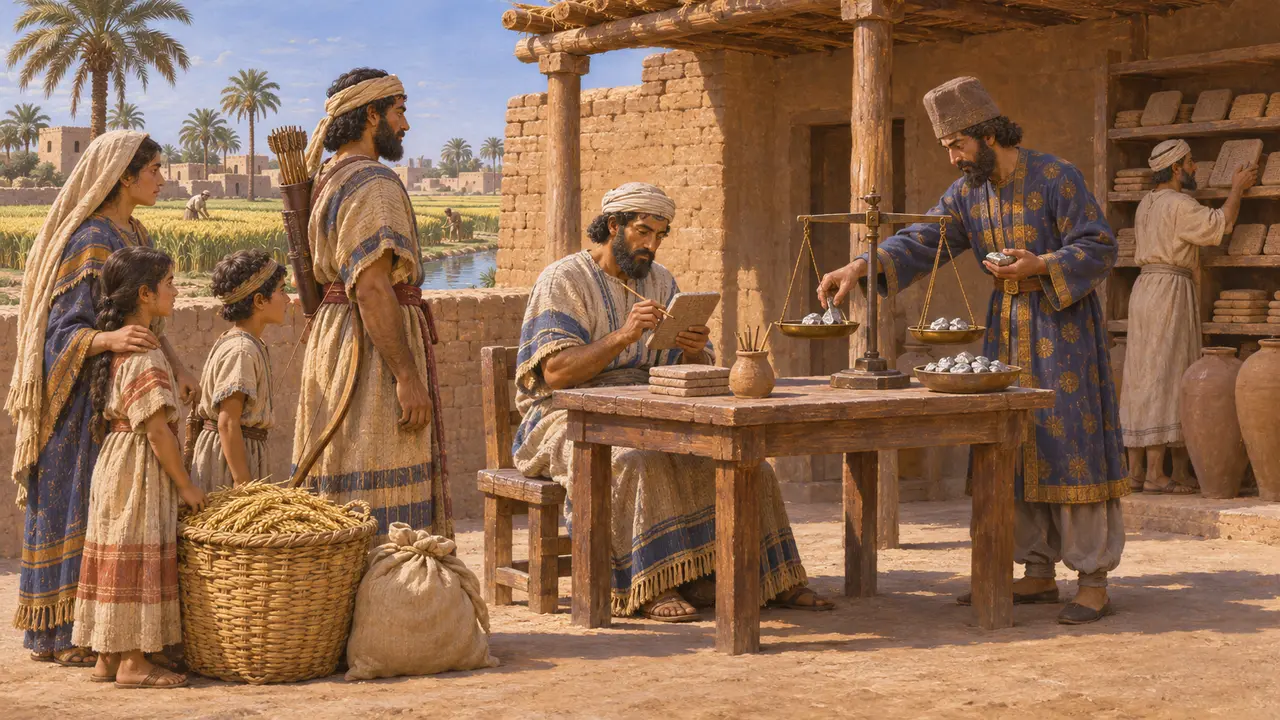
Counting land and dues in Babylonia
In the recordBabylonian archives show how dues were tracked. Land was granted to soldiers and their families as bow-land, horse-land or chariot-land, and holders owed service, produce and silver. The Murashu texts from Nippur, written later in the fifth century, record firms that managed such plots and paid the dues for them, so the system was well established by then.
M. Stolper, Entrepreneurs and Empire, 1985; P. Briant, From Cyrus to Alexander, 2002
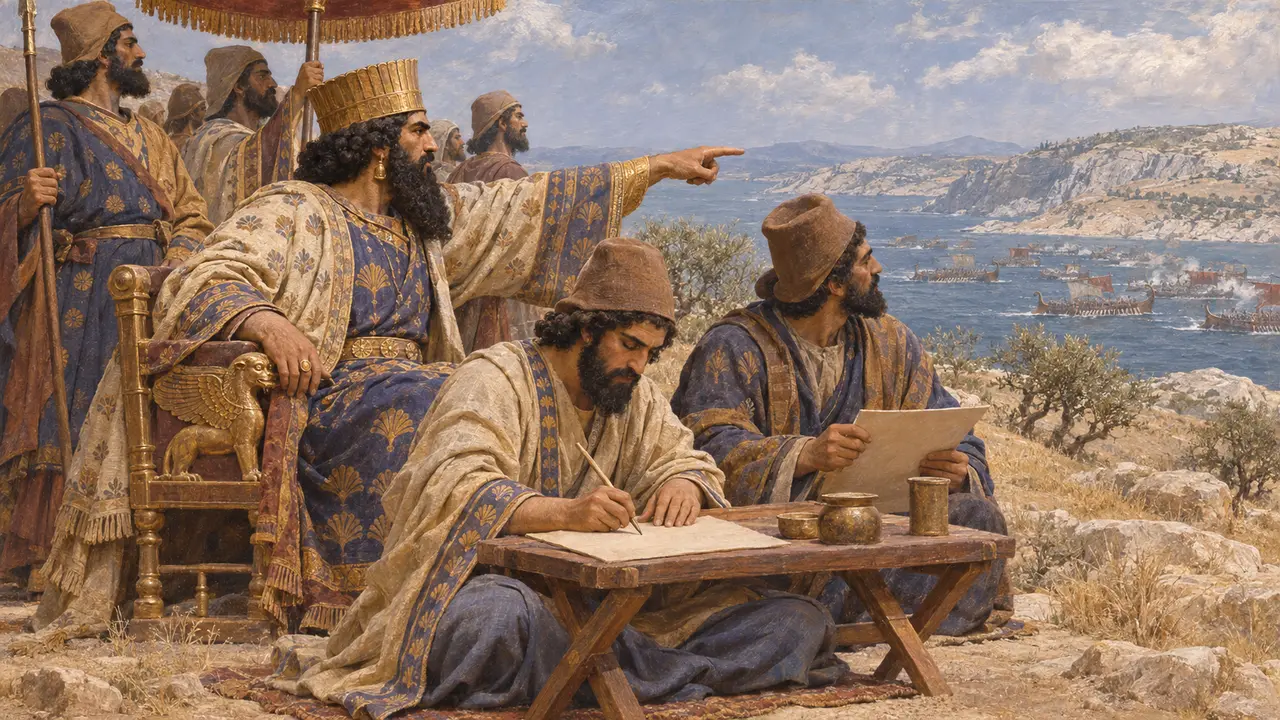
Scribes at the King's side
Ancient accountHerodotus places royal scribes close to power. In his story of Oroetes, a royal scribe read out sealed letters from the King to the satrap's guard. At Salamis, he says, Xerxes watched the fighting while his scribes wrote down the names of captains who did well, along with their fathers and cities.
Herodotus 3.128; Herodotus 8.90
Who wrote Old Persian
DisputedAt Behistun Darius says he made a new form of writing, which many scholars take to mean the Old Persian cuneiform script. Others argue it existed earlier, though the short inscriptions in Cyrus's name at Pasargadae are now usually thought to have been added later. Either way, daily administration was written in Elamite, Aramaic and Babylonian, and almost never in Old Persian.
DB §70; P. Briant, From Cyrus to Alexander, 2002
Tribute in silver
Ancient accountHerodotus says Darius divided the empire into provinces and fixed each one's yearly tribute in talents of silver, while the Persians of Persis paid none. His totals are schematic and historians treat them with caution. The tablets show that much of what the crown collected came in kind, as barley, wine, sheep and labour.
Herodotus 3.89; Herodotus 3.97
Sources
- R. Hallock, Persepolis Fortification Tablets, 1969
- W. Henkelman, The Other Gods Who Are, 2008
- P. Briant, From Cyrus to Alexander, 2002
- M. Stolper, Entrepreneurs and Empire, 1985
- Herodotus 3.89, 3.97, 3.128, 8.90
- DB §70