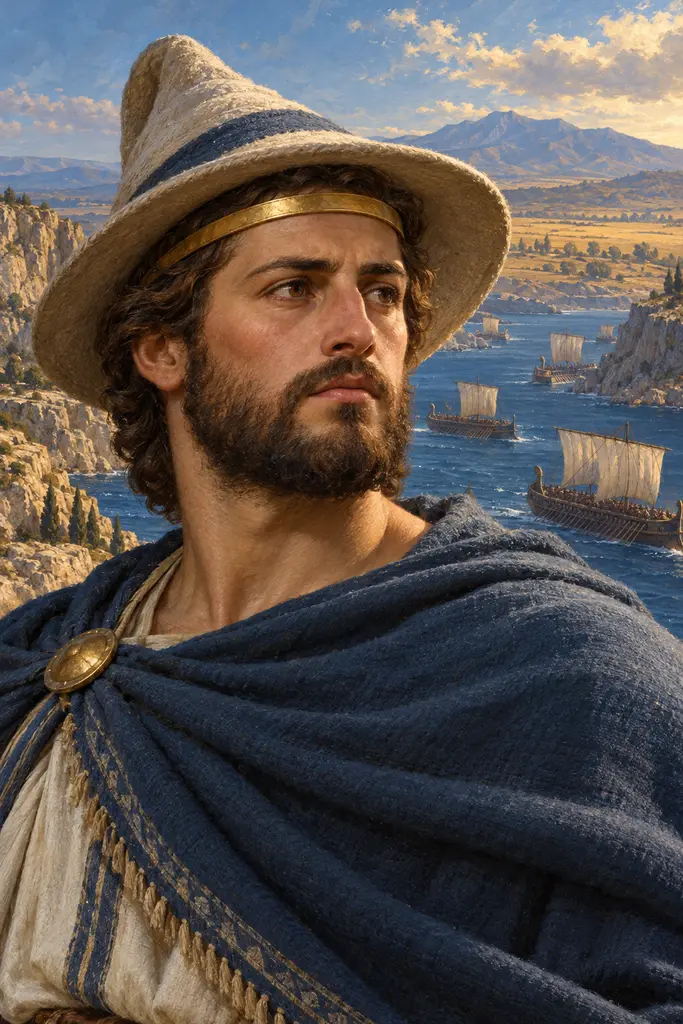
Alexander of Macedon
King of Macedon and subject of the Persian King, ruled about 498-454 BCE
In the game: Level 1: The Founder's Tomb, Level 11: The Finale
Alexander I was king of Macedon while it was part of the Persian empire. In 479 Mardonius sent him to Athens to offer the Athenians alliance with the King, and Herodotus says he later rode secretly to the Greek lines to warn them before Plataea. His double role, loyal vassal and self-declared friend of the Greeks, makes him one of the hardest figures of the wars to judge.
In the game: The game's chronicle presents Alexander as a subject king who carried Mardonius's offer to Athens and, by Herodotus's account, warned the Greeks before Plataea.
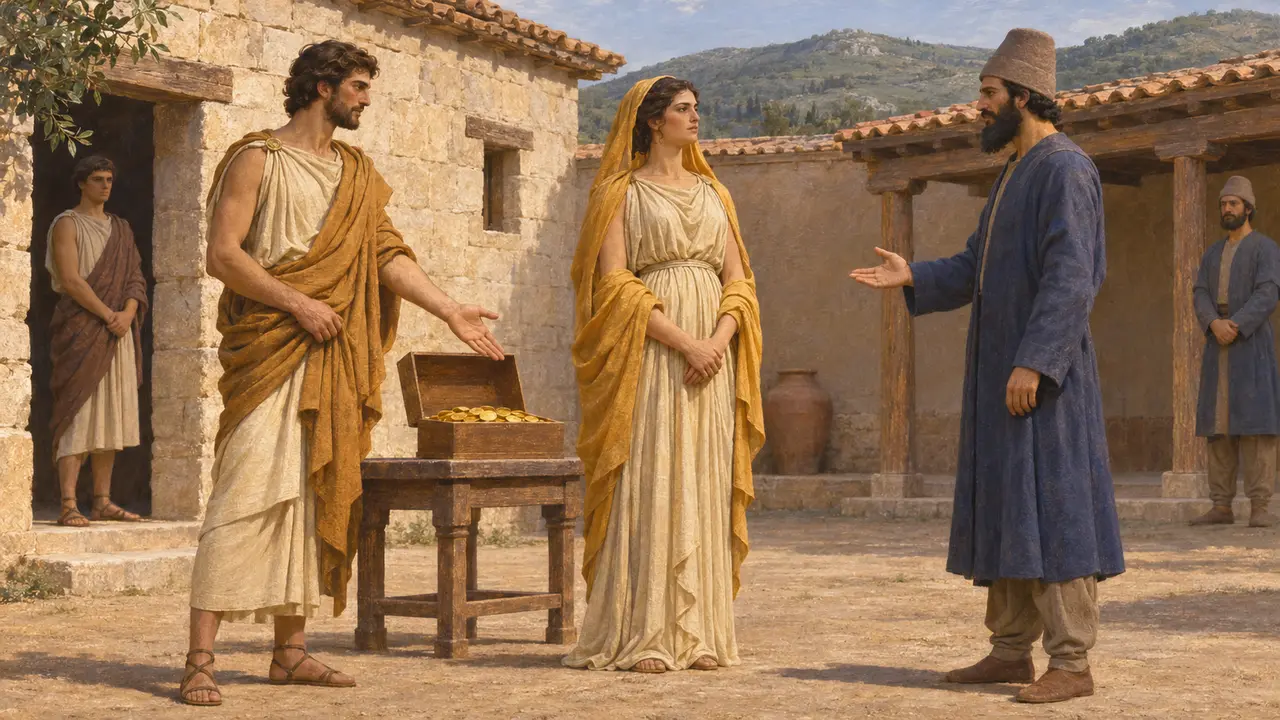
The envoys and the marriage of Gygaea
Later legendHerodotus tells how Persian envoys, sent to demand earth and water from Alexander's father Amyntas, insulted the Macedonian women at a feast. Young Alexander had beardless youths dressed as women kill them. When the Persian Bubares came to search for the missing men, Alexander bought his silence with money and his sister Gygaea in marriage. Many historians read the tale as a later Macedonian story of resistance, while the marriage itself shows close ties to Persia.
Herodotus 5.17-21
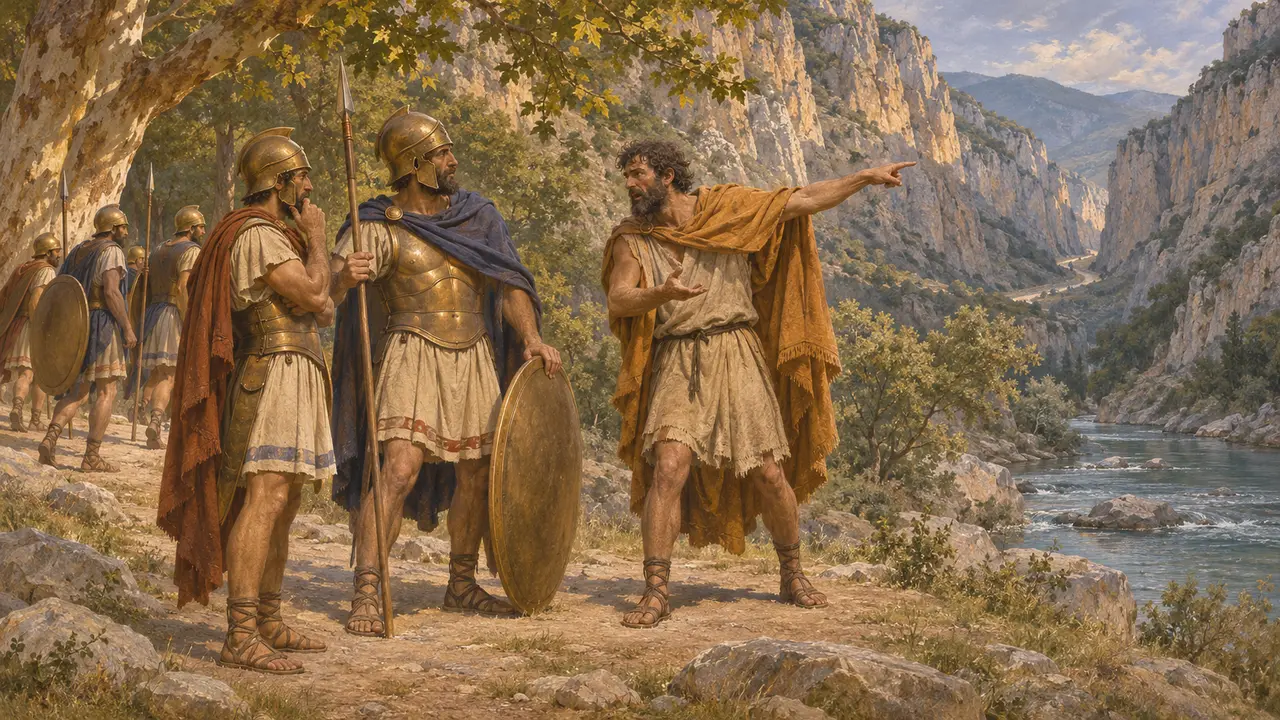
A loyal subject of the King
Ancient accountHerodotus says Mardonius brought the Macedonians under Persian rule in 492. In 480 Alexander sent word to the Greeks holding the Vale of Tempe that Xerxes' army was too large and they should withdraw. His men later protected Boeotian towns by showing that they sided with Persia. Herodotus also mentions a gold statue of Alexander set up at Delphi.
Herodotus 6.44; 7.173; 8.34; 8.121
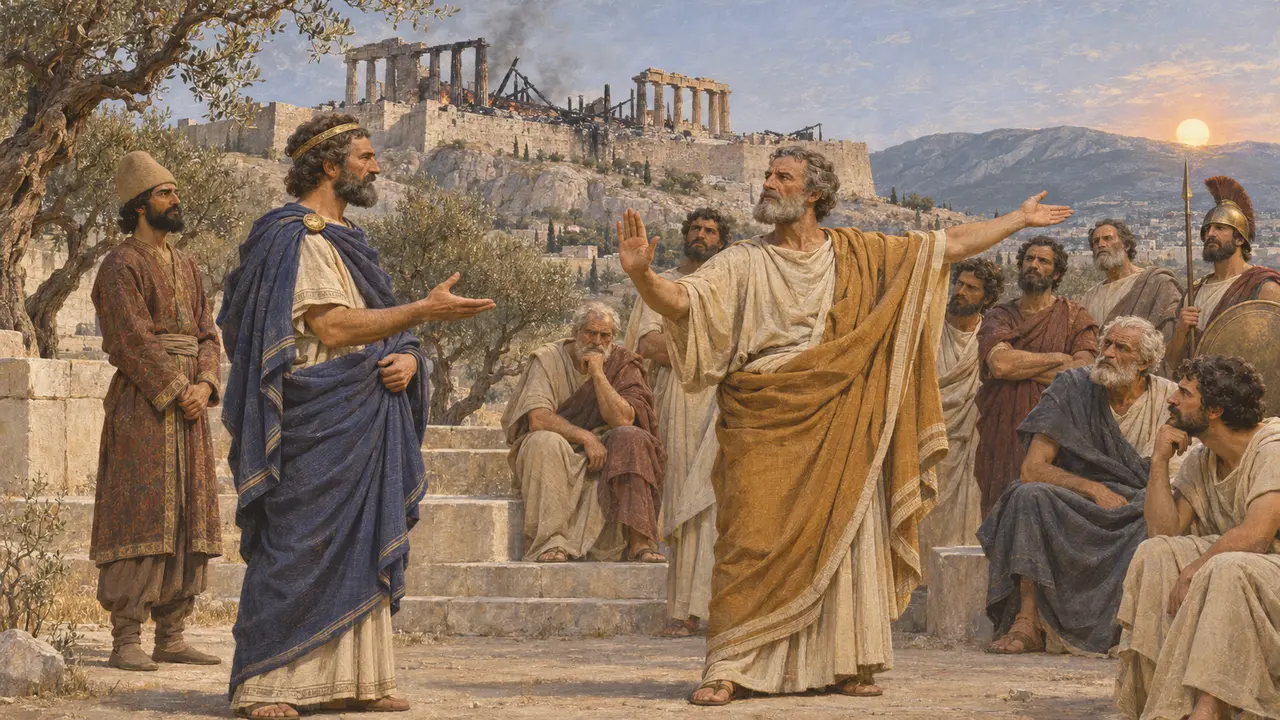
Mardonius's offer to Athens, 479
Ancient accountIn 479 Mardonius chose Alexander as his envoy because he was related to the Persians by marriage and was an official friend and benefactor of Athens. Alexander offered pardon, land, self-rule and the rebuilding of burnt temples if Athens joined the King. Herodotus gives the Athenians a proud refusal: they would never make terms with the Persians while the sun kept its course.
Herodotus 8.136; 8.140-144
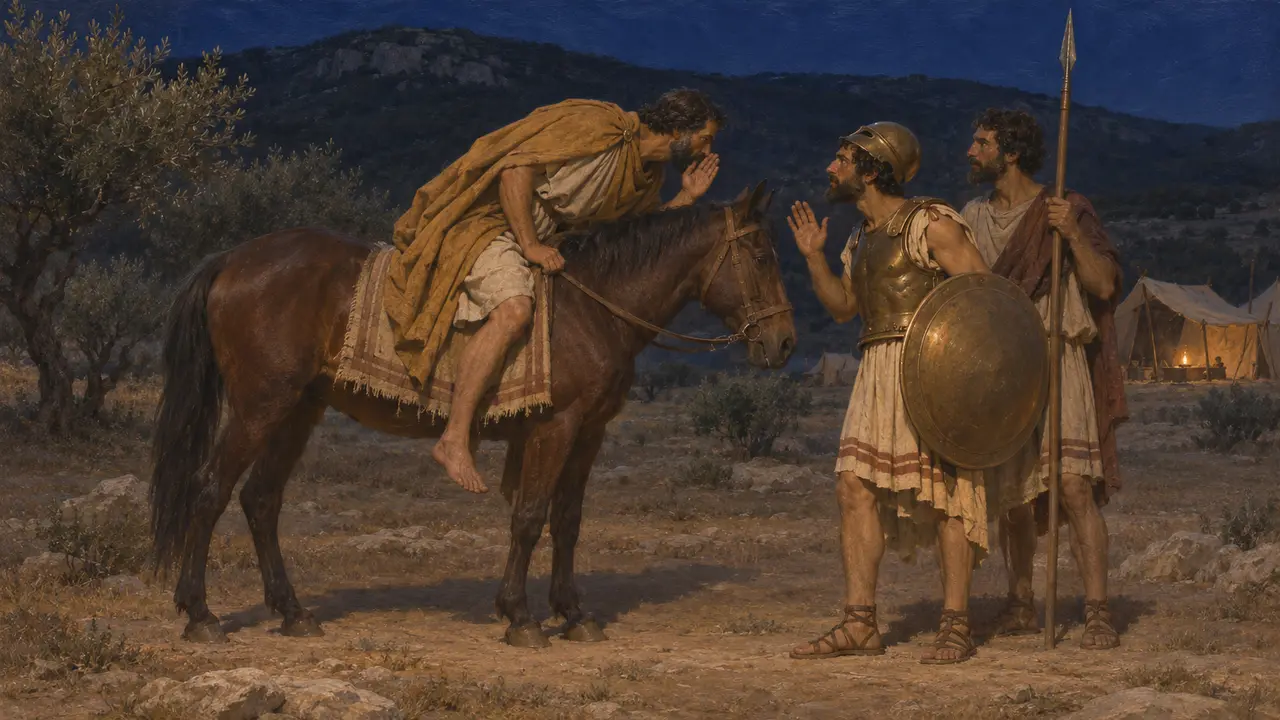
The night ride before Plataea
Ancient accountAccording to Herodotus, on the night before the battle Alexander rode alone to the Athenian outposts and asked for their generals. He told them Mardonius meant to attack at dawn, claimed Greek descent as his reason for speaking, and asked to be remembered if the Greeks won. Plutarch tells the same story much later, probably drawing on Herodotus.
Herodotus 9.44-45; Plutarch, Aristides 15
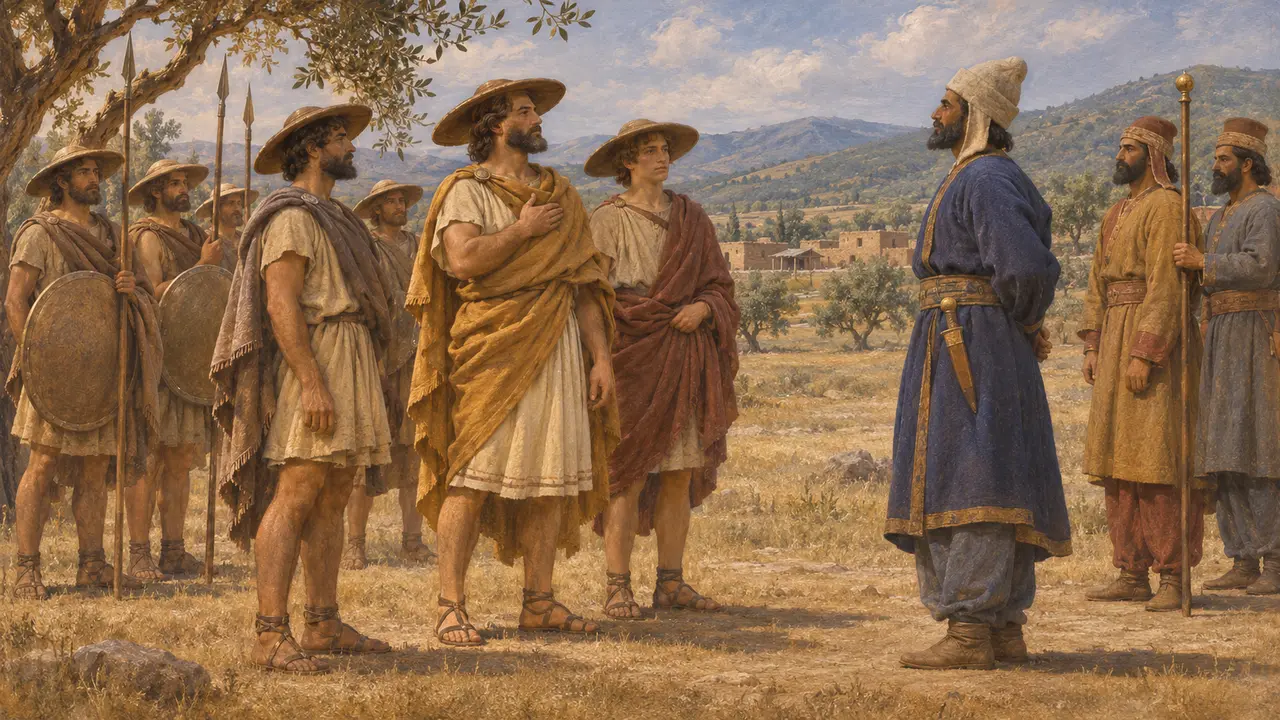
Friend of the Greeks or Persian vassal
DisputedHerodotus stresses Alexander's Greek ancestry and his entry at Olympia, and much later writers gave him the title Philhellene. Many historians, following E. Badian, think Herodotus repeated Macedonian stories that hid how fully Alexander served Persia in 480 and 479. Darius's tomb inscription lists Ionians wearing shield-like hats among subject peoples. Some scholars take these to be the Macedonians, though the identification is argued over.
Herodotus 5.22; E. Badian, Herodotus on Alexander I of Macedon, 1994; DNa
Sources
- Herodotus, Histories, books 5-9
- E. Badian, Herodotus on Alexander I of Macedon: a study in some subtle silences, 1994
- N. G. L. Hammond and G. T. Griffith, A History of Macedonia, vol. 2, 1979
- P. Briant, From Cyrus to Alexander, 2002
- M. I. Vasilev, The Policy of Darius and Xerxes towards Thrace and Macedonia, 2015