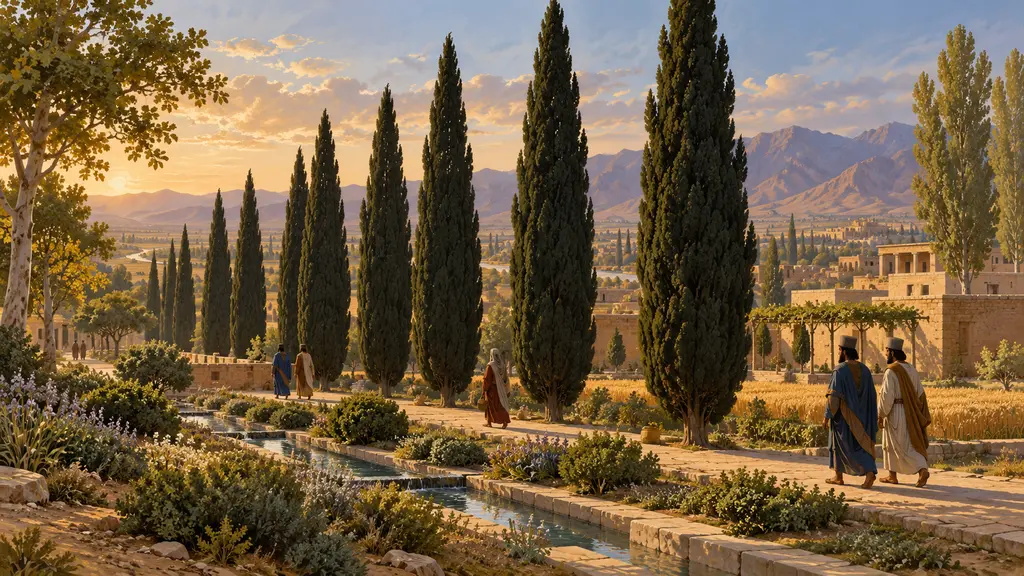
Cypress Row
Rows of conifers in Achaemenid art and gardens, Persepolis and Pasargadae, 530-480 BCE
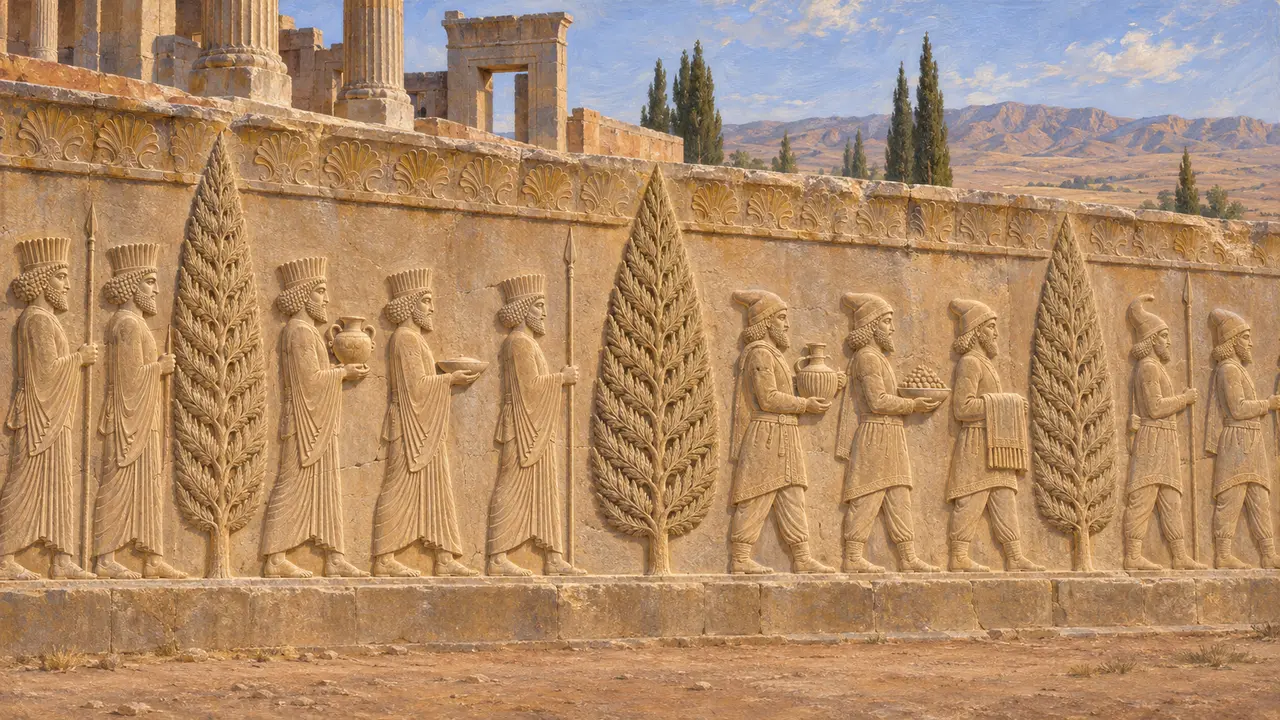
Tall, narrow evergreen trees, usually identified as cypresses, appear in rows on the carved stairways of Persepolis, where they divide the processions of the subject peoples. The Persians also laid out gardens in straight lines along water channels. The rows on the reliefs are probably the clearest surviving image of how ordered planting looked to the court.
In the game: The game places the Cypress Row among its housing buildings, as a line of tall dark trees modelled on those between the figures on the Apadana stair reliefs. That the carved trees are cypresses is a probable reading, not a certainty.
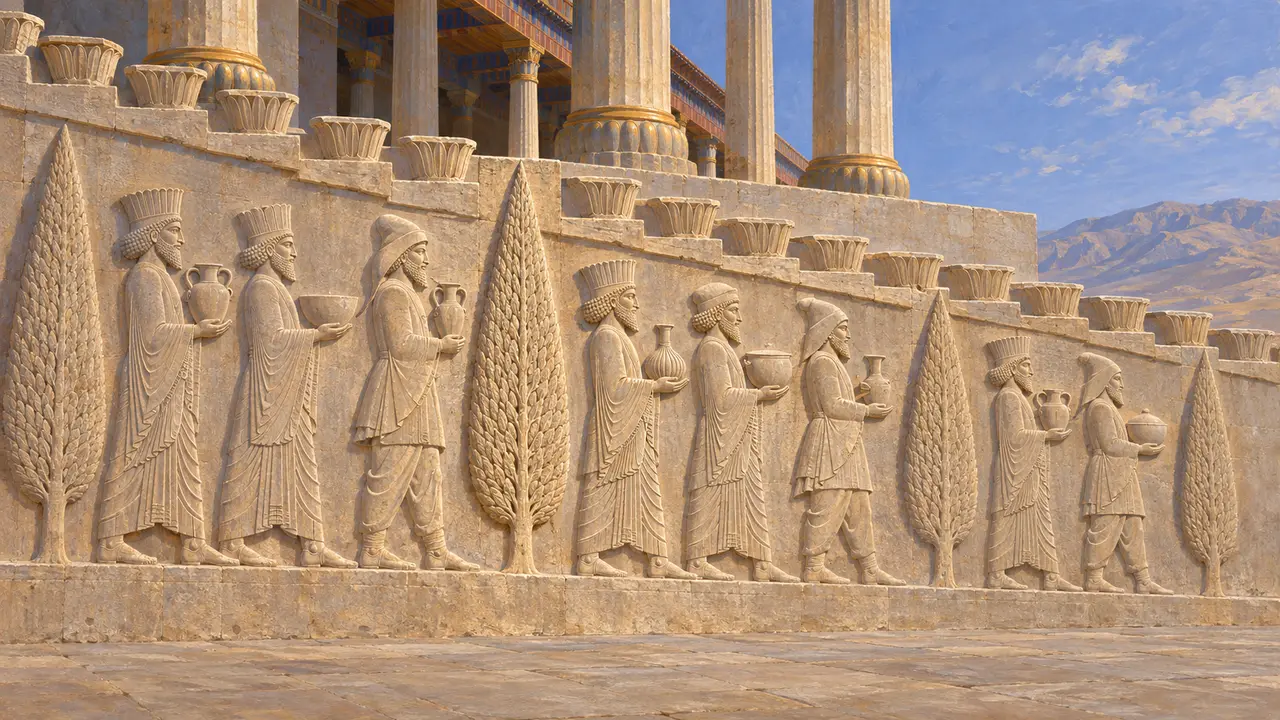
Trees on the Apadana stairs
In the recordThe staircases of the Apadana at Persepolis, carved probably under Darius and Xerxes, show delegations from the lands of the empire bringing gifts towards the King. Tall, slender conifers stand between the groups and separate one delegation from the next. Similar trees recur elsewhere on the stair façades. The Oriental Institute of Chicago uncovered the reliefs in the 1930s, first under Ernst Herzfeld and then under Erich Schmidt, who published them.
E. F. Schmidt, Persepolis I, 1953
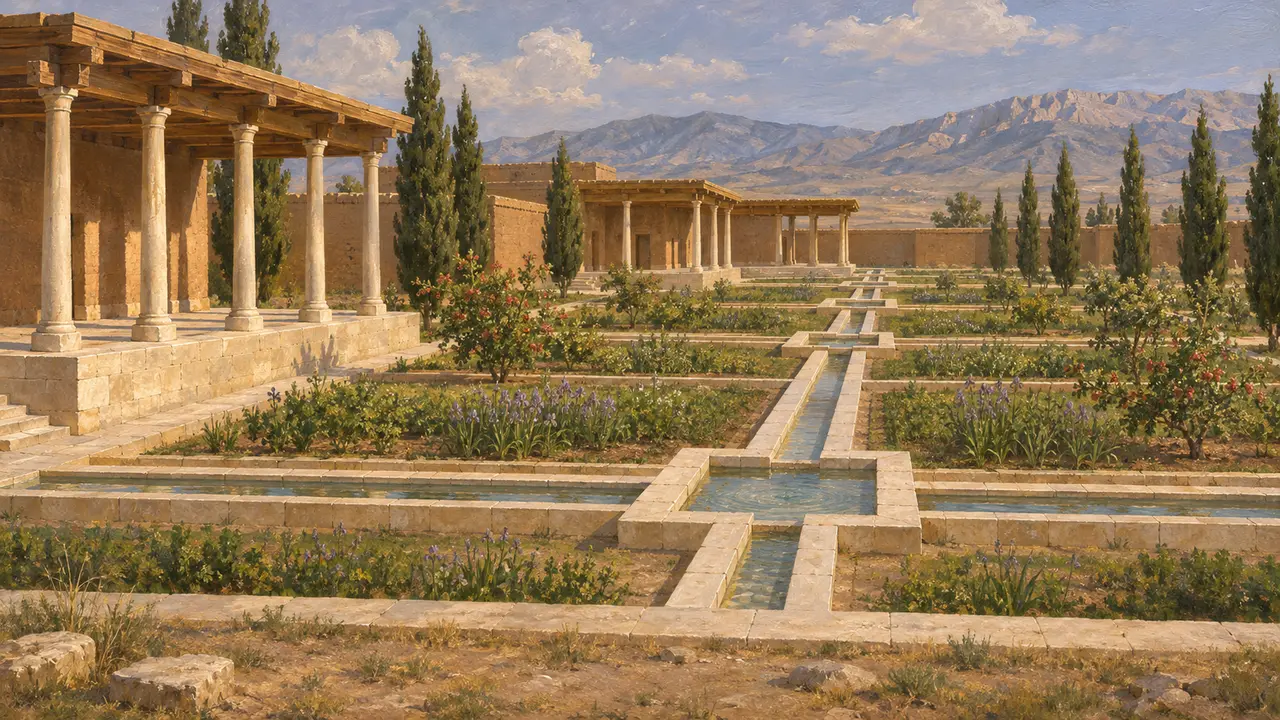
Gardens laid out in lines
In the recordAt Pasargadae, David Stronach excavated the stone water channels of Cyrus's garden. Small basins stand at intervals along them, and they frame rectangular plots beside the palace buildings. The plants themselves do not survive, so which trees grew along the channels is unknown. Elamite tablets from the Persepolis Fortification archive use partetaš for royal estates, a loan from the Old Persian word that also gave Greek paradeisos.
D. Stronach, Pasargadae, 1978; W. Henkelman, The Other Gods Who Are, 2008
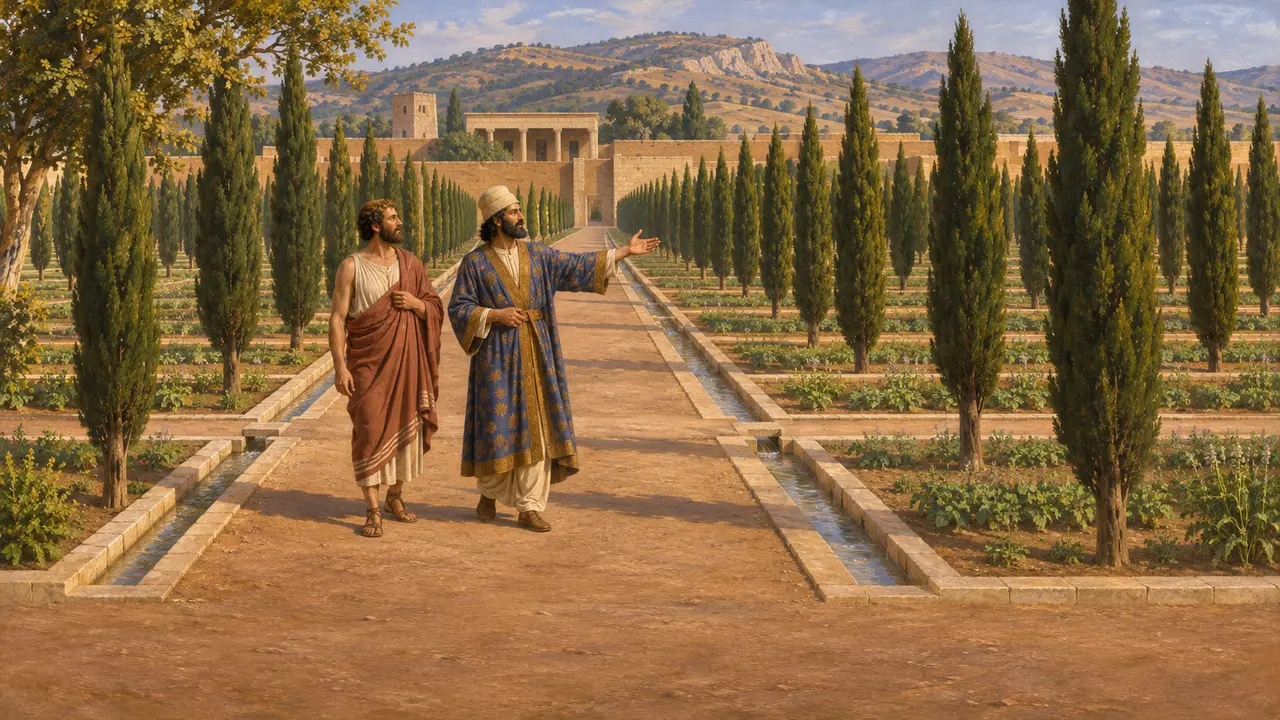
Xenophon's straight rows
Ancient accountXenophon tells how the Spartan Lysander visited the younger Cyrus at Sardis near the end of the 5th century. Lysander admired the park because its trees stood in straight rows at regular angles, and Cyrus said he had measured it out and planted some trees himself. The story is later than the game's period and does not name the trees, but it shows that orderly rows were a mark of a Persian royal garden.
Xenophon, Oeconomicus 4.20-25
Which tree, and what it meant
DisputedThe carved trees are stylised. They are usually taken for the Mediterranean cypress, which grows in the region, but some prefer a generic conifer or a pine. No Achaemenid text explains them. Some modern writers read them as symbols of evergreen life or of the royal garden, while others see them mainly as a device that divides the long processions into units.
M. C. Root, The King and Kingship in Achaemenid Art, 1979
The cypress of Kashmar
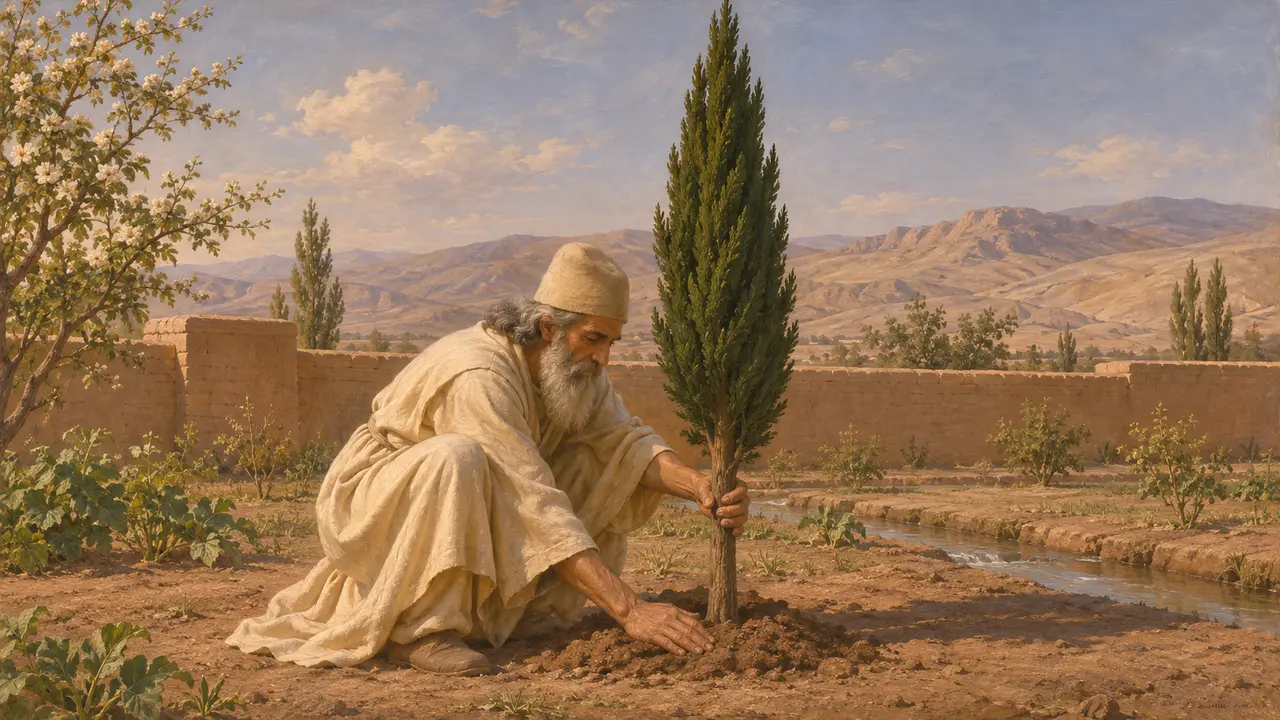
Later legendMuch later Persian tradition made the cypress a sacred tree. Ferdowsi's Shahnameh, completed around 1010 CE, says Zoroaster planted a cypress at Kashmar, and later writers claimed that a caliph had it felled. These stories were written down well over a thousand years after Darius and say nothing reliable about Achaemenid planting.
Ferdowsi, Shahnameh
Sources
- E. F. Schmidt, Persepolis I, 1953
- D. Stronach, Pasargadae, 1978
- Xenophon, Oeconomicus 4.20-25
- M. C. Root, The King and Kingship in Achaemenid Art, 1979
- W. Henkelman, The Other Gods Who Are, 2008
- P. Briant, From Cyrus to Alexander, 2002