Plane Tree
A great shade tree of Persian gardens and Lydian roads, 6th to 5th centuries BCE
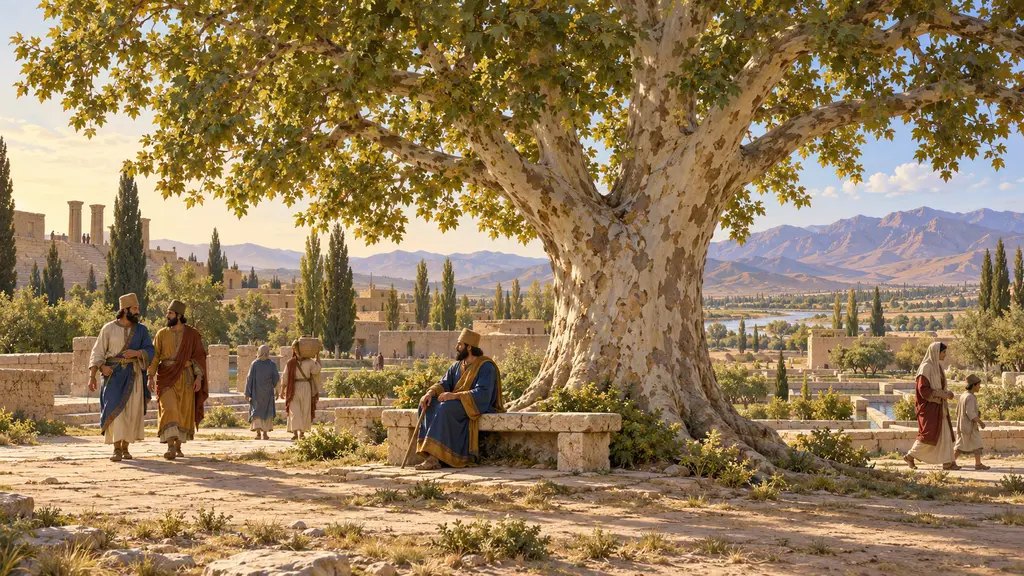
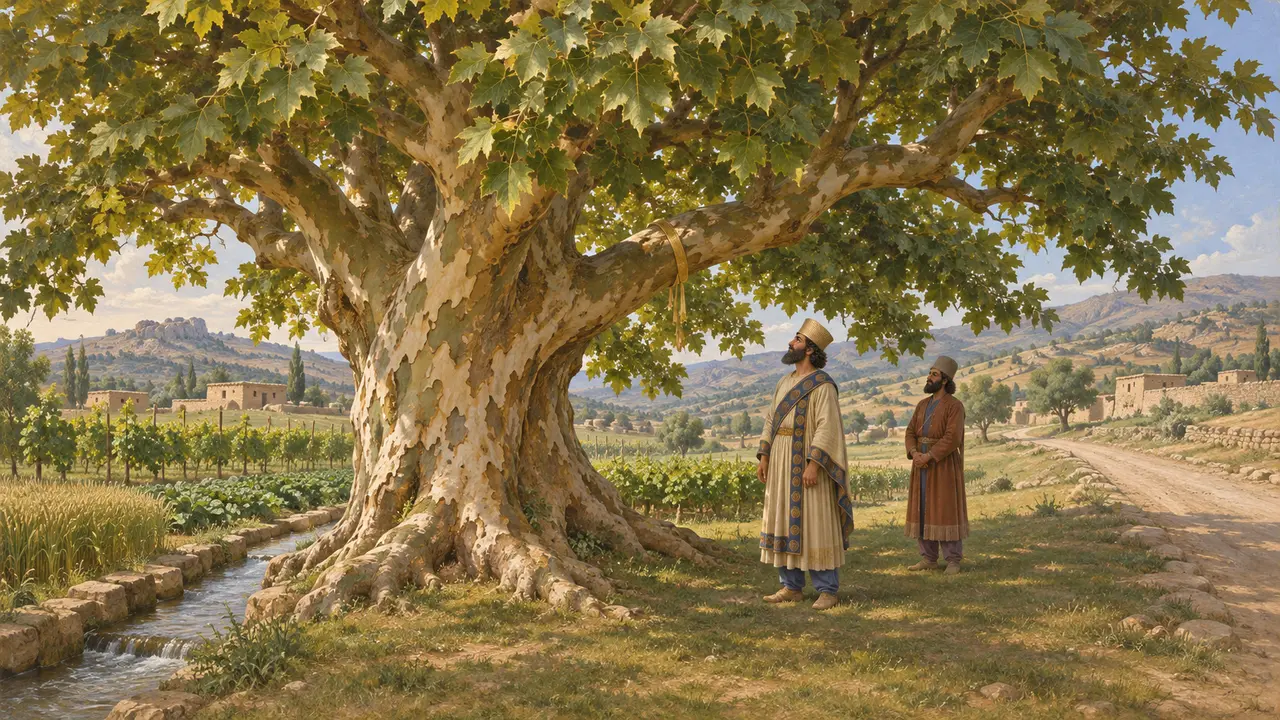
The oriental plane (Platanus orientalis) is a broad, long-lived tree native to the eastern Mediterranean and western Asia. It gives deep shade near water. Greek writers linked it with the Persian kings: Herodotus tells how Xerxes honoured a plane tree in Lydia, and the kings owned a famous plane tree made of gold.
In the game: The game offers the Plane Tree as a shade tree among housing, with a note on Xerxes taken from Herodotus 7.31. The game sets it in town, while the tree Xerxes honoured stood along his line of march in Lydia.
Shade and water in Persian gardens
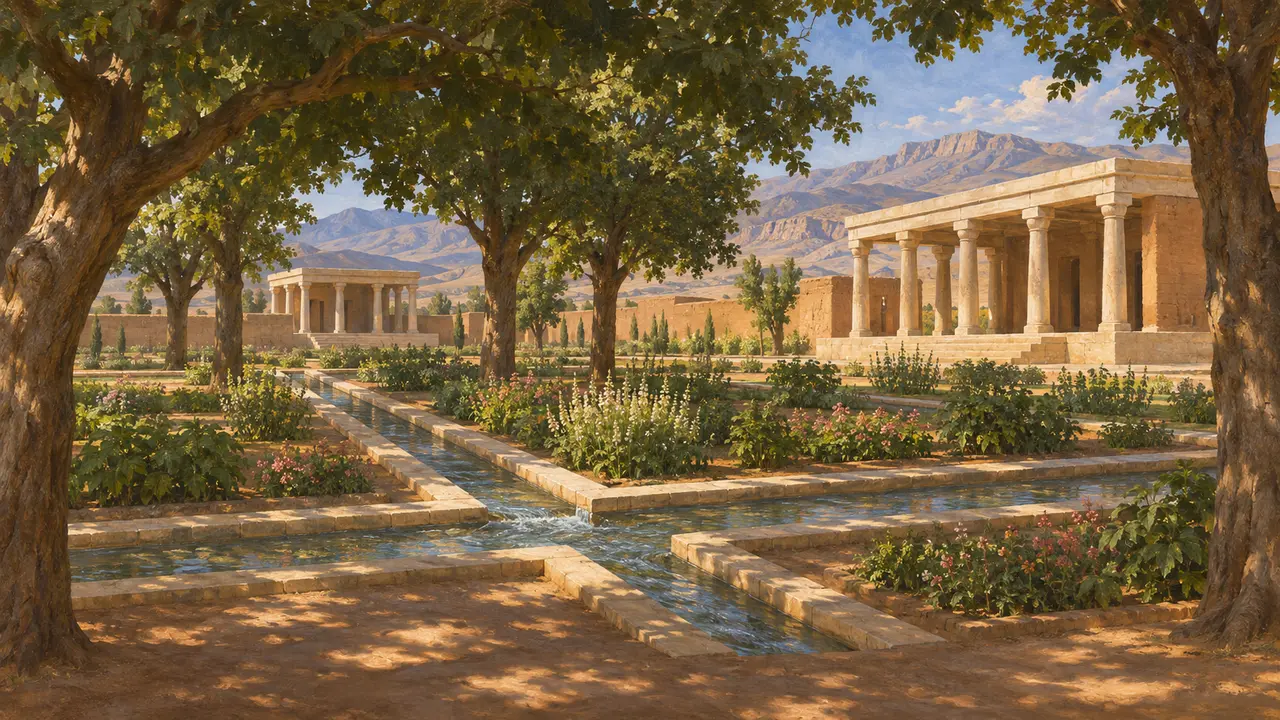
In the recordExcavations at Pasargadae uncovered a royal garden laid out with stone water channels and planting beds around Cyrus's palaces. The remains show that trees and plants were set out in an ordered plan. They do not show which species were grown, so the plane tree cannot be securely placed there, although it suits such watered ground well.
D. Stronach, Pasargadae, 1978
Xerxes and the plane tree of Lydia
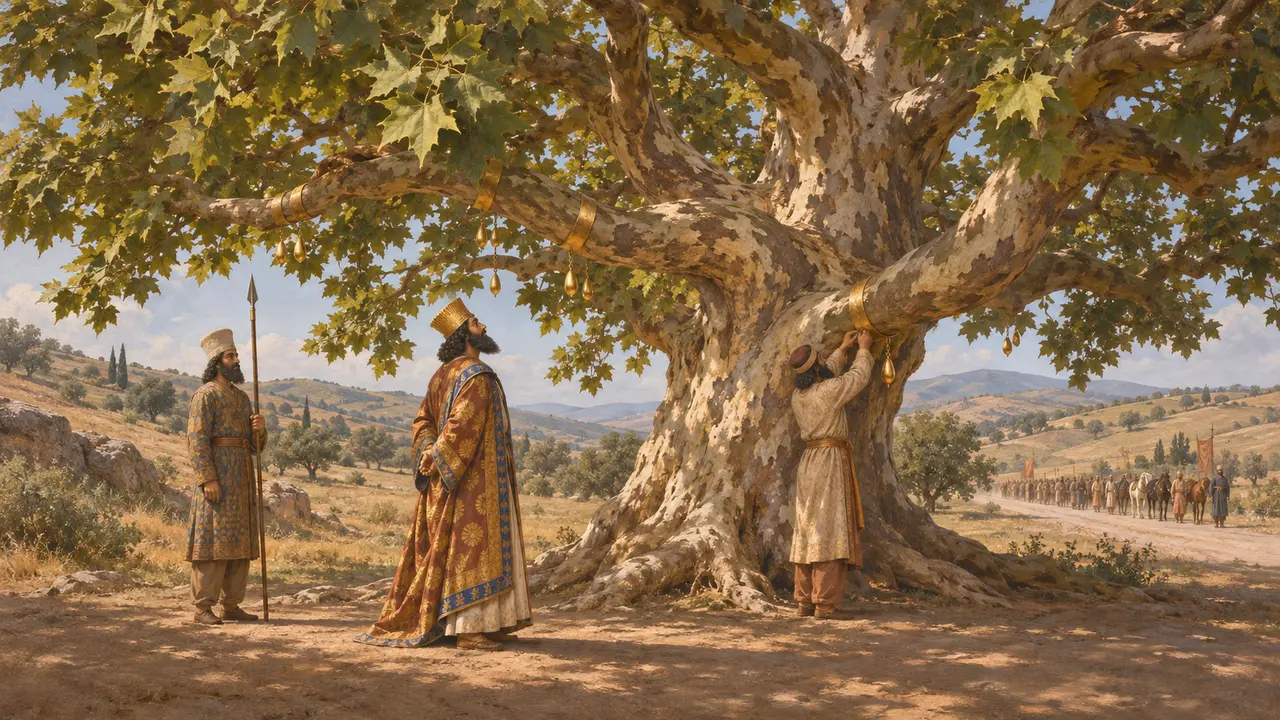
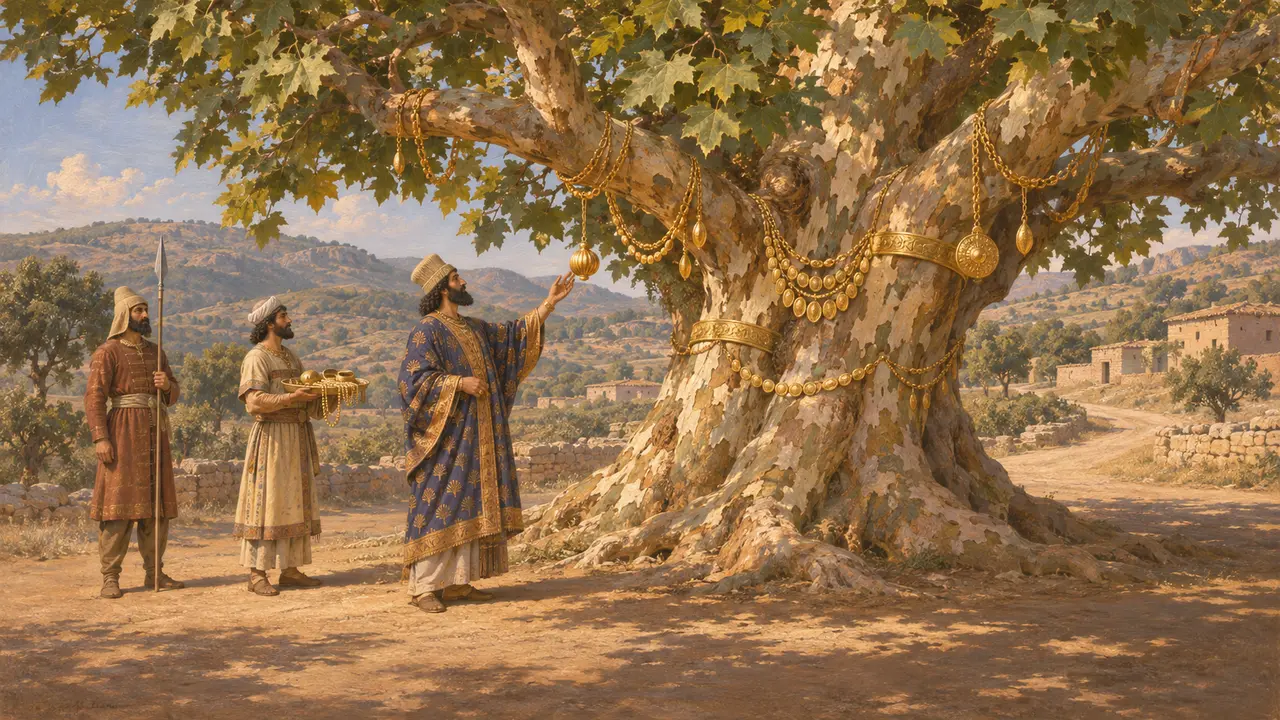
Ancient accountHerodotus says that in 481, while marching from Phrygia to Sardis, where the army wintered, Xerxes came upon a plane tree just beyond Callatebus in Lydia. He found it so beautiful that he gave it gold ornaments and left one of the Immortals to guard it. Herodotus tells the story briefly and without criticism.
Herodotus 7.31
The golden plane tree of the kings
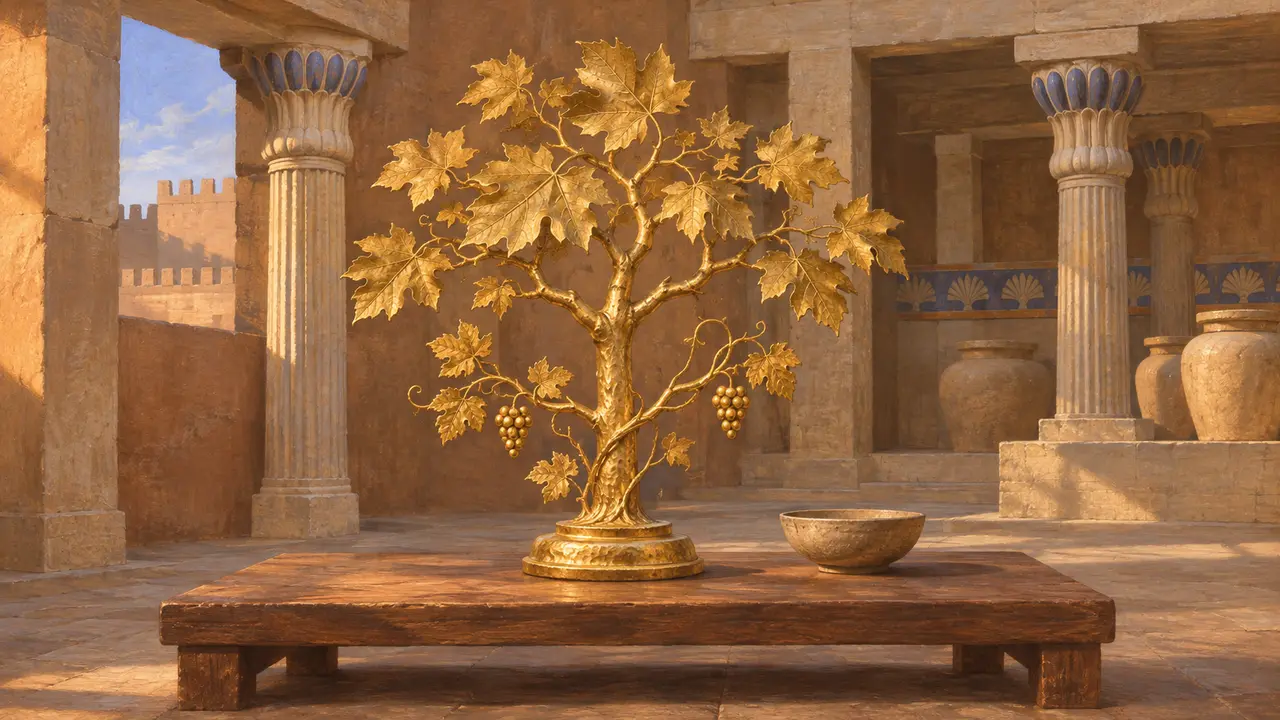
Ancient accountHerodotus reports that the Lydian Pythius had earlier given Darius a plane tree and a vine made of gold. Xenophon describes the Arcadian envoy Antiochus, back from the royal court in 367, scoffing that the famous golden plane tree was too small to shade a grasshopper. If this was the same object, as is probable, it stayed a known treasure of the royal household for well over a century.
Herodotus 7.27; Xenophon, Hellenica 7.1.38
Why honour a tree
DisputedHistorians disagree about what Xerxes' gesture meant. Some read it as private delight in a fine tree. Others, including Briant, connect it to royal ideas of the king as the one who makes the land fertile and keeps it green, an idea also seen in the kings' gardens and the golden plane. The Persian sources themselves say nothing about this tree.
P. Briant, From Cyrus to Alexander, 2002
A tale of royal folly
Later legendAelian, a Greek writer of the Roman period around 200 CE, turned the Lydian plane into a moral story. He presented Xerxes' love for a tree as foolish excess, the kind of tale used to contrast Persian luxury with Greek restraint. His version adds details that Herodotus does not give and should not be taken as fact.
Aelian, Varia Historia
Sources
- Herodotus 7.31
- Herodotus 7.27
- Xenophon, Hellenica 7.1.38
- P. Briant, From Cyrus to Alexander, 2002
- D. Stronach, Pasargadae, 1978
- Aelian, Varia Historia