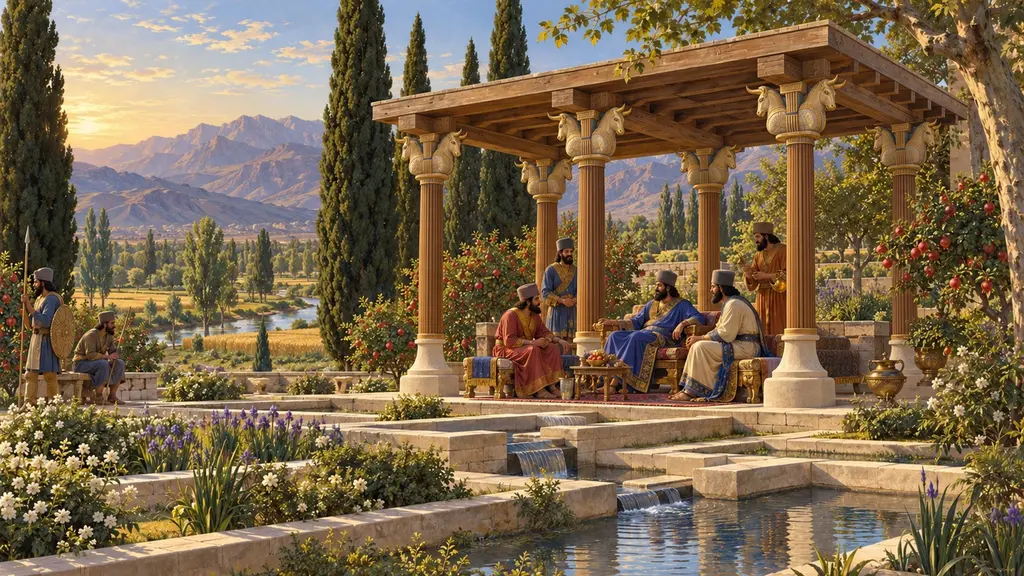
Garden Pavilion
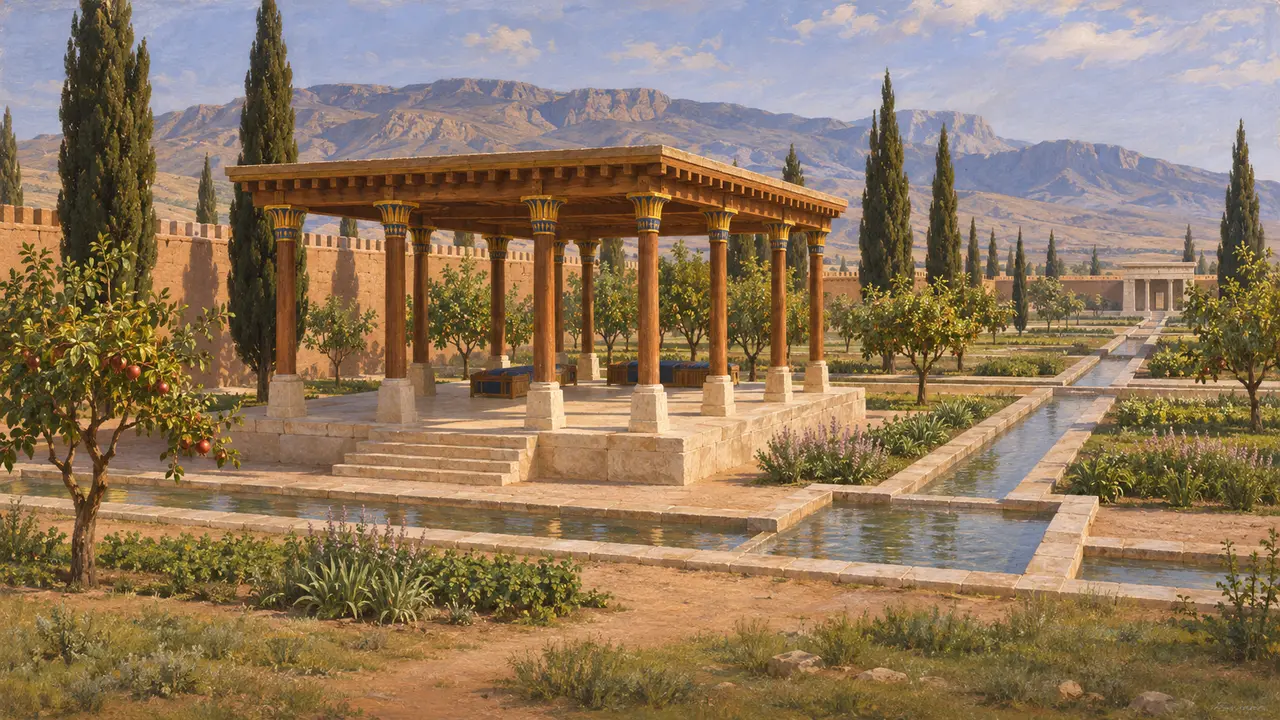
Columned shelter in a royal walled garden, Pasargadae, 6th century BCE
Persian kings and nobles laid out walled gardens, later called paradises by the Greeks, with trees in rows, stone water channels and small columned buildings for shade. At Pasargadae, Cyrus's garden had two such pavilions. They show how the court used gardens to display order, plenty and royal care for the land.
In the game: A service building in Pasargadae, Parsa and Susa: a columned shade-house cooled by running water, whose hosts invite the houses they pass. Its feast echoes Herodotus's tale of Cyrus feasting the Persians in a meadow, not a pavilion.
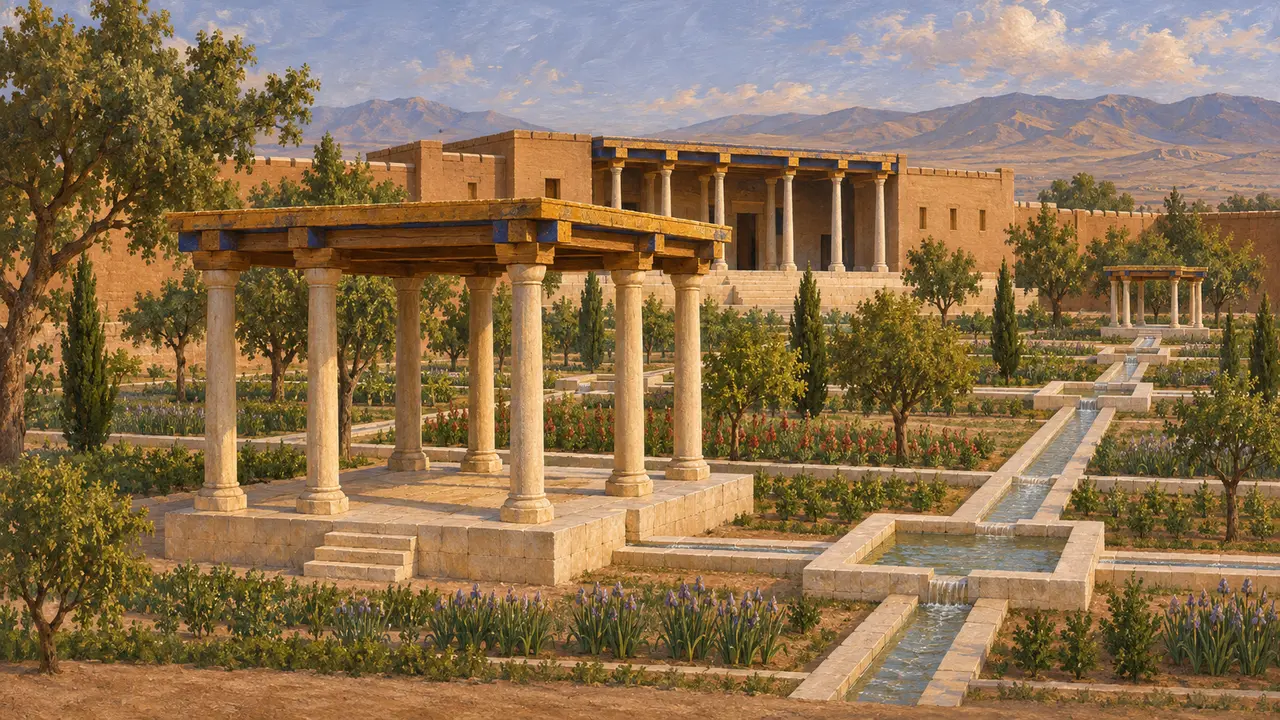
The pavilions at Pasargadae
In the recordDavid Stronach's excavations in the early 1960s uncovered a garden in front of the residential building known as Palace P. Two small columned structures, called Pavilion A and Pavilion B, stood at its corners. Limestone channels with square basins at intervals carried water through the garden, and parts of them survive today.
D. Stronach, Pasargadae, 1978
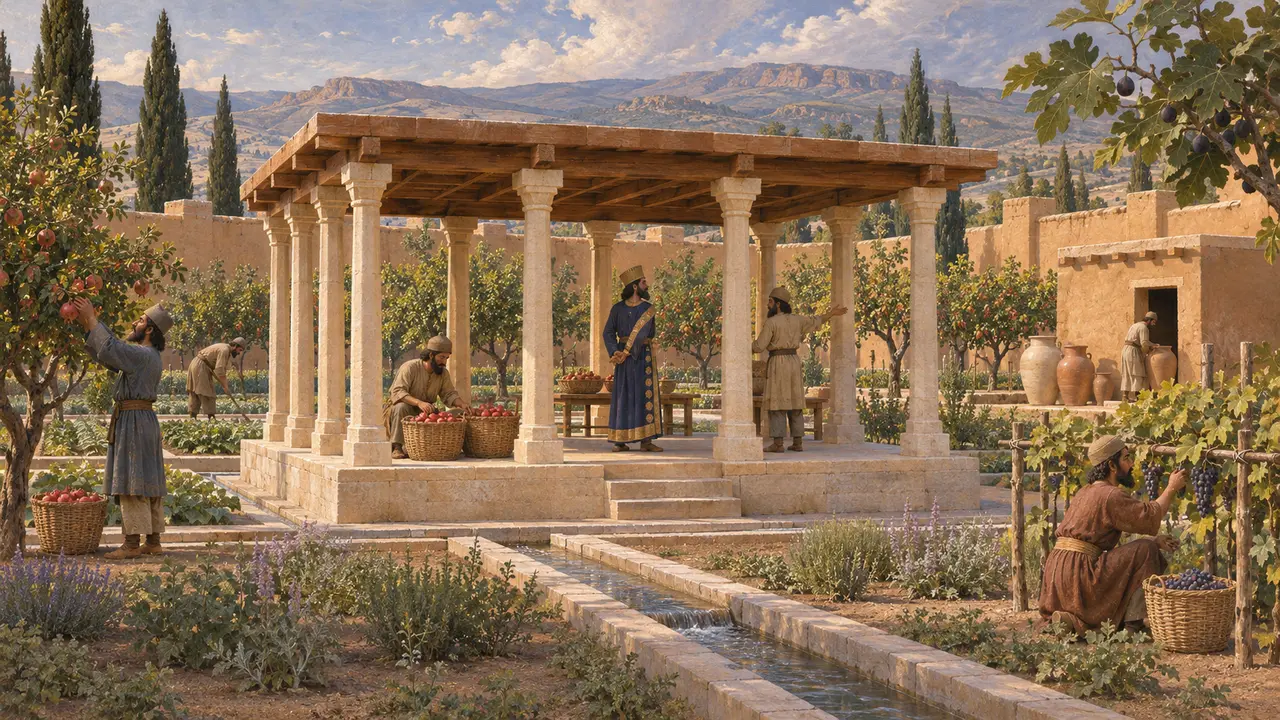
What a paradise was
In the recordThe Greek paradeisos came from an Old Persian word, reconstructed as paridaida, meaning an enclosed park or walled garden. Elamite administrative tablets from Persepolis use a related term, partetaš, for managed estates that held trees, fruit and stores. These texts show that such gardens were working properties run by officials, not only places for leisure.
Persepolis Fortification tablets; W. Henkelman, The Other Gods Who Are, 2008; P. Briant, From Cyrus to Alexander, 2002
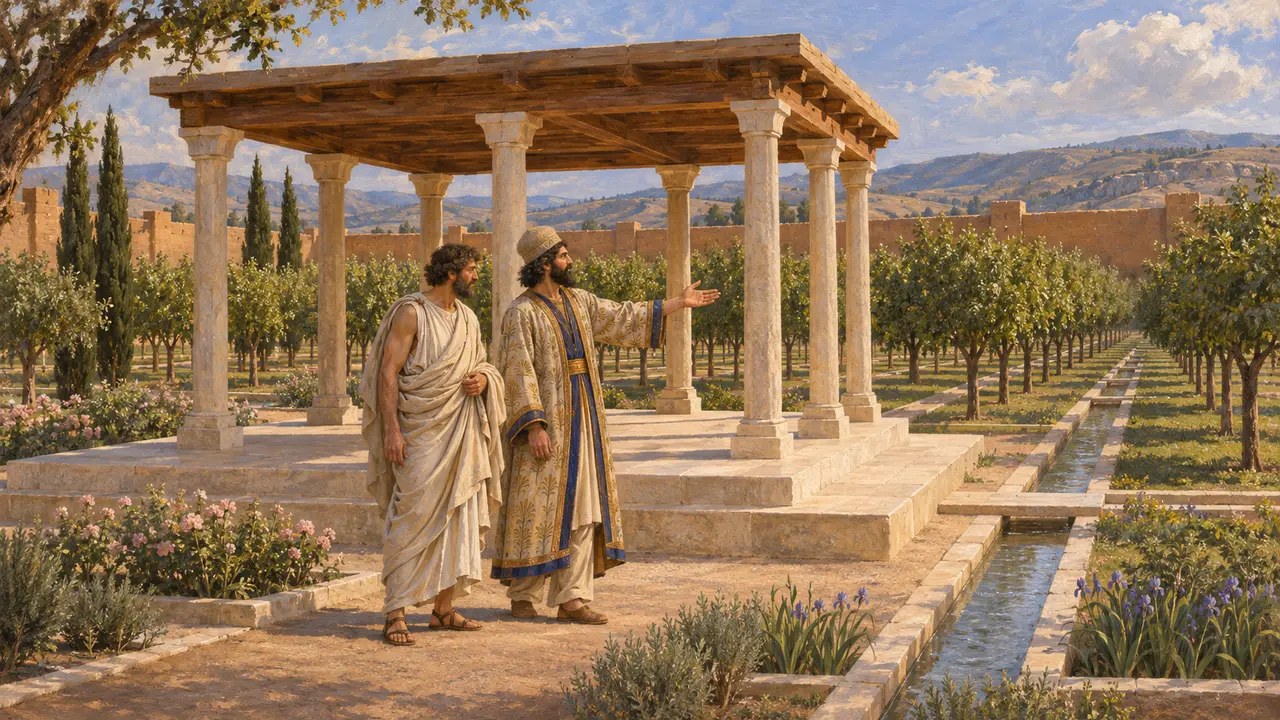
A Persian prince shows his garden
Ancient accountXenophon tells how the Spartan Lysander visited the younger Cyrus in his paradise at Sardis and admired the straight rows of trees. Cyrus said he had planned the garden and planted some trees himself. The scene is set around 407, long after the game's period, but it shows how Greeks saw gardening as a royal skill.
Xenophon, Oeconomicus 4.20-25
How the garden was laid out
DisputedStronach argued that the channels divided the Pasargadae garden into four parts, an early form of the later Persian fourfold garden. Later geophysical survey around the site found more channels and buildings, and some scholars now doubt the neat fourfold plan. Whether running water cooled the pavilions, as the game suggests, is a reasonable guess rather than a proven fact.
D. Stronach, Pasargadae, 1978; C. Benech, R. Boucharlat and S. Gondet, Arta 2012.003

Cyrus's feast in the meadow
Later legendHerodotus says Cyrus made the Persians clear thorny ground for a day, then feasted them in a meadow the next. He asked which day they preferred and told them that freedom from the Medes would bring the second kind of life. The story is a moral tale and does not describe a garden pavilion.
Herodotus 1.126
Sources
- D. Stronach, Pasargadae, 1978
- C. Benech, R. Boucharlat and S. Gondet, Arta 2012.003
- Herodotus 1.126
- Xenophon, Oeconomicus 4.20-25
- P. Briant, From Cyrus to Alexander, 2002
- W. Henkelman, The Other Gods Who Are, 2008