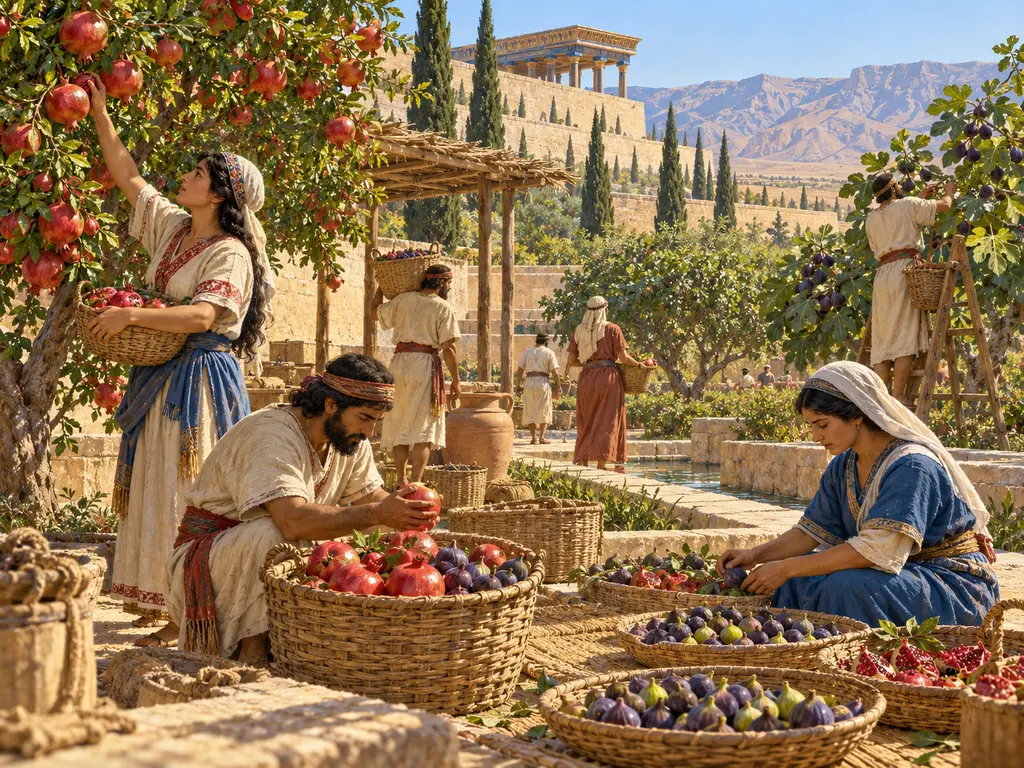
Date Grove
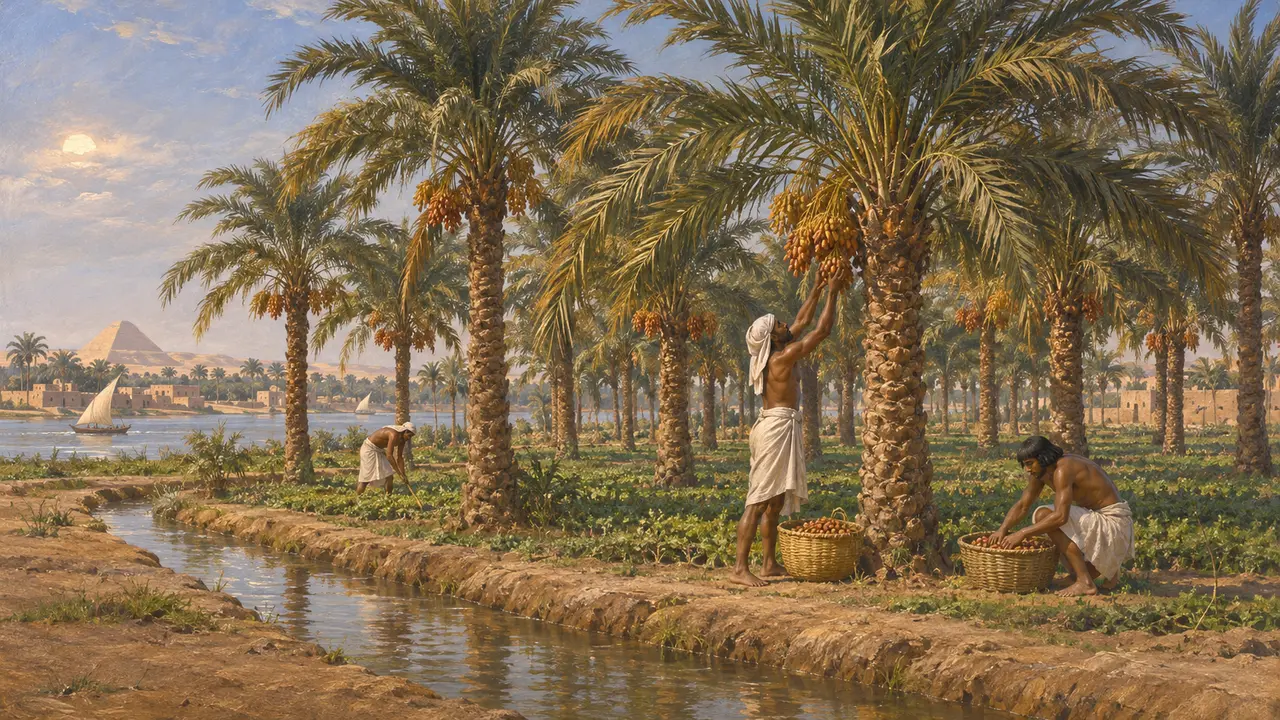
Groves of date palms on the Nile floodplain around Memphis, Egypt, about 525 BCE
In the game: Level 2: The Spear-bearer
The date palm had grown in Egypt for many centuries and was among its most useful trees. Its fruit was eaten fresh or dried and used as a sweetener, and its trunks and fronds served as timber, roofing, matting and rope. When Cambyses conquered Egypt in 525, palm groves stood among the fields and villages around Memphis, as they had long before Persian rule.
In the game: In the Memphis level the Orchard takes the form of a Date Grove of palms on the black land, and Elder's Houses want dates. Black land renders kemet, the Egyptians' name for their country, taken from the dark Nile soil.
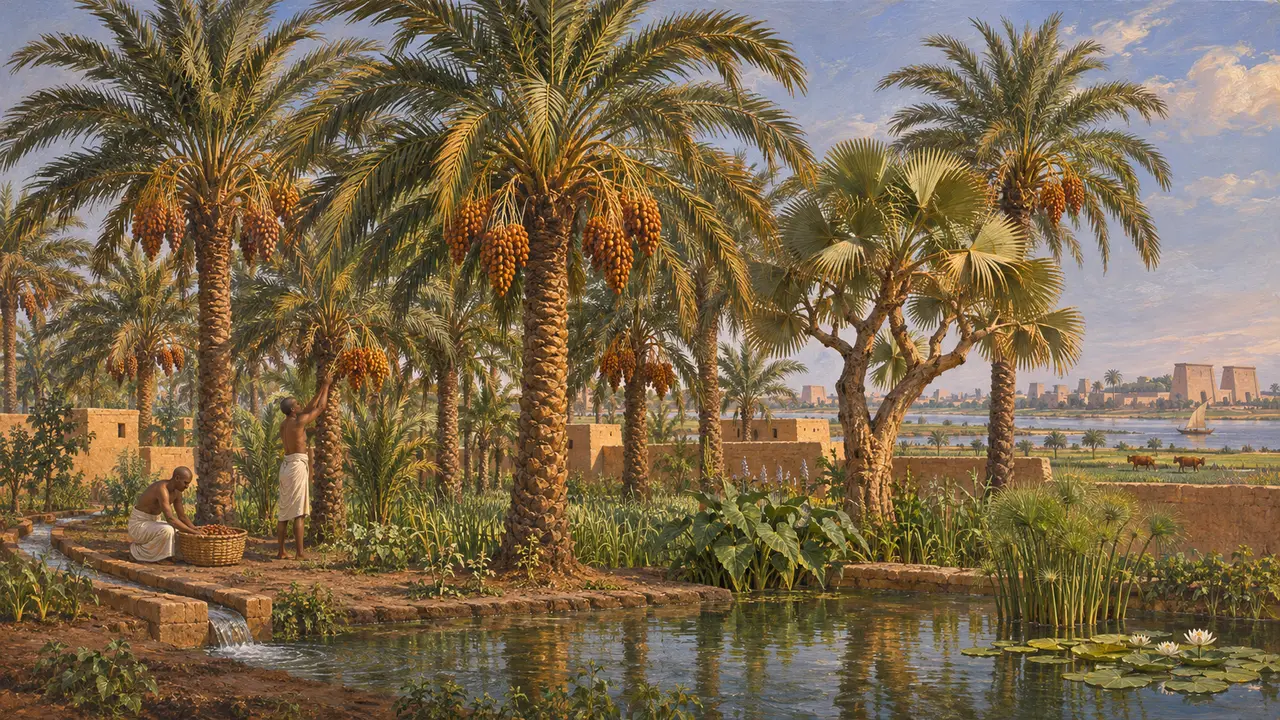
Palms of the black land
In the recordDate stones and dried fruit have been found in Egyptian graves and settlements, and dates were laid among the food offerings in tombs. Such finds become much more common from the second millennium, when the cultivated palm spread widely. New Kingdom tomb paintings show date palms and the branching dom palm in gardens and beside pools. The ruins of Memphis at Mit Rahina still lie among palm groves today.
W. Darby, P. Ghalioungui and L. Grivetti, Food: The Gift of Osiris, 1977; D. Zohary, M. Hopf and E. Weiss, Domestication of Plants in the Old World, 2012
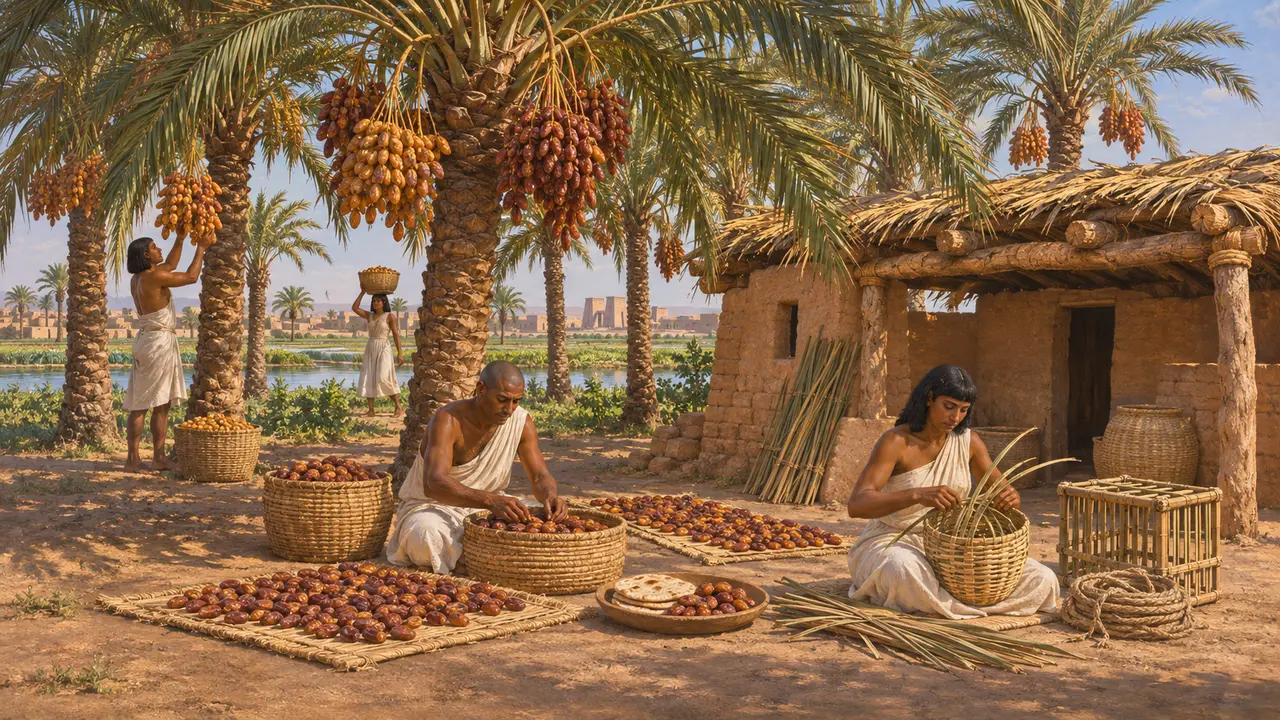
Food, sweetener and building material
In the recordTexts and remains show dates eaten whole, dried for storage and used to sweeten bread, since honey was costly. Older studies held that dates also flavoured beer, but residue analysis has not confirmed this. Palm trunks made beams and roofing, the ribs of the fronds made baskets and crates, and the fibre made rope. A grove gave a household food and materials from the same trees.
W. Darby, P. Ghalioungui and L. Grivetti, Food: The Gift of Osiris, 1977
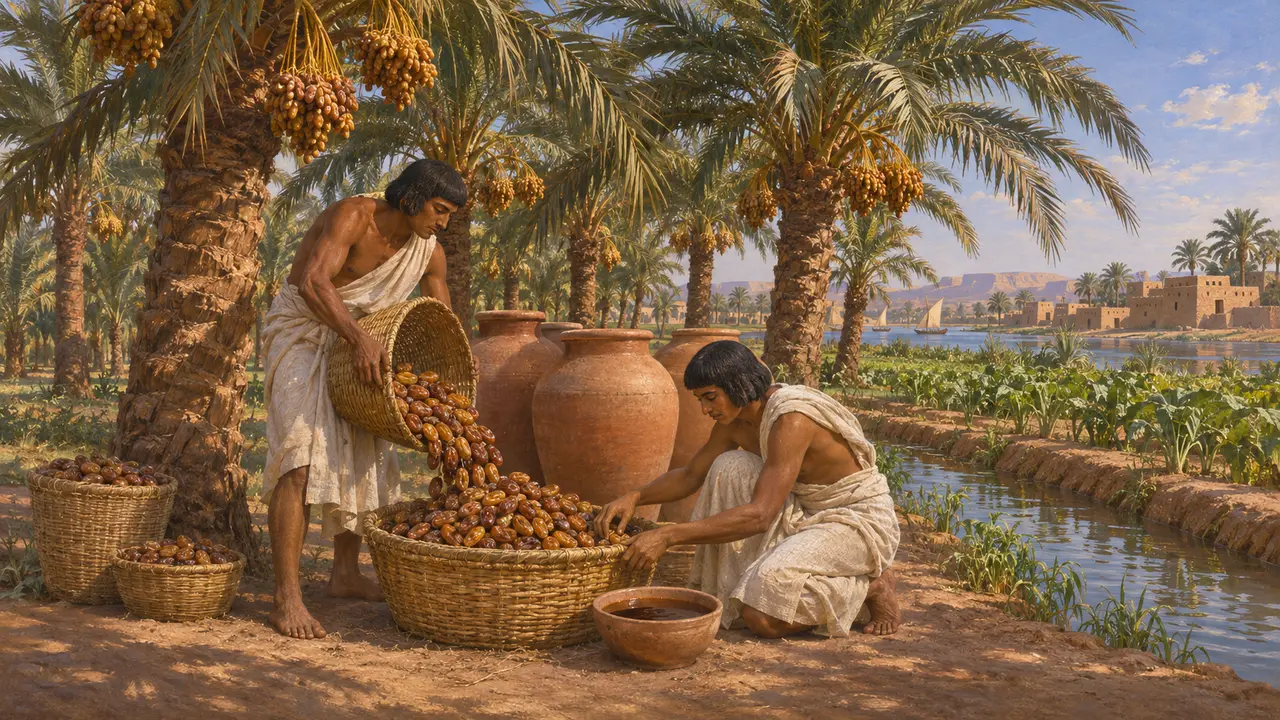
Herodotus on palm wine and palm groves
Ancient accountHerodotus says Egyptian embalmers washed out the body cavity with palm wine and then with ground spices before filling it. Writing of Babylonia, he describes a plain full of palms that gave bread, wine and a kind of honey. He compares the fertilising of the palms with the treatment of figs, which shows that he misunderstood how palms are pollinated.
Herodotus 2.86; Herodotus 1.193
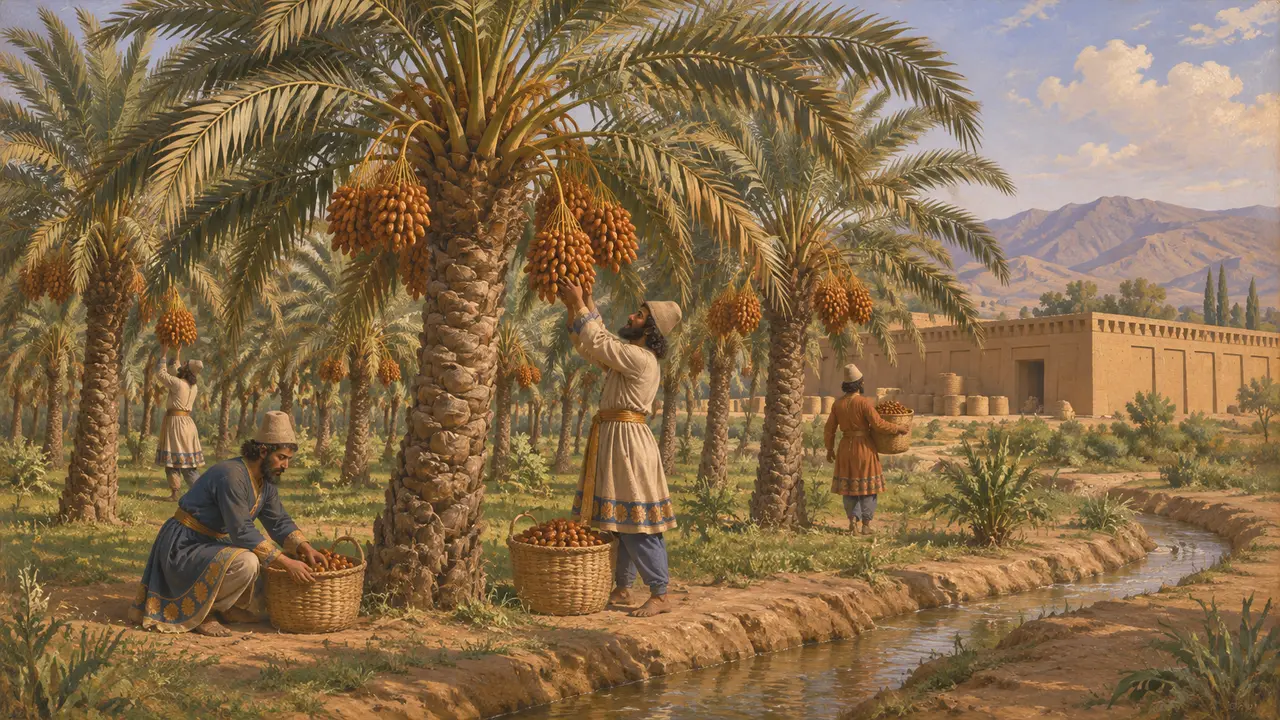
Dates in the Persian heartland
In the recordDate palms grew in the warm lowlands of Elam and southern Persis. The Elamite tablets of the Persepolis Fortification archive, written under Darius, record dates among the commodities issued from royal stores, alongside grain, wine and beer. The Persians who came to Egypt therefore already knew the tree and its fruit.
R. Hallock, Persepolis Fortification Tablets, 1969
What Persian rule changed
DisputedHerodotus lists Egypt's tribute in silver, fish revenue and grain for the Persian garrison at Memphis, but says nothing of dates. How palm groves were taxed under Cambyses and Darius is not known in detail. Historians debate how far Persian rule changed Egyptian landholding, and many, Briant among them, stress continuity. Strabo, writing under Augustus, judged the dates of Lower Egypt poorer than those of the south.
Herodotus 3.91; Strabo, Geography book 17; P. Briant, From Cyrus to Alexander, 2002
Sources
- W. Darby, P. Ghalioungui and L. Grivetti, Food: The Gift of Osiris, 1977
- D. Zohary, M. Hopf and E. Weiss, Domestication of Plants in the Old World, 2012
- Herodotus 2.86; 1.193; 3.91
- R. Hallock, Persepolis Fortification Tablets, 1969
- P. Briant, From Cyrus to Alexander, 2002
- Strabo, Geography book 17