Encyclopedia › Wildlife and weather

The partridge
Game-bird of the stony hills of Persis, Media and Attica, 6th to 5th century BCE
In the game: Level 1: The Founder's Tomb, Level 3: The Lie, Level 4: The Terrace, Level 8: The Bay of Marathon
Partridges lived on the dry, rocky slopes of the Iranian plateau and of Attica, and people there probably hunted and ate them. Written evidence for them in the Achaemenid world is thin, so the entry rests mostly on the natural history of the birds and on a few Greek remarks.
In the game: The game draws partridges as scenery on the Pasargadae, Bagastana, Parsa and Marathon levels. No rule reads them. One model stands in for the chukar, the see-see partridge and the Attic rock partridge.
Which birds are meant
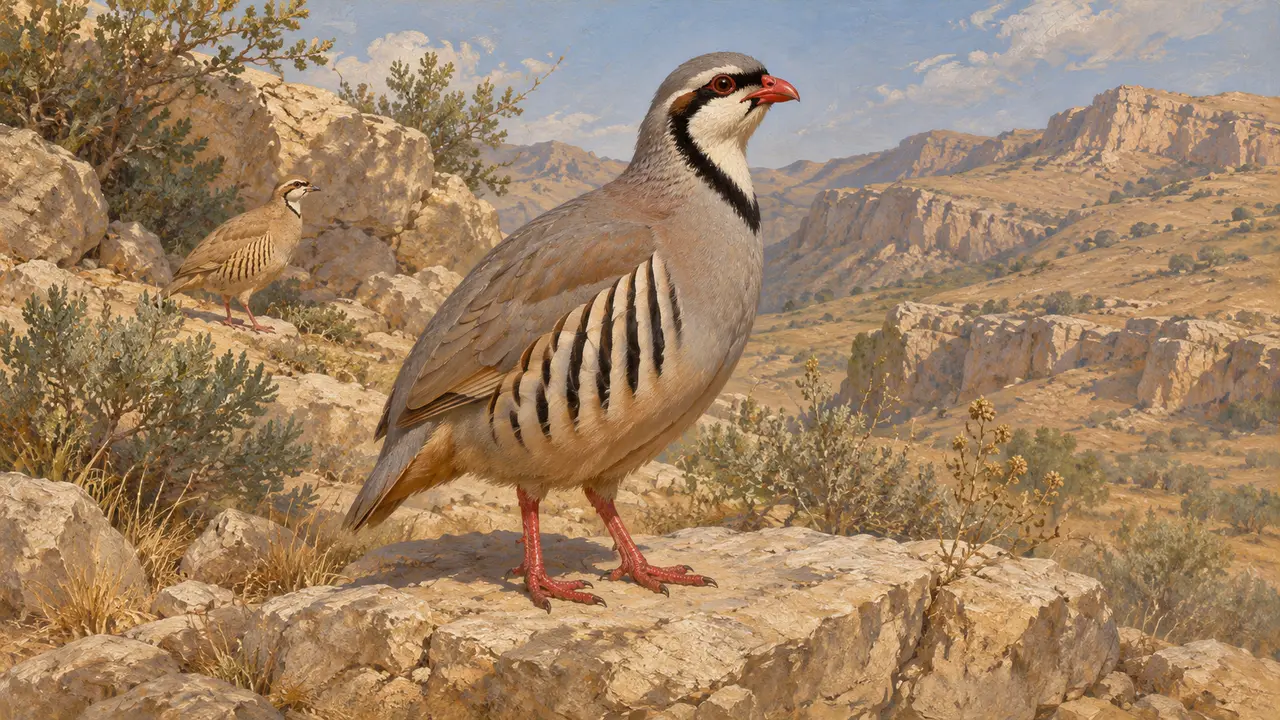
Ancient accountModern zoology places the chukar and the see-see partridge on the rocky hills of the Iranian plateau, and the rock partridge on the hills of Greece, including Attica. The chukar and rock partridge are close relatives. Ancient writers do not name species in this way, so matching their birds to modern ones is an inference. Aristotle describes the partridge as a bird of stony ground.
Aristotle, History of Animals
Partridges in Greek writing
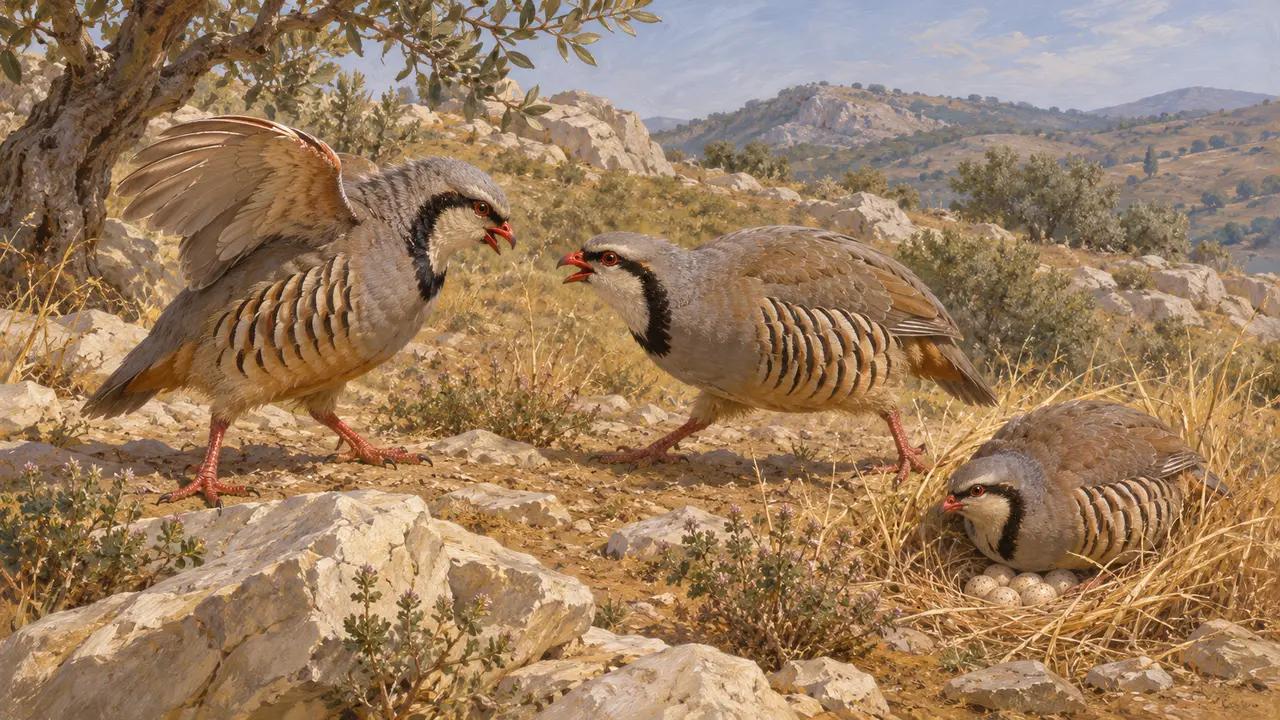
Ancient accountGreek natural historians such as Aristotle describe the partridge as a ground-nesting bird that is easy to hunt, and note the fighting spirit of the male. Herodotus gives no useful detail on partridges in Persian lands. These remarks are Greek, written about Greek birds, and do not show how Persians treated the bird.
Aristotle, History of Animals
Hunting and the table
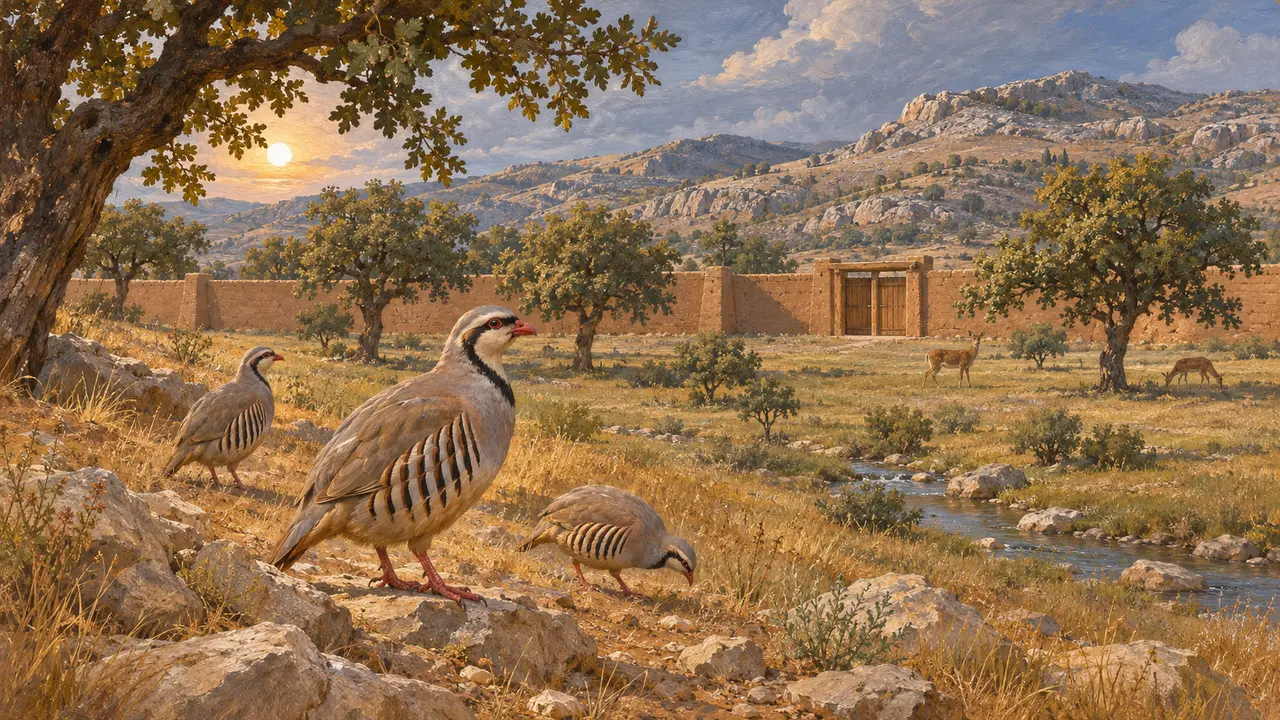
DisputedPersian kings and nobles kept enclosed parks, and the Greek word paradeisos comes from an Iranian word. Xenophon describes such a park at Celaenae stocked with game. Whether partridges were taken in such hunts or eaten at court is not shown by the sources used here, so any such picture is a guess from the habits of the bird.
Xenophon, Anabasis 1.2.7; P. Briant, From Cyrus to Alexander, 2002
The partridge in later Greek lore
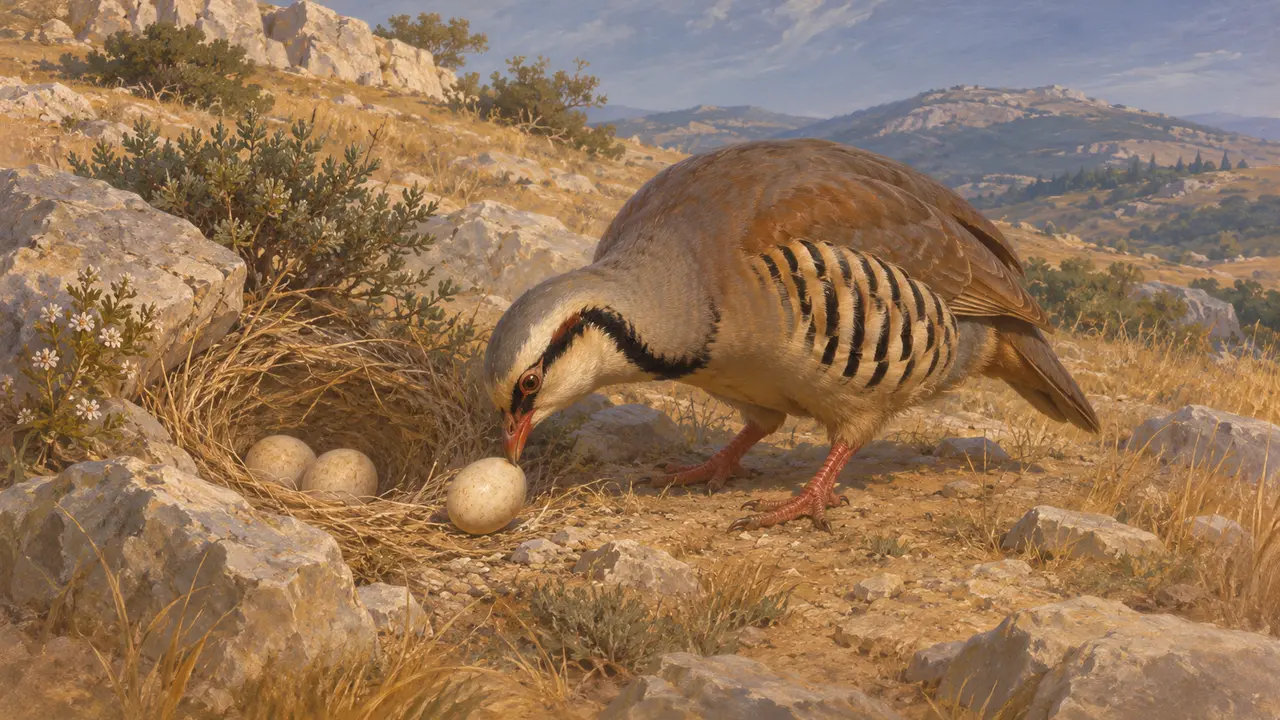
Later legendLater writers told moral tales in which the partridge stands for lust or cunning, and some said it stole the eggs of other birds. These stories belong to natural-history lore, written centuries after the Persian wars, and say nothing of Persian life. They are kept apart here for that reason.
Aelian, On the Nature of Animals
Sources
- Aristotle, History of Animals
- Xenophon, Anabasis 1.2.7
- P. Briant, From Cyrus to Alexander, 2002
- Aelian, On the Nature of Animals