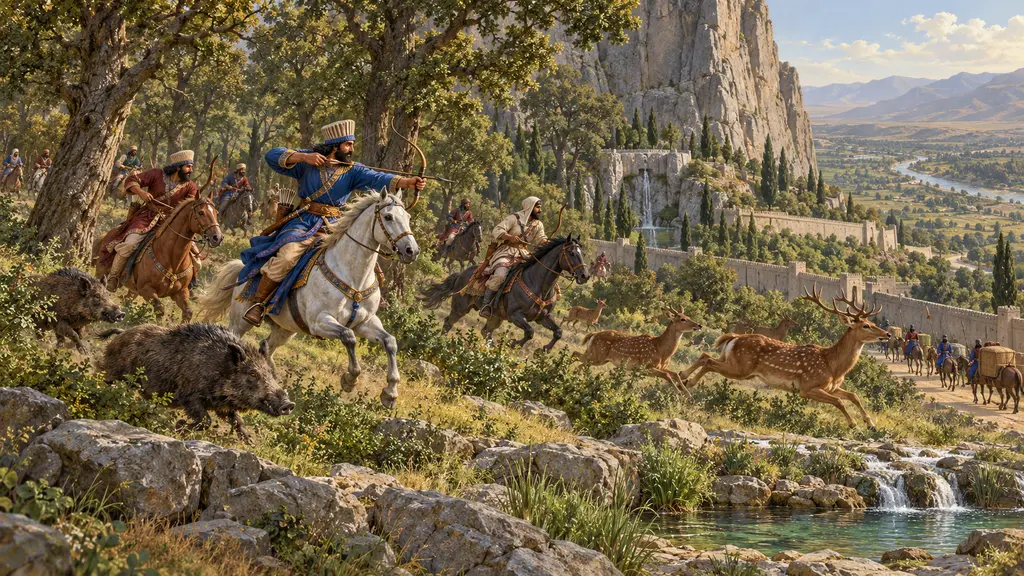
Hunting Park
Walled royal and satrapal parks stocked with game, Persian empire, 6th-5th century BCE
The Persian kings and their satraps kept enclosed parks of trees, water and wild animals, which Greek writers called paradeisoi. Some were hunting grounds where the King and his nobles rode after deer, boar and lions. Hunting from horseback with the bow showed the qualities a Persian ruler claimed for himself, and the parks became one of the marks of Persian power across the empire.
In the game: The Hunting Park is a service at Pasargadae, Parsa and Susa whose huntsmen invite the houses they pass. Its note cites Herodotus 1.136, which is about boys' training, not parks; no game park is proven at these towns.
The word paradise
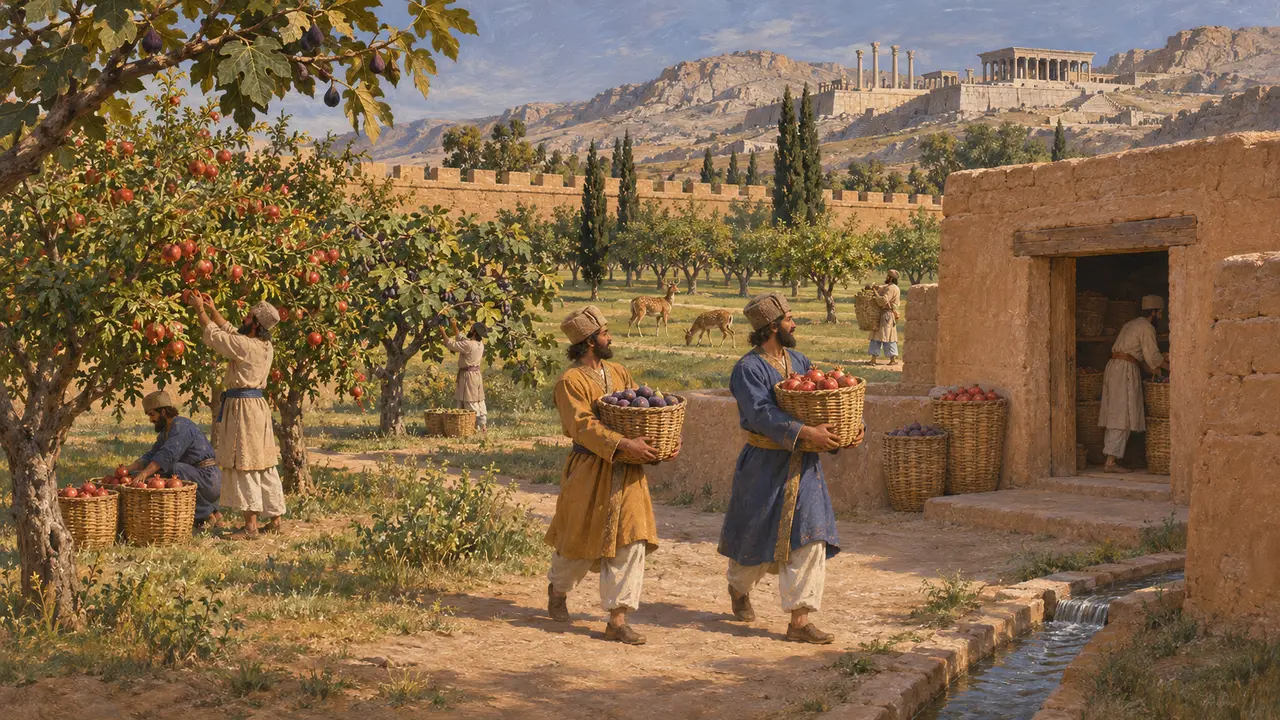
In the recordThe Persepolis Fortification tablets, written in Elamite under Darius, mention estates called partetaš, a loan from a Persian word usually reconstructed as paridaida, meaning an enclosed place. The tablets show such estates holding fruit trees, stores and workers. Greek took the word over as paradeisos, Hebrew as pardes, and through later Greek and Latin it gave English the word paradise.
Persepolis Fortification tablets; W. Henkelman, The Other Gods Who Are, 2008
Parks full of wild beasts
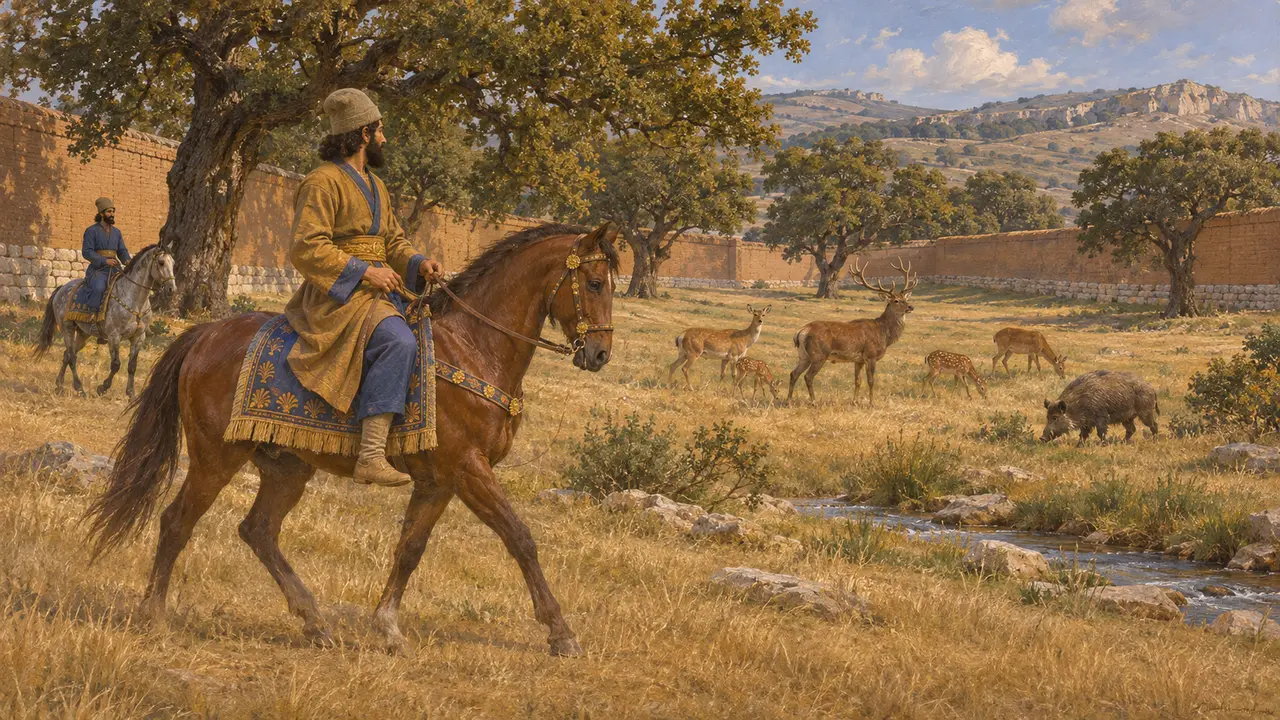
Ancient accountXenophon, who marched with Cyrus the Younger in 401, says Cyrus had a large park full of wild animals at Celaenae in Phrygia, where he hunted on horseback. He also describes the satrap Pharnabazus at Dascylium, whose land held plentiful game, some in enclosed parks and some in open country. These are later than the game's period but are the clearest descriptions of Persian game parks.
Xenophon, Anabasis 1.2.7; Xenophon, Hellenica 4.1.15-16
The King as hunter
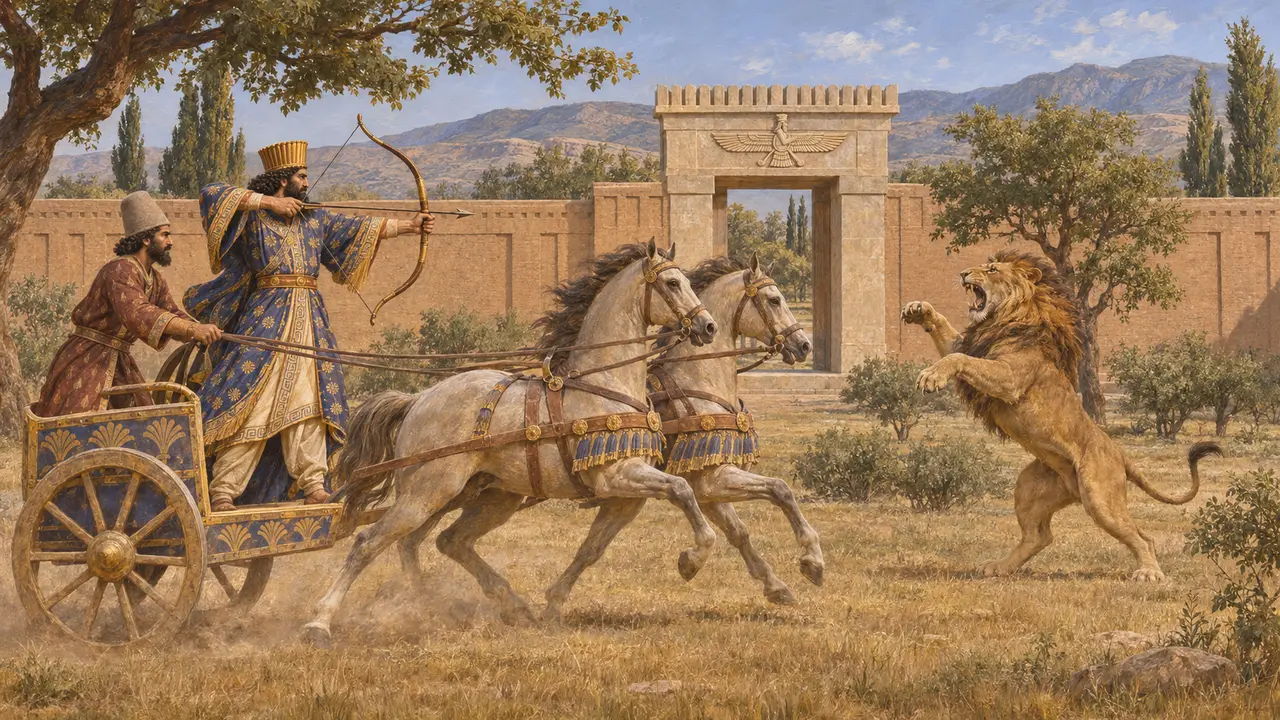
In the recordA cylinder seal inscribed in Old Persian, Elamite and Babylonian with the name of a King Darius, probably Darius I, shows the king in a chariot shooting arrows at a rearing lion, beneath a winged figure. Many seals impressed on the Persepolis Fortification tablets also show hunts and combats with animals. Hunting was part of how the Persian elite pictured royal strength and skill.
Seal of Darius, British Museum; M. Garrison and M. C. Root, Seals on the Persepolis Fortification Tablets I, 2001
Riding, shooting and truth
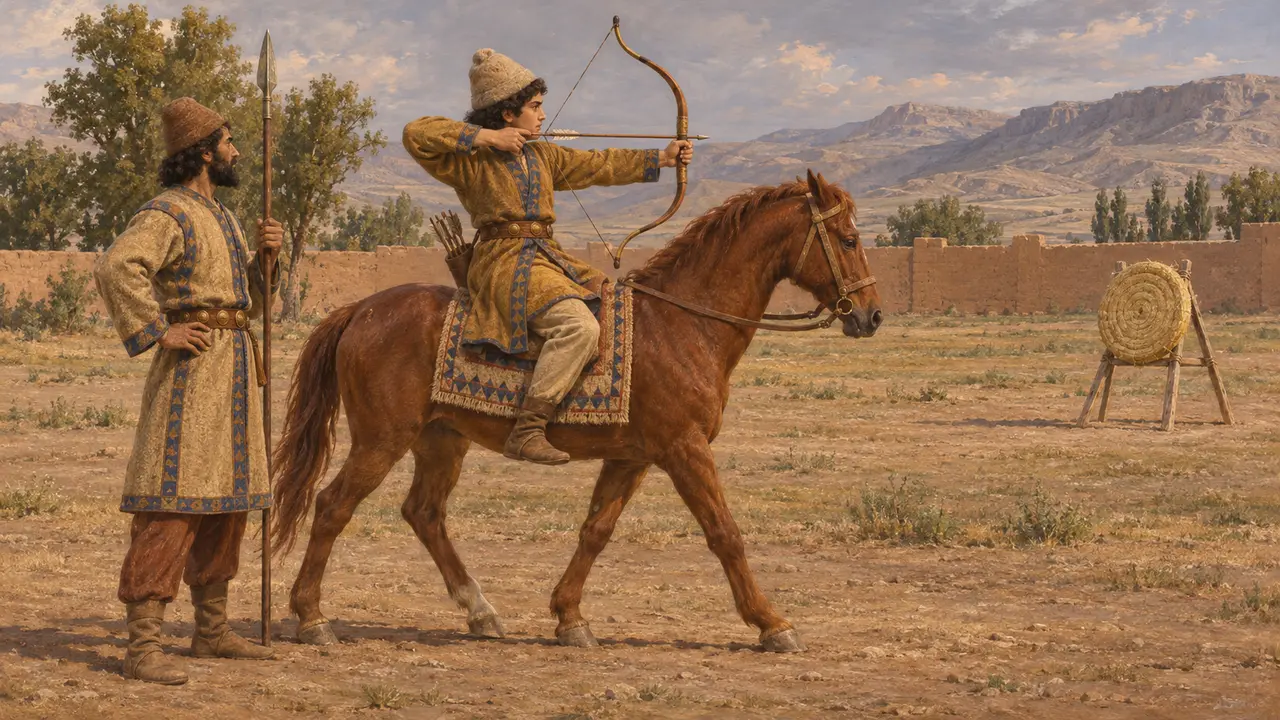
Ancient accountHerodotus says Persian boys were taught three things between the ages of five and twenty: to ride, to shoot the bow and to speak the truth. He does not connect this with parks. On the Persian side, Darius's own tomb inscription calls him a good horseman, archer and spearman, so the Greek report and the royal claim agree on these skills.
Herodotus 1.136; DNb
Did the royal towns have game parks
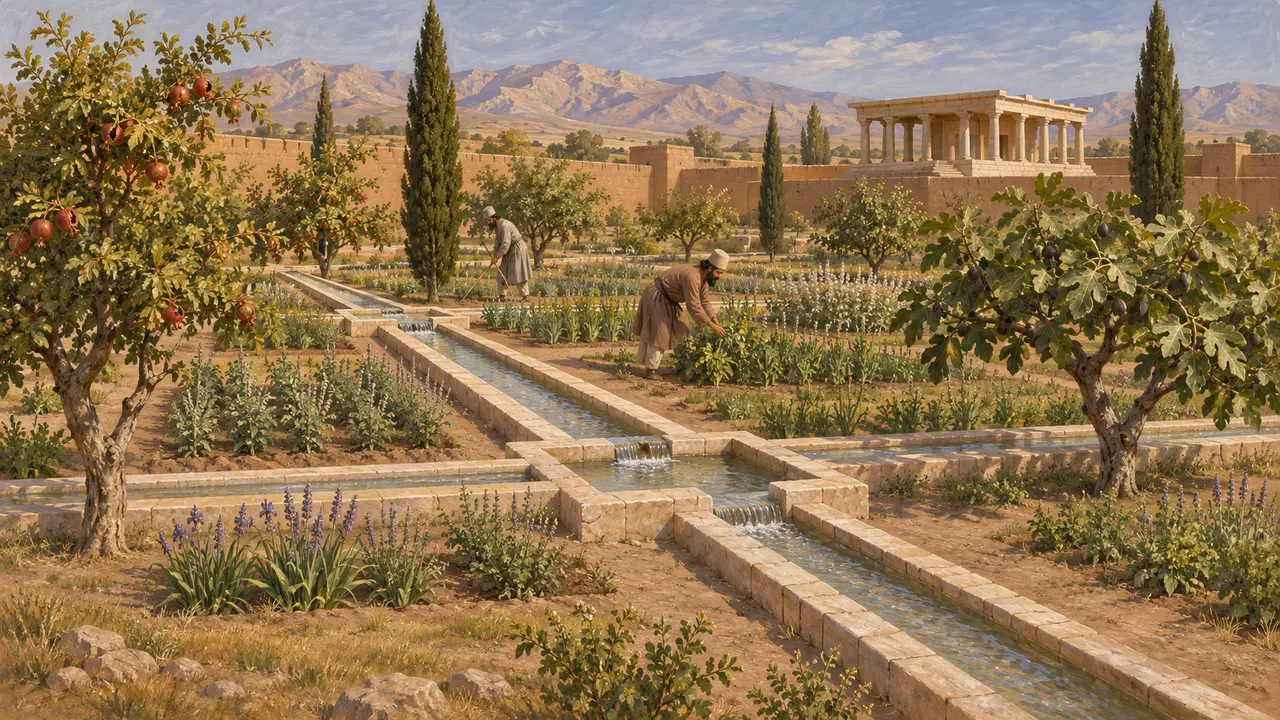
DisputedExcavations at Pasargadae revealed a garden laid out with stone water channels, but nothing proves it held game, and scholars debate how far it was a pleasure garden or a park. The partetaš of the Persepolis tablets look mostly like productive estates. Historians therefore argue over how many paradises were hunting grounds and how many were orchards, farms or display gardens.
D. Stronach, Pasargadae, 1978; P. Briant, From Cyrus to Alexander, 2002
Sources
- Xenophon, Anabasis 1.2.7
- Xenophon, Hellenica 4.1.15-16
- P. Briant, From Cyrus to Alexander, 2002
- Herodotus 1.136
- DNb
- W. Henkelman, The Other Gods Who Are, 2008