Encyclopedia › Wildlife and weather
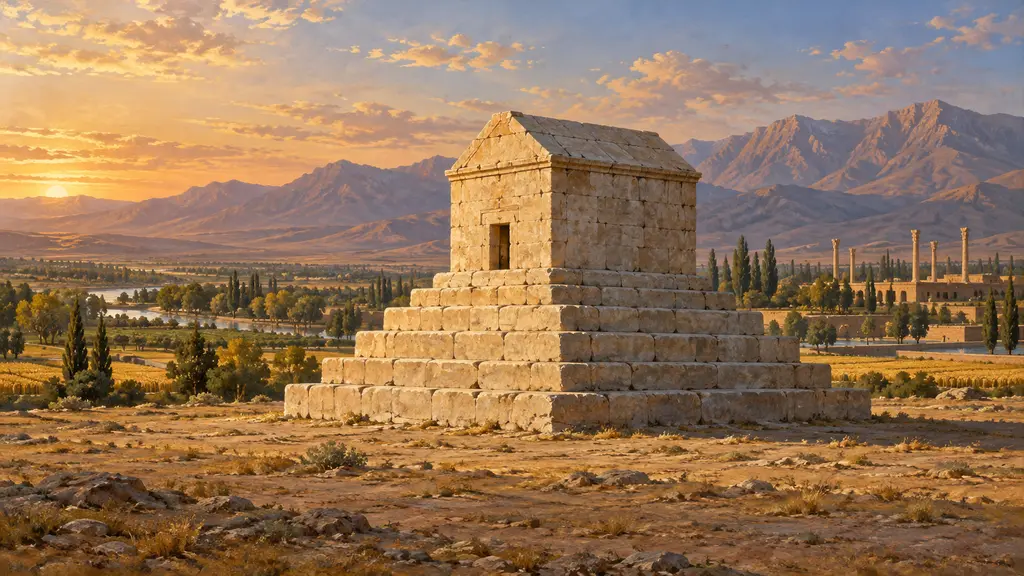
The wild goat
The bezoar goat of the Zagros and Persian hills, 6th-5th century BCE
In the game: Level 1: The Founder's Tomb, Level 3: The Lie, Level 4: The Terrace
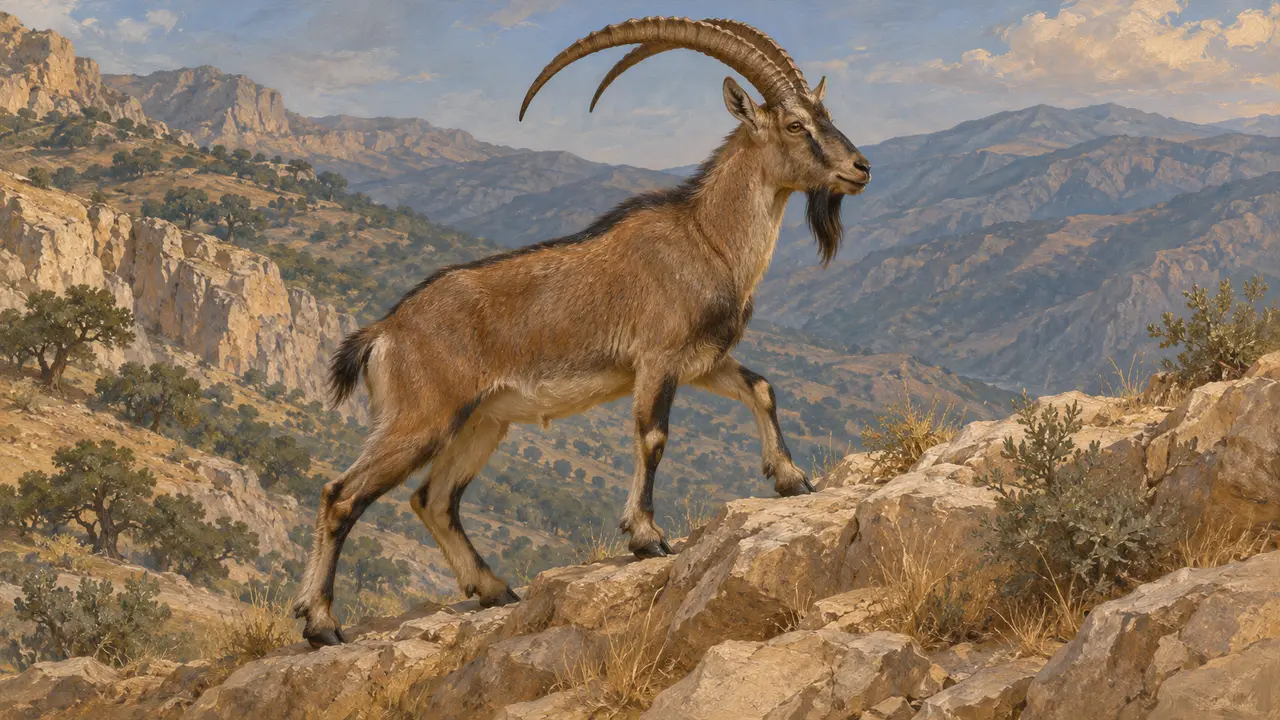
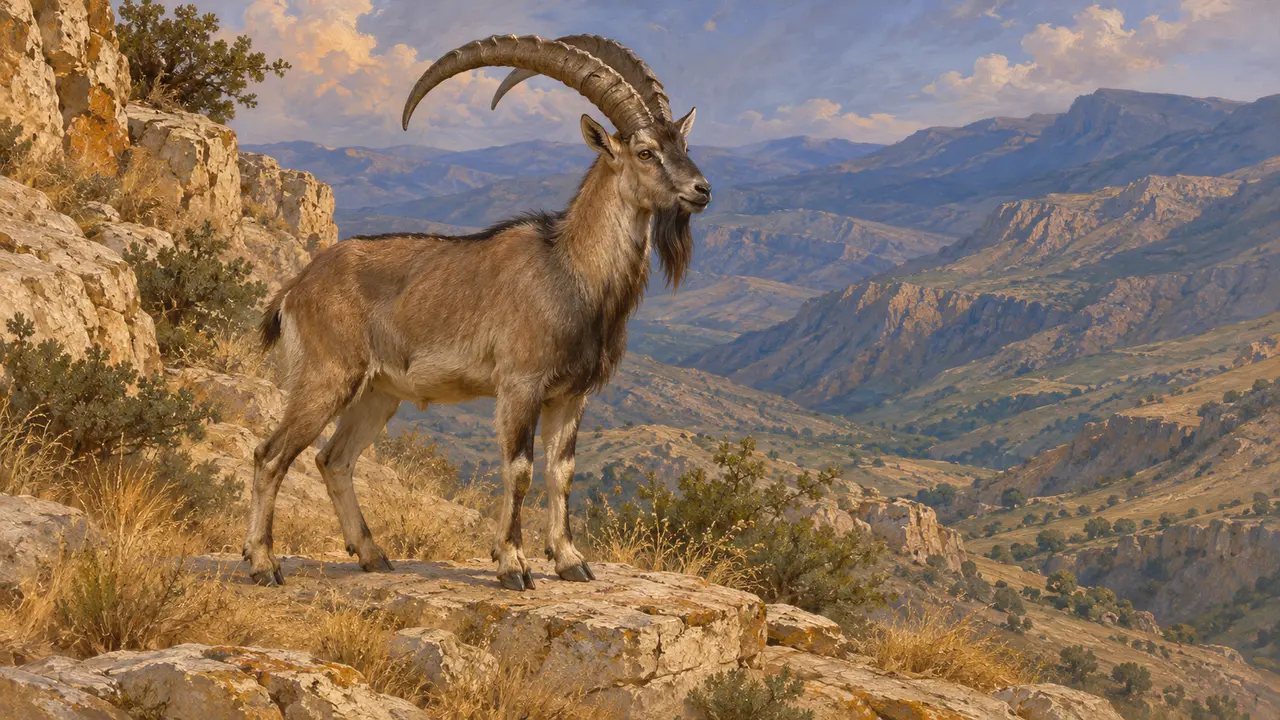
The wild goat of the Iranian highlands, the bezoar goat (Capra aegagrus), lived on the cliffs and screes of Persis and Media. It is the wild ancestor of the domestic goat. The surviving sources say little about it directly, and it matters here mainly as part of the highland landscape the Persians knew.
In the game: Wild goats appear as scenery on the Pasargadae, Parsa and Bagastana levels, keeping to rock, steep ground and screes. No rule reads them. Their place in the game's hunting scenery is an inference from the landscape, not from a Persian text.
The animal and its range
In the recordThe bezoar goat is native to the mountains of western and southern Iran, the Zagros and its neighbours, and to parts of Anatolia and the Caucasus. It lives on rocky slopes and cliffs and is a sure-footed climber. Excavated animal bones show that goats were first domesticated in the Zagros region thousands of years before the Achaemenids, so the wild form was ancient local stock.
Excavation reports on early goat domestication in the Zagros (modern studies)
Xenophon's hunting scenes
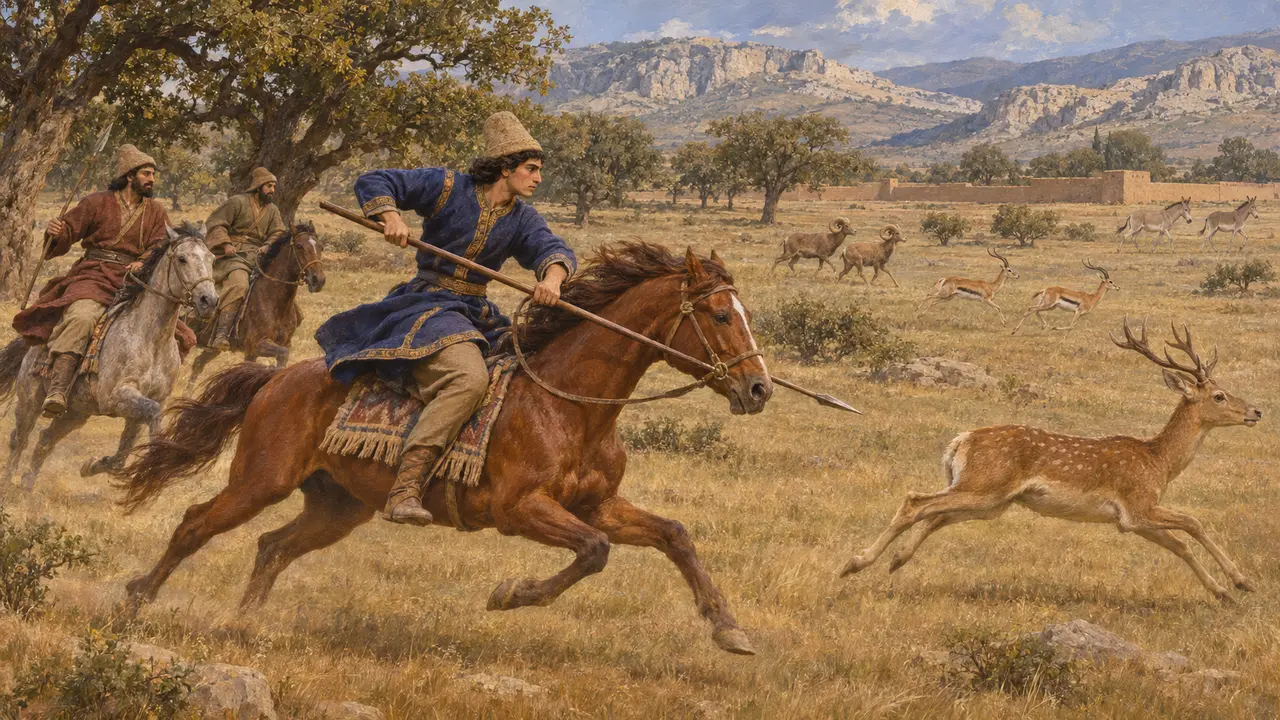
Ancient accountXenophon, writing in the fourth century BCE, describes the young Cyrus hunting in a Median game park and lists the quarry as deer, gazelles, wild sheep and wild asses. Wild goats are not named in that list. Xenophon wrote an idealised life of Cyrus, so the scene shows what a Greek reader thought a Persian prince did, not a record of Cyrus himself.
Xenophon, Cyropaedia 1.4.7
Parks and royal hunting
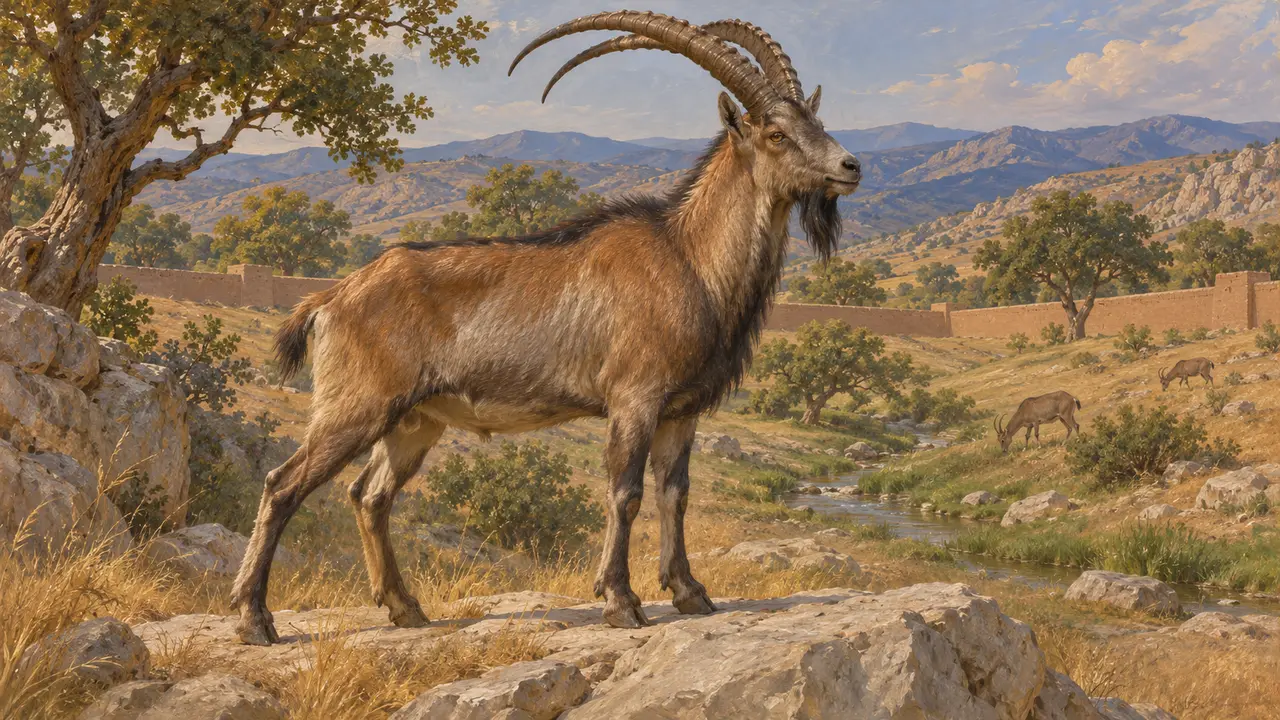
Ancient accountXenophon describes a paradeisos of Cyrus the Younger at Celaenae, an enclosed park full of wild animals where he hunted. The word is of Iranian origin. Which species lived in any given park is mostly unrecorded, so the wild goat can be placed there only as a likely hill animal, not by a named text.
Xenophon, Anabasis 1.2.7
Goats in the Persepolis tablets
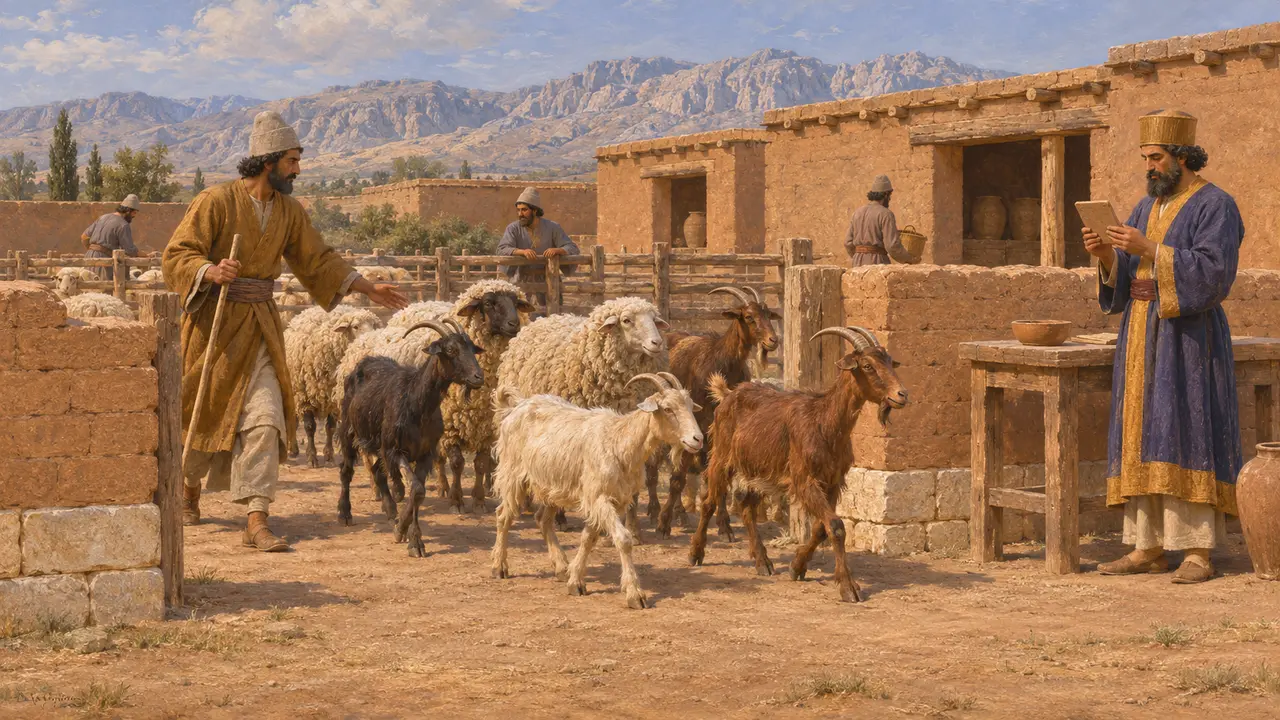
In the recordThe Persepolis Fortification tablets record rations and livestock, and goats and sheep appear among the animals issued or tallied. These texts concern domestic flocks, so they do not show wild goats being hunted. They give no evidence for the wild species either way.
Persepolis Fortification tablets, without a tablet number
What cannot be said
DisputedNo Persian inscription is known to this entry that names the wild goat as a hunted animal or gives it a ritual role. Horned animals in Achaemenid art are sometimes read as wild goats or ibex and linked to royal hunting or fertility, but this is interpretation, and the sources do not settle it. The wild goat is best treated as part of the highland landscape.
P. Briant, From Cyrus to Alexander, 2002
Sources
- Xenophon, Cyropaedia 1.4.7
- Xenophon, Anabasis 1.2.7
- P. Briant, From Cyrus to Alexander, 2002
- Persepolis Fortification tablets, without a tablet number