Encyclopedia › Wildlife and weather
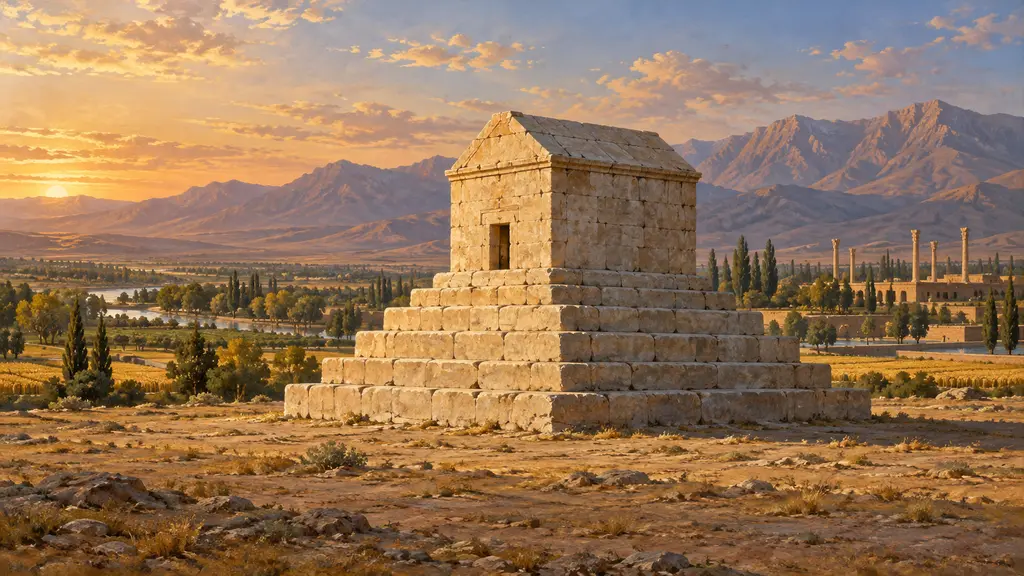
The urial
Wild sheep of the hills of Persis and Media, 559-479 BCE
In the game: Level 1: The Founder's Tomb, Level 3: The Lie, Level 4: The Terrace
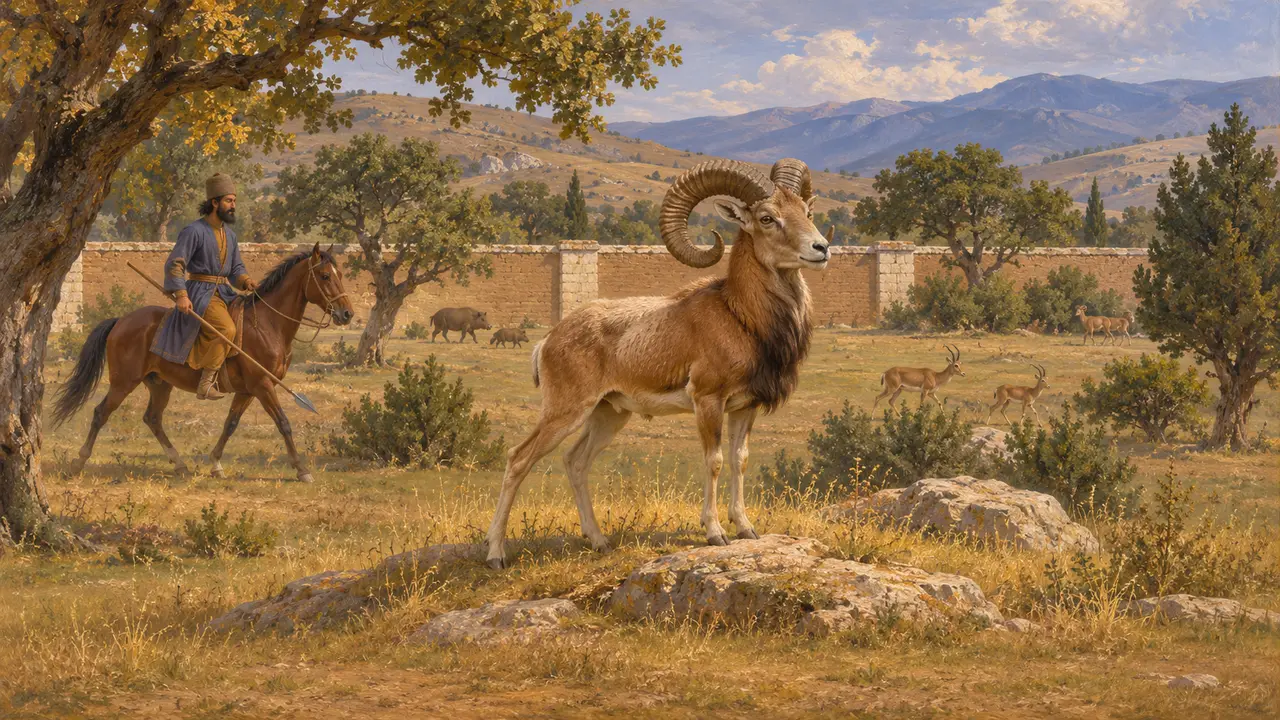
The urial is a wild sheep of the dry hills of Iran and Central Asia. The rams are red-brown with pale legs and large, curved horns. Sources of the period say little about it directly, so what can be said rests on records of managed flocks, Greek accounts of Persian hunting and the Persian habit of keeping hunting parks.
In the game: The game draws the urial as scenery on the Pasargadae, Bagastana and Parsa levels, among the animals on land the town has not taken. No rule reads it.
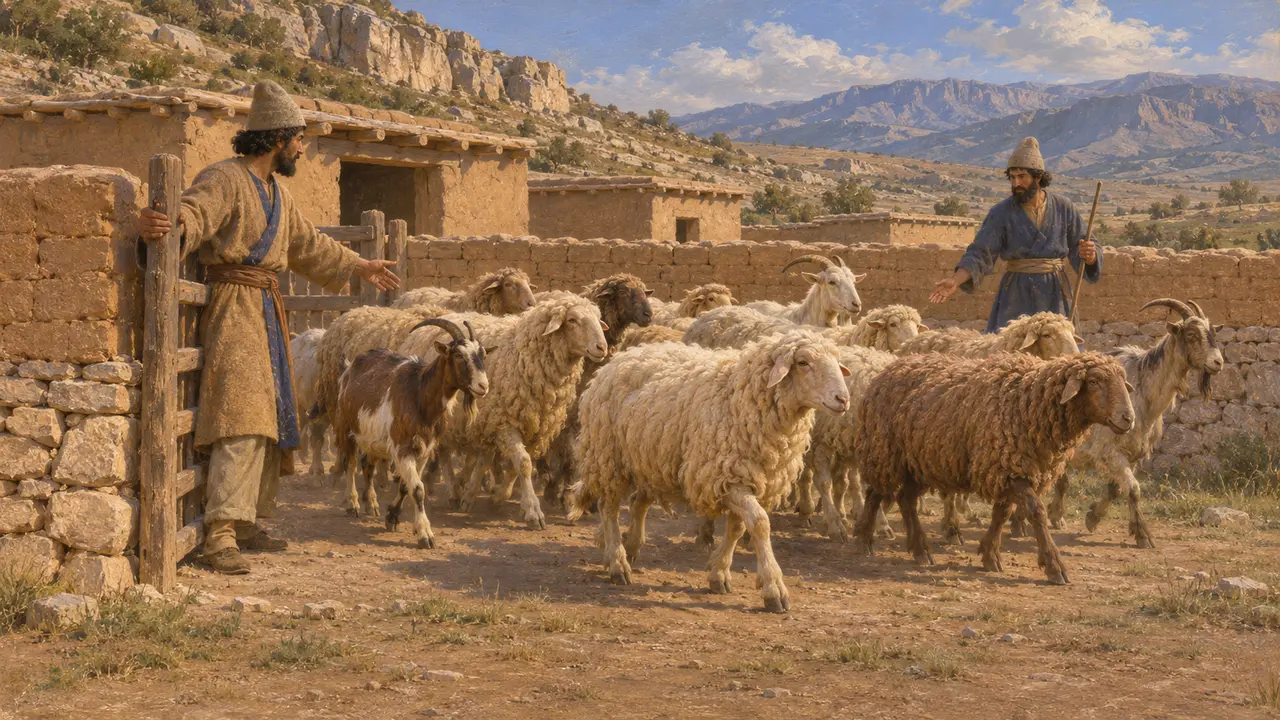
Sheep in the Persian archives
In the recordThe Persepolis Fortification tablets, which date from about 509 to 493, record rations and livestock, including sheep and goats, issued in Persis. The tablets deal with managed flocks and do not describe wild animals. They show how much the economy of Persis depended on sheep, but they give no information about the urial.
R. Hallock, Persepolis Fortification Tablets, 1969
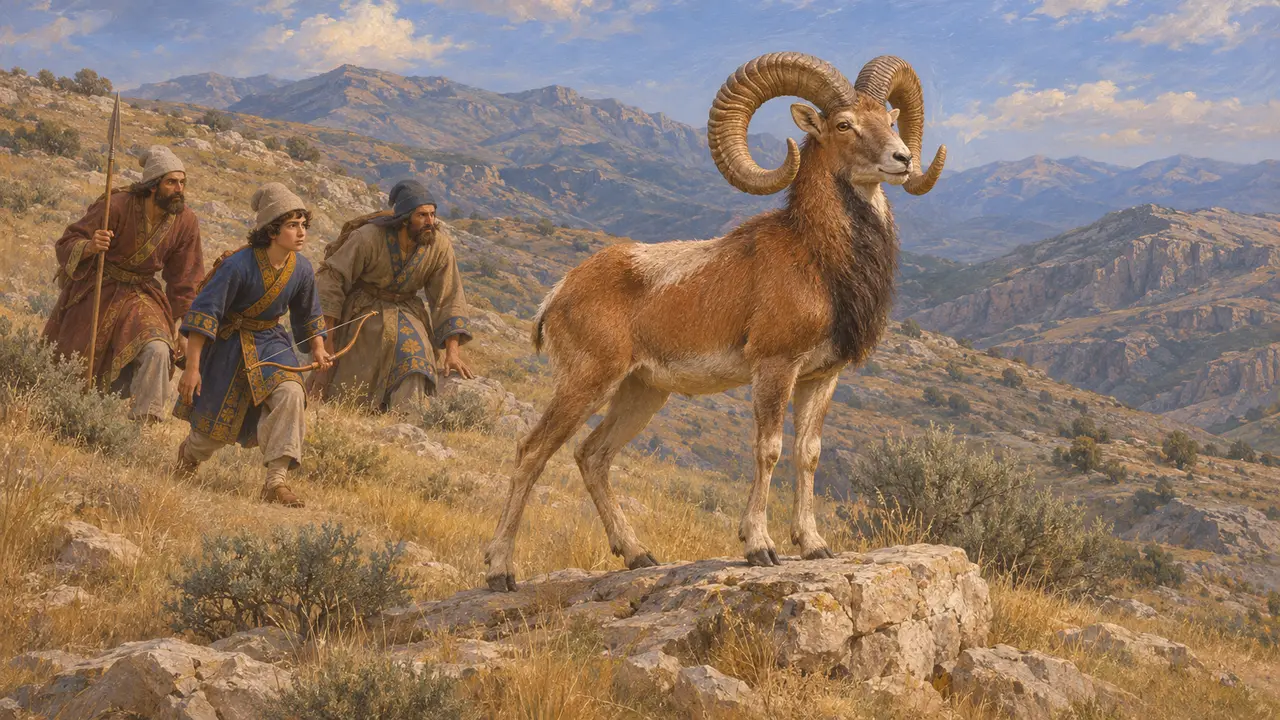
Xenophon's hunting scenes
Ancient accountXenophon, writing in the fourth century, describes the young Cyrus hunting in Media with his relatives. The work is partly an ideal of kingship, so these scenes are not a record of what Cyrus did. They do show that Greeks saw hunting as part of a Persian gentleman's upbringing.
Xenophon, Cyropaedia 1.4
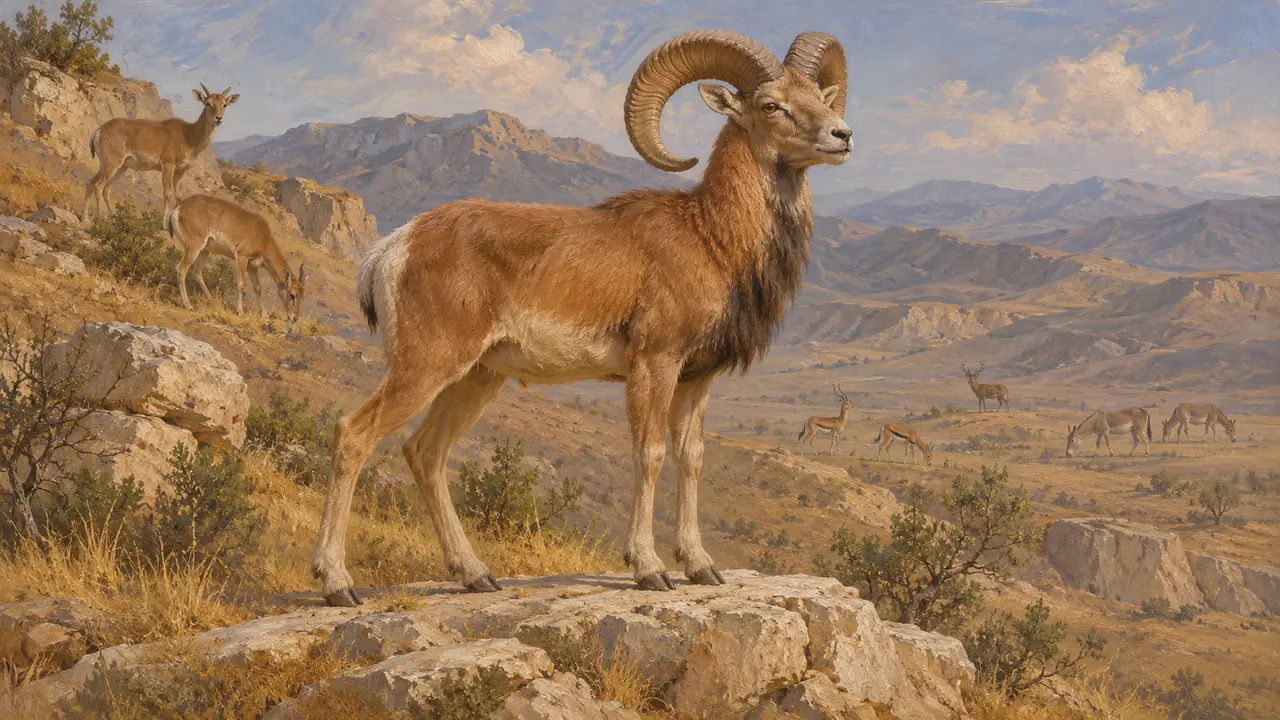
Which animals Xenophon names
DisputedXenophon has the young Cyrus hunt wild sheep among deer, gazelles and wild asses (Cyropaedia 1.4.7). He does not say which wild sheep; the urial is one candidate in Persis and Media, the mouflon of the Zagros another, so the identification is a modern guess.
Xenophon, Cyropaedia 1.4.7
Hunting parks of the Persian elite
Ancient accountXenophon says that Cyrus the Younger kept a park at Celaenae full of wild animals, which he hunted on horseback for exercise. This was in 401, after the period of the game, but it shows a practice that Greek writers linked to Persian nobles and satraps, whose enclosed parks they called paradeisoi. Wild sheep may have been taken in the open hills around such places, but the sources do not say so.
Xenophon, Anabasis 1.2.7
Sources
- Xenophon, Cyropaedia 1.4.7
- Xenophon, Anabasis 1.2.7
- R. Hallock, Persepolis Fortification Tablets, 1969
- P. Briant, From Cyrus to Alexander, 2002